

Science • Space • Cosmic Mysteries Explained simply. Follow for what comes next.
- Tweets2.8K
- Following36.1K
- Followers41K
- Likes3.7K





ALT This paint can make a building cooler than the air around it — without electricity. Imagine standing under the blazing midday sun, yet the roof above you is actually cooler than the air outside. It sounds impossible, but scientists have developed a paint that can do exactly that. Researchers at Purdue University created an ultra-white paint that reflects **98.1% of incoming sunlight**, earning a place in the Guinness World Records. But the real secret lies beneath its brilliant white surface. The paint contains barium sulfate particles of different sizes that scatter sunlight while allowing heat to escape into space as infrared radiation. The results are remarkable. In outdoor tests, painted surfaces stayed about **8°F (4.4°C) cooler than the surrounding air** under strong midday sunlight. At night, they became up to 19°F (10.6°C) cooler than the air.

ALT **The universe has a hidden connection that challenges everything we think we know. Imagine two tiny particles separated by billions of light-years, yet still showing a strange connection that scientists cannot explain through ordinary everyday experience. This is the mystery of **quantum entanglement**. When two particles become entangled, measurements of their properties can show correlations that classical physics cannot explain. Even when separated by vast distances, these correlations remain. But here is the fascinating part: scientists still cannot use this connection to send messages faster than light. And your voice does not instantly influence distant stars through entanglement. So, what does this discovery really tell us? It reveals that the universe behaves in ways far stranger than our everyday experience suggests. At the smallest scales, reality follows rules that continue to challenge our understanding.

ALT 🎶 **YOUR BODY DOESN’T CARE IF YOU CAN SING. IT RESPONDS ANYWAY. What if one simple activity could lift your mood, help you feel connected to others, and influence your body's stress response? That activity is **singing.** And scientists are investigating what happens inside your body when you do it. Your brain responds.** Singing engages brain systems involved in emotion, memory and reward. It can also help you express feelings that are difficult to put into words. Your body's chemistry can change.** Research on group singing has found changes in cortisol, a stress-related hormone, and oxytocin, which is associated with social bonding. The results vary, and these changes don't happen the same way in everyone. You don't need a perfect voice.** Whether you're singing in the shower, humming while cooking, or joining a choir, you can enjoy the emotional benefits of music without performing for anyone.

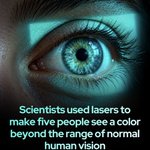
ALT **Scientists made five people see a color no screen can reproduce Imagine seeing a color so intensely saturated that no phone, TV, or photograph can truly show it. Scientists call it **“olo.”** Five people experienced this unusual blue-green color during a specialized laser experiment. The secret? Researchers used a system called *Oz* to target specific cells in the human retina, stimulating green-sensitive cone cells in a way ordinary light cannot achieve. The result was a visual experience that participants could not match with ordinary colors unless they added white light to reduce its intensity. But here's the mystery: **Did they really see a new color, or an extreme version of a color we already know?** Scientists are still debating what “olo” means for our understanding of human vision. The breakthrough could also help researchers investigate color blindness.

ALT 🧠 CHRONIC STRESS MAY BE AFFECTING YOUR GUT IN WAYS YOU DON'T REALIZE! Stress doesn't just affect your mind. It can also change how your digestive system works. Research suggests that chronic stress can weaken the gut's protective barrier, affect digestion, and contribute to inflammation and digestive discomfort. Why sweet potatoes?** Orange sweet potatoes are rich in beta-carotene, which your body converts into vitamin A. This vitamin helps maintain the healthy lining of your digestive tract. Their skin also contains fibre that supports beneficial gut bacteria. Washing and cooking sweet potatoes with the skin on can help you get more fibre. The key takeaway:** Eating nutritious foods can support gut health, but sweet potatoes alone cannot repair stress-related gut problems. Managing stress, getting enough sleep, and eating a balanced diet all play important roles.

ALT **Scientists are exploring a natural way to remove microplastics from water What if a tree could help tackle one of the world’s growing pollution problems? Researchers are studying *Moringa oleifera*, commonly known as the moringa tree, to explore its potential for water purification. Laboratory research suggests that materials derived from moringa may help attract and separate suspended particles from water. Scientists are investigating whether these natural properties could also help remove microplastics. Some laboratory tests have reported removal rates of up to 98%, but this figure does not mean moringa can remove 98% of microplastics from all drinking water. 🌱 **Why is this important?** Moringa is already being investigated for its potential use in water treatment. As a renewable biological resource, it could offer an additional approach to developing more sustainable filtration methods.

ALT 🧬 Your Body Has a Hidden Healing Trick That instinct to lick a small cut might not be random—your saliva contains natural healing proteins like histatin, EGF, and Trefoil Factor 3 that help skin cells repair faster. Studies show these compounds can speed up wound closure and even support new blood vessel growth, which is important for healing. In lab tests, wounds exposed to saliva-related compounds closed faster than untreated ones. Scientists are still exploring how powerful this natural “built-in repair system” really is. Sources: Oudhoff et al., The FASEB Journal (2008). Vrije Universiteit Medical Center, Amsterdam, Netherlands. World Journal of Advanced Research and Reviews (2024)

ALT 🧬 What if dormant hair follicles could be switched back on? Scientists are testing an experimental treatment called PP405 that aims to activate hair follicle stem cells and encourage hair growth. In an early study involving 78 adults, the developer reported that 31% of men with more advanced hair loss who received the treatment experienced a greater than 20% increase in hair density. The results are promising, but larger trials are needed to confirm its effectiveness and safety. ⚠️ PP405 is still experimental and is not an approved hair-loss treatment. Source: Pelage Pharmaceuticals. (2026, October 14). First patient dosed in Phase 2/3 AWAKEN trial of PP405 for pattern hair loss.

ALT 🧠 Your brain may be switching between two versions of reality 15 times every second What if your brain is processing two different versions of what you see, but you are only aware of one? A fascinating new study suggests that the brain may rapidly switch between visual information that reaches our conscious awareness and information that remains hidden from us. And this may happen around **15 times every second!** In experiments, researchers showed monkeys two different faces, one to each eye. Although one face dominated what they appeared to perceive, brain activity continued to alternate between signals linked to both faces. The surprising part? **Even when your brain focuses on one thing, information you are not consciously aware of may still be active behind the scenes.** Scientists believe this could help explain how the brain separates conscious experience from the enormous amount of information it receives every moment.

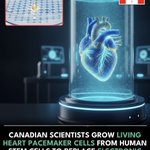
ALT What if living cells could one day help repair the heart’s electrical system? Your heart depends on tiny electrical signals to keep every beat in rhythm. But when those signals cannot travel properly between the heart’s upper and lower chambers, the condition is called *heart block*. Many patients need an electronic pacemaker to keep their heartbeat regular. Now, researchers at Toronto’s McEwen Stem Cell Institute have made an exciting advance. In a study published in *Cell Stem Cell* in 2026, scientists developed specialized heart cells from human stem cells that can act like the heart’s natural electrical relay. The goal is remarkable: instead of relying only on wires and batteries, doctors may one day be able to use living cells to help restore the heart’s electrical pathway. In laboratory tests and animal models, these cells showed promising functions needed to safely guide electrical signals through the heart.

ALT In space, two pieces of metal can fuse together without heat, glue, or welding equipment. And the reason is stranger than you might think. On Earth, two metal objects can touch without becoming one. But in the vacuum of space, under the right conditions, something remarkable can happen: **cold welding.** Metal surfaces are usually covered with thin layers of oxide, dirt, and other contaminants that prevent their atoms from bonding directly. When two exceptionally clean metal surfaces come into contact in a vacuum, their atoms can form bonds across the boundary, joining the pieces together. And this is not just a scientific curiosity. NASA's Galileo spacecraft experienced problems when its high-gain antenna failed to fully deploy in 1991. Cold welding was considered one possible explanation for the jammed mechanism, although the exact cause was not conclusively established.

ALT 🧬 A Mother May Carry Her Child’s Cells for Decades After Birth A mother’s connection to her baby may leave something behind that science is only beginning to understand fully. During pregnancy, cells can cross the placenta in both directions, allowing a small number of a baby’s cells to enter the mother’s body. This fascinating process is called **microchimerism**. Some of these cells can remain in the mother’s tissues for decades after pregnancy, meaning that long after a child is born, a tiny number of their cells may still be present in their mother’s body. But here’s where it gets even more interesting. Scientists are investigating whether these cells influence tissue repair, immune responses, and certain health conditions. Their exact roles remain unclear, and researchers are still working to understand whether they help or harm the body in different situations.


ALT 🚨 Honey Patch Could Revolutionize Wound Healing Scientists in Chile are developing a new honey-based patch that may help heal difficult wounds and burns faster. Made with ulmo honey, a Chilean honey known for antibacterial and anti-inflammatory properties, the patch keeps healing compounds in contact with damaged tissue. Researchers are testing this innovative material to see if it can support tissue regeneration. While regular honey should not be used on wounds, this project shows how nature-inspired solutions could shape the future of medicine. Source: Universidad Técnica Federico Santa María. Research on ulmo honey-based biomaterials for wound healing.

ALT Scientists 3D-printed a heart using human cells — and the results could change medicine forever! Imagine a future where damaged hearts could one day be replaced with organs grown from a patient's own cells. Scientists at Tel Aviv University in Israel took an important step toward that possibility in 2019. Using human cells and biological materials from fatty tissue, researchers created a miniature, 3D-printed heart complete with chambers and blood vessels. The technology even allowed them to use materials derived from the same patient, potentially helping reduce the risk of immune rejection. But there's a catch. The tiny heart was not yet capable of pumping blood like a healthy human heart. Scientists still needed to overcome major challenges before such technology could produce fully functional replacement organs. The ultimate goal? To develop personalized hearts that could one day help address the shortage of donor organs.

ALT 🚨 Reheated rice can pose a serious risk of food poisoning if it is not stored properly after cooking. When cooked rice is left at room temperature, Bacillus cereus bacteria can multiply and produce toxins that are not destroyed by reheating. This illness is often referred to as “fried rice syndrome” and can cause vomiting and diarrhea within hours. To reduce the risk, rice should be cooled quickly and placed in the refrigerator within one hour of cooking. When reheating, make sure the rice is steaming hot all the way through and consume it within one day of refrigeration.

ALT This tiny pill can flip itself upright inside your stomach! Imagine swallowing a pill instead of facing daily insulin injections. MIT engineers developed a remarkable capsule inspired by the leopard tortoise, whose dome-shaped shell helps it turn upright when flipped over. But here’s the fascinating part: once swallowed, the capsule can automatically position itself against the stomach wall. It then delivers insulin through a tiny needle made from compressed insulin itself. Because the stomach lining lacks pain receptors, the researchers believe the injection could happen without the patient feeling it. In animal tests, the technology successfully delivered insulin in pigs. Could this unusual invention one day make insulin treatment easier for millions of people with diabetes?

ALT Zoom Into the Heart of the Milky Way, and Watch It Turn to Gold From millions of tiny points of light to a breathtaking sea of stars, the center of our galaxy holds a beauty that's almost impossible to imagine. What looks like a soft, golden glow from far away transforms into a dazzling field of countless stars when you zoom in. Each tiny speck is a distant star, packed into an incredibly crowded region of space. And here's the most amazing part: **we live inside this galaxy, yet its heart remains hidden from our everyday view.** The universe is far more spectacular than we can ever see with our own eyes. 💫

ALT ⚡ In 1896, Nikola Tesla Captured an Image That Seemed Almost Like Science Fiction Imagine seeing the bones inside a human hand without making a single cut. More than a century ago, this incredible possibility was beginning to emerge. Nikola Tesla, the inventor famous for his groundbreaking work with electricity, was also experimenting with a mysterious new technology called **X-rays**. He developed his own equipment to produce them and called his images *shadowgraphs*. One of his experiments revealed the bones of a human hand beneath the skin. Another showed a human foot inside a shoe, demonstrating how these invisible rays could reveal structures hidden from ordinary sight. At the time, X-ray photography was a revolutionary discovery. Tesla’s experiments helped capture the excitement surrounding a technology that would transform medical imaging forever.

ALT When doctors' bonuses depend on vaccination rates, what happens to patient choice?** Behind the scenes of healthcare, financial incentives can influence how medical practices operate. Some programs have rewarded doctors and clinics for reaching childhood vaccination targets, with payments linked to their performance. But here's where the story gets complicated. When money depends on meeting specific targets, could the pressure to achieve those numbers affect conversations between doctors and parents? Research has shown that financial bonuses can increase recorded vaccination rates, although some improvements may reflect better recordkeeping rather than more vaccinations. Critics worry that rigid targets could put pressure on healthcare providers and weaken meaningful discussions with families. **Should medical decisions be driven by performance targets, or should informed consent and individual patient needs always come first?**