
🚔Creator of the Not Reaching Pouch | 🚦President of nonprofit Alliance for Safe Traffic Stops (ASTS) | Solutionary
Alexandria, VA
Joined July 2016
- Tweets16.1K
- Following1.8K
- Followers679
- Likes10.1K




Not Reaching retweeted

Sixty-three years ago, on Nov. 22, 1963, President John F. Kennedy was assassinated in Dallas, Texas. Today, his legacy of service and sacrifice lives on at Arlington National Cemetery, where the Eternal Flame burns at his gravesite in Section 45.
Not Reaching retweeted

"""Three brothers.
One died in a plane packed with explosives over England.
One was shot in a Dallas motorcade.
One was shot in a hotel kitchen the night he won the vote that could have made him president.
None of them lived past forty-six.
And all three had deliberately chosen to stand somewhere dangerous when history arrived.
Most people know the Kennedy story through tragedy.
But tragedy alone is too simple.
Because what made the Kennedy brothers matter was not merely how they died.
It was how consciously they chose to live.
The first was Joseph Kennedy Jr.
The eldest son.
The one their father expected to become president.
Handsome.
Harvard-educated.
Confident.
The golden child of one of America’s most ambitious political families.
But when World War II began, Joseph did not stay home protecting the future everyone had planned for him.
He became a naval aviator.
He flew dangerous combat missions over Europe.
And after completing enough missions to justify going home safely — the military standard most pilots understandably accepted — Joseph volunteered for something even more dangerous instead.
Operation Aphrodite.
An experimental mission involving B-24 bombers packed with explosives and flown remotely toward Nazi targets.
The technology barely worked.
The risks were enormous.
Pilots had to guide the aircraft manually before parachuting out seconds before detonation.
Joseph Kennedy Jr. understood exactly how dangerous it was.
He volunteered anyway.
On August 12, 1944, before reaching the jump point, the explosives detonated prematurely over Suffolk, England.
The aircraft vaporized in the sky.
Joseph Kennedy Jr. was twenty-nine years old.
His younger brothers watched what happened to him very carefully.
Especially John.
Years earlier, John F. Kennedy had nearly died himself in the Pacific when PT-109 was cut in half by a Japanese destroyer. Despite severe injuries, he dragged wounded crewmen through open water to safety using his teeth to grip one sailor’s life jacket strap.
War changed him.
By the time he became president in 1961, Kennedy carried something many politicians never fully develop:
An understanding of how fragile life actually is.
That awareness shaped his presidency.
The Peace Corps.
The moon mission.
The willingness during the Cuban Missile Crisis to resist immediate military escalation while the world stood on the edge of nuclear war.
For thirteen terrifying days in October 1962, military advisors urged aggressive action against Soviet missiles in Cuba.
Kennedy chose restraint instead.
Quiet diplomacy.
Careful backchannel negotiations.
Humanity survived the crisis without a nuclear exchange.
And slowly, Kennedy himself was evolving too.
His civil rights record began cautiously, shaped by political realities and compromises historians still debate honestly today. But by 1963, after watching violence against Black protesters broadcast across American television screens, Kennedy publicly reframed civil rights as a moral issue, not merely a political one.
He was still growing into the presidency.
Still becoming fully himself.
Then came Dallas.
November 22, 1963.
A motorcade.
Crowds cheering.
A rifle shot echoing through history.
John F. Kennedy died at forty-six years old with much of his presidency unfinished.
And then there was Robert.
Robert Kennedy may have changed the most of all.
Before his brother’s assassination, he was known as ruthless, disciplined, intensely combative — an Attorney General willing to confront organized crime, segregationist governors, and corruption with relentless focus.
After November 1963, something inside him broke open.
People around Robert later described a transformation.
Grief deepened him.
He became more emotionally accessible.
More compassionate.
More willing to sit directly beside suffering rather than manage it from a political distance.
He visited migrant labor camps.
Poor Appalachian towns.
Black communities abandoned by political power.
He listened.
Not for photographs.
Not for headlines.
Because he genuinely wanted to understand how people lived beyond the world of privilege he came from.
Then came April 4, 1968.
Martin Luther King Jr. was assassinated.
That night, Robert Kennedy traveled to Indianapolis despite warnings from police and advisors who feared riots and violence.
Standing on a flatbed truck before a grieving crowd, Kennedy told them King was dead.
Many in the audience had not heard yet.
The sound of their reaction — gasps, crying, disbelief — still exists in archival recordings today.
And then Robert did something extraordinary.
He did not speak like a politician.
He spoke like a grieving human being.
He told them he understood what it meant to lose someone to assassination because his own brother had been murdered too.
He quoted Aeschylus from memory:
“In our sleep, pain which cannot forget falls drop by drop upon the heart…”
And he pleaded for compassion over hatred.
That night, riots erupted in cities across America.
Indianapolis remained calm.
Two months later, Robert Kennedy won the California Democratic primary.
He walked through the kitchen of the Ambassador Hotel in Los Angeles believing the presidency might finally be within reach.
Then gunfire erupted.
Robert Kennedy died the next day.
He was forty-two years old.
Three brothers.
Joseph.
John.
Robert.
One dead at twenty-nine.
One at forty-six.
One at forty-two.
And perhaps what still lingers about them decades later is not simply the tragedy surrounding their deaths.
It is the repeated pattern inside their lives.
Joseph volunteered for a mission he did not have to fly.
John chose restraint when war would have been politically easier.
Robert walked directly into grief-stricken communities instead of hiding safely behind politics.
None of those decisions were inevitable.
All of them required conscious choice.
And maybe that is the deeper truth behind the Kennedy story.
Not mythology.
Not glamour.
Not even tragedy.
But the reality that service always costs something.
Sometimes reputation.
Sometimes safety.
Sometimes the future you imagined for yourself.
The Kennedy brothers never finished the work they began.
Nobody ever does.
That is the nature of history.
But what they left behind still matters:
The Peace Corps.
Civil rights momentum.
Nuclear diplomacy.
The example of powerful people choosing not to look away from suffering when it would have been easier to ignore it.
Three brothers who believed the work was worth doing even when doing it was dangerous.
And history still remembers them because they acted like they believed it."""""""

Not Reaching retweeted

Glad to see @carmeloanthony spoke up about #Ravens CB Marlon Humphrey’s ‘criminals’ comment just now on his IG page, as someone who came up in the Maryland area.
(@carmeloanthony) ⬇️


Not Reaching retweeted
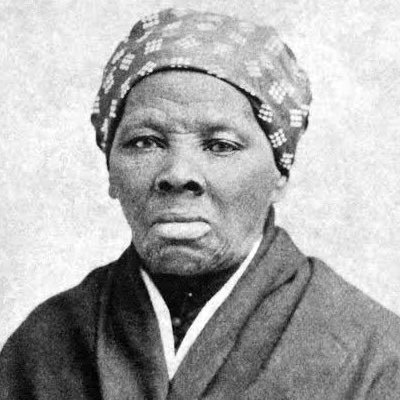
Albert Einstein defying the prevailing racial climate at the time by visiting Lincoln University, Pennsylvania in 1946.


Not Reaching retweeted

Listen to this pilot. Speaking the truth about his flight during the FAA ground stop.
I hope he doesn’t lose his job over it.
Bless you, Mr. Pilot! 🙏
Not Reaching retweeted

Dear Fannie,
Thanks for your work. Mississippi broke the glass because of you ❤️✊🏽

Not Reaching retweeted

NAACP field secretary Medgar Evers's wife Myrlie comforts their child after her husband's assassination, June 1963:

Not Reaching retweeted
Five months before his own assassination, JFK and the family of the murdered Medgar Evers of Mississippi, Oval Office, June 1963:

Not Reaching retweeted
Remember and honor Andrew Goodman, James Chaney and Michael Schwerner and the price they paid when they were murdered for voting rights in Mississippi, 1964:



Not Reaching retweeted
Good morning and Happy Monday to everyone who won’t forget that trump removed MLK Jr. Day and Juneteenth from National Park free-entry days, then added his own birthday.
The disrespect is deliberate.
Not Reaching retweeted

They both had been shunned by their respective organizations for speaking the truth and were on their way to uniting. Imagine what they would’ve accomplished together…..and that’s exactly why they (and we all know who they are) didn’t allow that to happen
#MLKDay2026

Not Reaching retweeted

It's officially Dolly Parton's 80th Birthday!
RETWEET to with @DollyParton a Happy Birthday! 🎉


Not Reaching retweeted

.
PRAY ...… Like Nehemiah
BUILD ..... Like Noah
LEAD ....... Like Moses
FAITH …… Like Abraham
OBEY ....…. Like Daniel
FIGHT ....... Like David
SERVE ....… Like Martha
BELIEVE ..... Like Mary
EDUCATE … Like Paul
LOVE ..……….. Like JESUS
Can I get an “AMEN” ???
.
