

Tolerance and apathy are the last virtues of a dying society / Anti zionist............. My Alts: @NoticingEvil @Noticing__Evil
Ελλάς
Joined October 2015
- Tweets12K
- Following99
- Followers222
- Likes18.9K



Pinned Tweet
What's the state of CHRISTIANITY in Turkey? - David Erhan youtu.be/wOSyKhT3Ipw?si=VDTZ…
Interesting talk about Christianity and the history of Greeks in Anatolia.

Chris 🇬🇷🇨🇾 retweeted

Whoever has read the books knows that:
1. The "Greeks" here refer to the mercenaries of Darius, not to the Greeks as a whole nation.
2. The original ancient Greek text doesn't mention any "old racial rivalry". It mentions a rivalry of honour (φιλοτιμίας).


You seek to cut off Greeks from Anatolia by denying we're also part of Anatolia for 3200 years, Albos aeek to cut off Greeks from the balkans by calling us Anatolian immigrants/ Turkodox. One thing you have in common, you both fear the Yunan.


1
3
154

Chris 🇬🇷🇨🇾 retweeted

Greece and North Macedonia both signed the Prespa Agreement in 2018.
Article 7: their official language and attributes "are not related to the ancient Hellenic civilization, history, culture and heritage" of Greece's northern region.
Ancient Macedonia is Greek 🇬🇷

Chris 🇬🇷🇨🇾 retweeted

Slav propagandists:
"Everyone spoke Macedonian and not a word of Greek" but according to his screenshot: at least the men spoke Greek
In Kastoria:
-🇬🇷schools opened in 1614, 1705, 1715
-There were about 80🇬🇷 primary &secondary schools in pre-Balkan wars era; 0 in "Macdonian"


Chris 🇬🇷🇨🇾 retweeted

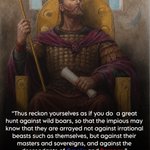
Sparta produced the most feared infantry in Greece.
But its greatest field commander may have been a man who refused to fight like a Spartan.
His name was Brasidas.
In 431 BC he led 100 men through an Athenian siege line to save Methone. At Pylos in 425 he ran his ship aground under fire, took a wound, and lost his shield in the surf. Athens set it up as a trophy.
Thucydides records that this was a Spartan officer who led from the front, not the rear. But personal courage was common in Sparta. What made Brasidas rare was what he did with it.
In 424, he marched north with 700 helots armed as hoplites and about 1,000 Peloponnesian mercenaries. That is roughly 1,700 men, hundreds of miles from home, in the heart of Athens’ empire.
Brasidas could not hope to conquer Athens' northern empire through brute force alone. So he didn’t try.
At Acanthus, he addressed the assembly himself, promised autonomy, and made it clear that the grape harvest outside the walls would not survive a refusal. The vote went his way.
Amphipolis was the prize. It controlled timber, silver, and the route to the Hellespont. Brasidas moved fast, caught the city off guard, and offered terms generous enough that most citizens chose to stay.
The Athenian commander, Thucydides himself, arrived by sea that evening. He was too late. Each easy surrender made the next one easier, because Brasidas kept his promises.
That was his real weapon. Athens' empire rested on the belief that rebellion was futile. Its fleet could punish defectors, and its garrisons could defend loyal cities.
Brasidas challenged that belief. He demonstrated that Athens could not protect every possession, and that defecting to Sparta did not necessarily mean exchanging one master for another.
In 422, Cleon came to take Amphipolis back. Brasidas watched the Athenian column turn to withdraw in disorder. He struck at once, with a small picked force from one gate while Clearidas hit from another.
The Athenian army broke. Cleon died. Brasidas was mortally wounded, but lived long enough to hear that he had won.
What followed tells us more than the battle does. The Amphipolitans buried him in their agora, fenced the tomb, and paid him annual sacrifices and games.
They called him their founder, and they destroyed the monuments to the original Athenian founder, Hagnon. Cities do not give that honor to a general who merely won a battle.
Lysander has the strongest claim to being Sparta's greatest commander. He destroyed Athens' fleet at Aegospotami and brought the war to an end.
But Brasidas achieved something different. With a small expeditionary army, operating far from home, he threatened the foundations of Athens' empire through mobility, diplomacy, and surprise.
Lysander won Sparta's greatest victory, but Brasidas was its greatest field commander.


I am not a Turk. My peasant farmer ancestors resisted.
Come home my Turkified brother, I'll teach you how to be a farmer and how to milk the sheep.

You can never be Turk; you are the child of an irritable peasant who has been driven mad by being crushed and living under oppression for 600 years
😂😂
4
11
453


A couple Albanian self proclaimed experts come to mind.

Archaegenetics is an actual field of human knowledge, it moves very quickly, and it's very, very hard for amateurs to deal with at the same level as academics, let alone *maybe the most important researcher in the field* who *is at Harvard.*
When you see an amateur right-wing Race Autist try to defend their ground by insulting the actual expert on racial or ethnic grounds, they're not doing that out of confidence in their position, they're doing it because they know they're out on a limb and are angry and insecure because one of the most important people in the field thinks very little of their takes.
64
Chris 🇬🇷🇨🇾 retweeted

Archaegenetics is an actual field of human knowledge, it moves very quickly, and it's very, very hard for amateurs to deal with at the same level as academics, let alone *maybe the most important researcher in the field* who *is at Harvard.*
When you see an amateur right-wing Race Autist try to defend their ground by insulting the actual expert on racial or ethnic grounds, they're not doing that out of confidence in their position, they're doing it because they know they're out on a limb and are angry and insecure because one of the most important people in the field thinks very little of their takes. – at Georgia
Chris 🇬🇷🇨🇾 retweeted

"Not all journeys are about discovering the world. Some are about returning home."
My journey home as a modern odyssey began in Mainland Greece, the homeland of my ancestors who sailed from Athens to found Miletos over three millennia ago. Stretching north from the Aegean coast to Trebizond on the Black Sea, this route continued with my own arrival from Trebizond to the historic crossroads of Constantinople.
From Constantinople, the path extended westward into the heart of Europe. Passing through the German cities of Munich, Bonn, Cologne, and Düsseldorf, it reached Luxembourg and continued through Metz and Paris in France. Following the waterways of Belgium across Bruges, Ghent, Antwerp, and Brussels, the route reached its northernmost points in the Netherlands—visiting Rotterdam, Delft, The Hague, Utrecht, and Amsterdam.
The return phase moved back through Germany to Constantinople, before heading south into Italy. This leg covered Venice, Milan, Lake Como, Florence, Pisa, Siena, Rome, Vatican City, Naples, Pompeii, and the Amalfi Coast.
After one final stop in Constantinople, the circle is finally nearing completion. Tomorrow evening, the crossing into Mainland Greece will take place through Alexandroupoli, and in the coming days, my journey will conclude with my return home through Thessaloniki and Athens.


