Professor of the eighteenth century, pirates, and dragon tales. Come find me at @nushpowell@bsky.social. (I'm not really here anymore because of the terrible.)
- Tweets21.3K
- Following652
- Followers2.3K
- Likes122K






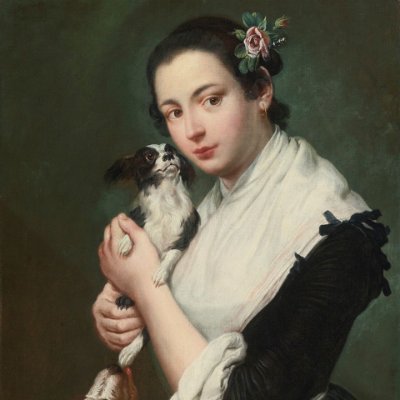
ALT The image on the front cover is Jeremias Schultz, Portrait of a Lady Holding an Orange Blossom, mid-18th century [ca. 1770s]. Purchase, with funds from the European Curatorial Committee, 2020. 2019/2437 Art Gallery of Ontario. This artwork is in the Public Domain. The digital reproduction is provided courtesy of the Art Gallery of Ontario, Toronto, https://ago.ca/collection/portrait-of-a-lady-holding-an-orange-blossom.


ALT Abstract: This essay provides a brief response to a New York Times guest opinion essay entitled “What Makes a Fetus a Person?,” which cites John Locke in the argument to support the overturning of Roe v. Wade. The NYT piece infers the Lockean theory of property as a means of undermining the argument for a person’s right to an abortion. Locke did write about procreation and politics, but only to support his critique of patriarchal autocracy that elides the mother’s personhood in relation to children. The eighteenth century should not be used to bolster twenty-first-century anti-abortion arguments.


ALT DNA Test Reveals Novel 100% That Bitch In modern English, we now cleverly differentiate among novels (long prose fictions), short stories ( ... short prose fictions), and novellas (mid-length prose fictions): novels are the longest. However, as Samuel Johnson’s Dictionary shows, the term “novel” once implied shortness (that is, as compared to the romance genre).9 4 Had you heard? Mary Wollstonecraft Godwin Shelley wrote the first science fiction novel.* *She did not; that was Cavendish.† †It was Lucien, you sad, revisionist footnoters. 5 This is a reference to poet John Keats, to go with the Romanticism note above. 6 The lesser Shelley, of course, would have called them both poets, but Shelley is dead. Long live Shelley. 7 In the immortal words of Terry Eagleton, “A novel is a piece of prose fiction of reasonable length” (The English Novel: An Introduction [Malden: Blackwell, 2004], 1). NB: Eagleton dedicated that tome to Moretti.

ALT Abstract: Whilst others have tried to capture my supposed life in T——m S——y, a spurious work that could not indeed capture the depth nor breadth of my spirit and genius, this work is firstly dedicated to the mute, inglorious academic and/or (un)dead authors longing to be free. This essay understands both author ship and the theory of the novel (... and keywords like Ian Watt and Eighteenth Century and Medical Humanities and Ontology [wait no]) as a credentialing sy$tem, an address for receiving cultural capital (Cha-ChinG!). This exploration—via social media, memes, cultural critique, zombies, and the history of the novel as a subject of study—works inside of and against the fetishization (hubba hubba) of formal realism as the ultimate marker of suc cessful fiction. (With apologies to Rasselas: the novel was, long before we were able to think about it.)

ALT he image on the front cover is a painting by Jeremias Schultz, called Portrait of a Lady Holding an Orange Blossom, mid-18th century [circa 1770s]. A young woman in a turquoise gown embellished wish lace. She wears round, bejewelled earrings and a snug bonnet adorned with blue ribbon. Art Gallery of Ontario. This eighteenth-century artwork is in the Public Domain. The digital reproduction is provided courtesy of the Art Gallery of Ontario, Toronto.

ALT ECF issue for July 2023, volume 35, number 3, table of contents featuring articles: Articles Figuring Jettison in Olaudah Equiano’s The Interesting Narrative by Kevin MacDonnell pages 331–353 and “The Spirit of Contradiction”: Ownership and Irony in Jane Collier’s An Essay on the Art of Ingeniously Tormenting by Phillip James Martinez Cortes pages 355–374 and Intellect versus Politeness: Charlotte Lennox and Women’s Minds by Karenza Sutton-Bennett pages 375-396 as well as three flash-length essays. See ECF online for the list of book reviews published in this Summer 2023 issue.


ALT Esteemed scholar Max Novak, in sun hat featuring embroidered celestial hedgehog.