








Pinned Tweet
OOKC explores how AI, Web3 and tokenized assets become sustainable businesses. Our work connects research, capital strategy, liquidity design and ecosystem development across the Middle East and Asia. We share the questions and evidence that inform that work, from customer demand and market access to the mechanics of issuance and trading.
Founders and institutions are welcome to share a specific challenge, their project stage and the market they are building for through our website ookc.com

For the industry, this incident raises a broader question: what should count as evidence that a platform is safe?
Proof of Reserves, operational security and the ability to absorb losses answer different questions. Evidence of assets does not, on its own, show that withdrawal controls are effective. A promise to cover losses does not tell users when access will be restored.
Institutional due diligence needs to examine the full path from access to asset movement: whether an operational credential can reach withdrawal systems, whether transaction approval is independently enforced, and how much can leave before a control stops it.
Recovery deserves the same scrutiny. Frozen assets are not yet recovered assets. Loss coverage needs to be backed by available resources, while service restoration requires confidence that the attack path has been closed.
Our view: the standard for crypto infrastructure should move beyond reassurance toward verifiable controls, clearly defined loss coverage and tested recovery procedures.
Binance’s investigation remains ongoing. Its eventual post-mortem will be important for understanding what failed and what the wider industry can learn.

Binance's initial investigation suggests that the security incident may involve a compromised DevOps engineer’s laptop, which allowed an attacker to gain access to a service container and submit unauthorized withdrawal transactions. We have found no evidence of any wallet private key leak. We will share a detailed technical post-mortem once the investigation is complete and the facts are fully verified.
The estimated total impact sits at around $6.3B. We have worked with blockchain partners to freeze affected assets, with ~$3 billion frozen on-chain so far.
Binance will cover all losses from the SAFU fund and the company’s funds. User funds are safe. We will also publish an updated Proof of Reserves once the remediation is complete.
As an immediate precaution, Binance has:
- temporarily suspended deposits and withdrawals while security checks are completed;
- revoked the affected address authorisation;
- engaged law enforcement and blockchain intelligence partners to trace and recover funds.
Our teams are working around the clock to resolve this issue safely and thoroughly. We are working closely with our law enforcement partners to confirm the identity of these criminals and bring them to justice.
Please rely only on official Binance channels for updates. Please feel free to contact Binance Customer Support if you have any further questions.
binance.com/en/support/annou…

Tokenisation is moving closer to the machinery of capital markets.
DTCC launched its Tokenization Service on 28 October, with 20 DTC participants signing agreements to access it. The service is integrated with Canton and DTCC’s private Besu network.
The important detail is convertibility: eligible DTC-custodied securities entitlements can move between traditional and tokenised forms while retaining their ownership rights and economic entitlements.
For institutions, the potential value is practical. Securities are not only investments; they also serve as collateral. Making them easier to move and deploy could improve how firms manage liquidity and funding, without requiring them to sell the underlying position.
OOKC’s view: the next competitive advantage in tokenisation may come less from issuing another token and more from connecting assets to the systems where institutions already operate.
The launch establishes infrastructure, not proof of adoption at scale. What matters next is actual usage: assets converted, collateral accepted and measurable improvements in processing time and cost.
dtcc.com/press-releases/2026…

For AI founders, being close to customers can matter as much as being close to capital.
Dubai AI Campus bringing together 500+ companies is worth watching for that reason. The real opportunity is in the connections between them: finding customers, hiring talent and building partnerships that help products reach the market.

حمدان بن محمد: شهدت اليوم انطلاق الدورة الثالثة من «مهرجان دبي للذكاء الاصطناعي»، الذي يجمع أكثر من 20 ألف مشارك من 100 دولة، إلى جانب 150 متحدثاً و500 مستثمر و200 جهة عارضة… واطلعت على إنجازات «كامبس دبي للذكاء الاصطناعي» التابع لمركز دبي المالي العالمي، والتوسعة الجديدة له ضمن «زعبيل ديستريكت»… نجح الكامبس في استقطاب أكثر من 500 شركة متخصصة وجذب استثمارات تجاوزت مليار درهم، محققاً أهدافه قبل عامين من موعدها… واعتمدنا مستهدفات جديدة لاستقطاب أكثر من 1,000 شركة متخصصة بحلول عام 2030… في دبي، وبجهود فرقها، نرفع سقف طموحاتنا ونضع أهدافاً أكبر للمستقبل… الذكاء الاصطناعي سيقود التحولات الكبرى في المشهد العالمي، ونريد لدبي أن تكون في قلب هذه التحولات، وتترك بصمتها الريادية في تشكيل مستقبلها.
Tokenisation is scaling. Distribution is becoming the harder question.
RWA.xyz tracks approximately $14.63B in distributed value across 120 tokenised U.S. Treasury assets as of 27 October 2026. USDY, USYC and BUIDL together account for roughly $6.91B, or 47% of the total.
That concentration raises a question: when multiple products offer exposure to similar underlying assets, what determines where capital goes?
Our view: issuing a token is only the starting point. The more consequential differences are who can access the product, how ownership rights are structured, how subscriptions and redemptions work, and where the token can be used.
For new entrants, a lower fee or another blockchain deployment may not be enough. They need a credible reason for investors to choose their product and keep capital there.
The next stage of tokenisation should be assessed beyond issuance value: redemption reliability, executable liquidity and sustained use matter. A large outstanding balance does not, by itself, demonstrate an active secondary market.

Congratulations to @ADGlobalMarket on 11 years.
Building a financial hub takes more than capital; it takes institutions, talent and lasting relationships. We look forward to the next chapter of Abu Dhabi’s financial ecosystem.

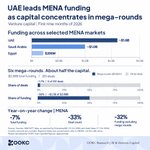
The UAE attracted approximately $1.6B in venture funding in the first nine months of 2026, leading MENA. Across the region, however, just six mega-rounds accounted for roughly half of the $2.98B raised, while deal count fell 33% year on year.
For OOKC, these figures highlight the difference between capital concentration and funding accessibility. For founders considering the UAE, the question is not simply where capital is available, but which investors match their sector, stage and commercial progress.

UAE enterprises are building AI agents, but readiness matters as much as adoption.
For OOKC, the opportunity goes beyond more capable agents: it includes the permissions, audit trails and human oversight that help enterprises deploy them with confidence.

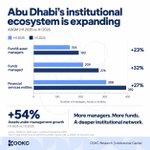
ADGM’s growth is extending beyond assets under management. In H1 2026, fund and asset managers increased to 190, while the number of funds managed from the centre reached 276. AUM grew 54% year-on-year.
For founders exploring the UAE, this means a broader network of potential investors and financial partners to understand. The practical question is which institutions match a project’s sector, stage and capital needs. A larger ecosystem creates more possibilities, but finding the right fit remains essential.

For teams preparing to enter Dubai’s virtual asset market, governance needs to work beyond the application documents. Who approves a new activity, who independently reviews the risks, and who handles escalation when something goes wrong?
Clear responsibilities and separation of duties help turn a business plan into an operating model that partners can assess and trust.

Strong governance starts with clear accountability.
From defined reporting lines and appropriately qualified individuals to separation of duties and effective oversight, governance arrangements should demonstrate how responsibility and decision-making work in practice.
This edition of VARA Licensing 101 looks at the foundations of a robust, Dubai-ready governance and control framework.
#VARA
As AI agents take on financial tasks, identity and authorisation need to be considered together. Proof of a human behind an agent is a useful layer; institutions also need clear permissions, transaction limits and revocation controls.
This is where AI adoption becomes an operational question.

In 2024, an employee at engineering firm Arup transferred $25.6 million after joining a video call where every other participant was a deepfake. Since then, AI has advanced significantly and is making impersonation increasingly convincing, causing challenges for financial institutions in particular. As autonomous agents begin handling more financial activity on behalf of people, establishing an added layer of trust and security behind a transaction or sensitive conversation is becoming an urgent need.
Introducing @world_id for banking and finance, a suite of technologies that helps institutions establish trust through privacy-preserving cryptographic Proofs. World ID for Zoom lets meeting participants confirm they are the same Orb-verified human connected to their account, while World ID for agents allows AI agents to carry Proofs delegated by people. Bain Capital, OpenExchange, Outtake, Pantera Capital, and VanEck Funds are initial design partners, bringing World ID into some of finance's most consequential interactions.
fortune.com/2026/10/18/zoom-…

The UAE attracted 93% of MENA’s funding for AI and AI-enabled companies in H1 2026, across 28 of the region’s 53 deals, according to MAGNiTT. Its share of capital was substantially larger than its share of transactions, highlighting its position as a regional centre for AI investment.
For OOKC, this makes the UAE a market worth examining closely, not a guarantee that funding is easy to secure. For founders, the practical question is how to connect that capital with customers, distribution and the right partners to build a sustainable business.

OOKC retweeted

Our Managing Director and Vice Chairperson, Deepa Raja Carbon, recently joined @TOKEN2049 Singapore for a panel discussion on regulatory clarity across increasingly interconnected virtual asset markets, alongside a fireside chat exploring “Why Dubai Wins.”
Across both sessions, Deepa reflected on a central challenge for regulators: how to provide enough clarity to build market confidence, while retaining the agility to respond as technologies, business models and risks continue to evolve.
She also shared VARA’s perspective on the next phase of market development - from greater convergence between traditional and decentralised finance to cross-border interoperability, real-time risk management and the institutional infrastructure needed to support responsible scale.
Many thanks to Henri Arslanian for moderating the session, and to fellow panellists Brian Quintenz, Jake Chervinsky and Arjun Sethi for the insightful discussion.
#VARA #TOKEN2049


For AI founders, testing a product also means testing its operating assumptions: what data it can use, which decisions it can make, and where human oversight is needed.
These are useful questions to bring into conversations with regulators before scaling.

That’s a wrap on AI Everything Abu Dhabi. 🎬
Over three days at our booth, the Sandbox Dubai team connected with founders, builders, and regulators to discuss which AI use cases they want to test and the regulatory uncertainties they’re facing.
Jan Neutze, Director of Sandbox Dubai, took the stage to share how we’re approaching AI: testing real solutions against existing frameworks rather than adding new layers of regulation, while working with regulators and industry to develop clearer guidance.
Sultan Al Raeesi, Head of Operations, also joined the judging panel for the Supernova Challenge, where early-stage AI startups pitched live to leading AI executives and investors for an equity-free prize.
More updates on Sandbox Dubai’s AI work soon. 👀
#SandboxDubai #DubaiFuture #AIEverything #SupernovaChallenge #AI #RegulatoryInnovation
Standard Chartered’s new crypto offering for eligible wealth clients in the UAE puts access inside an existing banking relationship.
For OOKC, the interesting question is how this changes distribution. A client who can buy digital assets through their bank may have less reason to open a separate exchange account. Crypto-native platforms will need to give that client a clear reason to choose them: deeper liquidity, broader functionality or a better experience.
Banking access and onchain access are not the same. The opportunity lies in understanding which customers need each, and building accordingly.

We’ve launched a cryptocurrency trading solution for affluent clients in the UAE, marking a global first for Standard Chartered and the first offering of its kind by an international bank in the UAE.
Regulated by VARA, eligible clients can now buy and sell Bitcoin (BTC) and Ether (ETH) directly through their existing Standard Chartered bank accounts, with institutional-grade custody and settlement managed within our ecosystem.
Read the full announcement: sc.com/en/press-release/stan…
Coinbase’s fraud-detection case highlights a question worth asking when evaluating AI companies: what can the team improve that is not available through the same model API everyone else uses?
For OOKC, proprietary data becomes more valuable when it feeds a repeatable process: measuring errors, learning from verified outcomes and improving performance on a specific task. This case illustrates that approach, though its results remain specific to Coinbase’s fraud-detection setting.
coinbase.com/blog/part-three…

For AI founders, access to a real service problem can be as valuable as access to capital.
Dubai’s agentic AI initiative offers a practical direction: building around government workflows, where integration, security and clear accountability matter alongside model capability.
مرحلة جديدة في تطوير الخدمات الحكومية تبدأ اليوم.
يُطلق مختبر دبي لنماذج الخدمات الحكومية المستقلة، التابع لمركز دبي لاستخدامات الذكاء الاصطناعي، برنامجاً جديداً يمكّن الجهات الحكومية في دبي من تحويل تحديات الخدمات إلى نماذج خدمات مستقلة، قابلة للتطبيق خلال أسابيع.
باب التقديم مفتوح الآن أمام الجهات الحكومية في دبي.
قدموا الآن: dubaifuture.ae/dcai-accelera…
زوروا موقعنا الإلكتروني للمزيد:
dubaifuture.ae/dcai-accelera…
#مركز_دبي_لاستخدامات_الذكاء_الاصطناعي #دبي_للمستقبل
An AI pilot can demonstrate capability. A renewal tests whether that capability is worth paying for.
For OOKC, the useful question is what happens after the demo: once human review, exception handling and integration costs are included, does the product still improve the customer’s workflow? Faster output alone is not enough if employees spend the time saved checking results or correcting errors.
The stronger case for renewal is measurable: less time to complete a task, consistent quality and a total cost the customer can justify. For founders, building the product and building the evidence for that decision should happen together.

For OOKC, meaningful AI progress should be visible in everyday outcomes: less time spent on paperwork, faster access to services and fewer errors in routine work.
Building around these needs gives founders a clearer basis for product decisions and customers a concrete reason to adopt.


The UAE’s second-place ranking in Henley’s 2026 Crypto Adoption Index is a useful signal for founders evaluating where to build.
OOKC’s focus is on what follows: access to banking, suitable licensing pathways and commercial partners. These are the practical conditions that help turn a regional presence into a functioning business.
The UAE has risen to second place globally in the Henley Crypto Adoption Index 2026, highlighting its growing position within the global virtual asset landscape.
As the global virtual asset market matures, competitiveness increasingly depends on more than adoption alone. Clear regulation, strong infrastructure and an environment that enables responsible innovation are becoming important foundations for sustainable growth.
Dubai continues to contribute to this progress through a dedicated regulatory framework designed to support a trusted, resilient and globally competitive virtual asset ecosystem.
#VARA
For investment advisers and funds, custody is part of the investment decision, not an administrative afterthought. The SEC’s proposal could broaden how crypto assets are held.
OOKC will be watching the conditions attached to those options, particularly around asset control, verification and accountability. This remains a proposal, not a final rule.

