

I direct cinematic AI videos, brand films & UGC avatars. Here I share finished work, behind-the-scenes decisions and useful experiments.
Joined February 2026
- Tweets1.1K
- Following255
- Followers477
- Likes2.1K
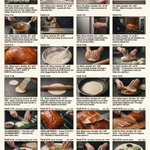






This Peking duck never saw an oven.
I built the entire 30-second cooking sequence with AI, right down to the glossy skin, thin pancakes, and final wrap.
Full prompt below.👇
SCENE 1 (0 to 10s) — Peking Duck: preparation becomes lacquered skin.
SHOT STRUCTURE:
Exactly 10 shots, 10 seconds total, vertical 9:16, exactly as listed, no added shots. Cooking, drying and draining intervals are compressed through editorial cuts.
REFS:
@Image1 = supplied Peking Duck storyboard. Use panels 1–10 for action order, kitchen, chef clothing, utensils and food appearance only. Follow the intended actions in the captions where the pictures differ. Render moving photographic scenes, without the storyboard grid, printed text, header or flag.
GLOBAL STYLE NOTES:
lighting_philosophy: Soft diffused side-back key from camera left, gentle fill from camera right, a restrained rim illuminating steam. Localized light on active workstations; the working kitchen remains subdued behind them. Open soft shadows and low contrast.
color_grade: Cinematic 35mm film still translated into motion, Kodak film stock, natural film grain, filmic color grade, neutral filmic blacks, natural skin, filmic midtones, neutral highlights, soft white roll-off, low-medium saturation, film-neutral tones.
setting: Professional Beijing restaurant kitchen during evening preparation. Stainless steel counters, opaque high-sided prep basin, refrigerated drying cabinet and controlled electric oven. Uncooked poultry stays fully concealed behind opaque equipment. Oven framing conceals the whole roast; visible food details are tightly cropped.
ambience: Quiet ventilation with close, synchronized kitchen Foley: paper movement, air hiss, water, simmering glaze, cabinet contact and roasting crackle.
characters:
character_1: Chef with the reference's dark Mandarin-collar jacket; hands and forearms perform precise cooking actions.
character_2: Background kitchen brigade in dark uniforms, softly out of focus.
camera_character: f/4, shallow depth of field, clean subject separation, anamorphic lens character and oval bokeh. Hazy atmosphere, subtle volumetric light and visible light in air. Use asymmetric rule-of-thirds framing, purposeful foreground layering and restrained camera movements. Every camera position is elevated or lowered; avoid eye-level elevation and frontal azimuth.
SEQUENCE LIST:
SHOT 1 (0.0 to 0.7s)
first_frame: Chef's hands and folded kitchen paper above an opaque prep basin; small ingredient bowls occupy the lower-left third.
camera: CU, elevation +35°, azimuth 45° three-quarter.
lens: 65mm, f/4.
camera_motion: Quick controlled push-in.
action_visual: Hands pat the concealed prepared duck dry below the basin rim. Paper compresses and rustles; ingredients establish maltose, vinegar, Shaoxing wine, salt and five-spice.
(CUT TO)
SHOT 2 (0.7 to 1.4s)
camera: ECU, elevation +25°, azimuth 90° profile.
lens: 100mm macro, f/4.
camera_motion: Short lateral slide.
action_visual: The chef operates a food-safe air pump to separate skin from flesh. The nozzle contact and poultry remain hidden below the opaque rim; a brief air hiss punctuates the movement.
(CUT TO)
SHOT 3 (1.4 to 2.1s)
camera: Macro CU, elevation +45°, azimuth 135° rear three-quarter.
lens: 85mm, f/4.
camera_motion: Follow the spoon diagonally.
action_visual: A spoon carrying premixed five-spice, salt and sugar descends behind the basin rim to season the concealed cavity. Fine grains shift audibly.
(CUT TO)
SHOT 4 (2.1 to 3.1s)
camera: CU, elevation +30°, azimuth 45°.
lens: 65mm, f/4.
camera_motion: Track the ladle's pouring arc.
action_visual: Boiling water pours onto the concealed exterior; backlit steam rises above the basin. The following cut skips the required 30-minute draining interval.
(CUT TO)
SHOT 5 (3.1 to 4.1s)
camera: ECU, elevation +50°, azimuth 90°.
lens: 100mm macro, f/4.
camera_motion: Small orbit around the saucepan.
action_visual: After draining, stir a dilute glaze made from 3 tablespoons maltose, 500ml water, 2 tablespoons red vinegar and 2 tablespoons Shaoxing wine. It reaches a gentle boil; a thin amber ribbon runs from the spoon.
(MATCH CUT TO)
SHOT 6 (4.1 to 5.0s)
camera: CU, elevation +35°, azimuth 90°.
lens: 85mm, f/4.
camera_motion: Gentle downward tilt following the stream.
action_visual: Ladle the hot, fluid glaze onto the concealed poultry below the rim. Excess drains away; the last thin drip catches the side light.
(CUT TO)
SHOT 7 (5.0 to 5.7s)
camera: MCU, elevation +25°, azimuth 135°.
lens: 50mm, f/4.
camera_motion: Brief pull-back.
action_visual: Close an opaque refrigerated airflow cabinet containing the concealed prepared duck. The next cut advances past 24 hours of refrigerated drying. A firm door seal ends the preparation rhythm.
(CUT TO)
SHOT 8 (5.7 to 6.5s)
camera: CU, elevation −15°, azimuth 135°.
lens: 65mm, f/4.
camera_motion: Track the supporting tray toward the oven.
action_visual: After drying, guide the roast into the controlled oven. The door jamb and tight crop conceal its body. Begin the first roasting stage at 120°C for approximately 60 minutes; the next cut skips elapsed cooking time.
(CUT TO)
SHOT 9 (6.5 to 8.0s)
camera: ECU, elevation +25°, azimuth 90°.
lens: 100mm macro, f/4.
camera_motion: Almost locked, with a subtle forward creep.
action_visual: Show only a small surface of browned skin during the finishing stage at 200°C for approximately 15 minutes. Tiny fat bubbles shimmer beneath a thin mahogany glaze; restrained roasting crackle emphasizes crispness.
(CUT TO)
SHOT 10 (8.0 to 10.0s)
camera: Macro CU, elevation +65°, azimuth 45°.
lens: 85mm, f/4.
camera_motion: Short diagonal drift across the bowl.
action_visual: In a heatproof bowl, pour 160ml boiling water into 200g plain flour with a pinch of salt. A rigid heat-resistant spatula immediately folds the mixture into moist shaggy clumps. End on the pale dough gathering around the spatula, establishing the dough for the next clip.
SCENE 2 (0 to 10s) — Peking Duck: dough becomes delicate Mandarin pancakes.
SHOT STRUCTURE:
Exactly 8 shots, 10 seconds total, vertical 9:16, exactly as listed, no added shots. Continue the previous clip's food and prop continuity. Kneading, resting and pancake cooking time are compressed through editorial cuts.
REFS:
@Image1 = the original Peking Duck storyboard. Use the photographic content of panels 11–18 for cooking actions, dough states, utensils, kitchen and chef clothing only. Ignore all typography, diagrams, annotations and layout surrounding the photographs. The screenshot showing unwanted graphics is diagnostic material, not a visual reference.
GLOBAL STYLE NOTES:
lighting_philosophy: Soft diffused side-back key from camera left, generous gentle fill from camera right, subtle rim light on thin pancake edges. Localized workstation light with a subdued restaurant background, open soft shadows and low contrast.
color_grade: Cinematic 35mm film still translated into motion, Kodak film stock, natural film grain, filmic color grade, neutral filmic blacks, natural skin, filmic midtones, neutral highlights, soft white roll-off, low-medium saturation, film-neutral tones.
setting: The same professional Beijing restaurant kitchen. Clean dough counter, rolling pin, oil brush, dry skillet, cooked-food station and controlled oven. Raw discs, paired uncooked rounds and cooked pancakes remain visibly distinct. Whole poultry stays outside the framing. Deliver clean photographic footage containing physical kitchen objects only. No superimposed text, floating numbers, camera readouts, angle diagrams, measurement scales, HUD graphics, arrows or annotation strokes. All shot timings, lens specifications and camera directions below are production instructions only and must never appear visually.
ambience: Close dough folds, bench scraper taps, brush strokes, rolling-pin friction, light skillet hiss, delicate pancake peeling, knife taps and a thermometer beep over quiet ventilation.
characters:
character_1: The same chef in the reference's dark Mandarin-collar jacket, visible through working hands and forearms.
character_2: Background kitchen brigade in dark uniforms, softly out of focus.
camera_character: f/4, shallow depth of field, clean subject separation, anamorphic lens character, oval bokeh, hazy atmosphere, subtle volumetric light and visible light in air. Rule-of-thirds compositions with restrained foreground layering. Camera positions are described verbally and executed physically. Use elevated oblique views, side profiles, rear three-quarter views and one lowered three-quarter detail. Preserve natural hands, stable utensils and consistent food proportions.
SEQUENCE LIST:
SHOT 1 (0.0 to 1.4s)
first_frame: The preceding clip's pale dough, now cool enough to handle, rests on the clean counter beneath the chef's hands. The upper background contains only softly blurred kitchen surfaces and the chef's jacket.
camera: Close-up from an elevated side profile, looking diagonally down onto the hands and dough.
lens: 65mm, f/4.
camera_motion: Slow push-in following a fold.
action_visual: Press and fold the cooled dough into a smooth ball. Show a representative kneading movement; the following cut advances past approximately 8 minutes of kneading and at least 1 hour of covered resting. The dough remains firmly against the counter as the palms press it.
(CUT TO)
SHOT 2 (1.4 to 2.6s)
camera: Close-up from a higher rear three-quarter position, looking down across the dough cylinder.
lens: 65mm, f/4.
camera_motion: Short track beside the bench scraper.
action_visual: Divide the rested dough cylinder into 12 equal portions. Show the scraper separating the final portions beside already rounded pieces; flatten the portions into small raw discs. Each cut physically separates the dough on the counter.
(CUT TO)
SHOT 3 (2.6 to 3.8s)
camera: Macro close-up from an elevated three-quarter position, looking down at the two raw discs.
lens: 100mm macro, f/4.
camera_motion: Locked detail framing.
action_visual: Brush a light film of oil onto one small raw dough disc. Place exactly one second raw disc over it, aligning their edges. The pair remains pale and uncooked, resting flat on the counter.
(MATCH CUT TO)
SHOT 4 (3.8 to 5.0s)
camera: Close-up from an elevated rear three-quarter position, looking diagonally along the rolling pin.
lens: 65mm, f/4.
camera_motion: Slide parallel to the rolling pin.
action_visual: Roll the two-disc pair into a thin round approximately 18cm across, turning it between strokes. Both raw layers remain aligned; the dough stretches physically beneath the pin while staying supported by the work surface.
(CUT TO)
SHOT 5 (5.0 to 6.5s)
camera: Macro close-up from an elevated three-quarter position beside the skillet, looking down into the pan.
lens: 85mm, f/4.
camera_motion: Gentle push toward the rising pancake.
action_visual: The paired round gently puffs in a dry skillet over medium-low heat. Begin on its first side already cooked for 30–45 seconds, then flip it once with a spatula supporting its underside. The second side cooks approximately 30 seconds before the next cut; the surface stays pale with faint brown freckles.
(CUT TO)
SHOT 6 (6.5 to 7.8s)
camera: Extreme close-up from below the raised hands, looking slightly upward from a three-quarter position at the pancake seam.
lens: 100mm macro, f/4.
camera_motion: Slight pull-back as the layers open.
action_visual: After brief cooling, hands gently peel the two cooked layers apart along their seam while still warm. Each hand supports one layer; rim light reveals their thinness. Place them beneath a clean cloth to remain soft.
(CUT TO)
SHOT 7 (7.8 to 8.8s)
camera: Close-up from a high side profile, looking diagonally down across the cutting board.
lens: 65mm, f/4.
camera_motion: Short lateral track along the knife.
action_visual: Finish cutting cucumber and scallion whites into fine strips beside a small bowl of prepared tianmianjiang sweet wheat sauce. The guiding hand stays behind the blade; crisp knife taps accelerate the serving rhythm.
(CUT TO)
SHOT 8 (8.8 to 10.0s)
camera: Extreme close-up from an elevated three-quarter position, looking down at the probe's contact with the cooked meat.
lens: 100mm macro, f/4.
camera_motion: Locked close detail.
action_visual: At the oven station, insert an instant-read probe into a tightly cropped cooked section. Confirm at least 74°C/165°F internally in the required thick areas before removal. The thermometer remains a physical handheld utensil; its reading is never enlarged or superimposed on the picture. Only mahogany skin, the probe, supporting rack and the chef's hand are visible. End with the fully cooked roast ready for immediate skin carving in the next clip.
SCENE 3 (0 to 10s) — Peking Duck: crisp carving resolves into an elegant plated service.
SHOT STRUCTURE:
Exactly 6 shots, 10 seconds total, vertical 9:16, exactly as listed, no added shots. Continue immediately after the preceding clip's doneness check. Reserve the final 3 seconds for the completed plated dish.
REFS:
@Image1 = supplied Peking Duck storyboard. Use panels 19–24 for carving, cooked meat, pancake filling, ivory plate, accompaniments and final presentation only. Preserve the preceding clips' chef, kitchen and food appearance. Render photographic video without storyboard borders, captions, title or flag.
GLOBAL STYLE NOTES:
lighting_philosophy: Soft diffused side-back key from camera left, gentle right-side fill, a restrained rim catching crisp skin and the pancake edge. Localized serving-counter light; the restaurant kitchen stays subdued behind the plate. Open soft shadows and low contrast.
color_grade: Cinematic 35mm film still translated into motion, Kodak film stock, natural film grain, filmic color grade, neutral filmic blacks, natural skin, filmic midtones, neutral highlights, soft white roll-off, low-medium saturation, film-neutral tones. Preserve the contrast between mahogany skin, moist meat, pale pancakes and fresh green vegetables.
setting: The same professional Beijing restaurant kitchen and clean serving station. Tightly cropped cooked duck details, carving board, ivory porcelain plate, warm pancakes, cucumber, scallion whites and tianmianjiang sauce. The whole bird remains outside the frame.
ambience: Detailed dry skin crackle, clean slicing, quiet tong and porcelain contact, soft pancake folding and subdued ventilation.
characters:
character_1: The same chef in the dark Mandarin-collar jacket; precise hands and forearms carve, arrange and fold.
character_2: Background kitchen brigade in dark uniforms, softly out of focus.
camera_character: f/4, shallow depth of field, clean subject separation, anamorphic lens character and oval bokeh. Hazy atmosphere, restrained volumetric light and visible light in air. Asymmetric rule-of-thirds framing with selective blurred foreground. Elevated viewpoints and three-quarter or profile azimuths; avoid eye-level and frontal framing.
SEQUENCE LIST:
SHOT 1 (0.0 to 1.2s)
first_frame: Fully cooked mahogany skin occupies the right third; a sharp carving knife approaches from the upper-left edge.
camera: ECU, elevation +30°, azimuth 90° profile.
lens: 100mm macro, f/4.
camera_motion: Tight controlled push-in.
action_visual: Immediately after oven removal, slide the blade beneath the crisp skin and lift a thin shard before trapped steam softens it. A dry crackle marks the separation; the roast's body stays outside the crop.
(CUT TO)
SHOT 2 (1.2 to 2.5s)
camera: Macro CU, elevation +40°, azimuth 45°.
lens: 85mm, f/4.
camera_motion: Short lateral move following the knife.
action_visual: Carve fine cooked meat portions for wrapping. The blade moves through the meat cleanly; moist interiors catch the soft light as slices fall into a neat row.
(CUT TO)
SHOT 3 (2.5 to 3.6s)
camera: CU, elevation +60°, azimuth 135° rear three-quarter.
lens: 65mm, f/4.
camera_motion: Diagonal slider move toward the plate.
action_visual: Tongs arrange cooked meat slices in a compact fan on ivory porcelain. Place crisp skin separately so its texture remains readable. A sauce bowl creates a soft foreground layer without obscuring the plating.
(CUT TO)
SHOT 4 (3.6 to 5.5s)
camera: Macro CU, elevation +65°, azimuth 45°.
lens: 85mm, f/4.
camera_motion: Gentle push toward the filling.
action_visual: Spread a small smear of tianmianjiang onto one open warm pancake. Place a modest cooked duck portion over it, then align cucumber and scallion strips along the center. Keep the filling compact enough for a clean fold; each ingredient is placed by the chef's hands.
(CUT TO)
SHOT 5 (5.5 to 7.0s)
camera: CU, elevation +35°, azimuth 90°.
lens: 65mm, f/4.
camera_motion: Small restrained arc following the fold.
action_visual: Fold the pancake's bottom upward, then bring the sides inward. Place the neat roll beside the plated duck with its open end revealing the filling. The chef's hands withdraw completely as the plate settles.
(MATCH CUT TO)
SHOT 6 (7.0 to 10.0s)
first_frame: The finished ivory plate is fully visible on the right third: a cooked meat fan, separate crisp skin, one folded filled pancake, cucumber and scallion strips, and a small sauce dish. Warm spare pancakes sit behind it.
camera: Hero CU, elevation +30°, azimuth 45° three-quarter.
lens: 65mm, f/4.
camera_motion: Almost imperceptible push-in from 7.0 to 8.0 seconds; locked-off hold from 8.0 to 10.0 seconds.
action_visual: Hold the completed service unobstructed. Soft side light reveals crisp skin, moist meat and the delicate pancake fold. Background chefs remain subdued in oval bokeh; kitchen ambience recedes while the finished plate stays perfectly still.

One soldier. A field of robots. Then the sky joins in.
I built this AI sequence around the reveal: from one controller to a full formation on the ground and overhead.
Full prompt below.👇
One soldier. A field of robots. Then the sky joins in.
I built this AI sequence around the reveal: from one controller to a full formation on the ground and overhead.
Full prompt below.
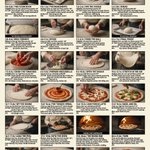
I made a pizza I can't eat. Now I'm hungry.
A 29-second AI Margherita film, from kneading the dough to that final cheese pull.
Full prompt below 👇if you want to make yourself hungry too.
SHOT STRUCTURE: 8 shots, exactly 10 seconds, vertical 9:16. Part 1 of a continuous 30-second Neapolitan Pizza Margherita film.
REF:
Use the attached storyboard only as visual guidance for panels 01–08: chef, wardrobe, kitchen, ingredients, lighting and actions. Generate full-screen photorealistic live-action footage. Storyboard grid, headings, flag, borders and captions must not appear in the video.
GLOBAL STYLE:
Cinematic 35mm film still aesthetic in motion, Kodak film stock, natural film grain, filmic color grade, soft cinematic lighting, shallow depth of field, f/4, clean subject separation, anamorphic lens aesthetic, oval bokeh, Black Pro-Mist diffusion, restrained halated highlights, cinematic haze, 85mm compressed perspective, macro-compatible close-ups, soft key with rim, generous fill, 2:1 lighting ratio, open gentle shadows, gradual light falloff, neutral filmic blacks, natural skin, filmic midtones, soft white roll-off, low-medium saturation, film-neutral tones.
SETTING:
Professional Neapolitan pizzeria during evening service. Pale stone counter, stainless bowls and wooden proofing trays. The same pizzaiolo throughout, wearing a cream jacket with rolled sleeves and a charcoal apron. Hands and forearms dominate; background staff remain softly defocused.
CAMERA:
Elevated three-quarter, rear three-quarter, profile and clearly upward-looking low angles. Asymmetrical rule-of-thirds composition. No eye-level or head-on shots. Stable cinematic motion, no wide-angle distortion.
CONTINUITY:
The dough contains flour, water, salt and yeast. Fermentation occurs through an editorial time jump between shots. Preserve realistic dough weight, elasticity and hand contact. No completed pizza appears.
AUDIO:
Close cooking ASMR and quiet pizzeria ambience. No dialogue, voiceover, music or on-screen text.
SEQUENCE:
SHOT 1 | 0.0–1.0s | FLOUR HOOK
camera: extreme macro close-up, low upward three-quarter 45°.
camera_motion: fast restrained push-in.
action_visual: a measured scoop releases flour into a stainless mixing bowl. Individual particles cascade through the soft rim light and form a small luminous cloud.
sound: fine flour hiss and light bowl contact.
exit: cut as the flour reaches the bowl.
SHOT 2 | 1.0–2.0s | INGREDIENTS
camera: medium close-up, elevated rear three-quarter 135°.
camera_motion: short diagonal slider move.
action_visual: the chef slides in flour, water, salt, yeast, tomatoes, drained mozzarella, basil and olive oil, all neatly separated.
sound: tray and ceramic contact.
exit: cut as the tray stops.
SHOT 3 | 2.0–3.2s | MIX
camera: close-up, elevated three-quarter 45°.
camera_motion: gentle arc around the bowl.
action_visual: fingers draw flour into measured water and gather the ingredients into rough shaggy dough. The movement stays continuous and physically coherent.
sound: wet mixing and bowl scraping.
exit: cut on the gathering hand.
SHOT 4 | 3.2–4.5s | KNEAD
camera: detail close-up, elevated profile 90°.
camera_motion: short lateral track synchronized with the hand.
action_visual: the heel of the hand pushes the dough forward; fingers fold it back. Repeat one complete kneading cycle as the surface becomes cohesive.
sound: soft dough compression against stone.
exit: cut at the end of the fold.
SHOT 5 | 4.5–5.7s | FERMENTED DOUGH
camera: medium close-up, elevated three-quarter 45°.
camera_motion: tilt upward with the container lid.
action_visual: clear editorial time jump to expanded fermented dough. The lifted lid reveals a relaxed aerated surface with small natural bubbles.
sound: lid release and quiet kitchen ambience.
exit: direct cut.
SHOT 6 | 5.7–6.9s | DIVIDE
camera: close-up, high rear three-quarter 135°.
camera_motion: locked camera.
action_visual: a bench scraper makes one clean downward cut, separating a measured dough portion from the fermented mass.
sound: dough separation and scraper tap.
exit: cut on metal contact.
SHOT 7 | 6.9–8.2s | FORM THE BALL
camera: close-up, elevated three-quarter 45°.
camera_motion: small curved track around the hands.
action_visual: cupped hands tuck the dough underneath while rotating it against the counter, forming a smooth ball with gentle surface tension.
sound: soft friction against stone.
exit: cut on the final tuck.
SHOT 8 | 8.2–10.0s | FINAL PROOF
camera: medium close-up, high rear three-quarter 135°.
camera_motion: controlled push-in followed by a slight upward tilt.
action_visual: after a second editorial time jump, a scraper gently releases the soft proofed dough ball from its tray. The underside stretches naturally for a moment before separating. Finish on the intact relaxed dough ball in the chef’s hands.
sound: tray contact and delicate dough release.
SHOT STRUCTURE: 8 shots, exactly 10 seconds, vertical 9:16. Part 2 of the same Neapolitan Pizza Margherita film.
REF:
Use the attached storyboard as visual guidance for panels 09–16. Match the chef, cream jacket, charcoal apron, pale stone counter, ingredients and lighting from Part 1. Generate full-screen photorealistic live-action footage. Exclude the storyboard layout, text, flag and borders.
GLOBAL STYLE:
Cinematic 35mm film still aesthetic in motion, Kodak film stock, natural film grain, filmic color grade, soft cinematic lighting, shallow depth of field, f/4, clean subject separation, anamorphic lens aesthetic, oval bokeh, Black Pro-Mist diffusion, restrained highlight halation, atmospheric haze, 85mm compressed perspective, detailed macro inserts, soft key with rim, generous fill, 2:1 lighting ratio, open shadows, gradual luminous falloff, neutral filmic blacks, natural skin, soft highlights, low-medium saturation, film-neutral tones.
LIGHTING:
Large soft side key across the preparation counter, gentle fill from the opposite side and subtle rear light revealing flour and dough edges. Natural tomato red, creamy mozzarella and muted basil green.
CAMERA:
Use elevated three-quarter, rear three-quarter, profile and low upward angles. Rule-of-thirds compositions with purposeful foreground depth. No eye-level or frontal views.
CONTINUITY:
Use one proofed dough ball from Part 1. Maintain the same irregular airy rim and approximately 28–30 cm diameter once stretched. The chef preserves gas in the rim. Mozzarella is well drained and added in moderate quantities. Toppings remain in consistent positions.
AUDIO:
Food preparation sounds and subdued pizzeria ambience only. No dialogue, voiceover, music, subtitles or graphic text.
SEQUENCE:
SHOT 1 | 0.0–1.0s | CRUSH THE TOMATOES
camera: extreme close-up, elevated three-quarter 45°.
camera_motion: locked macro.
action_visual: fingertips gently crush peeled tomatoes in a ceramic bowl. The sauce remains fresh and textured; a small pinch of salt lands on the surface.
sound: moist tomato crushing and light ceramic contact.
exit: cut on the last falling salt grains.
SHOT 2 | 1.0–2.0s | PREPARE MOZZARELLA
camera: detail close-up, elevated profile 90°.
camera_motion: tiny push-in.
action_visual: the chef separates well-drained fior di latte into short strips over a strainer. Fine milk fibres stretch briefly and separate.
sound: delicate cheese tearing and strainer tap.
exit: cut on separation.
SHOT 3 | 2.0–3.3s | OPEN THE DOUGH
camera: close-up, high three-quarter 45°.
camera_motion: short overhead drift following the hands.
action_visual: fingertips press the centre of the proofed dough outward in a circular rhythm. Gas moves toward the untouched outer edge, leaving a visibly thicker rim.
sound: soft rhythmic fingertip contact.
exit: cut as the hands reach the rim.
SHOT 4 | 3.3–5.0s | STRETCH IN THE AIR
camera: medium close-up, low upward three-quarter 45°.
camera_motion: gentle upward track followed by a small arc.
action_visual: the chef lifts the dough across the backs of both hands and performs one controlled rotation. Gravity stretches the thin centre while both hands continuously support it and the rim remains thicker.
sound: soft dough movement and faint falling flour.
exit: cut during the final supported rotation.
PHYSICS: no high toss, no free-spinning disc, no tearing or changing shape.
SHOT 5 | 5.0–5.9s | SET THE ROUND
camera: close-up, elevated rear three-quarter 135°.
camera_motion: tilt downward with the dough.
action_visual: the stretched disc settles onto the lightly floured stone counter. Fingertips gently correct one edge without compressing the rim.
sound: soft landing and light flour brushing.
exit: cut on the final adjustment.
SHOT 6 | 5.9–7.4s | TOMATO SPIRAL
camera: close-up, high three-quarter 45°, whole dough disc readable.
camera_motion: controlled clockwise arc.
action_visual: the back of a ladle spreads crushed tomato from the centre outward in one clearly visible widening spiral, stopping before the raised rim.
sound: thick sauce gliding across dough.
exit: cut when the spiral is complete.
SHOT 7 | 7.4–8.7s | FIOR DI LATTE
camera: macro close-up, elevated profile 90°.
camera_motion: short lateral slide.
action_visual: fingertips distribute mozzarella strips across the sauce, leaving visible red spaces. Show two deliberate placements and the final release.
sound: soft moist cheese contact.
exit: cut as the last strip lands.
SHOT 8 | 8.7–10.0s | BASIL AND OLIVE OIL
camera: close-up, high rear three-quarter 135°.
camera_motion: slow micro push-in.
action_visual: fresh basil leaves are placed between the mozzarella pieces. A fine thread of extra-virgin olive oil traces one loose circle over the pizza and catches the soft light. Finish on the fully topped raw pizza.
sound: subtle leaf contact and quiet oil pour.
SHOT STRUCTURE: 8 shots, exactly 10 seconds, vertical 9:16. Part 3 and final sequence of the Neapolitan Pizza Margherita film.
REF:
Use the attached storyboard as visual guidance for panels 17–24. Preserve the same chef, pizza, topping arrangement, pizzeria and wood-fired oven from Parts 1 and 2. Generate full-screen photorealistic live-action footage. Do not reproduce storyboard captions, flag, borders or grid.
GLOBAL STYLE:
Cinematic 35mm film still aesthetic in motion, Kodak film stock, natural film grain, filmic color grade, soft cinematic lighting, shallow depth of field, f/4, clean subject separation, anamorphic lens aesthetic, oval bokeh, Black Pro-Mist diffusion, restrained halated highlights, cinematic oven haze, 85mm compressed perspective, macro food detail, neutral filmic blacks, natural skin, filmic midtones, soft highlight roll-off, low-medium saturation, film-neutral tones.
LIGHTING:
Inside the oven, amber flame is the motivated key, balanced by soft ambient kitchen fill. Gentle halation around embers, preserved flame detail and open crust shadows. At the plating counter, return to a wide soft side key with subtle rear rim on steam.
CAMERA:
Elevated three-quarter, rear three-quarter and oblique profile angles. Low views must look upward. No eye-level or frontal compositions. Keep the oven and hand geography consistent.
CONTINUITY AND PHYSICS:
The same 28–30 cm pizza continues from Part 2. Bake directly on the oven floor beside the flame. The crust expands progressively through time-compressed cooking. Maintain the tomato spiral and mozzarella positions as they soften. Use one ivory serving plate. The cheese pull consists of several short, soft fresh-mozzarella strands. After the pull, return the same wedge slightly offset to the plate for the final shot.
AUDIO:
Peel scrape, fire crackle, crust sounds and quiet restaurant ambience. No speech, voiceover, music or on-screen text.
SEQUENCE:
SHOT 1 | 0.0–0.9s | LOAD THE PEEL
camera: medium close-up, elevated profile 90°.
camera_motion: lateral track with the peel.
action_visual: the chef slides a lightly dusted peel beneath the dressed pizza and performs one short controlled shake, confirming that the base moves freely.
sound: dry peel scrape and wooden handle movement.
exit: cut as the pizza settles on the peel.
SHOT 2 | 0.9–2.0s | INTO THE FIRE
camera: medium close-up, high rear three-quarter 135° over the chef’s forearms.
camera_motion: short forward push toward the oven mouth.
action_visual: the peel enters the hot domed oven and releases the pizza onto the stone floor beside the flame. It withdraws without shifting the toppings.
sound: peel sliding over stone and strong fire crackle.
exit: cut as the peel clears the pizza.
SHOT 3 | 2.0–3.3s | OVEN SPRING
camera: extreme macro through the oven opening, elevated oblique profile 90°.
camera_motion: locked camera with subtle natural heat shimmer.
action_visual: time-compressed baking shows the rim progressively swelling into irregular air pockets. Small leopard spots appear, the tomato glistens and the mozzarella softens into creamy pools.
sound: fire crackle and faint crust sizzling.
exit: cut after the largest rim pocket finishes expanding.
PHYSICS: organic oven spring, no instantaneous ballooning or magical morphing.
SHOT 4 | 3.3–4.4s | TURN THE PIZZA
camera: close-up through the oven opening, elevated three-quarter 45°.
camera_motion: short lateral follow.
action_visual: a small turning peel lifts one edge and rotates the pizza across the oven floor, bringing its pale side toward the heat. The pizza remains flat and intact.
sound: metal against stone and steady oven roar.
exit: cut on completion of the turn.
SHOT 5 | 4.4–5.6s | GOLDEN EXIT
camera: medium close-up, high rear three-quarter 135°.
camera_motion: smooth backward track with the peel.
action_visual: the finished pizza emerges from the oven: inflated spotted rim, glossy tomato, softly melted mozzarella and wilted basil. Fine steam rises into the backlight.
sound: peel scrape as the oven roar recedes.
exit: match cut from round pizza on peel to round pizza on plate.
SHOT 6 | 5.6–7.0s | PLATE AND SLICE
camera: close-up, elevated three-quarter 45°.
camera_motion: short push following the cutter.
action_visual: after a brief settling pause, the pizza rests on a warm ivory plate. A pizza wheel completes one clean cut through the thin centre and airy crust; existing cuts define the other wedges.
sound: delicate crust crackle, wheel and ceramic contact.
exit: cut as the wedge separates.
SHOT 7 | 7.0–8.6s | CHEESE PULL
camera: extreme close-up, elevated profile 90°.
camera_motion: slow upward track.
action_visual: a small serving spatula raises one wedge several centimetres. The flexible tip bends slightly while several short mozzarella strands stretch naturally from the adjacent slice, revealing the thin base, glossy tomato and porous rim.
sound: soft crust separation and utensil movement.
exit: cut as the last thin cheese strands separate.
PHYSICS: restrained fresh-mozzarella pull, no huge elastic curtain.
SHOT 8 | 8.6–10.0s | READY TO SERVE
camera: cinematic hero close-up, elevated three-quarter 45° azimuth, looking downward approximately 30°.
camera_motion: almost imperceptible push until 9.4s, then locked for the final 0.6s.
action_visual: the lifted wedge has been returned slightly offset within the same pizza. The complete sliced Margherita rests unobstructed on the ivory plate. Fresh basil, creamy mozzarella, glossy tomato and the blistered airy rim remain visible. Hands and tools have exited; only fine steam and distant oven bokeh move.
sound: quiet pizzeria ambience and distant fire crackle.
finish: hold on the completed plated pizza without fading to black.

Ramen is where AI food videos usually fall apart.
The broth, noodles, chashu, and jammy egg all need to feel like they belong in the same bowl. I built this 29-second sequence to test exactly that.
Full prompt below. 👇 Did it pass?
SHOT STRUCTURE: 9 shots, exactly 10 seconds, vertical 9:16. Part 1 of a continuous 30-second tonkotsu ramen cooking film.
REFS:
Attached storyboard = visual reference for panels 01–09, ingredients, chef wardrobe, kitchen and cookware. Recreate these scenes as full-screen live-action footage. Storyboard typography, flag, borders and panel grid remain outside the generated video.
GLOBAL STYLE NOTES:
Look: cinematic 35mm film still aesthetic in motion, kodak film stock, natural film grain, filmic color grade, soft cinematic lighting, shallow depth of field, f/4, clean subject separation, anamorphic lens, oval bokeh, hazy atmosphere, volumetric light, visible light in air, soft key with rim, atmospheric haze, clean soft shadows, neutral filmic blacks, natural skin, filmic midtones, neutral highlights, soft white roll-off, low-medium saturation, film-neutral tones.
Setting: professional Japanese restaurant kitchen, stainless cookware, dark worktops. Same chef in a charcoal jacket; hands and forearms only. Background cooks remain softly defocused.
Lighting: diffused upper-left task light, subtle rear rim revealing steam, dim kitchen depth.
Camera: thirds and diagonal compositions; elevated three-quarter, rear three-quarter or clearly upward low angles. No eye-level or frontal views.
Sound: close cooking sounds over quiet ventilation; no music, speech or captions.
Editing: precise hard cuts, natural movement within shots. Long cooking stages are separated by editorial time jumps, never instant food morphing.
SHOT 1 | 0.0–0.8s | BROTH HOOK
camera: extreme close-up, low upward profile.
camera_motion: short push-in.
action_visual: a ladle pours an opaque ivory ribbon of creamy broth back into the stockpot; folds form on the surface beneath fine steam. Rich pouring and bubbling.
exit: hard cut back to raw preparation.
SHOT 2 | 0.8–1.6s | INGREDIENTS
camera: medium close-up, elevated three-quarter 45°.
camera_motion: short diagonal slide.
action_visual: chef slides in a tray of pork bones, raw pork belly, eggs, fresh noodles and separated seasonings. Metal tray softly taps the counter.
exit: cut on the tray stopping.
SHOT 3 | 1.6–2.6s | BLANCH
camera: close-up, high rear three-quarter 135°.
camera_motion: tilt following the skimmer.
action_visual: a skimmer lifts grey foam from bones boiling in blanching water. Bubbles and a delicate metal scrape.
exit: cut on the lift.
SHOT 4 | 2.6–3.6s | RINSE
camera: close-up, elevated profile 90°.
camera_motion: lateral slide.
action_visual: water rinses the blanched bones in a colander; cloudy water drains away. A cleaned stockpot waits beside the sink.
exit: match the downward water movement to the next pour.
SHOT 5 | 3.6–5.0s | EMULSIFY
camera: medium close-up, high three-quarter.
camera_motion: gentle push.
action_visual: time jump to hours later: opaque tonkotsu rolls at a vigorous boil. A small stream of fresh water replenishes evaporation at the pot edge. Dense bubbling and steam.
exit: hard cut.
SHOT 6 | 5.0–6.0s | STRAIN
camera: extreme close-up, elevated profile.
camera_motion: follow the stream downward.
action_visual: creamy broth passes through a fine strainer into a clean heatproof vessel; solids remain above the mesh. Thick liquid pour.
exit: cut.
SHOT 7 | 6.0–7.2s | TIE THE PORK
camera: close-up, high rear three-quarter.
camera_motion: small arc.
action_visual: fingers tighten the final twine knot around a raw pork-belly roll; its spiral end stays visible. Twine tension and board contact.
exit: cut on tightening.
SHOT 8 | 7.2–8.5s | SEAR
camera: extreme close-up, low upward three-quarter.
camera_motion: track the turning pork.
action_visual: tongs rotate the tied roll, revealing a golden seared surface and shimmering fat. Strong realistic sizzle.
exit: cut on the turn.
SHOT 9 | 8.5–10.0s | BRAISE
camera: medium close-up, elevated three-quarter.
camera_motion: slow push.
action_visual: time jump to the pork gently braising in soy, sake and mirin with ginger and scallion. A spoon bastes the exposed surface with amber liquid. Finish on the glossy intact roll.
sound: gentle simmer and spoon pour.
SHOT STRUCTURE: 9 shots, exactly 10 seconds, vertical 9:16. Part 2 of the same tonkotsu ramen film.
REFS:
Attached storyboard = visual reference for panels 10–18. Match the same chef, pork roll, tools, kitchen and lighting. Generate full-screen live-action scenes, not an animated storyboard sheet. Omit reference typography, borders and labels.
GLOBAL STYLE NOTES:
Look: cinematic 35mm film still aesthetic in motion, kodak film stock, natural film grain, filmic color grade, soft cinematic lighting, shallow depth of field, f/4, clean subject separation, anamorphic lens, oval bokeh, hazy atmosphere, volumetric light, visible light in air, soft key with rim, atmospheric haze, clean soft shadows, neutral filmic blacks, natural skin, filmic midtones, neutral highlights, soft white roll-off, low-medium saturation, film-neutral tones.
Setting: professional Japanese kitchen; charcoal chef jacket, hands and forearms, dark board and stainless cookware.
Lighting: soft upper-left task light, gentle rear rim; restrained amber, ivory and muted green tones.
Camera: asymmetric thirds, elevated three-quarter and profile angles, purposeful shallow foreground layers. Never eye-level or frontal.
Continuity: same rolled pork belly, now braised and chilled. All twine removed before slicing. Three slices are reserved for the final bowl. One marinated egg becomes two halves.
Editing: direct cuts with natural hand movement. Boiling, chilling and marinating are compressed through time jumps between shots.
Sound: cooking ASMR and subdued kitchen ambience; no music, voiceover or screen text.
SHOT 1 | 0.0–1.2s | SLICE CHASHU
camera: close-up, elevated profile 90°.
camera_motion: short track along the knife.
action_visual: a knife cuts one even round from chilled braised pork belly. Earlier slices show matching spirals; removed twine lies separately on the board. Clean knife tap.
exit: hard cut.
SHOT 2 | 1.2–2.1s | SOFT-BOIL
camera: medium close-up, high rear three-quarter.
camera_motion: downward tilt.
action_visual: a slotted spoon gently lowers whole eggs into a saucepan of boiling water. Gentle splash and bubbling.
exit: cut to cooling after elapsed cooking time.
SHOT 3 | 2.1–3.1s | ICE AND PEEL
camera: detail close-up, high three-quarter.
camera_motion: micro push.
action_visual: beside an ice bath, fingertips remove the last shell fragment from a cooled egg. Smooth intact white emerges. Delicate shell crackle.
exit: cut.
SHOT 4 | 3.1–4.0s | MARINATE
camera: close-up, elevated profile.
camera_motion: short slide.
action_visual: peeled eggs settle into cooled soy-mirin marinade in a separate container. The chef closes the lid for refrigerated marination. Soft liquid displacement and lid click.
exit: hard cut.
SHOT 5 | 4.0–5.0s | SHOYU TARE
camera: extreme close-up, high three-quarter.
camera_motion: small overhead arc.
action_visual: soy sauce enters kombu infusion and mirin; a spoon draws an amber spiral through the liquid. Thin pour and metal contact.
exit: cut on the spoon motion.
SHOT 6 | 5.0–6.0s | AROMA OIL
camera: macro close-up, elevated profile.
camera_motion: locked.
action_visual: ginger and scallion gently bubble in warm oil. A fine strainer and clean vessel wait beside the pan. Tiny bubbles sparkle without burning the aromatics.
exit: cut with gentle sizzling carried across.
SHOT 7 | 6.0–7.0s | GARNISH
camera: medium close-up, high rear three-quarter.
camera_motion: lateral track.
action_visual: chef slices scallion into fine rings. Prepared menma and nori remain separated in small dishes. Crisp rhythmic knife taps.
exit: torch ignition begins just before the cut.
SHOT 8 | 7.0–8.5s | TORCH CHASHU
camera: extreme close-up, low upward profile.
camera_motion: short macro track.
action_visual: a controlled torch passes across three cooked pork rounds on a metal tray. Fat bubbles, glaze caramelizes, small edges char. Preserve the meat-and-fat spirals.
sound: torch hiss and sharp crackles.
exit: direct cut.
SHOT 9 | 8.5–10.0s | GOLDEN YOLK
camera: macro close-up, elevated three-quarter 45°.
camera_motion: slow push.
action_visual: after refrigerated marination, taut food-safe thread divides one egg. Both halves ease apart; set whites frame a glossy golden centre that slowly beads at the cut edge. Finish on the two halves.
sound: soft contact; boiling-water ambience enters at the end.
SHOT STRUCTURE: 6 shots, exactly 10 seconds, vertical 9:16. Part 3 and final sequence of the tonkotsu ramen film.
REFS:
Attached storyboard = visual reference for panels 19–24, especially the final bowl. Match its dark ceramic bowl, ivory broth, pork spirals, golden egg yolks and arrangement of toppings. Render full-screen live-action footage. Reference captions, flag and panel grid do not appear.
GLOBAL STYLE NOTES:
Look: cinematic 35mm film still aesthetic in motion, kodak film stock, natural film grain, filmic color grade, soft cinematic lighting, shallow depth of field, f/4, clean subject separation, anamorphic lens, oval bokeh, hazy atmosphere, volumetric light, visible light in air, soft key with rim, atmospheric haze, clean soft shadows, neutral filmic blacks, natural skin, filmic midtones, neutral highlights, soft white roll-off, low-medium saturation, film-neutral tones.
Setting: the same professional Japanese kitchen, charcoal-jacketed chef, hands and forearms only. Dim working kitchen behind the illuminated service counter.
Lighting: diffused upper-left key, delicate rear rim on steam and noodle surfaces; natural food colour and soft ceramic reflections.
Camera: elevated three-quarter, rear three-quarter and oblique profile angles; thirds and diagonal depth. No eye-level or frontal views.
Continuity: one consistent dark ceramic bowl. Three torched chashu slices, two halves of one marinated egg, menma, nori and scallions. Ingredients enter through visible placement; preserve their positions after each cut.
Sound: boiling, draining, pouring and delicate utensil sounds over quiet kitchen ambience. No music, dialogue or on-screen text.
Editing: crisp cooking montage that slows into the final plated hold.
SHOT 1 | 0.0–1.3s | COOK AND DRAIN
camera: medium close-up, high rear three-quarter 135°.
camera_motion: tilt upward with the noodle basket.
action_visual: chopsticks loosen noodles in a mesh basket inside boiling water. The chef lifts the basket and gives one firm draining shake over the pot; droplets fall back into it.
sound: boiling, mesh rattle, falling water.
exit: cut on the draining shake.
SHOT 2 | 1.3–2.2s | SEASON THE BOWL
camera: extreme close-up, elevated three-quarter 45°.
camera_motion: short diagonal slide.
action_visual: measured shoyu tare pours into the empty prewarmed bowl, followed by a small spoonful of strained aroma oil. Amber liquid pools at the bottom.
sound: small pours, spoon contact.
exit: cut after the oil lands.
SHOT 3 | 2.2–3.5s | ADD THE BROTH
camera: close-up, elevated profile 90°.
camera_motion: gentle push.
action_visual: a ladle pours opaque ivory tonkotsu into the bowl. Tare swirls into the broth while tiny oil droplets catch the light. Subtle steam rises.
sound: rich continuous pour.
exit: match downward broth movement to falling noodles.
SHOT 4 | 3.5–5.2s | NOODLE WATERFALL
camera: close-up, high three-quarter 45°, basket above the bowl and bowl rim visible below.
camera_motion: controlled downward track.
action_visual: the drained basket tilts; chopsticks guide one continuous curtain of noodles into the broth. The strands settle into an aligned bundle without spilling over the rim.
sound: damp noodle movement, soft splash, basket contact.
exit: cut when the noodles settle.
SHOT 5 | 5.2–7.4s | BUILD THE LAYERS
camera: medium close-up, high rear three-quarter 135°.
camera_motion: small controlled arc.
action_visual: begin with two chashu slices, both egg halves and menma already placed through the assembly time jump. Chef visibly places the third chashu slice to complete the fan, inserts nori at the rear rim, then releases a small pinch of scallion rings over the centre. Hands withdraw completely.
sound: chopsticks touching ceramic, dry nori rustle, gentle garnish contact.
exit: cut to the completed presentation, preserving all topping positions.
SHOT 6 | 7.4–10.0s | READY TO SERVE
camera: hero close-up, three-quarter 45° azimuth, elevated approximately 30° looking downward.
camera_motion: very slow push until 9.0s, then locked camera for the final second.
action_visual: the finished bowl rests motionless on the clean counter. Three caramelized pork spirals, two glossy egg halves, pale noodles, menma, upright nori and fresh scallions remain clearly identifiable. A white ramen spoon rests on a saucer beside the bowl. Entire bowl stays in frame; hands and tools are gone. Only fine steam moves.
sound: kitchen ambience gently recedes.
Finish on the plated dish with no fade to black.

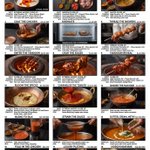
Beef Wellington is a brutal AI video test. Every layer has to survive the cut.
I took it from raw fillet to pink center in 29 seconds, keeping the pastry, mushroom layer, and meat consistent.
Full prompt below. 👇Which shot gave it away?
SCENE 1A (0:00–0:10) — HEAT HOOK → PREPARATION → SEARING → DUXELLES SETUP
SHOT STRUCTURE: exactly 8 shots, exactly 10 seconds, vertical 9:16, exactly as listed, no added shots.
REFS:
@Image1 = attached 24-panel Beef Wellington storyboard. Controls recipe order, ingredient identity, chef’s hands, kitchen, cookware and food continuity only. The storyboard layout, borders and typography stay out of the output. Generate fresh full-screen live-action footage.
GLOBAL STYLE NOTES:
setting: contemporary British fine-dining kitchen during evening service; stainless-steel pass, black cutting board, heavy dark pan, cooling rack and food processor. Subtle kitchen activity remains behind the working station.
continuity: the same 900 g centre-cut beef tenderloin, same clean chef hands and black sleeves, same tools and preparation station throughout. Shot 1 is a brief flash-forward from the later searing stage; Shot 2 returns to the beginning of preparation.
lighting_philosophy: a large diffused service-pass lamp from upper-left creates the soft key; stainless surfaces provide gentle fill while a narrow rear practical forms a restrained rim through the atmospheric haze.
look: cinematic 35mm film still, kodak film stock, natural film grain, filmic color grade, soft cinematic lighting, shallow depth of field, f/4, clean subject separation, anamorphic lens, oval bokeh, hazy atmosphere, volumetric light, visible light in air, soft key with rim, atmospheric haze, clean soft shadows, neutral filmic blacks, natural skin, filmic midtones, neutral highlights, soft white roll-off, low-medium saturation, film-neutral tones.
camera_character: precise premium food cinematography, controlled slider and dolly movement, tactile macro details, consistent movement axis.
ambience: low ventilation, distant kitchen service and synchronized cooking sounds only. Clean screen throughout, without captions, titles, logos, voiceover or music. Chef’s hands and forearms only.
SEQUENCE LIST:
SHOT 1 (0.0–0.9s) HOOK — ECU macro, pan-rim low angle, profile 90°.
camera_motion: rapid micro push toward the contact point.
action_visual: flash-forward — seasoned beef lands in shimmering oil; the first strip darkens as oil bursts outward. Explosive sizzle and dense crackling fat.
exit: the loudest oil pop triggers a temporal jump backward.
(SMASH CUT TO)
SHOT 2 (0.9–1.7s) SETUP — CU bird’s-eye, diagonal three-quarter composition.
camera_motion: short overhead drift across the stainless pass.
action_visual: tenderloin, mushrooms, shallot, thyme, Dijon, prosciutto, puff pastry, eggs, salt and pepper form a precise mise en place; the chef slides the raw beef into the working light. Steel tray contact and herb rustle.
exit: the tray stops as a knife enters from frame-left.
(J-CUT TO)
SHOT 3 (1.7–2.8s) — CU high angle, rear three-quarter 135°.
camera_motion: lateral slider following the length of the beef.
action_visual: a boning knife removes silver skin, then butcher’s twine tightens around the tenderloin to form a uniform cylinder. Knife glide, twine pull and board contact.
exit: the final twine loop cinches around the meat.
(CUTTING ON ACTION TO)
SHOT 4 (2.8–3.7s) — Macro CU, slight high angle, three-quarter 45°.
camera_motion: slow clockwise orbit.
action_visual: sea salt and cracked pepper fall across the beef; the chef rolls it once so seasoning coats every surface. Crisp granular fall and soft meat contact.
exit: the rolling movement continues toward the hot pan.
(MATCH ON MOVEMENT TO)
SHOT 5 (3.7–5.1s) SIGNATURE — ECU, counter-level low angle, three-quarter 45°.
camera_motion: locked macro with a gentle forward creep.
action_visual: the broad side sears in hot oil; the surface develops a deep mahogany crust while steam and smoke rise into the rim light. Dense pan hiss and fat crackle.
exit: steel tongs enter and grip the cylinder.
(CUTTING ON ACTION TO)
SHOT 6 (5.1–6.4s) — CU slight high angle, profile 90°.
camera_motion: curved track following the tongs.
action_visual: the chef rotates the beef across every side and briefly sears both ends, creating an even continuous crust while the centre remains raw. Tong clicks, renewed sizzling and pan scrape.
exit: the tongs lift the beef from the pan toward the cooling rack.
(MATCH ON MOVEMENT TO)
SHOT 7 (6.4–7.8s) — Macro, high angle, three-quarter 45°.
camera_motion: short tracking move along the tenderloin.
action_visual: a pastry brush coats the warm seared beef with a thin glossy layer of Dijon mustard; visible brush marks follow the cylinder before it settles on the rack. Brush drag, rack contact and fading sizzle.
exit: the brush exits frame as the processor lid descends.
(HARD CUT TO)
SHOT 8 (7.8–10.0s) — ECU insert, bird’s-eye diagonal three-quarter view.
camera_motion: tight controlled circular orbit around the processor bowl.
action_visual: quartered chestnut mushrooms, shallot and thyme pulse into a fine granular duxelles mixture; individual mushroom flecks remain visible and the texture stops before becoming a paste. Short processor bursts and lid vibration.
final_frame: hold briefly on the finished granular mushroom mixture, ready for the pan.
SCENE 1B (0:00–0:10) — DUXELLES TRANSFORMATION → LAYERING → TIGHT ROLL → FIRST CHILL
SHOT STRUCTURE: exactly 8 shots, exactly 10 seconds, vertical 9:16, exactly as listed, no added shots.
REFS:
@Image1 = attached 24-panel Beef Wellington storyboard. Controls recipe order, ingredient identity, chef’s hands, kitchen, cookware and food continuity only. The storyboard layout, borders and typography stay out of the output. Generate fresh full-screen live-action footage.
GLOBAL STYLE NOTES:
setting: the same contemporary British fine-dining kitchen and evening service. Use the same wide pan, wooden spoon, steel cooling tray, cling film and preparation counter.
continuity: begin with the finely chopped mushroom mixture created at the end of Part 1. Use the same Dijon-coated seared tenderloin, same cylinder dimensions, same chef’s clean hands and black sleeves. The duxelles progressively changes from moist and pale to dark, concentrated and completely dry.
lighting_philosophy: a large diffused service-pass lamp from upper-left creates the soft key; stainless surfaces provide gentle fill while a narrow rear practical forms a restrained rim through the atmospheric haze.
look: cinematic 35mm film still, kodak film stock, natural film grain, filmic color grade, soft cinematic lighting, shallow depth of field, f/4, clean subject separation, anamorphic lens, oval bokeh, hazy atmosphere, volumetric light, visible light in air, soft key with rim, atmospheric haze, clean soft shadows, neutral filmic blacks, natural skin, filmic midtones, neutral highlights, soft white roll-off, low-medium saturation, film-neutral tones.
camera_character: controlled premium food cinematography, intimate macro inserts alternating with readable preparation views.
ambience: restrained kitchen room tone with tactile synchronized food sounds only. Clean screen throughout, without captions, titles, logos, voiceover or music. Chef’s hands and forearms only.
SEQUENCE LIST:
SHOT 1 (0.0–1.2s) — Macro CU, pan-rim low angle, three-quarter 45°.
camera_motion: lateral slide following the wooden spoon.
action_visual: finely chopped mushrooms, shallot and thyme enter a wide hot pan; the damp granular mixture spreads as the spoon presses it into a thin layer. Moist hiss, granular scrape and pan tap.
exit: the spoon begins drawing a line through the mixture.
(CUTTING ON ACTION TO)
SHOT 2 (1.2–2.5s) SIGNATURE — Extreme macro, slight high angle, profile 90°.
camera_motion: slow push following the spoon’s clean trail.
action_visual: butter melts through the mushrooms as thyme releases its oils; steam rapidly diminishes and the duxelles becomes dark, crumbly and concentrated. The pan remains clean and dry behind each spoon stroke. Fine bubbling recedes into a dry scrape.
exit: the clean spoon trail becomes the leading line of the next frame.
(MATCH CUT TO)
SHOT 3 (2.5–3.4s) — CU high angle, rear three-quarter 135°.
camera_motion: tilt down with the offset spatula.
action_visual: the finished duxelles spreads into a thin layer across a chilled steel tray; faint steam escapes while the mushroom granules remain distinct. Spatula scrape and light tray ring.
exit: the spatula completes one straight edge.
(CUT TO)
SHOT 4 (3.4–4.5s) — MCU bird’s-eye, diagonal three-quarter composition.
camera_motion: smooth overhead slide from left to right.
action_visual: thin prosciutto slices overlap into a seamless rectangle on taut cling film; translucent marbled edges align precisely. Delicate cured-meat contact and cling-film tension.
exit: the final slice lands and fills the rectangle.
(CUT TO)
SHOT 5 (4.5–5.7s) — Macro CU, slight high angle, three-quarter 45°.
camera_motion: micro-track following the offset spatula.
action_visual: cooled duxelles spreads into a thin uniform layer across the prosciutto, leaving a narrow clean border for sealing. Soft granular spread and film rustle.
exit: the spatula withdraws as the mustard-coated beef enters frame.
(CUTTING ON ACTION TO)
SHOT 6 (5.7–7.3s) — CU low angle, rear three-quarter 135°.
camera_motion: curved dolly synchronized with the rolling cylinder.
action_visual: ONE CONTINUOUS UNCUT ACTION — the chef places the Dijon-coated beef along the near edge, lifts the cling film and rolls prosciutto and duxelles tightly around the tenderloin while keeping it centred. Film stretches with soft layered compression.
exit: the cylinder completes one full compact rotation.
(MATCH ON MOVEMENT TO)
SHOT 7 (7.3–8.6s) — ECU insert, high angle, profile 90°.
camera_motion: locked frame with a subtle push.
action_visual: both cling-film ends twist in opposite directions; the chef rolls the package forward, compressing it into a firm, symmetrical cylinder. Tight plastic tension and compact rolling sound.
exit: the finished log rolls toward frame-right.
(NATURAL WIPE TO)
SHOT 8 (8.6–10.0s) — CU slight high angle, three-quarter 45°.
camera_motion: tracking slide moving with the wrapped log.
action_visual: the tightly wrapped beef cylinder slides onto a refrigerator shelf; cold vapour lightly catches the rim light as the door closes across the lens. Shelf contact, refrigerator hum and soft door seal.
final_frame: refrigerator door fills the frame, creating a clean endpoint for Part 2.
SCENE 1C (0:00–0:10) — PASTRY WRAP → GOLDEN TRANSFORMATION → REST → PINK REVEAL
SHOT STRUCTURE: exactly 8 shots, exactly 10 seconds, vertical 9:16, exactly as listed, no added shots.
REFS:
@Image1 = attached 24-panel Beef Wellington storyboard. Controls recipe order, ingredient identity, chef’s hands, kitchen, cookware, plating and food continuity only. The storyboard layout, borders and typography stay out of the output. Generate fresh full-screen live-action footage.
GLOBAL STYLE NOTES:
setting: the same British fine-dining kitchen during evening service, transitioning between pale marble pastry station, refrigerator, professional oven, wire rack and charcoal ceramic serving plate.
continuity: begin with the firm chilled prosciutto-and-duxelles-wrapped beef log from Part 2. Maintain its cylinder diameter and centred layers. The finished cross-section appears exclusively in the final shot.
lighting_philosophy: a large diffused service-pass lamp from upper-left creates the soft key; pale marble and stainless steel provide gentle fill while a narrow rear practical catches pastry gloss, steam and airborne crumbs.
look: cinematic 35mm film still, kodak film stock, natural film grain, filmic color grade, soft cinematic lighting, shallow depth of field, f/4, clean subject separation, anamorphic lens, oval bokeh, hazy atmosphere, volumetric light, visible light in air, soft key with rim, atmospheric haze, clean soft shadows, neutral filmic blacks, natural skin, filmic midtones, neutral highlights, soft white roll-off, low-medium saturation, film-neutral tones.
camera_character: elegant precision food cinematography; controlled dolly, macro arcs and deliberate hero push-in.
ambience: synchronized pastry, oven and knife sounds over restrained kitchen room tone. Clean screen throughout, without captions, titles, logos, voiceover or music. Chef’s hands and forearms only.
SEQUENCE LIST:
SHOT 1 (0.0–1.1s) — MCU high angle, three-quarter 45°.
camera_motion: short dolly parallel to the rolling pin.
action_visual: all-butter puff pastry expands beneath a wooden rolling pin on lightly floured marble, remaining uniformly thick from centre to edges. Rolling-pin rumble and flour brushing stone.
exit: the rolling pin travels out of frame, revealing the complete pastry rectangle.
(CUT TO)
SHOT 2 (1.1–2.1s) — Macro CU, low angle, profile 90°.
camera_motion: slow pull-back following the peeling film.
action_visual: cling film releases cleanly from the chilled prosciutto-wrapped cylinder; the taut seamless core is placed along the near third of the pastry. Film release and soft pastry contact.
exit: the cylinder settles as the pastry edge lifts.
(CUTTING ON ACTION TO)
SHOT 3 (2.1–3.7s) — CU slight high angle, rear three-quarter 135°.
camera_motion: controlled orbit around the rolling parcel.
action_visual: ONE CONTINUOUS UNCUT ACTION — egg wash brushes the pastry edge; the chef rolls pastry snugly around the core, trims the overlap, seals the seam underneath and folds both ends into a smooth compact parcel. Brush drag, pastry fold, knife trim and fingertip seal.
exit: the completed Wellington finishes seam-side down.
(MATCH CUT TO)
SHOT 4 (3.7–4.4s) — CU high angle, three-quarter 45°.
camera_motion: short push following the tray.
action_visual: the pale pastry-wrapped Wellington slides briefly into the refrigerator to firm its shape; the door sweeps across the lens. Tray slide and soft refrigerator seal.
exit: the refrigerator-door wipe reveals the chilled Wellington back on the marble station.
(NATURAL WIPE TO)
SHOT 5 (4.4–5.7s) SIGNATURE — ECU macro, slight high angle, three-quarter 45°.
camera_motion: precise macro arc over the pastry surface.
action_visual: ONE CONTINUOUS UNCUT ACTION — golden egg wash coats the pastry, the back of a small knife draws a clean diagonal lattice, then flaky salt falls across the glossy shell. Brush whisper, delicate scoring and crisp salt fall.
exit: the final salt crystals land as the tray begins moving forward.
(MATCH ON MOVEMENT TO)
SHOT 6 (5.7–7.3s) — MCU oven-rack low angle, three-quarter 45°.
camera_motion: slow push through the open oven toward the tray.
effect: natural time compression within one locked oven view.
action_visual: the pastry transforms from pale and compact into a deeply golden, inflated laminated shell; the lattice opens into crisp relief while butter bubbles at the base. Low oven fan, butter sizzle and delicate pastry crackle.
exit: golden reflections briefly fill the frame as the oven door opens.
(WHIP THROUGH LIGHT TO)
SHOT 7 (7.3–8.1s) — CU high angle, rear three-quarter 135°.
camera_motion: restrained half-orbit around the wire rack.
action_visual: after an implied resting interval, the lacquered golden Wellington sits intact on the rack; the chef removes a slim temperature probe and positions a long slicing knife beside it. Quiet pastry ticks, probe release and knife touching the board.
exit: ambience drops for one beat as the blade meets the crust.
(SOUND-LED CUT TO)
SHOT 8 (8.1–10.0s) CLIMAX — Cinematic hero CU, counter-level low angle, three-quarter 45°.
camera_motion: slow deliberate push toward the opening centre slice, ending locked.
action_visual: the knife completes one clean centre cut and the slice opens onto a charcoal ceramic plate, revealing warm rosy medium-rare beef, a dark dry duxelles ring, thin prosciutto and crisp golden laminated pastry. Fine crumbs fall from the edge and a restrained thyme sprig completes the plate. Crisp pastry fracture, smooth knife glide and soft ceramic contact.
final_frame: hold the immaculate layered cross-section fully visible as the kitchen ambience gently recedes.

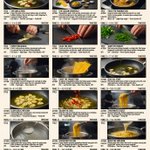
The simplest pasta may be the hardest one for AI to sell.
No heavy sauce to hide behind, only garlic, olive oil, chili, and glossy strands.
This is my 20-second aglio e olio test. Full prompt below. 👇 Did it make you hungry?
SCENE 1A — PREP → BOIL → INFUSE
SHOT STRUCTURE: 10 shots, 10 seconds, vertical 9:16, exactly as listed, no added shots.
REFS:
@Image1 = production storyboard. Controls recipe order, ingredients, cookware, chef hands with black sleeves, dark professional kitchen, light direction and food appearance only. Every shot uses fresh full-frame live-action composition; the printed grid and typography remain reference metadata.
GLOBAL STYLE NOTES:
setting: contemporary Italian fine-dining kitchen during evening service; stainless pass and active cookware isolated against a near-dark working kitchen with distant chefs in layered haze.
lighting_philosophy: focused diffused top-side light follows the active zone; soft volumetric backlight reveals steam and oil droplets.
color_grade: 70mm IMAX film still, large-format cinematography, epic dynamic range, ultra sharp fine grain, immersive cinematic scale, deep detail, f/16, deep focus, everything sharp front to back, anamorphic lens, edge-to-edge sharpness, soft lighting, low contrast, diffused light, hazy atmosphere, volumetric light, visible light in air, clean saturated shadows, controlled crisp blacks, healthy rich skin, vibrant midtones, glossy highlights, bright pop speculars, very high saturation, bold vivid palette.
characters: chef’s clean hands and forearms, black fine-dining jacket; keep wardrobe and anatomy identical throughout.
ambience: synchronized cooking SFX only—knife, boil, oil, steel and ventilation; music, voices and visible text stay absent.
SEQUENCE LIST:
SHOT 1 (0.0–0.7s) HOOK — ECU macro, pan-rim low angle, profile 90°, 29° short telephoto. Fast micro push-in as thin garlic touches olive oil, first bubbles race around it and a chili ring hovers above; close delicate sizzle. Exit on the ring shape. (MATCH CUT TO)
SHOT 2 (0.7–1.4s) — CU bird’s-eye, diagonal three-quarter, 47° standard. Short overhead drift across spaghettoni, garlic, chili, parsley, breadcrumbs, salt and EVOO as the chef slides the oil bottle into light; glass tap and pasta rustle. (CUT TO)
SHOT 3 (1.4–2.4s) — Macro CU high angle, three-quarter 45°, 29°. Lateral track follows a wooden spoon sweeping breadcrumbs through oil until irregularly golden, then into a steel bowl; granular scrape and crisp crackle. (CUTTING ON ACTION TO)
SHOT 4 (2.4–3.2s) — ECU high angle, rear three-quarter 135°, 29°. Slider follows the knife producing uniform translucent garlic coins; rhythmic board ticks. Exit on blade reflection. (MATCH CUT TO)
SHOT 5 (3.2–4.0s) — Macro low angle, three-quarter 45°, 29°. Locked frame as glossy red chili becomes narrow rings and seeds scatter; two crisp cuts. Exit on the knife gathering rings. (CUTTING ON ACTION TO)
SHOT 6 (4.0–4.8s) — CU overhead diagonal, 47°. Small clockwise orbit as a rocking knife finely chops parsley into a vivid green mound; rapid herb cuts. Boiling sound enters early. (J-CUT TO)
SHOT 7 (4.8–5.8s) — MCU high angle, three-quarter 45°, 47°. Tilt down with sea salt falling into rolling water; crystals vanish and steam fills the beam. Exit on downward salt motion. (MATCH ON MOVEMENT TO)
SHOT 8 (5.8–6.8s) — CU low pot-rim angle, rear three-quarter 135°, 47°. Controlled push-in as rigid spaghettoni fan into boiling water and bend gradually; boil surges and pasta rustles. (MATCH CUT TO)
SHOT 9 (6.8–7.8s) — ECU macro pan-rim low angle, three-quarter 45°, 29°. Slow lateral slide follows green-gold EVOO spreading across the cool sauté pan around waiting garlic; viscous pour. (CUT TO)
SHOT 10 (7.8–10.0s) SIGNATURE — Extreme macro vessel-rim elevation, profile 90°, 29°. Slow arc follows the pan swirl: controlled bubbles surround each garlic coin as it becomes translucent pale gold while staying flat and distinct. End with red chili rings entering the upper edge, suspended just before contact; fine sizzle holds into Part 2.
SCENE 1B — BLOOM → EMULSIFY → TOSS → SERVE
SHOT STRUCTURE: 9 shots, 10 seconds, vertical 9:16, exactly as listed, no added shots.
REFS:
@Image1 = production storyboard. Controls recipe order, ingredients, cookware, chef hands with black sleeves, dark professional kitchen, light direction, plating and finished-dish appearance only. Every shot uses fresh full-frame live-action composition; the printed grid and typography remain reference metadata.
GLOBAL STYLE NOTES:
setting: continue the identical Italian fine-dining kitchen, stainless pass, wide sauté pan, pasta pot and dark ceramic plate from Part 1.
lighting_philosophy: the same focused diffused top-side light follows pan and plate; volumetric backlight makes steam, sauce and falling crumbs readable.
color_grade: 70mm IMAX film still, large-format cinematography, epic dynamic range, ultra sharp fine grain, immersive cinematic scale, deep detail, f/16, deep focus, everything sharp front to back, anamorphic lens, edge-to-edge sharpness, soft lighting, low contrast, diffused light, hazy atmosphere, volumetric light, visible light in air, clean saturated shadows, controlled crisp blacks, healthy rich skin, vibrant midtones, glossy highlights, bright pop speculars, very high saturation, bold vivid palette.
continuity: begin with pale-gold garlic bubbling in EVOO and the same chili rings descending from Part 1; garlic colour, pasta quantity and utensil positions progress naturally. The completed plate appears only in the resolution.
ambience: synchronized cooking SFX only—oil, boil, tongs, pan, herbs, crumbs and ceramic; music, voices and visible text stay absent.
SEQUENCE LIST:
SHOT 1 (0.0–0.8s) — ECU slight high angle, three-quarter 45°, 29° short telephoto. Quick tilt follows descending chili rings as they land among pale-gold garlic; bubbles intensify briefly and crimson oil blooms. Exit on the rising sizzle. (HARD CUT TO)
SHOT 2 (0.8–1.8s) — CU high angle, profile 90°, 47° standard. Vertical tracking lift follows tongs pulling firm glistening spaghettoni from boiling water; droplets fall as the infused pan waits beyond. Exit on the downward drip. (CUT TO)
SHOT 3 (1.8–2.6s) — Macro high angle, three-quarter 45°, 29°. Tight follow move as a metal ladle scoops cloudy starch-rich water, then arcs toward the pan; water scoop and one clean drip. (MATCH ON MOVEMENT TO)
SHOT 4 (2.6–3.8s) — MCU slight high angle, rear three-quarter 135°, 47°. Curved track from pot to pan as tongs lower steaming spaghettoni into garlic-chili oil; strands descend in a golden curtain and land with a wet hiss. (CUTTING ON ACTION TO)
SHOT 5 (3.8–5.2s) SIGNATURE — ECU macro pan-rim low angle, profile 90°, 29°. Static macro holds while cloudy pasta water streams into hot oil and vigorous tong movement turns separate liquids into a pale-gold glossy emulsion coating every strand; bubbling and steel scrape. Exit on the first pan snap. (SMASH CUT TO)
SHOT 6 (5.2–6.8s) CLIMAX — CU low angle, three-quarter 45°, 47°. Fast push follows one controlled pan toss: the complete spaghetti wave rises in an arc with distinct glossy strands, garlic coins and chili rings, then lands into silky sauce; pan scrape and soft sauce slap. Exit on the circular landing motion. (MATCH CUT TO)
SHOT 7 (6.8–8.0s) — CU high angle, three-quarter 45°, 47°. Slow clockwise orbit as chopped parsley and a thin raw-EVOO stream fold through the pasta, then tongs twist it into a tall clean nest on the dark plate in one continuous action; herb fall and ceramic contact. (CUT TO)
SHOT 8 (8.0–8.8s) — Macro slight high angle, profile 90°, 29°. Gentle lateral move follows the chef’s fingers releasing a narrow shower of crisp golden pangrattato over the pasta peak; individual crumbs remain airborne. Exit as the hand clears frame. (L-CUT TO)
SHOT 9 (8.8–10.0s) RESOLUTION — Hero CU low angle, three-quarter 45°, 29°. The finished aglio, olio e peperoncino sits unobstructed: glossy separate spaghettoni, translucent pale-gold garlic, red chili, parsley and crisp crumbs. Gentle push-in becomes a locked final hold while subtle steam crosses the light and kitchen ambience recedes.

This tiramisu was never made. It was prompted.
A full 20-second recipe film, from espresso-soaked ladyfingers to the final cocoa dusting, created entirely with AI.
Full prompt below.👇 Would you have guessed?
Create a 10-second vertical 9:16 cinematic food-preparation montage for Omni 1.1.
SUBJECT: Authentic Italian tiramisù preparation, first half. Follow the listed shots exactly in chronological order. The finished dessert must not appear in this generation.
GLOBAL CONTINUITY:
Contemporary Italian fine-dining pastry kitchen during evening service. Dark stainless-steel surroundings remain barely visible through atmospheric haze; distant pastry chefs work quietly in soft shadow. Focused diffused top-side light follows the active preparation zone. Use the same chef’s clean hands, black sleeves, utensils, ingredients and rectangular ceramic tiramisù dish throughout. Accurate food physics, natural human hand anatomy and realistic ingredient quantities.
VISUAL STYLE:
70mm IMAX film still, large-format cinematography, epic dynamic range, ultra sharp fine grain, immersive cinematic scale, deep detail, f/16, deep focus, everything sharp front to back, anamorphic lens, edge-to-edge sharpness, soft lighting, low contrast, diffused light, hazy atmosphere, volumetric light, visible light in air, clean saturated shadows, controlled crisp blacks, healthy rich skin, vibrant midtones, glossy highlights, bright pop speculars, very high saturation, bold vivid palette.
CAMERA LANGUAGE:
Never use eye-level elevation or frontal/head-on views. Use overhead, high-angle, low-angle and vessel-rim elevation with three-quarter 45°, profile 90° or rear three-quarter azimuth. Rule-of-thirds compositions, asymmetric framing and occasional foreground layering. Alternate shot scales decisively and cut on physical actions.
SEQUENCE:
SHOT 1 — 0.0–0.8s — HOOK
Extreme macro from low vessel-rim elevation, profile 90°. A dry savoiardo enters from the upper third and plunges halfway into glossy dark espresso. Coffee races into its porous surface while tiny droplets jump upward. Fast controlled micro push-in. Cut before the biscuit is lifted. Crisp liquid splash.
SHOT 2 — 0.8–1.6s
Overhead wide insert at a diagonal three-quarter orientation. Espresso, savoiardi, mascarpone, pasteurized egg yolks, sugar, cocoa and salt are arranged on a cold stainless-steel station. The chef’s hand slides the mascarpone bowl into the active light. Quick diagonal drift.
SHOT 3 — 1.6–2.6s
Macro close-up from low three-quarter 45°. Fresh espresso streams from the machine into a shallow metal bowl; crema rolls outward in amber waves and steam catches the volumetric backlight. Slow lateral track.
SHOT 4 — 2.6–3.4s
High-angle close shot, rear three-quarter 135°. The chef sets the espresso bowl over ice and stirs once; condensation gathers on the steel. A foreground whisk creates subtle layered depth. Match cut on the circular motion.
SHOT 5 — 3.4–4.3s
Macro overhead three-quarter composition. Four golden yolks and fine sugar fall into a polished bowl; a pinch of salt follows. The whisk enters and immediately begins mixing. Short clockwise orbit.
SHOT 6 — 4.3–5.5s
Extreme macro from low bowl-rim elevation, three-quarter 45°. The whisk rapidly transforms the mixture from deep yellow into a thick pale ribbon. The whisk lifts and a continuous glossy ribbon folds back into the bowl. Hold long enough to reveal its viscosity.
SHOT 7 — 5.5–6.5s
High-angle medium close-up, profile 90°. Dense ivory mascarpone drops from a spatula into the yolk ribbon in one heavy fold. Slow push-in following the mascarpone.
SHOT 8 — 6.5–7.6s
Macro close-up from low three-quarter 45°. A silicone spatula folds the mixture gently from beneath; visible streaks disappear into a smooth, stable, satin cream. Follow the spatula with a short curved track.
SHOT 9 — 7.6–10.0s
Extreme macro from high three-quarter 45°. One savoiardo is dipped into the cooled espresso, rotated once and immediately lifted before becoming soggy. Coffee beads fall from its edge in slow, distinct droplets. End with the soaked biscuit moving toward the empty ceramic dish, creating a direct motion bridge into the second generation.
AUDIO:
Natural synchronized kitchen sound only: espresso pour, soft bowl contact, whisking, thick cream folds, liquid dip and delicate droplets. Quiet ventilation and distant utensils underneath. No dialogue, voice-over or music.
OUTPUT:
Photorealistic moving footage, not a storyboard card. No captions, titles, logos, flags, borders or split screens. No completed tiramisù. End on the biscuit traveling toward the empty dish.
Create a 10-second vertical 9:16 cinematic food-preparation montage for Omni 1.1.
SUBJECT: Authentic Italian tiramisù preparation, second half. Continue seamlessly from the previous generation. Begin with the espresso-soaked savoiardo moving toward the empty ceramic dish and finish on the fully plated dessert.
GLOBAL CONTINUITY:
Use the identical contemporary Italian fine-dining pastry kitchen, chef’s clean hands with black sleeves, rectangular ceramic dish, utensils, ingredient appearance and focused preparation light established in Part 1. The dark stainless-steel kitchen remains barely visible through atmospheric haze while distant pastry chefs continue working. Ingredient states must progress logically: first biscuit layer, cream, second biscuit layer, final cream, chilling, cocoa and plated slice.
VISUAL STYLE:
70mm IMAX film still, large-format cinematography, epic dynamic range, ultra sharp fine grain, immersive cinematic scale, deep detail, f/16, deep focus, everything sharp front to back, anamorphic lens, edge-to-edge sharpness, soft lighting, low contrast, diffused light, hazy atmosphere, volumetric light, visible light in air, clean saturated shadows, controlled crisp blacks, healthy rich skin, vibrant midtones, glossy highlights, bright pop speculars, very high saturation, bold vivid palette.
CAMERA LANGUAGE:
Never use eye-level elevation or frontal/head-on views. Use overhead, high-angle, low-angle and food-level elevation with three-quarter 45°, profile 90° or rear three-quarter 135° azimuth. Rule-of-thirds composition, asymmetric framing and motivated foreground layering. Alternate wide, close and extreme-macro scales. Preserve hand, utensil and food continuity across every cut.
SEQUENCE:
SHOT 1 — 0.0–1.1s
High-angle close shot, three-quarter 45°. Continue the incoming movement from Part 1 as the chef places the soaked savoiardo into the near-left corner of the ceramic dish. Additional dipped biscuits land rapidly beside it in a precise parallel row. Cut on the final biscuit contact.
SHOT 2 — 1.1–2.2s
Macro close-up from low dish-rim elevation, profile 90°. A generous ribbon of mascarpone cream descends onto the first biscuit layer and slowly spreads between their contours. Controlled lateral slider move.
SHOT 3 — 2.2–3.3s
Overhead medium close-up with diagonal three-quarter orientation. An offset spatula distributes the cream evenly from one corner to the opposite corner, creating a clean ivory layer. Follow the spatula tip clockwise.
SHOT 4 — 3.3–4.3s
High-angle close shot, rear three-quarter 135°. A second row of freshly dipped savoiardi is laid crosswise over the cream, creating a stable alternating structure. Each biscuit remains intact and visibly moist.
SHOT 5 — 4.3–5.4s
Low food-level macro, three-quarter 45°. The remaining mascarpone cream pours across the second layer in a thick glossy wave. Slow push-in as the cream settles without overflowing.
SHOT 6 — 5.4–6.2s
Overhead extreme close-up, asymmetric rule-of-thirds composition. The offset spatula makes one continuous finishing pass, leaving a perfectly smooth surface and one delicate curved ridge. Cut as the blade exits frame.
SHOT 7 — 6.2–6.8s — TIME COMPRESSION
High-angle three-quarter 45°. The chef slides the completed dish onto a refrigerator shelf. The closing refrigerator door wipes across the frame, creating a motivated time transition representing four hours of chilling. No visible written caption.
SHOT 8 — 6.8–8.2s — COCOA REVEAL
Macro low-angle profile 90°. Fine dark cocoa rains through a small sieve onto the cold pale surface, forming a velvety, completely even layer. Individual cocoa particles sparkle briefly in the focused backlight. Slow-motion micro orbit around the falling cocoa.
SHOT 9 — 8.2–9.1s
Extreme macro from high three-quarter 45°. A clean knife cuts vertically through the set tiramisù; the slice separates to reveal distinct espresso-soaked savoiardi and thick mascarpone layers. The structure remains stable, creamy and moist.
SHOT 10 — 9.1–10.0s — FINAL HERO
Low food-level hero close-up, three-quarter 45°. A perfect rectangular tiramisù slice rests slightly off-center on an elegant dark ceramic plate. Velvety cocoa top, sharply readable alternating layers and a tiny controlled spoon opening at one corner reveal the soft interior. Gentle semicircular dolly-in; thin steam-like kitchen haze and glossy plate highlights create depth. Finish with a locked-off hold on the completed dessert.
AUDIO:
Natural synchronized food sounds only: soft biscuit placement, cream spreading, spatula scrape, refrigerator seal, delicate cocoa sifting, clean knife cut and quiet ceramic contact. Kitchen ambience recedes during the cocoa reveal and returns under the final frame. No dialogue, voice-over or music.
OUTPUT:
Photorealistic moving footage, not a storyboard card. No captions, titles, logos, flags, borders or split screens. Keep the plated tiramisù fully visible and unobstructed in the final frame.

This French omelet never touched a real pan.
The entire 20-second cooking sequence was made with AI, from the first pour to the final creamy fold.
Full prompt below 👇 Would you eat it?
TARGET MODEL: Omni 1.1
SCENE 1 — RAW INGREDIENTS → SILKY EGG MIXTURE → HOT PAN
SHOT STRUCTURE: 10 shots, exactly 10 seconds, vertical 9:16, exactly as listed, no added shots.
REFS:
@Image1 = complete French omelette storyboard. Controls the cooking order, ingredients, cookware, chef’s hands, kitchen atmosphere and food appearance only. Create fresh cinematic framing; the storyboard grid, typography, panel borders and French flag stay outside the generated video.
GLOBAL STYLE NOTES:
70mm IMAX film still, large-format cinematography, epic dynamic range, ultra sharp fine grain, immersive cinematic scale, deep detail, f/16, deep focus, everything sharp front to back, anamorphic lens, edge-to-edge sharpness, soft lighting, low contrast, diffused light, hazy atmosphere, volumetric light, visible light in air, clean saturated shadows, controlled crisp blacks, healthy rich skin, vibrant midtones, glossy highlights, bright pop speculars, very high saturation, bold vivid palette.
setting: professional French fine-dining kitchen during evening service. A soft diffused 3400K pass light from camera-left illuminates only the active preparation zones; gentle steel-counter bounce keeps shadows readable. Background chefs in black uniforms work quietly in the dim layered kitchen.
continuity: same chef’s anatomically correct hands, black sleeves, stainless bowl, sieve, Microplane, 20 cm dark omelette pan, three eggs, cultured butter, aged Comté and fines herbes throughout.
camera grammar: elevations use overhead, pronounced high angle, low oblique and pan-rim macro perspectives. Azimuths use three-quarter side 45°, profile 90° and rear three-quarter 135°. Rule-of-thirds and asymmetric compositions; consistent screen direction.
audio: synchronized natural cooking SFX only; shell, knife, grater, whisk, liquid, flame, butter and pan sounds over restrained kitchen room tone. The audio contains music-free, dialogue-free and voiceover-free production sound.
SEQUENCE LIST:
SHOT 1 (0.0–0.7s) HOOK — Extreme macro, low oblique, three-quarter side 45°. Rapid micro push-in as two shell halves open and a vivid yolk falls through stretching egg white into the steel bowl; delicate crack and thick liquid drop. Exit on the circular yolk. (MATCH CUT TO)
SHOT 2 (0.7–1.4s) SETUP — Medium insert, bird’s-eye overhead. Smooth diagonal drift over three eggs, cultured butter, aged Comté, chives, chervil, tarragon, salt and white pepper arranged on a steel tray; ramekins touch the counter. Exit on the Comté wedge. (CUT TO)
SHOT 3 (1.4–2.2s) — Extreme macro, pronounced high angle, profile 90°. Short lateral slide follows aged Comté across a Microplane; fine ivory ribbons fall with a dry granular scrape. Exit on falling cheese. (MATCH ON MOVEMENT TO)
SHOT 4 (2.2–3.0s) — Close-up, high angle, three-quarter side 45°. Controlled arc around the knife tip as the chef rapidly cuts chives, chervil and tarragon into fine green pieces; crisp rhythmic taps. Exit during the final knife stroke. (CUTTING ON ACTION TO)
SHOT 5 (3.0–3.8s) — Macro, overhead oblique, rear three-quarter 135°. Locked camera as fleur de sel and white pepper fall across three intact yolks; fine grains strike the bowl. Whisk sound begins early. (J-CUT TO)
SHOT 6 (3.8–4.8s) — Close-up, pronounced high angle, three-quarter side 45°. Tight clockwise micro-orbit follows fast whisking until yolks and whites become one glossy golden mixture with minimal bubbles; rhythmic metal whisk and liquid folding. Exit on the circular whisk motion. (MATCH CUT TO)
SHOT 7 (4.8–5.7s) — Extreme close-up, high angle, profile 90°. Slow tilt follows the egg mixture passing through a fine sieve in one smooth ribbon into a second bowl; quiet mesh contact. Exit on the descending golden stream. (CUT TO)
SHOT 8 (5.7–6.9s) — Macro, low pan-rim angle, three-quarter side 45°. ONE CONTINUOUS UNCUT ACTION: the dark pan warms over a controlled blue flame, cultured butter lands, melts into pale foam, then the chef swirls it evenly across the surface. Camera slides with the spreading bubbles; flame hum and bright butter sizzle. (SOUND-LED CUT TO)
SHOT 9 (6.9–7.9s) — Close-up, pronounced high angle, three-quarter side 45°. Short dolly-in follows the strained eggs pouring into the foaming butter; golden circular ripples cover the pan with a warm sharp sizzle. Exit on expanding ripples. (MATCH CUT TO)
SHOT 10 (7.9–10.0s) RISING — Extreme close-up, low pan-rim angle, rear three-quarter 135°. Camera tracks parallel to the pan as the chef rapidly shakes it with the left hand and stirs with a black silicone spatula in the right; tiny glossy curds form inside still-fluid egg. Fast scrape, pan movement and energetic sizzle. End with moist fine curds covering the pan, still unfolded; grated Comté and herbs remain ready beside the burner.
TARGET MODEL: Omni 1.1
SCENE 2 — CREAMY CURDS → CLASSIC FOLD → CUSTARD REVEAL
SHOT STRUCTURE: 8 shots, exactly 10 seconds, vertical 9:16, exactly as listed, no added shots.
REFS:
@Image1 = complete French omelette storyboard. Controls the cooking order, ingredients, cookware, chef’s hands, kitchen atmosphere and final omelette appearance only. Create fresh cinematic framing; the storyboard grid, typography, panel borders and French flag stay outside the generated video.
GLOBAL STYLE NOTES:
70mm IMAX film still, large-format cinematography, epic dynamic range, ultra sharp fine grain, immersive cinematic scale, deep detail, f/16, deep focus, everything sharp front to back, anamorphic lens, edge-to-edge sharpness, soft lighting, low contrast, diffused light, hazy atmosphere, volumetric light, visible light in air, clean saturated shadows, controlled crisp blacks, healthy rich skin, vibrant midtones, glossy highlights, bright pop speculars, very high saturation, bold vivid palette.
setting: same professional French fine-dining kitchen, burner and cooking station. Soft diffused 3400K pass light comes from camera-left; steel-counter bounce opens the shadows, while restrained back separation illuminates butter sheen, cheese and rising steam. Background chefs continue service in subdued darkness.
continuity: begin from the exact final state of the first generation—same pan on the same burner, moist fine egg curds, same chef’s hands and black sleeves. Grated aged Comté and chopped fines herbes remain beside the pan. The omelette develops continuously from wet curds into a smooth pale-yellow cigar shape.
camera grammar: overhead, pronounced high angle, low oblique and pan-rim macro elevations; three-quarter side 45°, profile 90° and rear three-quarter 135° azimuths. Rule-of-thirds, asymmetric composition and consistent movement direction.
audio: synchronized cooking SFX only—soft spatula sweep, cheese scatter, folding egg, pan tap, ceramic contact, butter brush and knife cut over restrained restaurant ambience. Music, dialogue and voiceover remain silent.
SEQUENCE LIST:
SHOT 1 (0.0–1.0s) CONTINUATION — Extreme close-up, low pan-rim angle, rear three-quarter 135°. Camera tracks beside the vibrating pan as the chef gives the moist curds two final controlled stirs; the sizzle softens. Exit when the spatula stops at the far edge. (CUT TO)
SHOT 2 (1.0–2.2s) — Medium close-up, pronounced high angle, three-quarter side 45°. Controlled overhead arc follows the spatula sweeping the curds into one uniform oval layer; the surface becomes smooth, glossy and softly set while retaining a custardy center. Soft silicone sweep. Exit on the spatula lifting away. (MATCH CUT TO)
SHOT 3 (2.2–3.4s) SIGNATURE — Macro close-up, high angle, profile 90°. Slow push-in beneath falling aged Comté ribbons and fines herbes as they form a narrow filling line along the central third; cheese begins melting on contact. Dry cheese whisper and herb scatter. Exit as the chef’s hand reaches for the pan handle. (CUTTING ON ACTION TO)
SHOT 4 (3.4–4.6s) — Close-up, low pan-rim angle, three-quarter side 45°. Profile tracking follows the spatula lifting the edge nearest the handle and folding the first third inward over the molten Comté; the pale flexible shell bends smoothly. Gentle spatula contact and soft egg fold. Exit on the curved folded edge. (MATCH CUT TO)
SHOT 5 (4.6–5.8s) CLIMAX — Close-up, pronounced high angle, rear three-quarter 135°. A controlled semicircular camera move follows a precise wrist motion rolling the omelette toward the far side; one short handle tap closes the final seam against the warm pan. Soft pan scrape and brief butter sizzle. Exit as the plate enters beneath the pan. (CUTTING ON ACTION TO)
SHOT 6 (5.8–7.1s) — Medium close-up, high angle, three-quarter side 45°. ONE CONTINUOUS UNCUT ACTION: the omelette rolls onto a warm ivory plate, the chef brushes its surface with melted cultured butter, then adds micro chervil and three restrained chive-oil droplets. Dolly alongside the plate; quiet ceramic contact and soft brush stroke. Exit on a bright butter highlight. (MATCH CUT TO)
SHOT 7 (7.1–8.6s) CUSTARD REVEAL — Extreme macro, low oblique angle, profile 90°. Very slow macro push-in as a fine silver knife opens one end; the smooth shell parts to reveal moist golden custard and short glossy strands of melted Comté. Thin steam crosses the sidelight; delicate knife contact and tender egg separation. Exit after the cheese strand releases. (CUT TO)
SHOT 8 (8.6–10.0s) RESOLUTION — Cinematic food hero close-up, slight high angle, three-quarter side 45°. Locked-off frame with an almost imperceptible push-in: the complete pale butter-yellow omelette rests diagonally on ivory porcelain, one opened end displaying the creamy center, melted Comté and herb flecks. Butter gloss and three chive-oil droplets catch bright controlled highlights; the working kitchen remains layered behind it. Hold the fully plated dish unobstructed and motionless through the final frame as restaurant ambience settles.

Good AI food videos don’t sell the recipe. They sell the craving.
I built this butter chicken sequence around fire, texture, and a clean raw-to-plated transformation.
Full prompt below. 👇Did it make you hungry?
TARGET: Omni Flash 1.1
DURATION: exactly 10 seconds
FORMAT: 9:16 vertical
STRUCTURE: exactly 9 live-action shots with clean cinematic cuts.
REFERENCE:
@Image1 = the “Murgh Makhani” storyboard. Use Panels 1–9 only as the chronological action and visual reference. Generate real restaurant cinematography, not an animated storyboard sheet. Do not reproduce its text, grid, borders, title or Indian flag.
GLOBAL:
Luxury New Delhi restaurant kitchen during evening service. Same chef’s natural hands in a black uniform, same ingredients, copper bowls, steel skewers and clay tandoor. Background chefs work subtly in near-darkness. No eye-level elevation and no frontal/head-on views. Use three-quarter angles, profiles, oblique overhead views, rule-of-thirds, asymmetric compositions and layered foregrounds.
STYLE:
70mm IMAX film still, large-format cinematography, epic dynamic range, ultra sharp fine grain, immersive cinematic scale, deep detail, f/16, deep focus, everything sharp front to back, anamorphic lens, edge-to-edge sharpness, soft lighting, low contrast, diffused light, hazy atmosphere, volumetric light, visible light in air, clean saturated shadows, controlled crisp blacks, healthy rich skin, vibrant midtones, glossy highlights, bright pop speculars, very high saturation, bold vivid palette.
LIGHT:
Soft diffused warm side key follows the active preparation zone. Tandoor flames create motivated orange rim light. Fine backlight reveals spice particles, steam, smoke and airborne haze.
SEQUENCE:
SHOT 1 — 0.0–0.9s
Extreme macro, high 55° elevation, three-quarter right. Kashmiri chilli falls into thick white yogurt and spreads into a vivid red-orange bloom. Fast controlled macro push-in.
CUT — circular shape match.
SHOT 2 — 0.9–1.9s
Oblique overhead 70°, diagonal three-quarter left. Smooth diagonal slide across raw chicken thighs, yogurt, lemon, ginger, garlic, spices, tomatoes, butter and cream arranged asymmetrically on the counter.
CUT TO:
SHOT 3 — 1.9–3.0s
Macro high 45° elevation, three-quarter left. Lemon juice, ginger, garlic, garam masala, turmeric, kasuri methi and mustard oil enter the yogurt. A whisk creates a smooth orange marinade. Tight clockwise camera arc.
CUT ON WHISK LIFT:
SHOT 4 — 3.0–4.1s
Low counter elevation 20°, three-quarter right. The chef folds chicken pieces through the thick marinade until every surface is evenly coated. Short lateral track following the hand.
CUT TO:
SHOT 5 — 4.1–4.9s
Shelf-high downward angle 35°, three-quarter left. The covered bowl slides into a refrigerator; use a brief visual time compression as the door closes.
CUT TO:
SHOT 6 — 4.9–5.9s
Low counter elevation 18°, three-quarter left. Marinated chicken pieces are threaded onto a long steel skewer with even spaces. Camera dollies parallel to the skewer.
CUT ON FINAL PIECE:
SHOT 7 — 5.9–7.1s
Tandoor-rim low angle 15°, three-quarter right. Skewers descend into the glowing clay tandoor. Flames flare naturally around the chicken. Controlled push toward the tandoor opening.
CUT ON FLAME FLARE:
SHOT 8 — 7.1–8.2s
Extreme macro, low 10° elevation, profile 90°. The skewer rotates; the marinade blisters, caramelizes and develops smoky blackened edges. Short orbit follows the rotation.
CUT ON A FALLING FAT DROPLET:
SHOT 9 — 8.2–10.0s
Close-up, high 30° elevation, three-quarter left. The chef lifts the skewer from the tandoor. Glowing red-orange chicken, dark char marks and beads of juice emerge through smoke. Rising tracking movement ending on a stable close-up of the cooked chicken.
AUDIO:
Only natural SFX: spice fall, whisking, marinade folding, refrigerator seal, steel skewer, tandoor roar, fat crackle and kitchen ambience. No music, voice-over or dialogue.
PHYSICS:
Realistic fire, smoke, marinade thickness, chicken weight, skewer rotation and hand contact. No morphing, floating ingredients or continuity jumps.
TARGET: Omni Flash 1.1
DURATION: exactly 10 seconds
FORMAT: 9:16 vertical
STRUCTURE: exactly 9 live-action shots with motivated cinematic cuts.
REFERENCE:
@Image1 = the “Murgh Makhani” storyboard. Use Panels 10–18 only as the chronological action and final plating reference. Generate real food cinematography rather than animating the storyboard card. Do not reproduce any titles, grid lines, captions or flag.
GLOBAL:
Luxury New Delhi fine-dining kitchen during evening service. Same chef’s natural hands, black uniform, charred tandoori chicken from Part 1, copper kadai, ladle, blender, fine sieve and serving bowl. No eye-level elevation and no frontal/head-on views. Use three-quarter angles, profiles, oblique overhead views, rule-of-thirds and layered depth.
STYLE:
70mm IMAX film still, large-format cinematography, epic dynamic range, ultra sharp fine grain, immersive cinematic scale, deep detail, f/16, deep focus, everything sharp front to back, anamorphic lens, edge-to-edge sharpness, soft lighting, low contrast, diffused light, hazy atmosphere, volumetric light, visible light in air, clean saturated shadows, controlled crisp blacks, healthy rich skin, vibrant midtones, glossy highlights, bright pop speculars, very high saturation, bold vivid palette.
LIGHT:
Soft warm side key illuminates the copper cookware and sauce. Diffused fill preserves shadow detail. Fine backlight reveals steam, cream streams, glossy butter and atmospheric haze.
SEQUENCE:
SHOT 1 — 0.0–1.1s
Macro close-up from pan-rim low elevation 15°, three-quarter right. Butter and oil foam in a copper kadai. Ginger, garlic, Kashmiri chilli, cumin and garam masala fall into the hot fat. Slow tilt follows the spices.
CUT ON SPICE CONTACT:
SHOT 2 — 1.1–2.2s
Extreme macro, high 45° elevation, three-quarter left. Concentrated tomato puree enters the fragrant butter and is stirred until darker, glossy and lightly caramelized. Controlled push-in.
CUT ON SPATULA SWEEP:
SHOT 3 — 2.2–3.3s
Close-up, high 35° elevation, three-quarter right. Water enters the kadai; the mixture simmers into a vivid red-orange gravy while butter separates naturally around the edges. Slow counter-clockwise orbit.
CUT ON CENTRAL BUBBLE:
SHOT 4 — 3.3–4.4s
Oblique overhead 65°, three-quarter left. The cooked tomato mixture spins inside a blender and becomes completely smooth. Tight descending camera arc ending as the vortex stops.
CUT TO:
SHOT 5 — 4.4–5.4s
Macro from bowl-rim low elevation 12°, profile 90°. The sauce is pressed through a fine sieve and falls into a copper bowl as one continuous velvet-red ribbon. Slow lateral track.
GRAPHIC MATCH CUT FROM SAUCE RIBBON TO CREAM STREAM:
SHOT 6 — 5.4–6.6s
Macro high 40° elevation, three-quarter left. Heavy cream flows into the sauce, butter melts and crushed kasuri methi falls between the chef’s palms. Gentle tilt follows the cream spiral.
CUT TO:
SHOT 7 — 6.6–7.8s
Low kadai elevation 18°, three-quarter right. Charred tandoori chicken enters the makhani sauce. The chef folds it gently until coated while the blackened edges remain visible. Short rotating follow around the ladle.
CUT ON COATED CHICKEN SURFACING:
SHOT 8 — 7.8–8.9s
Medium close-up, high 35° elevation, three-quarter left. The chef spoons Murgh Makhani into a hammered copper serving bowl and adds one restrained cream spiral, a small butter curl, kasuri methi and coriander. Gentle descending crane.
CUT AFTER BOTH HANDS WITHDRAW:
SHOT 9 — 8.9–10.0s
Cinematic hero close-up from a low 20° elevation below the dish rim, three-quarter right. Finished Murgh Makhani rests beside folded butter naan and basmati rice. Smoky chicken remains visible beneath the glossy red-orange sauce. Almost imperceptible push-in settling into a locked final hold.
AUDIO:
Only natural SFX: butter foam, spice sizzle, tomato bubbling, blender motor, sieve scrape, cream pour, rich simmer, ladle contact and subdued restaurant ambience. No music, voice-over or dialogue.
FINAL FRAME:
The complete plated serving remains motionless, unobstructed and fully sharp. No chef’s hands or utensils remain in frame.
PHYSICS:
Realistic sauce viscosity, steam, butter separation, cream diffusion, ladle contact and chicken weight. No ingredient duplication, morphing or magical transitions.

This burger never existed. The appetite it creates definitely does.
I built this AI food commercial shot by shot, keeping the textures, sauce, and motion consistent.
Full prompt below 👇 Would it make you order?
Generate the first 10 seconds of a premium American double-smash-cheeseburger film. Follow panels 1–9 of the storyboard exactly in order.
SHOT STRUCTURE: 9 shots, exactly 10 seconds, 16:9, exactly as listed, no added shots.
REFS:
@Image1 = <IMAGE_REF_0>, the supplied 24-panel storyboard card. It controls shot order, food, actions, framing logic, and kitchen continuity only. Create fresh live-action framing; exclude the storyboard grid, borders, labels, typography, flag, and graphic layout.
GLOBAL STYLE NOTES:
setting: professional American restaurant kitchen during evening service; clean stainless prep counter and flat-top griddle; chef visible only as natural healthy-rich-skinned hands and white coat sleeves.
lighting_philosophy: one large diffused overhead kitchen source softly bounced by stainless steel; haze and cooking steam reveal volumetric light through every depth plane.
color_grade: every frame looks like a 70mm IMAX film still, large-format cinematography, epic dynamic range, ultra-sharp fine grain, anamorphic lens character. Very high saturation and a bold vivid palette: golden bun, orange-yellow cheese and sauce, red tomato, green lettuce and pickles against cool steel and controlled crisp blacks; vibrant midtones, clean saturated shadows, glossy highlights and bright pop speculars.
camera_character: premium food cinematography; f/16 deep focus, everything sharp front to back, edge-to-edge sharpness, no focal drift. Soft low-contrast lighting, diffused glow, controlled micro push-ins and locked macro frames.
ambience: tactile kitchen ASMR only—soft extraction fan, steel room tone and crisp food contact. No dialogue, narration, captions, or music.
SEQUENCE LIST:
SHOT 1 (0.0 to 1.0s) HOOK — extreme macro food-level three-quarter hero close-up. Fast 8 cm push-in on the finished double smash cheeseburger; two lacy-crusted patties, melted American cheese, vegetables and glossy sauce remain tack sharp. Bun crackles faintly and cheese gives a soft pull. Exit on a bright cheese specular. (SMASH CUT TO)
SHOT 2 (1.0 to 2.2s) — counter-level overhead three-quarter view. Smooth short tilt reveals two loose beef portions, sesame potato bun, lettuce, tomato, pickles, onion, mayonnaise, ketchup and yellow mustard arranged separately in stainless bowls. Soft bowl contacts. Exit on the circular sauce bowl. (MATCH CUT TO)
SHOT 3 (2.2 to 3.4s) — macro high angle. A whisk folds ketchup, yellow mustard, mayonnaise and a small splash of pickle brine into glossy pale-orange burger sauce; slow clockwise micro-orbit, viscous folds and bowl scrape. Exit as one sauce spiral closes. (CUT TO)
SHOT 4 (3.4 to 4.6s) — cutting-board-level side macro. The chef slices ripe tomato into even rounds, white onion and dill pickles into thin rings, then finely shreds crisp iceberg; short lateral track follows the knife, rhythmic crisp cuts. Exit on the final lettuce stroke. (CUT TO)
SHOT 5 (4.6 to 5.8s) — slight high-angle close-up. Both hands loosen raw 80/20 ground beef into two equal balls without compressing it, then release them onto parchment; gentle push-in, soft meat contact and parchment movement. (CUT TO)
SHOT 6 (5.8 to 6.8s) — griddle-level low extreme close-up. Water droplets strike intensely hot steel, dance and evaporate under a locked frame; sharp hiss and low ventilation rumble. Exit as the last droplet flashes away. (MATCH CUT TO)
SHOT 7 (6.8 to 7.8s) — griddle-level macro. A small cube of clarified butter lands, melts, foams and spreads across the steel; slow 5 cm lateral slide, rapid sizzle and bubbling. Exit on the expanding golden pool. (CUT TO)
SHOT 8 (7.8 to 8.8s) — slight high-angle close-up. The chef places both beef balls on separate hot zones; they retain irregular loose texture, steam rises, explosive first sizzle. Quick controlled tilt down. (CUT ON ACTION TO)
SHOT 9 (8.8 to 10.0s) SIGNATURE — food-level side macro. Parchment covers the first ball; a heavy steel press drives straight down once, flattening it into a thin irregular patty as lacy edges spread and fat crackles. Tight 6 cm push-in synchronized with the press; metal pressure and aggressive sear dominate. End with the press lifting and the first patty sizzling.
Continue the previous video seamlessly for exactly 10 seconds from its final frame. Follow panels 10–18 of the same storyboard exactly in order.
SHOT STRUCTURE: 9 shots, exactly 10 seconds, 16:9, exactly as listed, no added shots.
REFS:
@Image1 = <IMAGE_REF_0>, the supplied 24-panel storyboard card. It controls panels 10–18, food states, actions and framing logic only. Preserve the exact kitchen, chef hands, griddle, ingredients, two patties, direction of action, lighting, color, optics, film grain and native audio from the previous clip. Exclude the storyboard typography and card layout.
GLOBAL STYLE NOTES:
look: every frame looks like a 70mm IMAX film still—large-format cinematography, anamorphic lens character, epic dynamic range, ultra-sharp fine grain, f/16 deep focus and edge-to-edge sharpness. One large diffused overhead kitchen source creates soft low-contrast light through haze and steam; controlled crisp blacks, clean saturated shadows, healthy rich skin, vibrant midtones, glossy highlights, bright pop speculars, very high saturation and a bold vivid food palette.
ambience: continue the extraction fan and tactile griddle ASMR; sear, scrape, steam and food contact carry the edit. No dialogue, narration, captions, or music.
SEQUENCE LIST:
SHOT 1 (0.0 to 1.1s) — slight high-angle close-up. Continuing the smash rhythm, the same steel press flattens the second loose beef ball once to the same thin diameter as the first; short overhead arc, firm metal contact and continuous sizzling. (CUT TO)
SHOT 2 (1.1 to 2.2s) — griddle-level bird’s-eye macro. Fine salt and cracked black pepper fall evenly across both thin patties while rendered fat bubbles at their irregular edges; locked frame, granular seasoning and hot-steel hiss. (CUT TO)
SHOT 3 (2.2 to 3.3s) SIGNATURE — extreme macro griddle-level close-up. The underside edge of one patty transforms into a dark golden-brown, crisp, lacy crust; tiny clear beads of beef juice shine on top. Imperceptible push-in, dense crackling fat. Exit on one bright juice bead. (MATCH CUT TO)
SHOT 4 (3.3 to 4.5s) — food-level three-quarter close-up. A sharp steel spatula scrapes completely beneath each patty and flips both exactly once; fast lateral track follows the continuous movement, preserving crust and shape. Metallic scrape and two weighted taps. (CUT ON ACTION TO)
SHOT 5 (4.5 to 5.6s) — slight high-angle macro. One square of vivid American cheese lands centered on each patty; corners immediately soften while both patties keep their established positions. Gentle 5 cm push-in, cheese contact over steady sear. (CUT TO)
SHOT 6 (5.6 to 6.8s) — griddle-level profile extreme close-up. A metal dome lowers over both patties, traps a short burst of steam, then lifts to reveal glossy cheese flowing over crispy edges; low-angle reveal, pressurized steam burst and dome lift. (CUT TO)
SHOT 7 (6.8 to 7.9s) CLIMAX — food-level three-quarter macro. The spatula raises the second cheese-covered patty and places it directly on the first, forming one aligned double stack; slow vertical rise, soft patty contact and bubbling cheese. (CUT TO)
SHOT 8 (7.9 to 9.0s) — griddle-level three-quarter close-up. Both bun halves toast cut-side down in the same beef fat until evenly golden with crisp caramelized rings; short lateral track, gentle bun sizzle and one spatula tap. (CUT TO)
SHOT 9 (9.0 to 10.0s) — 45-degree overhead macro. The toasted bottom bun sits centered; a spoon spreads one generous clockwise spiral of glossy pale-orange burger sauce to the edge. Slow circular micro-orbit and creamy scrape. End on the completed sauced base.
Continue the previous video seamlessly for exactly 10 seconds from its final frame. Follow panels 19–24 of the same storyboard exactly in order and finish on the plated hero image.
SHOT STRUCTURE: 6 shots, exactly 10 seconds, 16:9, exactly as listed, no added shots.
REFS:
@Image1 = <IMAGE_REF_0>, the supplied 24-panel storyboard card. It controls panels 19–24, ingredient order, burger construction, cross-section and final plating only. Preserve the exact sauced bun, double cheese stack, kitchen, chef hands, lighting, grade, film texture, optical behavior and audio from the previous clip. Create clean live-action footage without the storyboard text, grid, border, flag or card design.
GLOBAL STYLE NOTES:
look: every frame looks like a 70mm IMAX film still, large-format cinematography, anamorphic lens character, epic dynamic range, ultra-sharp fine grain, f/16 deep focus, everything sharp front to back and edge to edge. Soft low-contrast diffused overhead kitchen light remains visible in hazy air and steam; controlled crisp blacks, clean saturated shadows, healthy rich skin, vibrant midtones, glossy highlights, bright pop speculars, very high saturation and a bold vivid palette.
camera_character: deliberate premium food-film precision, smooth short pushes and locked hero compositions, no focal drift.
ambience: continuous restrained kitchen ASMR—soft extraction fan, moist vegetable contact, spatula scrape, bun crackle and knife cut. No dialogue, narration, captions, or music.
SEQUENCE LIST:
SHOT 1 (0.0 to 1.4s) — slight high-angle three-quarter close-up. Onto the sauced bottom bun, the chef places shredded iceberg evenly, then one ripe tomato slice centered on top; slow camera ease downward, crisp lettuce rustle and soft tomato contact. (CUT TO)
SHOT 2 (1.4 to 2.8s) — food-level frontal three-quarter hero close-up. The spatula transfers the intact double cheese stack directly onto the tomato and lettuce; static precision frame, soft patty landing and bubbling cheese. (CUT TO)
SHOT 3 (2.8 to 4.1s) — high-angle macro. Three dill-pickle rounds and thin white-onion rings are placed symmetrically on the melted cheese; locked frame and light moist contact. Exit on the circular onion geometry. (MATCH CUT TO)
SHOT 4 (4.1 to 5.5s) — eye-level three-quarter close-up. A final ribbon of pale-orange burger sauce lands beneath the sesame top bun; both hands lower the bun and press once very gently, settling the layers without crushing them. Controlled tilt down, sauce movement and subtle crust crackle. (CUT TO)
SHOT 5 (5.5 to 7.6s) SIGNATURE — counter-level profile extreme food macro. A sharp knife slices once through the center; one half separates to reveal toasted bun, glossy sauce, crisp lettuce, tomato, pickles, onion, two deeply crusted patties and two molten cheese layers. Slow 8 cm push-in; crisp bun cut and juicy interior release. Every ingredient remains stable and distinct. (CUT TO)
SHOT 6 (7.6 to 10.0s) RESOLUTION — eye-level three-quarter cinematic food hero close-up. Presentation cut: one fully assembled double smash cheeseburger and one cross-section half rest motionless on a dark ceramic plate with golden fries and one pickle spear. Beef juices and glossy cheese catch the diffused light while faint haze hangs through every depth plane. Almost imperceptible 6 cm push-in for 1.8 seconds, followed by a locked final hold for 0.6 seconds. Kitchen ambience recedes beneath one delicate crust crackle. End perfectly centered, unobstructed and appetizing.

Your eyes see a mandarin. The knife reveals pâté.
In 32 seconds, a chef turns liver, eggs and butter into a glossy citrus illusion, then spreads the center on toast.
Would you take the first bite?
Promt bellow 👇
MEAT FRUIT / SCENE 01 — INGREDIENTS → LIQUID BASE → GENTLE COOK → SET
SHOT STRUCTURE: 8 shots, 10 seconds, 9:16 exactly as listed, no added shots
GLOBAL STYLE NOTES:
- lighting_philosophy: one warm tungsten task light directly over the active work zone as the single source; key falls on hands and food, the surrounding fine-dining kitchen drops into cooler subdued depth
- color_grade: 35mm film still, warm tungsten, fine film grain, faint halation on wet highlights. ~55% brushed steel and cream work surface + ~30% deep liver-brown of the base + ~15% cool shadow of the kitchen behind
- setting: British fine-dining kitchen, evening prep, brushed-steel counters, dark quiet surroundings
- ambience: low extraction hum, quiet room tone, occasional distant metal clink
- continuity: only bare hands and forearms with rolled sleeves enter frame, no faces at any point; same counter, same tools, keep the kitchen identical in every shot
SEQUENCE LIST:
SHOT 1 (0-1.3s) SETUP — CU
- camera: close-up, counter level, three-quarter 45°
- camera_motion: slow push-in toward the bowl
- action_visual: a bright mandarin with one green leaf, a single brown egg and a brushed-steel bowl of dark raw chicken livers sit on the counter; a hand slides the steel bowl a few centimetres into place. SFX: steel bowl scraping counter, low extraction hum.
- exit: hand settles, push-in holds on the livers
(HARD CUT TO)
SHOT 2 (1.3-2.4s) — Macro CU
- camera: macro close-up, high angle looking down, three-quarter 45°
- lens: 29° short telephoto, shallow focus on the spoon trail
- camera_motion: lateral track across the pan
- action_visual: dark wine reduction simmers around shallots and thyme in a steel pan; a spoon drags through and leaves a clean trail across the base that slowly closes. SFX: fine bubbling, spoon scrape on metal.
- exit: spoon lifts, a drip falls back into the pan
(CUT TO)
SHOT 3 (2.4-3.5s) — MCU
- camera: medium close-up, high angle, three-quarter 45°
- camera_motion: slow tilt down onto the water bath
- action_visual: three sealed sous-vide bags, one of liver, one of eggs, one of pale butter, rock gently in circulating warm water. SFX: soft water circulation, faint splash.
- exit: water settles, one bag drifts toward the lens
(CUT TO)
SHOT 4 (3.5-4.6s) — CU
- camera: close-up, vessel level, profile 90°
- camera_motion: slow push-in on the jug
- action_visual: warmed liver, egg and reduction spin in a blender jug and pull down into a smooth brown vortex. SFX: blender motor rising in pitch.
- exit: vortex tightens as the motor climbs
(CUTTING ON ACTION TO)
SHOT 5 (4.6-5.7s) — Macro ECU
- camera: macro extreme close-up, high angle, three-quarter 45°
- lens: 29° short telephoto, very shallow focus on the pour
- camera_motion: static macro, faint handheld breathing
- action_visual: a thin ribbon of melted golden butter pours into the pale spinning parfait base and folds under on contact. SFX: steady blender hum then it cuts to silence.
- exit: motor stops, the surface goes still
(SOUND-LED CUT TO)
SHOT 6 (5.7-7.0s) — Macro ECU
- camera: macro extreme close-up, low angle, profile 90°
- lens: 47° standard normal
- camera_motion: slow tracking along the sieve edge
- action_visual: pale base is pushed through a fine mesh sieve over a steel bowl, a spatula scraping the underside as thick smooth liquid folds into the bowl below. SFX: mesh scrape, thick liquid folding.
- exit: the last of the mix drops through, a ribbon lands
(MATCH CUT TO)
SHOT 7 (7.0-8.2s) — MCU
- camera: medium close-up, oven level, three-quarter 45°
- effect: gentle rising heat shimmer at the frame edges
- camera_motion: short push-in toward the tray
- action_visual: a foil-covered terrine sits in a water-filled tray inside a warm oven; a temperature probe slides into the centre. SFX: low oven fan, foil rustle, a single probe beep.
- exit: probe holds as heat shimmer blurs the edge
(JUMP CUT TO)
SHOT 8 (8.2-10s) — CU
- camera: close-up, high angle, three-quarter 45°
- camera_motion: static, slow settle
- action_visual: the parfait is now set firm and cold in its terrine; a spoon presses the surface and it holds a clean dent. SFX: soft spoon contact, quiet fridge hum.
- exit: spoon lifts away, the mark stays
no subtitles, no captions, no on-screen text, no watermark, no logos, no faces in frame
MEAT FRUIT / SCENE 01 — MOULD → FREEZE → JOIN → BUILD THE GEL
SHOT STRUCTURE: 8 shots, 10 seconds, 16:9, exactly as listed, no added shots
GLOBAL STYLE NOTES:
- lighting_philosophy: one warm tungsten task light over the active work zone as the single source; key on hands and food, the kitchen falls into cooler subdued depth
- color_grade: 35mm film still, warm tungsten, fine film grain, faint halation on wet highlights. ~55% brushed steel and cream surface + ~30% the pale parfait and its rising citrus-orange gel + ~15% cool kitchen shadow
- setting: British fine-dining kitchen, evening prep, brushed-steel counters, a chilled work station, dark surroundings
- ambience: low refrigeration hum, quiet room tone, faint metal and silicone contact
- continuity: only bare hands and forearms, and one gloved hand at the freezer, no faces at any point; same counter and tools, keep the kitchen identical in every shot
SEQUENCE LIST:
SHOT 1 (0-1.3s) SETUP — Macro CU
- camera: macro close-up, overhead high angle, three-quarter 45°
- camera_motion: slow overhead slide across the mould
- action_visual: a piping bag fills the cavities of a red silicone hemisphere mould with pale parfait, each dome swirled and rising, then a palette knife levels the tops flush. SFX: piping bag crease, palette knife dragging on silicone.
- exit: knife clears the last dome and lifts
(CUT TO)
SHOT 2 (1.3-2.6s) — MS
- camera: medium shot, shelf level, three-quarter 45°
- camera_motion: tracking as the tray slides in
- action_visual: a gloved hand slides the filled mould onto a freezer shelf lined with rows of pale domes, and the freezer door swings toward camera. SFX: tray sliding on rack, freezer seal closing.
- exit: the door edge sweeps across the lens
(NATURAL WIPE TO)
SHOT 3 (2.6-3.8s) — Macro CU
- camera: macro close-up, counter level, profile 90°
- camera_motion: static macro
- action_visual: fingers peel the soft red silicone back and a frozen pale hemisphere pops free, its flat face frosted. SFX: soft silicone release, faint frost crackle.
- exit: the dome settles flat-face-up in the palm
(CUT TO)
SHOT 4 (3.8-5.0s) — ECU
- camera: extreme close-up, counter level, three-quarter 45°
- effect: a short blue torch flame licks each flat face, the surface glossing where it passes
- camera_motion: slight lateral micro-track
- action_visual: two frozen hemispheres have their flat faces warmed by a quick torch pass, then are pressed together and twisted into one seamless sphere. SFX: short torch hiss, faint film tightening.
- exit: hands rotate the joined sphere once, the seam vanishing
(CUTTING ON ACTION TO)
SHOT 5 (5.0-6.2s) — MCU
- camera: medium close-up, shelf level, three-quarter 45°
- camera_motion: slow pull-back from the tray
- action_visual: pale spheres, each pierced on a wooden skewer, stand in rows on a lined tray sliding back onto a fridge shelf to firm up. SFX: tray contact, low refrigeration hum.
- exit: tray settles and the frame widens off the rows
(JUMP CUT TO)
SHOT 6 (6.2-7.4s) — Macro ECU
- camera: macro extreme close-up, high angle, profile 90°
- lens: 47° standard normal
- camera_motion: static, faint breathing
- action_visual: translucent gelatin sheets soften and go limp in a bowl of cold water; a hand lifts them and squeezes the excess out in a thin stream. SFX: water droplets falling.
- exit: the squeezed sheets hang above the surface, dripping
(MATCH CUT TO)
SHOT 7 (7.4-8.7s) — CU
- camera: close-up, high angle, three-quarter 45°
- camera_motion: slow clockwise arc around the pan
- action_visual: bloomed gelatin dissolves into a warm base as mandarin oil and a drop of paprika extract are whisked in, deepening the colour to bright citrus orange. SFX: gentle whisk, liquid moving.
- exit: whisk lifts, the gel surface smooths and glosses
(CUT TO)
SHOT 8 (8.7-10s) — Macro CU
- camera: macro close-up, vessel level, profile 90°
- camera_motion: slow tilt down following the pour
- action_visual: the orange gel is poured through a fine sieve into a tall glass, a clean stream catching the light, and the sieve is tapped once against the rim. SFX: liquid stream, single sieve tap.
- exit: the stream thins to a last drip into the glass
no subtitles, no captions, no on-screen text, no watermark, no logos, no faces in frame
MEAT FRUIT / SCENE 01 — DIP → SKIN → SHAPE → REVEAL THE ILLUSION
SHOT STRUCTURE: 8 shots, 10 seconds, 16:9, exactly as listed, no added shots
GLOBAL STYLE NOTES:
- lighting_philosophy: one warm tungsten task light over the active work zone as the single source; key on hands and food, the kitchen falls into cooler subdued depth, a plated hero pool of light on the finished dish
- color_grade: 35mm film still, warm tungsten, fine film grain, faint halation on glossy highlights. ~50% brushed steel and cream plate + ~35% saturated citrus-orange skin of the sphere + ~15% pink parfait revealed inside and cool kitchen shadow
- setting: British fine-dining kitchen, evening, brushed-steel counter and a warm-lit plating surface, dark surroundings
- ambience: quiet room tone, faint gel drip and blade contact, kitchen ambience easing back in at the end
- continuity: only bare hands and forearms, no faces at any point; same counter, same skewers and knife, keep the kitchen identical in every shot
SEQUENCE LIST:
SHOT 1 (0-1.3s) SETUP — ECU
- camera: extreme close-up, vessel-rim level, three-quarter 45°
- camera_motion: slow push-in over the rim
- action_visual: a frozen pale sphere on its skewer is lowered fully into the tall glass of orange mandarin gel and the surface rises and closes over it. SFX: quiet liquid displacement.
- exit: the sphere disappears under the orange surface
(CUTTING ON ACTION TO)
SHOT 2 (1.3-2.6s) — Macro ECU
- camera: macro extreme close-up, slight low angle, profile 90°
- lens: 29° short telephoto, shallow focus on the drip
- effect: gel sets to a matte orange skin the instant it meets the frozen surface
- camera_motion: slow upward track following the lift
- action_visual: the sphere is drawn slowly out of the gel already sheathed in a smooth orange skin, excess running down and gathering into one hanging drip. SFX: one distinct drip landing.
- exit: the single drip falls from the base
(MATCH CUT TO)
SHOT 3 (2.6-3.8s) — CU
- camera: close-up, vessel level, three-quarter 45°
- camera_motion: static, faint settle
- action_visual: the coated sphere is dipped again and lifted glossier, then again, three thin coats building into a deep even orange shell. SFX: soft dripping, light tray tap.
- exit: the sphere hangs still, shell fully glossed
(JUMP CUT TO)
SHOT 4 (3.8-5.0s) — MCU
- camera: medium close-up, shelf level, frontal 0°
- camera_motion: slow pull-back from the tray
- action_visual: skewers are drawn out and the orange spheres rest in a row on a tray sliding onto a fridge shelf to thaw through. SFX: refrigerator seal, tray sliding.
- exit: the tray settles, spheres line the frame
(JUMP CUT TO)
SHOT 5 (5.0-6.2s) — Macro ECU
- camera: macro extreme close-up, high angle, three-quarter 45°
- camera_motion: static macro
- action_visual: a fingertip presses and works a small dimple into the top of one orange sphere, forming the characteristic mandarin depression. SFX: near-silent room tone.
- exit: the finger lifts and the dimple holds
(CUT TO)
SHOT 6 (6.2-7.7s) — CU
- camera: close-up, food level, three-quarter 45°
- camera_motion: slow pull-back revealing the plate
- action_visual: a tiny dried stalk and a single green leaf are set into the dimple, and the finished mandarin is plated beside a slice of herb-oil grilled sourdough. SFX: ceramic contact.
- exit: the hand withdraws and the plate reads as real fruit
(CUT TO)
SHOT 7 (7.7-9.0s) — Macro ECU
- camera: macro extreme close-up, food level, profile 90°
- camera_motion: slow push-in on the blade
- action_visual: a sharp knife slices cleanly through the thin orange skin and the halves part to reveal smooth pink chicken liver parfait inside. SFX: soft gel cut, blade contact.
- exit: the two halves ease apart, parfait exposed
(CUTTING ON ACTION TO)
SHOT 8 (9.0-10s) — CU
- camera: close-up, food level, three-quarter 45°
- camera_motion: gentle push-in, then final hold
- action_visual: a knife spreads the exposed parfait thickly onto grilled bread and the finished bite is lifted a little toward camera and held. SFX: toast scrape, delicate crust crackle, kitchen ambience returning.
- exit: hold on the finished bite
no subtitles, no captions, no on-screen text, no watermark, no logos, no faces in frame

The egg yolk cut is where people stop scrolling.
Shrimp fried rice, tossed on a live wok station, plated and sliced open on camera — none of it was ever cooked. Food is the hardest thing to fake because everyone already knows what real cooking looks like.
Prompt below 👇
PROMPT 1 — OMNI FLASH 1.1 — FIRST 10 SECONDS
SCENE 1 (0:00–0:10) — YOLK HOOK → SHRIMP SEAR → GARLIC BUTTER → EGG → VEGETABLES → RICE
SHOT STRUCTURE: 10 shots, exactly 10 seconds, 16:9, exactly as listed, no added shots.
REFS:
@Image1 = the supplied Asian Shrimp Fried Rice storyboard. Controls the cooking order, food appearance, black carbon-steel wok, utensils, black serving bowl, chef wardrobe, kitchen atmosphere, lighting and color palette only. The storyboard grid, borders, labels, typography and red badge stay outside the video. Every shot is fresh full-frame live-action footage.
ACTIVE REFERENCE: @Image1 95%.
GLOBAL STYLE NOTES:
setting: active East Asian restaurant wok station during evening service. Stainless-steel surfaces, black-uniformed chefs working quietly in the dim background.
continuity: the same chef in a clean black jacket, the same hands, wok, utensils, ingredients and serving bowl throughout. Cooking progress accumulates naturally without resets.
lighting_philosophy: one warm diffused side key from screen-left illuminates the active cooking zone; a narrow rear light reveals steam, butter bubbles and airborne ingredients. The surrounding kitchen remains subdued.
color_grade: 70mm IMAX large-format film texture, ultra-fine grain, f/16 deep focus, anamorphic field of view, edge-to-edge detail, soft low-contrast light, controlled crisp blacks, saturated golden rice, orange shrimp, green peas, bright carrots and glossy red chili oil.
atmosphere: thin cooking haze drifts through every depth plane; steam rises from the wok and bends with each toss.
camera_character: precise stabilized food cinematography with short physical pushes, micro-tracking and locked macro inserts.
ambience: low ventilation bed, distant steel utensils, intense wok sizzling, spatula scraping and restrained music beneath the cooking sounds.
SEQUENCE LIST:
SHOT 1 (0.0–0.8s) HOOK — Macro ECU
• first_frame: the finished fried rice fills the lower frame; a glossy sunny-side egg and intact domed yolk sit at center.
• camera: macro ECU, food level, three-quarter front 45°.
• camera_motion: slow 5 cm push toward the yolk.
• action_visual: a spoon touches the elastic yolk membrane and makes it dimple; cut one instant before rupture. Soft metal contact and near-silent kitchen tone.
• exit: the spoon and yolk fill the frame.
(SMASH CUT TO)
SHOT 2 (0.8–1.9s) — CU
• camera: close-up, low wok-rim angle, profile 90°.
• camera_motion: fast 8 cm push toward the wok.
• action_visual: peeled shrimp fall into the smoking-hot black wok and immediately curl against the metal. A sharp searing burst dominates the mix.
• exit: one shrimp bounces upward through the steam.
(CUTTING ON ACTION TO)
SHOT 3 (1.9–3.0s) SIGNATURE — ECU
• camera: extreme close-up, wok-rim level, three-quarter front 45°.
• camera_motion: lateral micro-track following the tongs.
• action_visual: steel tongs flip one shrimp and reveal an evenly browned golden crust covered with tiny oil droplets. Continuous hard searing.
• exit: the tongs sweep screen-right with the shrimp.
(CUTTING ON ACTION TO)
SHOT 4 (3.0–4.0s) — Macro Insert
• camera: macro insert, slight high angle, profile 90°.
• camera_motion: locked camera.
• action_visual: a cube of butter lands beside the shrimp, softens and expands into dense golden foam. Crisp bubbling replaces the dry sear.
• exit: expanding bubbles fill the lower frame.
(MATCH CUT TO)
SHOT 5 (4.0–5.0s) — ECU
• camera: extreme close-up, low angle, three-quarter front 45°.
• camera_motion: slow 15° clockwise orbit.
• action_visual: finely minced garlic falls into the foaming butter and briefly blooms without darkening; individual pieces shimmer inside the bubbles. Fine granular sizzling.
• exit: steam rises across the lens edge.
(CUT TO)
SHOT 6 (5.0–6.0s) — CU
• camera: close-up, eye level, three-quarter front 45°.
• camera_motion: short pull-back from wok to metal bowl.
• action_visual: tongs and a wok spatula lift the browned shrimp into a small steel bowl; the garlic-butter coating remains in the wok. Metal taps and butter sizzling continue.
• exit: the final shrimp clears the wok rim while the sizzle carries forward.
(L-CUT TO)
SHOT 7 (6.0–7.0s) — Overhead Insert
• camera: close insert, bird’s-eye 0°.
• camera_motion: tilt down following the pour.
• action_visual: beaten egg pours into the hot garlic-butter surface and spreads into a thin golden layer. A soft egg hiss rises.
• exit: the liquid egg reaches the curved wok edge.
(CUT TO)
SHOT 8 (7.0–8.0s) — MCU
• camera: medium close-up, high angle, three-quarter front 45°.
• camera_motion: short overhead slide screen-left to screen-right.
• action_visual: the spatula folds the egg into tender glossy curds and stops before they dry. Rhythmic metal scraping.
• exit: the spatula clears the center of the wok.
(CUT TO)
SHOT 9 (8.0–9.0s) — Overhead Insert
• camera: close overhead insert, bird’s-eye 0°.
• camera_motion: gentle clockwise drift.
• action_visual: diced carrot, green peas and sliced scallions scatter into the wok; the chef stir-fries them until bright and lightly softened while every piece retains its shape. Vegetable crackle and spatula taps.
• exit: the vegetables circle outward, leaving the center open.
(CUT TO)
SHOT 10 (9.0–10.0s) — MS
• camera: medium shot, eye level, three-quarter front 45°.
• camera_motion: tilt down following the rice.
• action_visual: cold cooked rice showers into the wok, lands over the vegetables and forms a loose mound; the wok spatula enters and pauses against the mound, ready to separate the grains. Dry rice patter, brief aggressive boil and one steel scrape.
• exit: finish on the rice mound, spatula touching its screen-right edge, wok handle pointing screen-right; hold this exact composition as the handoff to Prompt 2.
TECHNICAL LOCKS: full-frame live-action food footage; realistic heat, gravity, oil and steam behavior; anatomically stable hands and utensils; no storyboard grid, no printed labels, no captions, no on-screen text, no logos, no watermark, no additional dishes.
PROMPT 2 — OMNI FLASH 1.1 — SECOND 10 SECONDS
SCENE 2 (0:00–0:10) — SEPARATE THE RICE → SOY SEAR → SHRIMP → CRISPY EGG → PLATING → YOLK RELEASE
SHOT STRUCTURE: 8 shots, exactly 10 seconds, 16:9, exactly as listed, no added shots.
REFS:
@Image1 = the supplied Asian Shrimp Fried Rice storyboard. Controls the food appearance, black wok, utensils, serving bowl, chef wardrobe, kitchen atmosphere, lighting and color palette only. The storyboard sheet itself stays outside the video. Every shot is fresh full-frame live-action footage.
ACTIVE REFERENCE: @Image1 95%.
GLOBAL STYLE NOTES:
continuity_start: begin immediately from Prompt 1’s final frame. The cold rice mound is inside the same wok, vegetables and glossy egg curds are underneath, the spatula touches the mound’s screen-right edge and the wok handle points screen-right.
setting: the same active East Asian restaurant wok station during evening service; background chefs continue working in subdued light.
continuity: the same chef, hands, wok, utensils, cooked shrimp, fried rice ingredients and black serving bowl. The rice remains loose and granular; ingredient quantities progress naturally.
lighting_philosophy: the same warm diffused side key from screen-left and narrow rear light reveal steam, separate grains, glossy sauce and the flowing yolk.
color_grade: consistent 70mm IMAX large-format film texture, ultra-fine grain, f/16 deep focus, anamorphic field of view, soft low-contrast light, crisp blacks and a highly saturated golden-orange-green-red food palette.
atmosphere: thin haze remains suspended; steam intensifies during tossing and settles during plating.
camera_character: controlled stabilized food cinematography alternating wok-level close-ups, macro inserts and a final food-level hero move.
ambience: continuous ventilation bed, wok roar, metal scraping, sauce hiss and restrained music beneath the food sounds.
SEQUENCE LIST:
SHOT 1 (0.0–1.2s) — CU
• first_frame: exactly match Prompt 1’s final composition and ingredient state.
• camera: close-up, wok level, profile 90°.
• camera_motion: slow push toward the moving spatula.
• action_visual: the spatula breaks apart the cold rice, folds in the egg and vegetables, then lifts once so individual grains separate and fall freely. Fine grain crackle and rhythmic steel scraping.
• exit: the falling rice opens a bare crescent of hot metal beside it.
(CUT TO)
SHOT 2 (1.2–2.4s) — Macro ECU
• camera: macro extreme close-up, low angle, three-quarter front 45°.
• camera_motion: locked camera.
• action_visual: a thin stream of soy sauce hits the exposed hot metal beside the rice, boils instantly into glossy bubbles and is folded through before pooling. An explosive sauce hiss leads the cut.
• exit: the spatula sweeps the glossy rice upward.
(SOUND-LED CUT TO)
SHOT 3 (2.4–3.6s) — CU
• camera: close-up, slight high angle, three-quarter front 45°.
• camera_motion: short 20° arc around the wok.
• action_visual: the browned garlic-butter shrimp return from the steel bowl; the chef folds them evenly through the golden rice and completes one controlled wok toss. Steam blooms backward and the grains land separately.
• exit: the circular airborne rice shape fills the frame.
(MATCH CUT TO)
SHOT 4 (3.6–4.8s) — Macro ECU
• camera: macro extreme close-up, low skillet-rim angle, three-quarter front 45°.
• camera_motion: slow lateral micro-track along the egg edge.
• action_visual: in a small black skillet, the egg white bubbles into a crisp golden lace while the yolk remains tall, smooth and liquid. Sharp white-edge crackling.
• exit: the circular yolk settles at frame center.
(MATCH CUT TO)
SHOT 5 (4.8–6.0s) — MS
• camera: medium shot, eye level, three-quarter front 45°.
• camera_motion: gentle tilt upward from bowl rim to rice mound.
• action_visual: the chef slides the finished fried rice into the same matte-black serving bowl and shapes one generous mound; shrimp remain clearly visible across the surface. Ceramic contact, soft rice movement and one spatula tap.
• exit: the spatula withdraws upward and reveals the center.
(CUT TO)
SHOT 6 (6.0–7.0s) — CU
• camera: close-up, eye level, three-quarter front 45°.
• camera_motion: gentle dolly down toward the bowl.
• action_visual: a spatula lowers the crispy fried egg onto the center of the rice; the lacy white settles over the grains while the domed yolk stays intact. Soft egg contact and quiet ceramic resonance.
• exit: the spatula clears the yolk.
(CUT TO)
SHOT 7 (7.0–8.0s) — ECU
• camera: extreme close-up, slight high angle, three-quarter front 45°.
• camera_motion: slow macro pull-back.
• action_visual: sliced scallions and crisp fried onions rain over the egg and shrimp; several glossy red chili-oil drops land around the yolk. Dry onion patter and one audible crisp crunch.
• exit: a spoon enters from screen-right and approaches the yolk.
(CUTTING ON ACTION TO)
SHOT 8 (8.0–10.0s) CLIMAX — Macro ECU to CU Hero Shot
• camera: macro extreme close-up opening to a close food-level three-quarter front 45° view.
• speed_timing: normal speed until contact, then 60% slow motion through the yolk flow and spoon lift.
• camera_motion: slow physical push toward the spoon, then a short focus handoff from the bowl to the rising bite.
• action_visual: the spoon ruptures the yolk; thick golden yolk flows between separate rice grains and coats one shrimp. The spoon gathers rice, soft egg, crisp onion and shrimp, then rises toward the camera as one complete bite. Soft yolk rupture, granular rice movement, crisp onion crunch and kitchen ambience returning beneath the final hold.
• reaction: steam curls around the loaded spoon while glossy sauce and yolk catch the rear light.
• exit: hold the complete spoonful sharply in the foreground for the final eight frames.
TECHNICAL LOCKS: full-frame live-action food footage; realistic cooking physics and ingredient textures; the yolk remains intact until the final shot; anatomically stable hands and utensils; no storyboard grid, no printed labels, no captions, no on-screen text, no logos, no watermark, no additional ingredients or dishes.

You can almost smell the sear. None of it was ever cooked.
Steak hitting cast iron, tortilla over open flame, tacos plated, one continuous AI pass. Food is the hardest thing to fake because everyone already knows what real cooking looks like.
Prompt below 👇
==============================
OMNI 1.1 — VIDEO PROMPT 1
TACO PREPARATION AND SEARING
==============================
[# References <IMAGE_REF_0>@Image1]
SCENE: FRESH INGREDIENTS → PICO DE GALLO → SEASONED BEEF → SEAR
SHOT STRUCTURE: 8 shots, 10 seconds, 16:9, exactly as listed.
REFS:
@Image1 = supplied Mexican beef taco storyboard. For this generation, Panels 1–8 control action order, framing, ingredients, chef wardrobe, utensils, kitchen materials and color treatment only. Generate fresh full-frame live-action footage; the printed storyboard grid and labels remain planning metadata.
GLOBAL STYLE NOTES:
lighting_philosophy: one large gridded 4000K overhead source creates focused soft pools over the prep board and skillet; stainless surfaces provide gentle bounce.
color_grade: 70mm large-format photochemical footage with fine uniform grain and restrained highlight halation. Saturated tomato red, cilantro green and lime green against charcoal uniforms, ivory boards and cool brushed steel.
setting: working stainless-steel restaurant kitchen during evening service; thin cooking haze reveals light above the active stations.
ambience: low extraction ventilation, distant cookware and precise food-contact sounds.
characters: the same chef’s hands and black sleeves from @Image1; stable grips, natural articulation, five fingers per hand. Three background chefs continue separate unsynchronized tasks.
camera_character: stable large-format camera with measured slider moves, controlled push-ins and locked detail frames.
continuity: produce uses the clean white preparation board; raw beef uses a separate meat board. Ingredient state progresses across cuts. The same knife, glass salsa bowl, tongs and cast-iron skillet persist. f/16 deep focus keeps foreground ingredients and dim kitchen geography readable.
SEQUENCE LIST:
SHOT 1 (0.0–1.0s) — RINSE THE PRODUCE
camera: medium shot, high angle, three-quarter front 45°.
lens: 47° standard view; colander, hands and surrounding ingredients remain sharp.
camera_motion: slow 8 cm push-in.
action_visual: the chef rinses tomatoes, white onion, jalapeño, cilantro and limes inside a steel colander. Water beads on the produce and splashes against the sink.
exit: the chef lifts the washed onion from the colander.
(CUT TO)
SHOT 2 (1.0–2.0s) — DICE THE ONION
camera: close-up at board level, eye level, profile 90°.
lens: 29° short telephoto view.
camera_motion: lateral track parallel to the knife.
action_visual: the knife dices a peeled onion half into small even cubes while the supporting fingertips stay curled behind the blade. Dry rhythmic taps land against the board.
exit: the blade completes one downward cut.
(MATCH ON MOVEMENT TO)
SHOT 3 (2.0–3.0s) — DICE THE TOMATOES
camera: extreme close-up, slightly high angle, three-quarter front 45°.
lens: tight detail view with the blade edge, tomato seeds and diced pieces sharply resolved.
camera_motion: locked frame.
action_visual: the same downward knife motion continues through tomato strips, producing small cubes that gather beside the blade. Moist chopping replaces the onion’s dry taps.
exit: a tomato cube slides toward the lower frame.
(CUT TO)
SHOT 4 (3.0–4.2s) — CHOP JALAPEÑO AND CILANTRO
camera: overhead insert, bird’s-eye 0°.
lens: 47° standard view; the full chopping zone remains visible.
camera_motion: slow overhead slide from jalapeño to cilantro.
action_visual: the chef finely chops jalapeño, then moves the blade through a compact cilantro pile. The ingredients remain in two distinct piles.
exit: rapid knife taps continue over the cut.
(L-CUT TO)
SHOT 5 (4.2–5.5s) — MIX PICO DE GALLO
camera: close-up, high angle, three-quarter front 45°.
lens: 47° standard view.
camera_motion: gentle 8 cm push-in toward the glass bowl.
action_visual: a spoon folds diced tomato, onion, jalapeño and cilantro together. The chef squeezes lime juice into the bowl and adds a measured pinch of salt. The mixture becomes evenly combined.
exit: the spoon completes one circular fold.
(CUT TO)
SHOT 6 (5.5–6.8s) — SEASON THE BEEF
camera: medium close-up, slightly high angle, frontal 0°.
lens: 47° standard view; both hands and the complete steak remain visible.
camera_motion: short lateral slide across the separate meat board.
action_visual: tongs hold the dry skirt steak while the chef distributes salt and black pepper over the first side, turns it once and seasons the second side. Granules strike the meat and board.
exit: the tongs lift the seasoned steak toward the stove.
(CUTTING ON ACTION TO)
SHOT 7 (6.8–8.2s) — START THE SEAR
camera: close-up, low angle, strict profile 90°.
lens: 29° short telephoto view; skillet rim and steak contact edge remain sharp.
camera_motion: slow 10 cm push-in toward the skillet.
action_visual: the tongs lower the steak into a preheated cast-iron skillet carrying a thin film of oil. The nearest edge touches first; bubbles form along the contact line and steam rises.
exit: the strong searing hiss continues through the cut.
(L-CUT TO)
SHOT 8 (8.2–10.0s) — FLIP AND FINISH
camera: extreme close-up, low angle, three-quarter front 45°.
lens: tight detail view of browned crust, tongs and rising vapor.
camera_motion: locked frame with a slight settling move after the turn.
action_visual: an editorial time ellipsis advances the cooking. The chef turns the steak once, revealing an evenly browned crust, then lowers the second side into the skillet. The searing sound surges at contact. Finish with the browned steak centered in the pan, ready for the resting sequence.
==============================
OMNI 1.1 — VIDEO PROMPT 2
RESTING, ASSEMBLY AND SERVICE
==============================
[# References <IMAGE_REF_0>@Image1]
SCENE: RESTED STEAK → WARM TORTILLAS → ASSEMBLY → FINISHED TACOS
SHOT STRUCTURE: 8 shots, 10 seconds, 16:9, exactly as listed.
REFS:
@Image1 = supplied Mexican beef taco storyboard. For this generation, Panels 9–16 control action order, framing, cooked beef, tortillas, toppings, plate, chef wardrobe, kitchen materials and final presentation only. Generate fresh full-frame live-action footage; the printed storyboard grid and labels remain planning metadata.
GLOBAL STYLE NOTES:
lighting_philosophy: one large gridded 4000K overhead source creates a focused soft pool over the serving board, comal and plating station; stainless surfaces provide gentle bounce.
color_grade: 70mm large-format photochemical footage with fine uniform grain and restrained anamorphic highlight streaks. Golden tortillas and beef, saturated red pico de gallo, vivid green cilantro and lime against ivory ceramic and cool brushed steel.
setting: the same working stainless-steel restaurant kitchen during evening service, with thin haze and subdued background activity.
ambience: low ventilation, knife and griddle contact, tortilla rustle, spoon against ceramic and quiet room tone.
characters: the same chef’s hands and black sleeves from @Image1; natural articulation, five fingers per hand. Background chefs continue separate unsynchronized tasks.
camera_character: stable large-format camera alternating measured slider moves, overhead inserts and locked macro detail.
continuity: begin with the same browned steak from Prompt 1 after a five-minute real-world rest represented by a time ellipsis. Use a clean serving board and clean knife. Pico de gallo remains in the same glass bowl. The same three tortillas and ivory serving plate persist through assembly. f/16 deep focus keeps active food layers and kitchen geography readable.
SEQUENCE LIST:
SHOT 1 (0.0–1.0s | MASTER 10.0–11.0s) — REST THE STEAK
camera: medium shot, high angle, three-quarter front 45°.
lens: 47° standard view.
camera_motion: gentle 10 cm pull-back.
action_visual: after the resting-time ellipsis, the browned steak lies undisturbed on a clean wooden board. A small amount of juice gathers beneath it while the skillet hiss fades into ventilation.
exit: a clean knife enters above the steak.
(CUT TO)
SHOT 2 (1.0–2.5s | MASTER 11.0–12.5s) — SLICE ACROSS THE GRAIN
camera: extreme close-up at board level, profile 90°.
lens: 29° short telephoto detail; blade edge, browned crust and meat fibers remain sharply resolved.
camera_motion: lateral track following the knife.
action_visual: the chef slices the rested steak thinly across the visible grain. Each slice separates cleanly, revealing a moist interior beneath the browned crust. The blade lands with weighted wooden taps.
exit: tongs lift the final sliced strip.
(CUT TO)
SHOT 3 (2.5–3.5s | MASTER 12.5–13.5s) — WARM THE TORTILLAS
camera: medium close-up, slightly high angle, three-quarter front 45°.
lens: 47° standard view.
camera_motion: short push-in toward the comal.
action_visual: the chef lays one small corn tortilla flat on the hot dry comal. Its surface softens and begins forming small toasted spots while the remaining tortillas wait beside the pan.
exit: the tongs grip the tortilla edge.
(CUTTING ON ACTION TO)
SHOT 4 (3.5–4.5s | MASTER 13.5–14.5s) — FLIP THE TORTILLA
camera: close-up, low angle, strict profile 90°.
lens: 29° short telephoto view.
camera_motion: locked frame.
action_visual: the tongs complete the same lifting motion and turn the tortilla once. The toasted first side faces the camera before the second side lands with a soft slap. Warmed tortillas rest beneath a folded cloth.
exit: the tortilla settles flat on the comal.
(MATCH CUT TO)
SHOT 5 (4.5–6.0s | MASTER 14.5–16.0s) — ADD THE BEEF
camera: overhead insert, bird’s-eye 0°.
lens: 47° standard view; plate, tortillas and filling area remain sharp.
camera_motion: slow overhead slide across the ivory plate.
action_visual: the chef places warm tortillas on the plate and divides the sliced beef evenly along their centers. Tongs release each strip before moving to the next taco.
exit: the final beef strip lands in the third tortilla.
(CUT TO)
SHOT 6 (6.0–7.5s | MASTER 16.0–17.5s) — ADD THE TOPPINGS
camera: close-up, eye level, three-quarter front 45°.
lens: 29° short telephoto view.
camera_motion: slow 8 cm push-in.
action_visual: a spoon deposits fresh pico de gallo over the beef. The chef distributes reserved diced onion and cilantro across all three tacos. Each tortilla remains open enough to reveal every filling layer.
exit: the spoon rises after the final portion.
(CUT TO)
SHOT 7 (7.5–8.5s | MASTER 17.5–18.5s) — FINISH WITH LIME
camera: macro extreme close-up, low angle, profile 90°.
lens: macro field of view with the lime pulp, fingertips, airborne droplets and taco surface simultaneously readable.
camera_motion: locked macro frame.
action_visual: the chef squeezes one lime wedge above the tacos. Distinct droplets release from the pulp, pass through the focused light and land across the beef, salsa and cilantro. A soft citrus squeeze leads the mix.
exit: the final droplet crosses the lower frame.
(MATCH CUT TO)
SHOT 8 (8.5–10.0s | MASTER 18.5–20.0s) — READY TO SERVE
camera: close food presentation shot, low eye level, three-quarter front 45°.
lens: 29° short telephoto view; all three tacos and lime wedges remain sharply defined.
camera_motion: slow 6 cm push-in, settling into a locked final hold.
action_visual: three completed tacos stand naturally folded on the ivory plate, filled with sliced beef, pico de gallo, onion and cilantro. Lime wedges rest beside them. Glossy highlights trace the beef and fresh salsa while background chefs continue working in the subdued kitchen. The plate touches the stainless pass with a quiet ceramic sound and the room ambience returns.

One recipe infographic. One 19-second food film.
No kitchen. No food stylist. Just a structured prompt turning 15 static steps into sizzling shakshuka.
AI video is getting good at pretty shots. The harder test is whether it can preserve the actual recipe.
Prompt below 👇
MODEL: Gemini Omni 1.1 Flash
SHOT STRUCTURE: 5 shots, 10 seconds, vertical 9:16, exactly as listed.
REFS:
@Image1 = visual storyboard reference. It controls the cooking order, black cast-iron skillet, ingredients, finished-dish styling, dark surfaces, and soft window-lit food photography. Convert its picture panels into fresh full-frame live-action cooking shots.
VISUAL CONTENT LOCK:
Every frame contains only food, cookware, ingredients, natural hands, and kitchen surfaces. Live-action cooking imagery fills the entire 9:16 frame. All surfaces remain clean and unlettered. The source poster’s typography, grid, headings, step numbers, captions, logos, and graphic elements remain reference metadata outside the generated video.
AUDIO CONTENT LOCK:
The soundtrack consists exclusively of synchronized cooking sounds and quiet kitchen room tone. Close dry chopping, oil pouring, pan sizzling, wooden-spoon movement, vegetables landing, tomato pouring, bubbling sauce, and soft steam. Spoken voices, narration, vocals, and music remain outside the soundtrack.
GLOBAL LOOK:
70mm large-format film aesthetic, fine organic grain, broad dynamic range, deep food detail, soft highlight roll-off, restrained anamorphic character. Vertical 9:16 composition with the food, cookware, and hands inside the central safe area. Soft diffused daylight enters from camera-left through a white curtain; pale stone counters return gentle fill. Saturated tomato red contrasts with black cast iron and warm neutral kitchen surfaces. Preserve realistic steam, oil flow, translucent onion, red-pepper texture, spice granules, sauce bubbles, and natural hand movement.
SHOT 1 (0–1.5s) — Finished-dish hook
camera: three-quarter close hero view, quick smooth push toward the skillet.
action_visual: finished shakshuka bubbles gently beside crusty bread; steam crosses the soft window light.
sound: close bubbling sauce and faint skillet sizzle.
exit: the circular skillet rim fills the frame.
(MATCH CUT TO)
SHOT 2 (1.5–3.5s) — Prepare ingredients
camera: locked overhead medium shot.
action_visual: hands finish dicing onion and slicing red pepper, then arrange minced garlic, spices, tomatoes, eggs, feta, and herbs in small bowls.
sound: clean knife rhythm, cutting-board taps, bowls touching the stone counter.
exit: one hand lifts an olive-oil bottle.
(CUTTING ON ACTION TO)
SHOT 3 (3.5–5.5s) — Heat oil and sauté onion
camera: macro three-quarter insert shifting into an overhead close shot.
action_visual: golden olive oil pours into the black skillet; diced onion follows immediately and a wooden spoon stirs through the rising sizzle.
sound: smooth oil pour followed by a sharp fresh sizzle and dry wooden scraping.
exit: the spoon sweeps screen-right.
(MATCH ON MOVEMENT TO)
SHOT 4 (5.5–7.5s) — Add pepper, garlic, and spices
camera: overhead close shot with a subtle push-in.
action_visual: red pepper strips fall into the softened onion, followed by minced garlic, cumin, smoked paprika, and chili flakes. The spoon folds everything together in one continuous action.
sound: vegetables landing, brighter pan sizzle, granular spices brushing the skillet.
exit: paprika-red oil spreads beneath the spoon.
(CUT TO)
SHOT 5 (7.5–10s) — Add tomatoes and simmer
camera: low three-quarter close view, short dolly back.
action_visual: crushed tomatoes pour into the skillet. A clean cooking-time jump reveals the sauce bubbling, reducing, and becoming visibly thicker.
sound: dense tomato pour transitioning into wet clustered bubbling.
exit: the thick bubbling red surface fills the final frame; bubbling continues across the extension.
MODEL: Gemini Omni 1.1 Flash
REFS:
@Video1 = the first 10-second video being extended. It sets the exact starting frame, skillet position, reduced sauce level, kitchen surfaces, lighting direction, color grade, camera character, and cooking-sound palette.
SHOT STRUCTURE: 5 new shots, 10 seconds, vertical 9:16, exactly as listed.
CONTINUITY:
Begin directly from the final bubbling-sauce frame of @Video1. Continue in the same skillet, kitchen, soft window light, color grade, screen direction, and large-format film aesthetic. Preserve the reduced sauce level and every visible ingredient state.
VISUAL CONTENT LOCK:
Every frame contains only the cooking process, food, cookware, natural hands, and kitchen surfaces. Live-action imagery fills the entire 9:16 frame. All surfaces remain clean and unlettered. Captions, titles, step numbers, logos, watermarks, graphic overlays, interface elements, and the source poster grid remain outside the generated video.
AUDIO CONTENT LOCK:
The soundtrack consists exclusively of synchronized kitchen foley and quiet room tone. Sauce bubbling, spoon pressure, eggshell cracking, lid contact, escaping steam, feta crumbling, herbs falling, bread touching the counter, and gentle skillet sizzling. Spoken voices, narration, vocals, and music remain outside the soundtrack.
SHOT 1 (0–2s) — Make the wells
camera: pull back from the bubbling surface into a locked overhead close shot.
action_visual: the thick sauce settles slightly and a wooden spoon presses four evenly spaced wells into it.
sound: wet spoon movement through dense sauce with soft bubbling underneath.
exit: the final well forms at frame center.
(MATCH CUT TO)
SHOT 2 (2–4s) — Crack in the eggs
camera: macro three-quarter insert with a gentle push-in.
action_visual: one egg cracks into the center well; three rapid cut-on-action beats place eggs into the remaining wells. Every yolk remains whole.
sound: four distinct eggshell cracks, soft egg contact with the sauce, steady skillet sizzle.
exit: the final shell lifts as a glass lid descends.
(CUTTING ON ACTION TO)
SHOT 3 (4–6s) — Cover and check
camera: medium three-quarter view shifting overhead as the lid lifts.
action_visual: the glass lid seats on the skillet and condensation spreads across it. A concise cooking-time jump reveals set whites and glossy soft yolks as the lid rises.
sound: soft glass-and-iron clink, muted simmer beneath the lid, then a brief rush of escaping steam.
exit: released steam fills the bright upper frame.
(WHIP THROUGH LIGHT TO)
SHOT 4 (6–8s) — Finish and serve
camera: overhead macro moving into a low lateral slide.
action_visual: fingertips scatter creamy feta between the yolks, fresh herbs fall across the sauce, and a hand places warm crusty bread beside the skillet in one flowing finishing action.
sound: dry feta crumble, delicate herb rustle, bread making soft contact with the stone counter.
exit: the lateral camera slide reveals the complete skillet.
(CONTINUOUS — NO CUT)
SHOT 5 (8–10s) — Final dish
camera: settle into a three-quarter hero composition and hold with a nearly imperceptible push-in.
action_visual: finished shakshuka bubbles softly; steam curls through the window light, golden yolks remain intact, feta and herbs stay naturally scattered, and crusty bread frames the skillet.
sound: gentle sauce bubbling, faint skillet sizzle, quiet kitchen room tone fading naturally at the final frame.

My sleep paralysis demon brought an accordion.
At 2:04 AM, the dog delivered a cat in a cowboy hat for a private concert.
Be honest: AI nightmare or real security footage?
Made in @dreamina_ai
This apple is lying to you.
The first cut looks ordinary. Then reality glitches and an apple turns out to be a watermelon wearing green skin.
AI video is getting good at making nonsense feel real. Did your brain catch the switch before the reveal?
PROMT Bellow👇
GLOBAL STYLE NOTES:
• lighting_philosophy: soft daylight from a kitchen window, with gentle bounce from the pale countertop and a clear contact shadow beneath the apple
• color_grade: clean digital food photography with natural surface texture. 65% neutral beige countertop, 25% crisp green apple skin, 10% deep watermelon red
• setting: minimalist kitchen countertop. One fresh green apple and one stainless-steel kitchen knife rest firmly on the surface
• ambience: quiet kitchen room tone
SHOT:
• shot_type: close-up tabletop food shot
• camera_angle: slightly above the countertop at 35°, centered on the apple
• camera_motion: locked tripod, one continuous uninterrupted take
• lens: 29° short telephoto, shallow depth of field; focus plane locked on the apple throughout
• duration: exactly 10 seconds
ACTIONS:
• action_visual: 0–2 seconds, a crisp green apple rests in the center of the countertop, knife beside it. 2–4 seconds, an adult right hand with five naturally proportioned fingers enters frame, wraps around the knife handle and lifts it while the left hand steadies the apple. 4–7 seconds, the blade presses through the apple with authentic weight and resistance. The green skin splits cleanly and drops of red juice appear along the widening cut. SFX: dry crunch of apple skin, wet dense slicing sound, light blade contact against the countertop. 7–9 seconds, both hands pull the halves apart. The newly exposed cut faces contain dense ruby-red watermelon flesh filled with glossy black watermelon seeds, while the outer shell remains continuous crisp green apple skin. The red flesh connects naturally to the thin apple skin around the entire cut edge. 9–10 seconds, hold on both halves facing the camera as red juice beads on the cut surfaces and one droplet runs onto the countertop. The knife remains in the right hand until the reveal is complete.