

“Mr. 401(k)” | Teaching young people about money, markets, and smart financial decisions | Author, Principles of Financial Literacy (December 2026)
Joined November 2016
- Tweets2.6K
- Following896
- Followers907
- Likes5.8K




Pinned Tweet
Money is the one subject school forgets to teach. Let’s fix that.
Mr. 401(k)’s Principles of Financial Literacy arrives this fall: a plain-English guide to money and markets for young people and the parents and teachers who guide them.
petros.us/the-book
1
2
168
The rats now have enough human cortex to form a committee, delay decisions, and still steal the cheese. They would be excellent politicians.


1
115

Invest $50 a month, starting at age 14.
Stop at 44: about $74,500.
Keep going to 64: about $396,500.
$50 a month, every month. The last twenty years of compounding did most of the work.
Today's middle school Financial Literacy with Mr. 401(k) lesson on investment funds.

33
Every financial asset in the world is one of two things: a piece of someone else's debt, or a piece of someone else's equity.
Today's middle school FinLit lesson on building a portfolio. 🧵

1
25
Iconic quote from Good Will Hunting (1995):
“You wasted $150,000 on an education you coulda got for $1.50 in late fees at the public library.”
Today's version: You wasted $350,000 on an education you coulda got for $20/month from Claude.
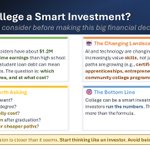
Harvard's estimated costs for 2026-27 (tuition, board, fees, and expenses) are over $90,000 per year. College can be a good investment -- for the right person, field, price, and financing method. But with AI tools exploding access to knowledge, it's no longer the only smart path.
That was the centerpiece of my recent financial literacy class for middle school students: "Is college a smart investment?"
What do you think?

2
1
71
A 14-year-old saves $100/mo at 10%. By age 65: ~$1.9M.
A 40-year-old saves $1,000/mo at the same return. By age 65: ~$1.3M.
The 40-year-old contributed 5x as much. The 13-year-old still wins, with 44% more!
Today's middle school FinLit lesson on annuities.

35
$1,000 invested at age 13 at a 10% historical return becomes ~$177,000 by age 65.
The same $1,000 invested at age 40 reaches only ~$12,000 by 65.
14x more, just for starting earlier. No extra dollars added.
Today's middle school FinLit lesson on compound interest.

24
Today I asked 26 middle schoolers which builds more wealth: a $40K car or a $500K house.
Car after 1 year of payments: equity 25% ➡️ 17%.
House after 2 years of payments: equity 20% ➡️ 27%.
The asset matters more than the discipline.
Today's FinLit lesson.

27



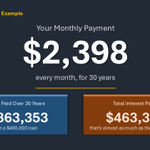
Today I asked 25 middle schoolers to guess the total cost of a $400,000 mortgage at 6% over 30 years.
Most guessed around $500K or $600K. The real answer: $863,353.
That is $463,353 in interest — almost the full price of the house, paid again.
Today's FinLit lesson.

33
Today I asked 25 middle schoolers how much a $200 mountain bike is worth two years later.
Their answers: $200, $120, and $100. All three were right.
That is the difference between book value, market value, and agreed value. Today's FinLit with Mr. 401(k) lesson.

27


I told 25 middle schoolers they were stuck in the Rat Race today.
Then I handed them a board game and told them to find their way out.
The game: CASHFLOW, by @theRealKiyosaki. 🧵
1
21
A game console costs $700.
But add controllers, games, a monitor, headphones, batteries, electricity, and a replacement in 5 years?
That $700 is really a multi-year commitment worth several times the sticker price.
I call these sneaky costs. 🧵
1
21
I asked 25 middle schoolers: You saved $800. The phone you want costs $795. Can you afford it?
Every student said yes.
Then we added sales tax. At 10%, the total is $874.50.
They are $74.50 short. 🧵
1
20
I asked 25 middle schoolers: Is an $800 gaming console a "need" or a "want?"
Most said want. Then I told them the buyer is a professional gamer. Gaming is their job.
Answers changed fast. 🧵
1
22
I asked 25 middle schoolers how much interest they would earn on $2,000 in a Bank of America savings account.
They did the math. The answer: $0.20. Twenty cents. Per year.
The room went silent. Then one student said, "That is not even worth it."
Exactly. 🧵
1
1
107
That was the opening exercise in today's financial literacy class. The lesson: passive and portfolio income.
Interest is renting money. You lend the bank your money. They pay you rent for using it. When you borrow, you pay rent to use theirs.
Simple idea. Most adults have never framed it that way.
1
26
Deflationary abundance is the likely bullish AI outcome. But, a fractional reserve credit based monetary system is fundamentally incompatible with deflation. The path forward from today through tomorrow will be messy and disruptive.

The bull case for the AI Revolution is abundance.
The “AI will end the world” narrative has gone viral and has quickly become the base case assumption.
However, if you look back at any time in history, innovation has largely yielded a net positive long-term outcome for humanity.
Innovation kills tasks, not people. In the bull case, humans work differently, productivity rises, costs fall, and scarcity declines.
As a result, the world can see less conflict over currently scarce resources, lower poverty rates, and improved living conditions.
A world full of abundance, peace, and efficiency is possible.
Humanity has always prevailed.
2
2
47