
Lawyer @cmadvocatesrw|Gooner
Kigali, Rwanda
Joined May 2011
- Tweets711
- Following290
- Followers322
- Likes1.7K


Pius N. Ntazinda retweeted

Our CM Advocates team is at #AfricaLegalForum2026 in Kigali, joining colleagues from across Africa and the Commonwealth to exchange ideas and build connections.
Attending? Let’s connect at @kigaliserena.
@cla_lawyers @Rwanda_Bar @IAFL_FamLaw
#CMAdvocates


Pius N. Ntazinda retweeted

To close the NextGen Lawyers Forum: "Ask, Learn, Lead: The NextGen Legal Q&A." Speakers took questions from the floor on mentorship, entrepreneurship and building a legal career in Africa, with a focus on running a firm through generational change. #AfricaLegalForum2026

Pius N. Ntazinda retweeted

FIRST LOOK! The plans for the purpose-built circuit in Bugesera, Rwanda 🇷🇼
Located 40 kilometres south of Kigali, the circuit will be designed to work in harmony with the natural landscape and use the area’s elevation changes to create a unique and challenging racing experience
#F1

Pius N. Ntazinda retweeted

Rwanda cruise to their second win in two matches. 🇷🇼
Dream start in the #TotalEnergiesAFCON2027 Qualifiers.
📸 @FERWAFA


Pius N. Ntazinda retweeted

⛳ The course is ready! 🇷🇼
The course is set, the team is ready, and we’re all set for the #RwandaOpen2026🏌️♂️
Pius N. Ntazinda retweeted

LET TOORO CHOOSE PEACE.
Tooro has lost a King. A mother has lost her son, a sister her brother, and a Royal Family one of its own. Yet, even before the tears have dried, disagreement over succession threatens to divide one of Uganda’s oldest and most beautiful cultural institutions.
I do not write to determine who is right or wrong, nor do I presume to tell the Batooro who their King should be. I write as an elder, a lawyer, a friend of the Royal Family and, perhaps importantly in this particular debate, as the person who moved the motion for the constitutional recognition of traditional and cultural leaders during the making of the 1995 Constitution.
I believed then, as I believe today, that Uganda must modernise without becoming culturally rootless. Our kingdoms preserve our languages, customs, histories and identities, and these things matter because a people must know where they came from if they are to know confidently where they are going.
Nor is this merely a Batooro affair. My daughter is married to a Mutooro and I have a grandchild who is Mutooro, as families across Uganda are joined across regions, cultures and kingdoms by marriage and friendship. When one Ugandan cultural family hurts, the pain does not stop at the boundaries of a kingdom.
We have always admired the Batooro for their beautiful culture, their gentle language, their courtesy, humility and softness of manner. At this difficult hour, I appeal to them not to lose those qualities, but to make the very gentleness for which they are known the instrument through which this disagreement is resolved.
History should make all of us humble about disputes of succession because there is nothing uniquely Batooro about them. Rwanda knew Rucunshu, Britain endured disputed crowns and civil wars, and our own history in Ankole tells us just how far a disagreement over a throne can travel once pride, faction and power take command.
The quarrel after Omugabe Ntare V’s death in 1895 should teach us something. There was no agreed successor, and while many chiefs and powerful figures looked to Prince Igumira, a famous warrior with a large following, others rallied around the young Kahaya, whose cause was championed by Nuwa Mbaguta and eventually secured with British support. The struggle did not end there: it would contribute to the subduing of Igara and, in time, to the death of my own grandfather, a reminder that succession quarrels can travel far beyond the palace and leave wounds in families and communities for generations.
I learnt another lesson about kingdoms much more recently and much more personally. In 1993, I was among the Banyankore who supported the restoration of the Kingdom of Ankole and, relying on our understanding of the law at the time, we crowned Prince John Barigye as Omugabe. Government declared our actions null and void, and I personally engaged President Museveni on the matter, but to no avail.
I did not agree with Government then, but experience teaches us that wishing Government away does not make Government disappear. Cultural institutions exist within a Republic, within a Constitution and within a wider political and legal order, and any durable settlement in Tooro must therefore involve respectful engagement with the central Government rather than treating it as an outsider to the problem. Government should not choose the King, but neither can a realistic search for peace pretend that Government has no role to play.
There are moments in human affairs when disagreement is real, deep and even bitter. I remember my years in Parliament, the fierce battles we fought and some of the terrible things we said about one another across the political divide. Yet time did something that anger could not: many of us who once confronted each other bitterly came to know one another better, and friendships were formed across those old battle lines which endure to this day.
Pius N. Ntazinda retweeted
RBA leadership is pleased to announce the appointment of Ms. Umuhoza Barbara as the Chief Executive Officer (CEO) and Mr. William Niyongabo as the Chief Operating Officer (COO) of the Rwanda Bar Association.


Pius N. Ntazinda retweeted

We are scared, hurt and in disbelief. We can’t continue like this, we refuse to. #handsofrwandanwomen #ndeka


Pius N. Ntazinda retweeted


I have been reflecting on the debate around how some of our young people dress, and I wonder whether we are asking ourselves the deeper questions.
When concerns are raised about increasingly revealing fashion trends, the conversation quickly becomes: “Why does the State want to police our bodies?”
But perhaps we should also ask: who is shaping these trends in the first place, and why?
Parents in different parts of the world have pointed out something interesting: clothes marketed to little girls are often shorter, tighter or more appearance-conscious than equivalent clothes for little boys of the same age.
Why?
Why are girls introduced so early to the idea that femininity is connected to displaying the body? And why, as they grow older, is that message reinforced through fashion, advertising, music, dance, films, music videos and social media, where the female body is so often presented through the lens of sexual desirability?
This is not an argument that the female body is inherently provocative. It is not. Nor should women and girls be made responsible for managing other people’s sexuality by simply being told to cover themselves.
The question is not what is wrong with the female body. The question is why our culture and commercial industries so persistently commodify it.
And there is another dimension to this conversation that matters to me: cultural identity.
For many years, much of what we wore was imported—not only the clothes themselves, but increasingly the ideas of what was fashionable, modern, attractive or desirable.
But modernity does not have to mean cultural erasure.
Across our continent, we can see powerful examples of societies that have made their cultural identity part of contemporary fashion. Nigeria, among others, has demonstrated how local fabrics, patterns, craftsmanship and aesthetics can be worn with pride and continuously reimagined for modern lifestyles.
That should challenge us too.
What does contemporary Rwandan fashion look like when it is confident enough to draw from who we are, while remaining creative, youthful and open to the world?
This is not about freezing culture in the past, prescribing one acceptable way of dressing, or rejecting influences from elsewhere. Culture has always evolved. The question is whether we are participating in that evolution as creators, or simply consuming what others create for us.
Industries manufacture aspiration. Algorithms amplify it. Celebrities normalize it. Markets profit from it. And when we do not produce enough of our own cultural references, other people’s definitions of beauty, desirability and modernity can very easily become our own.
So before reducing every conversation about these trends to “the State wants to control our bodies,” perhaps we should encourage our young people—girls and boys alike—to exercise something even more important than the freedom to choose: the critical thinking to interrogate the choices being presented to them.
Who benefits from this trend?
Who defined this as desirable?
Why is sexual visibility so disproportionately expected of the female body?
What parts of ourselves are we losing when we imitate without questioning?
And what could we create if we looked at our own culture not as something belonging to the past, but as material for the future?
Freedom is not only the ability to choose. It is also the ability to understand what is shaping our choices—and the confidence to create alternatives of our own.




Pius N. Ntazinda retweeted

To all the Arsenal fans, thank you for everything, from the bottom of my heart.
Once a Gunner, always a Gunner.
Leo
Pius N. Ntazinda retweeted

1964.
16th Street NW
Washington, D.C.
Uganda's new embassy opened its doors.
President Lyndon B. Johnson and Lady Bird Johnson arrived to mark the occasion.
But it was Princess Margaret Semugeshi who stole the afternoon, dressed in the flowing mushanana of a Rwandan kingdom that no longer existed.
She wore it not as costume, but as a flag.
The embassy at 5911 16th Street NW was a statement of arrival.
Uganda, just two years independent, had found a permanent home for its young diplomatic mission.
Prince Stephen Edgar Paul Karamagi, the Second Secretary and Chargé d'Affaires, welcomed American dignitaries, journalists, and diplomats into the freshly polished halls.
But the highlight of the afternoon came when President Lyndon B. Johnson and First Lady Lady Bird Johnson stepped through the doors in person, a gesture of genuine interest from the White House toward a small East African nation still learning to walk on the global stage.
The photographers positioned themselves.
The President and First Lady moved through the room with practised ease.
And then, standing to the far left of a formal group, the First Lady's attention caught.
Princess Margaret Semugeshi, wife of the Chargé d'Affaires, was dressed in a mushanana, the traditional royal attire of Rwanda, its graceful folds cascading like water.
The fabric shimmered softly in the spring light.
Lady Bird leaned in, visibly taken, asking about the dress, the story behind it, the country it came from.
The Princess answered with a gentle Rwandan lilt, her smile warm but her eyes carrying the weight of memory.
The mushanana was not simply a fashion choice.
Four years earlier, Rwanda's monarchy had been abolished.
Her father, Chief Semugeshi of Bufundu, had been displaced, and the kingdom her family had served for generations had been swept away by revolution.
Yet here, on the marble steps of Uganda's embassy, she wore the dress of her ancestors not as mourning but as declaration.
Every fold was a refusal to let heritage be erased by political upheaval.
She was not a petitioner seeking recognition; she was a princess, and she wore her crown, not on her head, but in the cultural armour of that mushanana.
President Johnson, in his familiar Texan warmth, joined the conversation.
He asked about Uganda, about her life in Washington, about the dress.
The Princess held her ground with effortless grace.
Behind her, Prince Karamagi watched the exchange with quiet pride, a husband, a diplomat, a man who understood that his wife was doing something no speech could accomplish.
The photograph taken that afternoon captured the moment precisely: the President and First Lady turned toward the Princess, their attention entirely hers, while the Chargé d'Affaires looked on, a small smile playing at the corner of his mouth.
The embassy was now officially open.
But what that image immortalised was not the building, nor the politics, nor the bilateral relations.
It was the convergence of two African stories, one Ugandan, forward-looking and ambitious; the other Rwandan, displaced but defiant.
Princess Margaret Semugeshi, standing on American soil, wearing the flag of a kingdom that no longer existed, had done something remarkable.
She had reminded everyone in the room that royalty is not a matter of thrones, but of presence.
And for a few hours on a spring afternoon in 1964, the mushanana had spoken more eloquently than any ambassador's address.
What does it mean to wear a lost kingdom on your shoulders, and still stand taller than anyone in the room?
#ughistory #Bufundu #Rwanda #Uganda @ObukamaBwaTooro @UgaEmbaWashDC @UgandaMFA @RwandaMFA
Pius N. Ntazinda retweeted

So wrong, Mr President @realDonaldTrump 👎

Trump: The people in Belgium --if they win the game, they can be very proud. If they would have won the game with the player missing, it would have been a different feeling. You can’t do that, and I’m very glad.
All I did was ask for a review. I didn’t say, “You have to do this.”
This man is a smart, tough man, Gianni Infantino. He’s a smart, tough man, and his stock has gone through the roof.

Pius N. Ntazinda retweeted
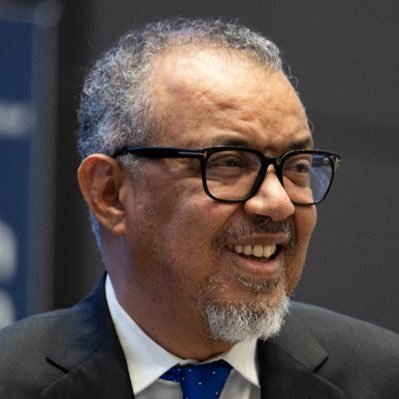
Omar Artan didn’t just make the #FIFAWorldCup, he made history as the first Somali referee to get there, and as #Africa’s best. That milestone stands no matter what. So sorry to see this, Omar. You reached the summit of your profession and inspired a generation back home just by getting there, and being kept off the pitch you earned doesn’t change that. This won’t be the end of your story on the world stage. The world stands with you as one family, wishing you resilience now and many more major finals to come. Solidarity. #Somalia


Pius N. Ntazinda retweeted

Me and a fellow lawyer/filmmaker recently launched a boutique law firm to serve the creative community (italanto.com/), please let us know how we can support, esp. on issues related to Copyrights & Capacity Building on Intellectual Property Rights 🙏🏿
#Tuzatsinda 💪🏿
