

PhD candidate, visual cognition @OptometryUoA, Schwarzkopf Lab. Ebbinghaus, Delboeuf Illusions, illusory brightness, consciousness.
Auckland, New Zealand
Joined January 2020
- Tweets34
- Following28
- Followers34
- Likes26





Are you someone who wants to
- shake their faith in the scientific enterprise to its very core?
- be motivated to be an even *more* conscientious researcher?
- to read about an entertaining albeit horrific catalogue of scientific f*ck ups?
Read this!
us.macmillan.com/books/97812…
Poutasi W. B. Urale retweeted

Anglophone commenters love to attribute everything that happens in enemy territory to Bad Leaders, but when you talk about Western interventions in the Global South they become Hume with the billiard balls, pulling out a magnifying glass and saying "well you can't SEE causality"
Finished "Mao Zedong and China in the Twentieth-Century World: A Concise History", by Rebecca E. Karl. I was surprised to learn that Mao's schtick was not only to sell himself as voice of the masses, but also as a *critic* of CCP leadership.

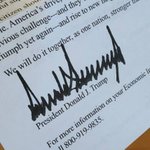
Got my (7 months late) stimulus check, and now somewhat determined now to have a signature that looks as slick as Donny's

A splash of cold water by @guitchounts. I'm sympathetic to the idea that there is a hard limit to understanding the brain in its entirety and why chasing general principles is a much more useful aim. 1/3
nautil.us/issue/94/evolving/… via @NautilusMag
I'll add that Borges' "On Exactitude in Science" is great, but an even better depiction in fiction of the incomprehensibility and enormous complexity of brains is found in Stanislaw Lem's "Solaris", in which scientists are bamboozled by a living, thinking planet. 2/3
Poutasi W. B. Urale retweeted
The most obvious - and extremely common - offense here is to assume that violence / authoritarianism / extremism happen "out there" in a bad world distinct from the United States, and to entirely ignore the real history of the US both at home and abroad for the last few centuries
I'd think it was kinda cool to see people occupy congress if it weren't for the fact that the people doing it this time are QAnon conspiracy theorists

I've noticed a lot of my left-leaning friends vacillating about whether it is morally acceptable to vote or Biden. For me, the immediacy of climate change alone makes voting for sleepy Joe a no-brainer, and I have yet to see any convincing argument to the contrary.
Poutasi W. B. Urale retweeted

"Ebbinghaus thickness illusion"
The contour of the left inner circle appears to be thicker than that of the right counterpart, though they are the same thickness.
psy.ritsumei.ac.jp/~akitaoka…

This the one I was telling you about @SoheilMpour. Unreal!

Transnational matai: Examining the experiences of intergenerational global Samoan titled chiefs: royalsociety.org.nz/research…

I find this kind of thinking baffling because it presupposes that the causes pushed by an activist press will miraculously always line up with what these people personally think is important.
This Post is from an account that no longer exists. Learn more
