

Writer // Crypto Maxi and Data Enthusiast
Joined March 2020
- Tweets16.2K
- Following2.1K
- Followers2.1K
- Likes34.4K


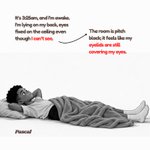





You just need your centrifugal force: the pull that keeps you anchored when everything else is pulling you away.

1
76


Pascal retweeted

Legends: Rise of the Pack preorders go live in 48 hours.
Friday, August 7. 10AM EST.
Are you ready to become a legend?

Okay! This is so cool!
Now let’s see how you do with the Doginals👀
Try a @doginaldogs first of course.

we just became the first people to ever buy $PENGU using Claude
joining the @pudgypenguins huddle is easy with PayBox
we'll send all of the tokens to one person who likes this post

Pascal retweeted

What if DeFi could verify reality before trusting collateral?
Proof-of-Reality uses AI agents to investigate assets, challenge conflicting evidence, detect fraud, and issue Truth Certificates on @Mantle_Official .
Before DeFi trusts an asset, PoR verifies it.
Support us in the Mantle community vote 💪
#Mantle #RWA #AI #MantleAIHackathon


Pascal retweeted
⚡️TETHER IS BUILDING AI THAT LIVES ON YOUR DEVICE. A BREAKTHROUGH IS COMING THIS WEEK.
Tether just put the industry on notice. On March 15, CEO Paolo Ardoino posted that the company's AI division will release a "true breakthrough" before the week ends.
For anyone still treating Tether as just a stablecoin issuer, that framing is now outdated.
Tether has spent more than a year building QVAC, a platform designed to run AI models entirely on consumer devices without cloud servers or API keys.
The goal is straightforward: AI that runs privately on your laptop, phone, or GPU, with no data leaving your device and no dependence on OpenAI, Google, or any centralized infrastructure.
The product has been moving fast. QVAC Workbench version 0.4.1 shipped on March 11 with a redesigned interface, expanded document format support for retrieval-augmented generation, and performance fixes for Android devices including Samsung and Pixel 10.
A live demonstration earlier this month showed QVAC running on a standard laptop GPU, using the Model Context Protocol to interact with third-party tools including Asana, handling automated workflows and task management entirely offline.
The technical foundation underneath all of this is serious.
Tether's QVAC Fabric LLM, released in December 2025, is the first production-ready framework capable of full LLM inference and LoRA fine-tuning across mobile GPUs including Qualcomm Adreno and ARM Mali.
That means model training on smartphone-class hardware, a capability that did not exist in any public framework before this. The entire stack is open-source under the Apache 2.0 license.
The commercial moves back it up. Tether invested in Eight Sleep at a $1.5 billion valuation in March 2026, integrating QVAC's on-device processing into the sleep technology company's AI health platform.
Its QVAC Genesis II dataset now covers 148 billion tokens across 19 academic domains, making it the largest publicly available synthetic educational resource built specifically for AI pre-training.
Tether has confirmed that QVAC's architecture will eventually integrate Bitcoin and USDT, enabling AI agents to transact autonomously using digital assets.
That is the end state: a network where AI agents reason, act, and pay, entirely outside corporate cloud infrastructure.
Tether controls over $186 billion in USDT supply. It is now spending those profits to challenge the AI establishment.
The breakthrough announcement this week will show how far along that challenge actually is.


Pascal retweeted
A whale accidentally sent 126,000 TON ($220,000 USDT) to a scammer.
Normally, that money would have been gone forever. But a few hours later, the scammer sent 116,000 TON ($203,000 USDT) back to the whale.
He kept 10,000 TON ($17,000 USDT) and labelled it as “compensation.”
He even left a note on the public chain that said: “Sorry, this is too much. Take it back. I know it’s hard-earned.”
How did the whale lose the money in the first place?
The whale was preparing to send a large amount of TON, as usual, to another wallet.
But the scammer had already set a trap using something called “wallet poisoning.”
Scammers watch the blockchain and track active wallets that frequently send money to the same addresses. These could be exchanges, friends, or other wallets owned by the user.
Then they create fake wallet addresses that look almost identical to real ones.
The first few and the last few characters match.
At a quick glance, the address looks identical.
Next, the scammer sends a tiny transaction to the target wallet, sometimes just a few cents. This small transaction appears in the wallet’s history.
Now the fake address sits in the victim’s recent transactions.
Later, when the victim wants to send any amount, they may copy an address from their transaction history instead of carefully checking it.
That is exactly what happened here.
The whale copied the wrong address and accidentally sent 126,000 TON to the scammer.
Luckily for him, instead of disappearing with the entire amount, the scammer returned most of it.
Some people online are calling him an honest thief.
Others believe he returned the funds because large transactions on public blockchains can sometimes be traced.
Either way, cases like this are extremely rare.
Always double check the full wallet address before clicking send.
Because once a transaction is confirmed on the blockchain, there is usually no way to reverse it.
Stay SAFU with your funds.
AN HONEST SCAMMER OR A LUCKY WHALE?


