

Lutheran Pastor. 🦬 LCMS. Creationist. I am a Bible-based, Christ-centered, servant of the Holy Trinity.
Connecticut, USA
Joined December 2022
- Tweets1.8K
- Following826
- Followers1.3K
- Likes18.5K




Pinned Tweet
There’s a lot of gloom and doom, sadness and grief on the feed today. Let’s not forget the big picture here: You are loved by Jesus Christ with an everlasting and infinite love. He died and rose again for you! Be at peace. You are loved. Nothing can ever change that. Amen!

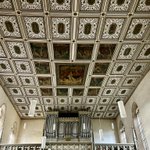
The inside of St. Anne’s Lutheran Church in Eisleben. Services are still held on Sunday with a handful of faithful members who keep the church going.
East Germany had a hard time recovering from the atheist attitudes of the DDR. The country churches who are faithful to God’s Word continue to struggle. And this was the key Lutheran territory for centuries.
Pray for our German brothers and sisters. May the Lord Jesus revitalize the churches in this area. #Reformation #SELK #LCMS #Lutheran


After lunch in downtown Eisleben, we walked to St. Anne’s Church, which was on the edge of town, up on a big hill.
St. Anne’s had a small Augustinian monastery attached to it which Martin Luther visited several times when he was a monk in Erfurt. (He was assigned the task of checking up on his fellow monks.) Later, as the Reformation got underway, St. Anne’s was the first church in this entire region to become Lutheran. The monks voluntarily closed the monastery and left it behind.
St Anne’s was completed in 1513 to serve the miners in this area. It was known as “The Miners’ Church.” Apparently, the churches downtown preferred that these rough-and-tumble workers worship in their own place, up the hill.
St. Anne was the patron saint of miners back then. Remember, Luther’s father, Hans, worked in the mining industry in nearby Mansfeld. Also, remember how the young man Luther cried out to St. Anne during the intense thunderstorm he was caught in near Erfurt.
St. Anne’s is unique in that it features the “Stone Picture Bible,” made by the famous sculptor Hans Thon Uttendrup from Munster in 1585. These sandstone carvings feature stories from the Bible and were useful for object lessons and sermons. St. Anne’s also has elaborate paintings on the ceiling. Overall, this is a delightful church. #Reformation #MartinLuther #Lutheran #LCMS


Pastor Volker Heide retweeted

"The greatest thing competitive sports does for anyone is to teach how to meet defeat - not victory. Because only through defeat, is character built. I've learned how to cope with defeat & endure to the point where you can come back and compete even harder."
-Tom Landry

Martin Luther was baptized on November 11, 1483, at St. Peter & St. Paul Church, Eisleben, pictured below. This church has been restored and is now a celebration of Holy Baptism. People can get baptized in the large baptistry in the floor. The inscription is our Lord’s great commission: “Go and baptize all nations in the name of the Father and of the Son and of the Holy Spirit and teach them to be my disciples.” #MartinLuther #Baptism #Lutheran #LCMS

Eisleben is a nice little town, rich in Reformation history. Martin Luther was born and also died here.
After his birth, Luther’s family moved to nearby Mansfeld. Luther considered Mansfeld to be his hometown and spoke of it fondly throughout his life.
The reason that Luther was in Eisleben at the time of his death was that he came here to help settle a legal dispute among four counts of Mansfeld. (The hometown boy trying to help out.) This took a couple of weeks of intense negotiations.
As they set out to leave and return to Wittenberg, Luther complained of chest pains; he then suffered a heart attack and stroke. There wasn’t much they could do.
Luther’s health was very poor at the end of his life, and he dealt with multiple issues. The stress of his work probably was also a factor.
We visited the house where Luther died. The museum featured a display of medical treatments from that day. It was pretty basic, but also rich with homeopathic treatments, natural herbs and so on. Old school medicine.
Luther’s body would be taken to Wittenberg and buried in the All Saints’ Church. His death was quite a shock to the Reformation movement. It would take a lot of work in the years after his death to clarify and consolidate his efforts. #MartinLuther #Reformation #Lutheran #LCMS


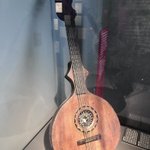
Below is Luther’s guitar in the museum in Eisleben. (Just kidding.) But various musical instruments were common back then. The Germans have always been big on music and singing. (Luther sang in the boys’ choir at St. George’s Church in Eisenach.) Martin Luther was a gifted musician and would write many hymns later on. (Come and visit Eisleben with me: Link below).
oasisblur36c156.substack.com…

Martin Luther was born and died in Eisleben. He was born on November 10, 1483. He was baptized the next day at St. Peter & St. Paul Church. Luther died on February 18, 1546. He was 62.
Luther’s parents were Hans and Margaret. His family could be considered lower middle-class. Hans worked in the mining industry and specialized in smelting. The family moved to nearby Mansfeld in 1484 to be closer to Hans’ work. The Harz Mountains were in this area, and they were heavily mined.
Hans wanted Martin to do something better than mining, so he sent him to the Latin Schools at Magdeburg and Eisenach from 1497 to 1498. Not every child went to school back then. This was something special. A Latin School would cover language arts, mathematics, and basic philosophy. (Latin also!) Luther wrote many of his works in Latin. It was the language of the church and academia. In 1501, at the age of 17, Luther entered the University of Erfurt. #MartinLuther #Reformation #Eisleben #Lutheran #LCMS


More pics from Wittenberg on my Substack. Happy Reformation Day!
oasisblur36c156.substack.com…


The Cranach altarpiece inside St. Mary’s Church in Wittenberg is an impressive example of the art of the Reformation. Lucas Cranach and his son were gifted artists in Wittenberg. They had a large shop that produced a great variety of artistic expressions of Luther’s teachings. They were especially great painters, and they communicated the teachings of the Bible in their artwork. #Reformation #MartinLuther #Lutheran #LCMS


This is the inside of St. Mary’s Church in Wittenberg. This is where Martin Luther was pastor. He preached his famous “Invocavit Sermons” here in 1522 when he suddenly returned from the Wartburg to end the chaos and confusion Andreas Karlstadt had unleashed with his radical ideas about reforming the church while Luther was gone.
Karlstadt was a senior professor at Wittenberg and supported Luther at the beginning. But he reached a point where he thought reforming the church meant totally rejecting all the current practices and services of the church. He wanted to basically throw out everything and start something different. His actions became pretty drastic as he starts tearing down and removing all artwork from the church and destroying statues and so on.
However, Martin Luther wanted to keep what was correct and reform what was wrong. He also wanted to move slowly, to allow people to process the changes that need to be done. Change needs to be initiated with a careful explanation of the reason for it. Teaching is always essential. Luther tried to always consider how this would impact the common people. Again, he was the pastor of this church. #Reformation #MartinLuther #Lutheran #LCMS

Some Wittenberg dates: In 1512, Luther became a Professor of Theology at the University. In 1514, he became the chief preacher at St. Mary’s Church. In 1524, Luther stopped wearing his monk’s clothing. (That was a big deal for him; he had been a monk for almost 20 years.) In 1525, he married Katharina von Bora. In 1532, Elector John (the successor of Frederick the Wise, who died in 1525) transferred the “Schwarzes Kloster” (the Black Monastery) to Luther and his family, who would live there for over 35 years.


You can’t free yourself. Only the Son of God has the power and authority to set you free. The Son of God wins this freedom for us through his service and sacrifice. He becomes a slave in our place. He humbles himself and becomes our servant. He enters our slavery as he bears our burden and suffers that punishment we merit. He dies on the cross. He is the “propitiation by his blood.”
This means that Jesus paid the price for our rebellion against God. He made a total and complete satisfaction for the sins of the whole world. He shed his blood for all of humanity on Good Friday. Therefore, the price has been paid in full. There is no need for us to add anything. “It is finished,” our Lord cried out from the cross. His atonement is done.
