

Mechanical Engineering PhD student @ CU Denver previously @yorkspacesystem, @HB_robotics
Denver, CO
Joined January 2021
- Tweets1.8K
- Following561
- Followers232
- Likes5.9K





PSA: When I’m president, anyone who cooks chicken to 165°F will be put in chains and taken straight to jail.
165°F isn’t the “safe” temperature, that's a LIE. It’s the instant temperature.
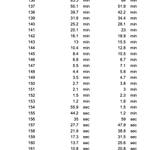
Killing bacteria with heat depends on time AND temperature. Hold chicken at a given temp and Salmonella dies off exponentially. The hotter it is, the faster that happens. The USDA target is a 10,000,000x reduction.
At 165°F that takes under 10 seconds. At 150°F, about 3 minutes. Per USDA’s own poultry tables, chicken held at 136°F for a little over an hour is just as safe. (But it’d be disgusting, so don’t go that low.)
Do yourself a favor and pull your chicken off the smoker or out of the oven at 155°F. It’ll change your life.

Though seemingly basic, the concept of pressure is actually pretty profound.
These dumbbells weigh 105lb. Seems like a futon made of polyester fabric and styrofoam shouldn’t be able to support them. But it can!
In this case the force of the dumbbells is distributed so well the futon still has folds in the fabric.
P=F/A so the more area you can distribute your force over, the less force each section of the fabric needs to support.


one time at work a coworker accidentally cut straight through a $50k flight harness that was already integrated


There's something important to going the extra mile and embedding an engineered product with art.
It shows that the designer takes pride in their work, which can be used as an indicator of a high level of quality. No one is going to half ass a product and then spend extra time putting a bow on it.
If you look at the old steam engines that powered drawbridges and factories you'll see what I mean. These beasts were marvels of engineering, and they were painted and finished beautifully to match the awe of their engineering achievement.


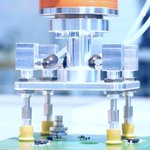
pneumatic end-of-arm tool grippers are some of the most complex parts of industrial robotics
typically industrial engineers have to spend hours designing them for every niche case
I'm shocked there still isn't an easy way to design one around a specific part

lately my stationary bike started making a super annoying creaking noise, but it didn't seem to happen every turn of the crank
so I took a video and sent it to claude. claude took stills of the crank position to measure the pedal angle and matched them to a spectrogram of the squeaks
turns out that these squeaks happen at a 240 degree cadence relative to crank position. digging into the bike's manual, there just so happens to be a belt linked to this crank in a 3:2 ratio!
so i took off the front panel, cleaned the belt, and the squeak went away
absolutely astounding what these models can do


and i thought the adafruit confirmation screen was peak...


Patrick Tash retweeted

SUPPLY CHAIN IS A SEARCH PROBLEM

It's pretty common in manufacturing that you need some difficult operation performed and there exists some industry in which they do it all the time. The trick is finding that industry and then finding "the guy" who has the tooling and knows how to do it really well. Suddenly, an operation that seemed impossible is actually cheap and easy.
It’ll be interesting to see if two camps emerge:
In one, they’ll use AI to think more deeply about how to solve problems. In the other, they’ll outsource their thinking.
The former case will create more agency over what actually gets built, but the latter will tempt many.

poisson’s ratio is a measure of how much a material elongates or shrinks 90 degrees from the direction of load.
a negative poisson’s ratio means it does the opposite of what you’d expect: squeeze it and it pulls in instead of bulging out.
metamaterials like this enable super cool mechanisms like print-in-place compliant latches and tools
I can't share much of my own research yet but we're deep into making interesting material structures like this one, great work Kentaro!

なぜ我々は負のポアソン比に魅了されるのでしょうか?
何はともあれ、新しい論文が掲載されました!
データ駆動型トポロジー最適化により、押すと縮む、いわゆる負のポアソン比を持つメタマテリアルを設計しました。
doi.org/10.1016/j.matdes.202…


Patrick Tash retweeted

vulnzero. the scaling laws will have driven cyber mythos-class capabilities into small, cheap models and all software dev everywhere will be using models for fractions of pennies on the dollar to stop shipping security bugs permanently.
the recent PHP vulnerability highlights a scenario that may lead to the consistent reliable revenue that Chamath is talking about
open source models are capable of creating agentic swarms, so defenders will have to consistently spend to protect systems from these attacks

1% of companies represent 90% of AI spending.
Of that 90%, 80% of this spend are from unprofitable VC backed companies.
So, roughly, $0.70-75 of every dollar of AI spending right now comes from AI companies spending VC investment dollars.
As a result, the revenue quality in AI is currently poor. This happened in previous cycles as well, like cloud when early users of AWS were mostly venture backed startups.
The thing, though, is that before AWS could scale and pull thru GCP and others as legitimate cash machines, there were a few clearing events to sort out these brittle revenues.
This is the extrapolation of Ken’s point. We will need to transition from speculative AI spending to consistent, reliable spend that shows up in public market earnings reports.
This hasn’t happened yet because most of the breathtaking revenue growth comes from LPs investing in VC funds who then send it to startups.
totally unrelated, but these are on sale rn at home depot


Regarding potential attacks on energy, food, and water infrastructure, the threat is quite real. Someone is currently probing infra and feeling it out, it is an active threat. Even a little preparation can be helpful, just in case. This comes from the joint cybersecurity advisory released by the NSA and partner agencies on August 19:
'The threat actors are conducting reconnaissance and capability development against U.S.-based Siemens PLC installations using Al-generated exploitation scripts disguised as legitimate monitoring tools. The actors leverage Internet scanning services to find Internet-exposed PLCs running outdated software or that are otherwise poorly protected. The U.S. critical infrastructure sectors most targeted by this threat activity include Critical Manufacturing, Energy, Water and Wastewater, Chemical, Food and Agriculture, and Commercial Facilities. This is not a theoretical risk - it is an active threat. Depending on the specific circumstances, exploitation of poorly protected PLCS could lead to disruption of critical industrial processes, safety incidents, downtime or equipment damage, compromise of sensitive data, compliance violations, and cascading impacts across interconnected systems.'
'Using Al to generate exploitation scripts represents an evolution in threat actor capabilities, dramatically reducing the technical expertise and time required to develop working ICS exploitation scripts and malicious tools. In addition, Al enables adversaries to rapidly leverage additional attack vectors and adapt to defensive measures. Threat actors can easily collect public information about vulnerabilities and weaknesses, find exposed and exploitable PLCs, and use Al-generated scripts to act on that information. If PLCs are exposed to the Internet, they are at high risk for exploitation.
Threat actors are leveraging open source industrial automation libraries - specifically snap7.d11/python-snap7 - combined with Al-assisted scripting to create custom tools that mimic legitimate OT monitoring solutions. These tools provide read/write access to Siemens S7 Series PLC memory, configuration data, and ladder logic programs via the S7comm protocol.'
