






Pinned Tweet
Currently reading “Seutonias The Lives of the Caesars” and will post random insights on Roman Emperors here as I come across them. Currently reading about Emperor Claudius who ruled from 42-54 AD

3
4
385
On this day in 1532, Francisco Pizarro captured the Inca emperor with 168 men.
It was the first time the Incas had experienced cannons, firearms, and a coordinated cavalry charge in combat.

8

Did you know the US used the gas chamber as a method of execution? They executed nearly 600 people in gas chambers between 1924 and 1999, using hydrogen cyanide, the exact same lethal gas found in Zyklon-B.
The US never stopped using it during World War II, gassing around 150 prisoners on American soil.
In some cases, two people were killed at once.
The last to be killed was a German national, Walter LaGrand on March 3, 1999. Convicted of murder & armed robbery in Arizona, he chose the gas chamber over lethal injection specifically so his lawyers could challenge the method as "cruel and unusual" by citing the horrors of Nazi Zyklon B. The legal gamble failed, and his execution took an 18 agonizing minutes.
18
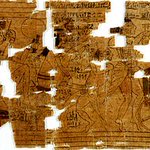
This is the Turin erotic papyrus, the only surviving Egyptian erotic scroll. Original and AI-enhanced:


1
25
One possibility is that this ship was carrying olive oil. Ancient people used olive oil for cooking, preserving food, bathing, cosmetics, perfumes, medicine, religious offerings,
Greek athletes coated themselves in olive oil before exercising, and some athletic champions received huge quantities of it as prizes.

An ancient shipwreck has been discovered near the Mediterranean island of Kekova, and analysis has determined it is between 4,400 and 4,700 years old (Early Bronze Age), thus making it the oldest known shipwreck in the world. It has already been entered into the Guinness Book of World Records. buff.ly/gZtMYGz

19
Part 2 of a series on Irish History. It’s 8000 BC and Irish Mesolithic Irish hunter gatherers have arrived. What did they hunt? How did they build their homes? A lot of clues come from Mount Sandel near Coleraine in Co. Derry, the earliest known human settlement in Ireland.
47
Did you know Adolf Hitler's family had a Jewish doctor?
In 1907, Hitler's mother Klara was dying from breast cancer in Linz, Austria. Her doctor was a Jewish physician called Eduard Bloch. Bloch treated her during the final months of her life, including using treatments intended to ease her suffering, until she died aged 47 on 21 December 1907.
Hitler was devastated but remained grateful to the Jewish doctor for the care he had given his mother. Years later, Bloch recalled Hitler thanking him and saying that he would "be grateful to you forever".
There is a story sometimes repeated about Hitler: that his hatred of Jews began because a Jewish doctor failed to save his mother. That's not true.
30 years later, Hitler was dictator of Germany and the Nazi regime was systematically persecuting Jewish people. In 1938, Nazi Germany annexed Austria and now, Dr Bloch was a Jewish man living under the dictatorship of his former patient's son.
But Hitler remembered him. Bloch and his family received special protection from the Gestapo and were treated differently from other Austrian Jews. Bloch was eventually permitted to leave Nazi-controlled Europe and emigrated to the United States in 1940.
There is an uncomfortable parallel with something Heinrich Himmler said a few years later.
During his infamous Posen speech in 1943, Himmler complained that Germans supposedly supported antisemitic persecution until it involved a Jewish person they actually knew.
As Himmler put it: "Everyone has his decent Jew."
Himmler wasn't arguing for compassion. He was condemning people for making those exceptions while discussing the extermination of Europe's Jews.
Yet Hitler himself had his own exceptions.
Below is the Memorial to the Murdered Jews of Europe, built right beside where the evil dictator spent his final months.
68
History on X mostly consists of:
Asking Grok what's up with this some ancient large monument or natural structure.
Grok gives a perfectly good explanation or if it's not sure, summarises different theories.
Proceed to argue with with the AI bot which keeps giving reasonable answers and possibilities based on the evidence.
Finally give up and tell Grok it's clearly being programmed by the archaeology elites to give fake answers.
Rinse and repeat.
1
12
"We set sail. Unless you've another field to plow" and the *knowing smirk* is an all-timer of a line.

Watch Episode 1 of our Odyssey series made with Grok Imagine.
Let us know in the comments if you'd like a full breakdown of how it was done!
Creative collaboration with @WonderStudiosX and director Dev Walker @glumlot_
12
At gladiatorial shows, Claudius would order that any fighters who slipped be killed.
He would randomly condemn people working at the show, including carpenters and attendants, and once even his personal aide, to fight lions and other animals where they were almost certain of death.
7
Part 1 of a new series on Irish history, follow for more videos coming.
Here are the some of the animals people saw when they first arrived in Ireland 12,500 years ago including the 7 foot tall Irish Elk and Brown Bears.
In 2016, archaeologists announced a discovery that pushed back the earliest known evidence of humans in Ireland by approximately 2,500 years.
It was a brown bear bone, approximately 12,500 years old, bearing marks made by a sharp stone tool.
The bone was found in Alice and Gwendoline Cave, near Ennis in County Clare.
What makes the story particularly interesting is that the bone had actually been excavated in 1903, more than a century before researchers recognised its significance.
The bone was the right kneecap (patella) of an adult brown bear.
Researchers identified five cut marks, each approximately 24–30 mm long, consistent with a sharp stone implement being used to cut through tissue around the knee.
51
Imagine being a European in the 1500s and seeing a rubber ball bounce for the first time.
When the Spanish arrived in the Americas, they encountered something that seemed almost impossible. Indigenous peoples of Mesoamerica had been making rubber balls for centuries, using latex collected from rubber trees mixed with plant juices. They used them in their famous ceremonial ballgames.
Europeans had balls made from materials such as leather, cloth and inflated animal bladders, but nothing behaved quite like this.
In 1528, Hernán Cortés brought a group of Indigenous ballplayers to the court of Emperor Charles V, where they demonstrated their game.
For spectators who had never encountered elastic rubber, watching a solid-looking ball hit the ground and spring back into the air must have been extraordinary.
The Spanish chronicler Peter Martyr d’Anghiera marvelled at the material, describing how the balls seemed to leap in a way European balls simply couldn't. He also said that the athletes "played naked, like wrestlers".
Long before Europeans understood how rubber worked, the peoples of Mesoamerica had already been manufacturing and playing with it for thousands of years.
Rubber didn't create European ball sports, which already existed, but the material would eventually help transform sporting equipment and the kinds of balls people could manufacture. Today, rubber or synthetic rubber is found in the construction of many of the world's most familiar sports balls, from footballs and basketballs to tennis balls and golf balls.

122
Imagine being a European in the 1500s and seeing a rubber ball bounce for the first time.
When the Spanish arrived in the Americas, they encountered something that seemed almost impossible. Indigenous peoples of Mesoamerica had been making rubber balls for centuries, using latex collected from rubber trees. They used them in their famous ceremonial ballgames.
Europeans had balls made from materials such as leather, cloth and inflated animal bladders, but nothing behaved quite like this.
In 1528, Hernán Cortés brought a group of Indigenous ballplayers to the court of Emperor Charles V, where they demonstrated their game.
For spectators who had never encountered elastic rubber, watching a solid-looking ball hit the ground and spring back into the air must have been extraordinary.
The Spanish chronicler Peter Martyr d’Anghiera marvelled at the material, describing how the balls seemed to leap in a way European balls simply couldn't.
Long before Europeans understood how rubber worked, the peoples of Mesoamerica had already been manufacturing and playing with it for thousands of years.
Rubber didn't create European ball sports, which already existed, but the material would eventually help transform sporting equipment and the kinds of balls people could manufacture. Today, rubber or synthetic rubber is found in the construction of many of the world's most familiar sports balls, from footballs and basketballs to tennis balls and golf balls
87
Claudius wrote a massive history of Rome starting with the assassination of Julius Caesar, skipping over subsequent events as writing about them truthfully would have upset his mother and grandmother, and then continuing with the period after the civil war.
The first time he went to read his history in a crowded hall, a bench broke under the weight of a fat man. Everyone laughed, no one more so than Claudius who was unable to continue reading as he couldn’t stop laughing every time he tried to read.
1
20
Claudius’ history of Rome was 41 volumes. He also wrote an 8 volume autobiography, a 20 volume of history of the Etruscan civilisation, a multi-volume history of Carthage, a treatise defending his introduction of three new letters into the Latin alphabet (the sonus medius, antisigma, and the digamma for 'V'), as well as a book on the art of dice playing. None of his works survive, due to lack of interest in scholars in the work of someone seen as a bumbljng leader and the works were just too long to make many copies of.
19
Claudius nominated a man for political office because his father had once given him a drink of cold water when he was sick.
12