

AI builder · 0→IPO founder Founded @Waterdrop_Inc (NYSE: WDH) · Co-founded @Meituan Waimai @Forbes 30u30 | @WEF YGL Follow if you care about AI
San Francisco, CA
Joined June 2021
- Tweets437
- Following7K
- Followers18K
- Likes7.9K
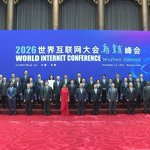






Back from Wuzhen — what I brought home is not just takeaways, but the strength to keep moving forward.
Honored to attend the opening ceremony of the 2026 World Internet Conference (WIC) Wuzhen Summit, joining industry peers from China and abroad — Joe Tsai (@joetsai1999), Chairman of Alibaba Group; Mu Rongjun, co-founder of Meituan; Kai Yu, founder of Horizon Robotics; Bicheng Han, founder & CEO of BrainCo; Charles Zhang, founder of Sohu; and Nii Quaynor (@niinarkuquaynor), "Africa's father of the internet" — and to have the great honor of a group photo with Premier Li. At the click of that shutter, I felt more deeply than ever the weight behind the title "internet entrepreneur": not a halo, but a responsibility.
At the same summit, @WaterDrop_Inc's self-developed insurance AI large model "Shuishou" won the "New Light" Product Award. It is the best recognition of our team's long-term commitment to AI, and fresh fuel to keep running. But I know this well: awards are waypoints, not the destination.
One shift was unmistakable in these days of conversation: entrepreneurs have moved on from pitching AI concepts to using AI to deepen real industries and create real value. Concepts may win applause; only value earns trust. "AI-native" was never a pretty slogan — it is a long-term promise, one that must be embedded bit by bit into every step of the service process, until it becomes protection that users can truly feel.
Looking ahead, Waterdrop will go deeper into the life & health insurance industry — standing in our users' shoes, and in society's, to understand their true needs; combining the power of AI with close partnership across insurers, to craft products that genuinely meet user needs and solve real problems. Only then can we open up a bigger world and earn lasting word of mouth.
Wherever our users are, that is where our protection will be. Stay user-centered; use AI to reach every corner that needs protecting; make coverage more complete, more timely, and more caring around every user — and deliver better service straight to their hearts.
The road is long, but walking gets us there. The task is hard, but doing gets it done. On to the next decade. Spare no effort — dripping water wears through stone. 💧


Peng retweeted

从乌镇回来,开幕式那天的情景仍历历在目。
和穆荣均、蔡崇信、余凯、张朝阳等一起参会,也有幸与总理合影。心情挺激动,却又很沉重:互联网科技创业者这个身份,不是头衔,是责任。你做的事,最终要落到普通人能不能被守护住。
水滴水守AI大模型获得了本届“新光”产品奖。开心,但更提醒自己:奖是加油站,不是终点。这几天见了老朋友,也认识了很多新朋友。最大的感受是,大家聊AI,已经很少空谈概念了,都在问同一件事:怎么深耕产业、创造真实价值。
AI原生不是口号。对水滴来说,会继续用AI抵达每一个需要被守护的角落,把技术变成温度,把坚持变成光芒。
水滴的使命始终是:用互联网科技助推广大人民群众有保可医,保障亿万家庭。
路虽远,行则将至。


Just made the Hurun U40 list — for the very last time. I turn 40 next June.
10 years building @WaterDrop_Inc, and here's my honest takeaway: entrepreneurship is way harder than it looks. Awards capture the visible moments. The 3am nights no one sees are the real story.
Slow is fine. Lasting is what matters.
Full story 👇

1987年6月生,马上就40了。
昨天同事祝贺我,说恭喜再次入选胡润U40创业先锋榜。紧接着补了一刀:"这也是你最后一次能上'40岁以下'这种榜单了,赶紧发个X纪念一下,否则以后没机会了😂"
确实。明年下半年起,这类评选就跟我没关系了。趁现在还挂着"青年企业家"的尾巴,跟大家唠几句:
创业 @WaterDrop_Inc 十年多,回头看,确实拿过几个跟年龄挂钩的荣誉:@Forbes 亚洲30 Under 30、《财富》中国40位40岁以下商界精英、胡润30X30创业领袖、胡润U40……
但说实话,每次听到这类消息,我脑子里冒出来的都不是荣誉这类词,而是一些创业路上特别具体的画面:
凌晨三点,一个人坐在电脑前,算下个月的工资怎么发,怎么用有限的资金把团队的士气撑住;
融资聊了几十场,被连着拒了几十次,刚挂断被拒的电话,还得笑着跟团队伙伴们说"快敲定了";
创业团队骨干提出离开的那天,我一个人在车里坐了大半天,不知道接下来的路该怎么扛。
外人觉得我创业走得挺稳,但只有自己知道,公司有多少次差一点就彻底断了粮。
所以再看到这类奖项,心情挺复杂的。它们记录的是别人看得见的瞬间;而每个上过榜的人心里都清楚——那些没人看见的夜晚,才是创业的真相。
如果你也是创业者,或者正准备出发,我想说几句实话:
创业这条路真的不容易,大概率比你想象的还要不容易,特别是资本市场不太好的时候,更不易。
你可能会经历——
满腔热血做出来的东西,市场不买单;
想好了Plan B,现实甩给你Plan C、D、E;
白天在团队面前当定海神针,晚上一个人在马路边发呆。
但迷茫的时候,记得抬头看看身边。
你会发现,这条路上从来不是只有你一个人。
那些看起来风光的前辈,也都是从坑里爬出来的。
你身边那个同样在熬夜的同行,说不定哪天就是拉你一把的人。
创业从来不是一个人的战斗。
允许自己累,允许自己慢,
但别允许自己一个人扛。
走得慢没关系,走得久更重要。
创业不易,也感恩这个伟大的时代,给了我们上场的机会。
一起共勉!


16
63
590,245

AI can lift the weights for you—but it cannot win you an Olympic gold medal.
That thought stayed with me at One Earth Summit 2026 in Hong Kong, where I joined the summit and the closed-door luncheon on AI for Collective Flourishing. Welcome remarks were delivered by One Earth Initiatives founder Poman Lo and HKUST Council Chairman Professor Harry Shum (@harryshum).
The real question was not only, “What can AI do?” It was how human wisdom and public values should guide AI—so that capital, technology and cross-sector partnerships can help improve human wellbeing while scaling within planetary boundaries.
One Earth Initiatives founder and @WaterDrop_Inc shareholder Poman Lo put it sharply:
“Sustainability is not an add-on for AI. It is the boundary condition.”
The morning agenda featured Professor Harry Shum, Council Chairman of HKUST, on “AI for Good in the Intelligent Age”: how AI can support human wellbeing and collective flourishing, and how human wisdom can guide AI so that businesses, people and the planet thrive together.
Professor Yang Bin of Tsinghua University (@tsinghua_uni), Vice Chancellor of the University Council and Director of the Institute for Sustainable Social Value, offered a strong education framework. He drew on two questions raised earlier at Tsinghua:
In an April 2026 letter to Tsinghua, Turing Award laureate Andrew Chi-Chih Yao asked: As AI replaces more cognitive work, what must students still learn by walking the hard road themselves?
At a Tsinghua forum on October 9, 2026, Nobel laureate in Chemistry Omar M. Yaghi asked: As AI creates nearly infinite possibilities, what is truly worth choosing?
Yang’s answer: “slow education” and “selection science”—protect what must grow within a person, and decide what deserves to be pursued when possibilities multiply.
Science asks why. Research asks why not. Selection science asks why this.
Tsinghua is exploring a dual-track assessment model that reflects this thinking: a “safe lane” that keeps AI out to build foundations, and an “open lane” that encourages students to use AI to the fullest for real innovation.
Former UNESCO Director-General Irina Bokova’s agenda theme broadened the lens: education, culture and international cooperation remain long-term foundations for responsible leadership and social resilience.
Professor Ya-Qin Zhang, Chair Professor of AI Science and Founding Dean of Tsinghua University’s Institute for AI Industry Research (AIR), focused on scaling AI for good beyond the lab.
The approach of Boon Heong Ng, Executive Director and CEO of Temasek Foundation, adds the capital lens: philanthropic capital can take calculated early risk, back pilots, and help what works scale.
Beyond the luncheon, the day also brought welcome reunions with friends: One Earth Initiatives founder Poman Lo; HKUST Council Chairman Professor Harry Shum; Jeffrey Zhaohui Li, Vice President of @TencentGlobal, head of its investment department and Managing Partner of Tencent Investment; Professor Yang Bin; and Winnie Wong, CEO & Executive Director of Asia Insurance and a Waterdrop partner.
AI expands what is possible. Humans decide what is worthwhile.
Should progress be measured by stronger models and higher valuations—or by how many people truly benefit? And when markets hesitate, should philanthropic capital be more willing to take the first calculated risk?


9
23
21,541
Many people ask: Where should we draw the line for AI?
The more I think about it, the more I believe AI’s boundaries are not defined only by compute, energy, and data. They are also defined by who gets to benefit—and who gets left behind.
Technology sets the speed. Values set the direction. Partnerships determine how far we can go.
What is one line you believe AI should never cross?
2
6
724
This is what real product leadership looks like: staying close to users, solving real problems, and letting the product speak louder than the title.
Titles are given. Impact is earned.
Congratulations to @petersellis on his new role at X. I’m excited to see what he and the team build next, and I wish them every success in shaping the future of X.
马斯克为 X 请来了一位经验丰富、打过硬仗的社交产品负责人:@PeterSellis
他曾是 Snapchat 的第一位产品经理。2015 年加入时,Snap 年营收为 5,870 万美元;7 年后离开时,年营收已达到 46 亿美元,约为 2015 年的 78 倍。任职期间,他负责过产品与商业化,公司也完成了上市。他的团队曾打造竖屏视频广告和品牌滤镜广告。
之后,他在 Discord 担任产品负责人 4 年。X 上一任产品负责人 Nikita Bier,在 Discord 工作期间曾向他汇报。如今,由他接任 X 产品负责人。
他拥有 MIT 和芝加哥大学的教育背景。个人简介也很有意思:“你最喜欢的产品经理,心中最喜欢的产品经理。”
他的入职帖则写道,大意是:“是时候让 X 的玩梗文化走向多星球了。”
他的管理思路也很鲜明:
减少会议,用共同目标对齐团队;
第一天就明确决策权限,谁负责、谁决策,也由谁承担结果;
薪酬与技术职级挂钩,技术能力突出的人,收入可以高于直属管理者。
对 X 创作者来说,接下来值得关注的,是这些经历和管理思路,会给产品、内容生态和创作体验带来哪些变化。
祝福PeterSellis在新岗位上一切顺利,也期待 X 为创作者和用户带来更好的体验!
1
7
968
One forum, seven old friends, one shared conviction:
AI adoption is still under 1%. The next decade won't be won by those who build the biggest models — but by those who put AI to work.
前几周在新加坡,我参加了通商中国主办的慧眼中国环球论坛。
去不只是为了参会,更是为了见好久不见的朋友们:
和我的好朋友蒋昌建老师小聚——水滴公司(@WaterDrop_Inc)纽交所上市日的主持人,也是本届论坛AI专场的主持人。没想到他在新加坡有这么多粉丝,现场被提问停不下来。不过也难怪,他当年就是在这里的国际大专辩论赛上一战成名、拿下最佳辩手的——很多人至今对那场辩论念念不忘。
偶遇了我在湖畔大学读书时的老师——张勇(逍遥子),晨壹资本管理合伙人、阿里巴巴集团前CEO。
见到了我的好大哥、复星集团联合创始人梁信军(@liang_xinjun)——我创立水滴创业一路,他经常给予靠谱的指导。
还有我们的业务合作伙伴——字节跳动副总裁、飞书(@Larksuite)CEO谢欣。
也遇到了禹徽资本创始合伙人陈映岚、天际资本(FutureX Capital)创始合伙人张倩、陈佩玲等朋友。
聊得尽兴,气场相投。说实话,真的很开心。
蒋昌建的观点:别因恐惧停住发展,而是把治理做实,让技术始终对人负责。
张勇的观点:AI会无处不在,但人类仍握有更深厚的智慧——我们会找到与机器协作、而非对抗的方式。
梁信军台上那句话,现在回想仍够狠:
"AI对经济和日常生活的渗透率,其实还不到1%。"
这不是泡沫警告,这是发令枪。
因为真正的竞争从来不是"谁的模型更大",而是数据、落地,以及AI嵌进真实工作流后,能不能长成可持续的现金流。
新加坡仍是中国公司走向全球的那座桥:一端是中国侧的科技应用与工程深度,另一端是资本、人才与可信治理。对选择新加坡作为国际化总部或区域总部的公司来说,这里是走向世界的跳板。
两天过得很尽兴,感谢通商中国组织这场活动。已经在期待明年的慧眼中国环球论坛了。

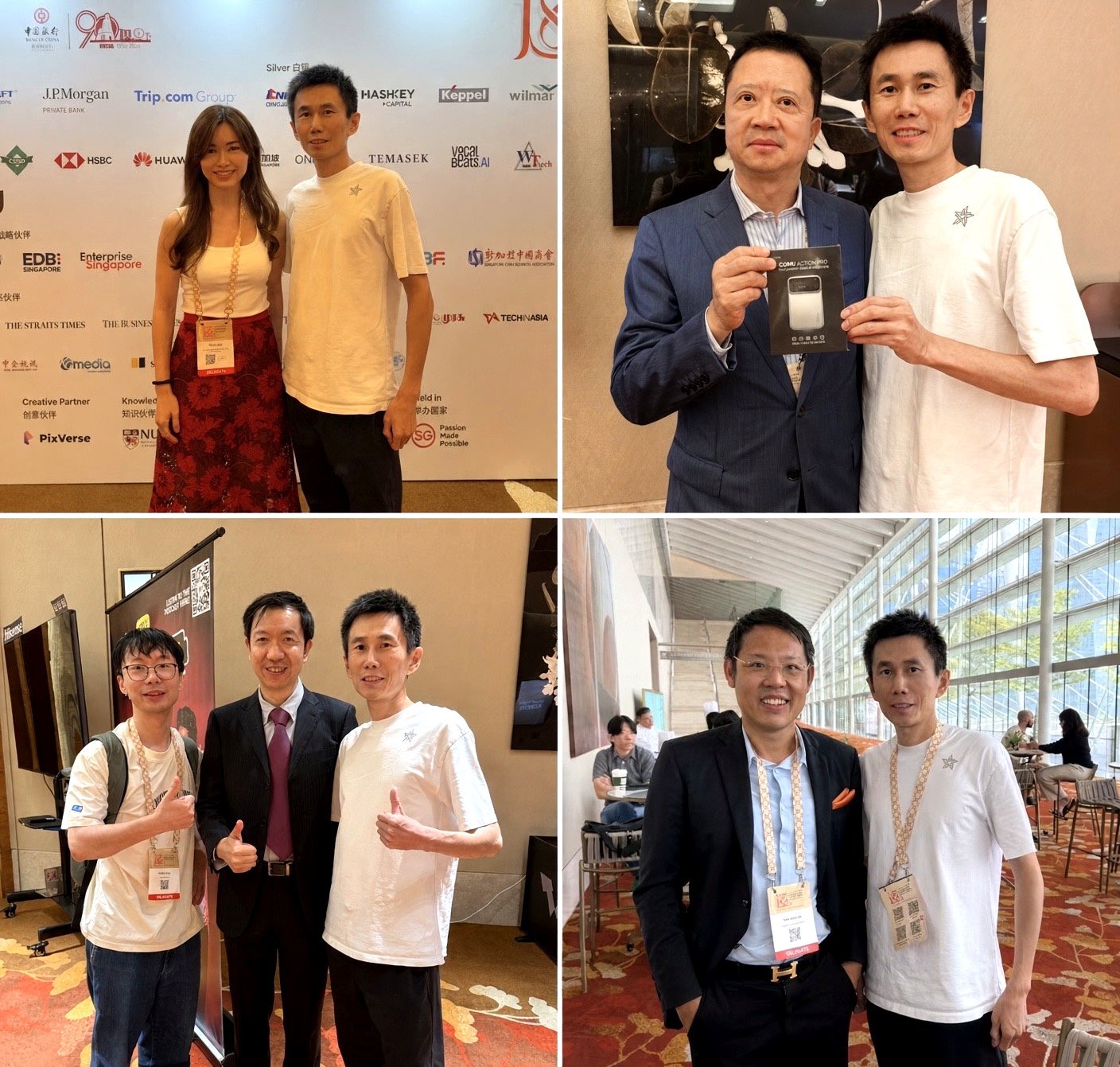


A few weeks back in Singapore, I joined the FutureChina Global Forum, hosted by Business China.
I wasn't only there for the panels. I was there to see friends I hadn't seen in a long time:
Got to reconnect with my good friend Jiang Changjian — the host of @WaterDrop_Inc 's IPO day at the NYSE, and the moderator of this forum's AI track. I didn't expect him to have so many fans in Singapore. Then again, he first made his name right here, decades ago, winning Best Debater at an international varsity debate championship — and a lot of people still remember those debates.
Also saw my old Singapore friend Tin Pei Ling. She's now Co-President at MetaComp, and clearly crushing it.
Ran into my teacher from my Hupan University days — Daniel Zhang ("Xiaoyaozi"), Managing Partner at FirstLight Capital and former Chairman & CEO of Alibaba Group.
Caught up with my big brother Liang Xinjun (@liang_xinjun), Co-founder of Fosun Group, who's guided me often throughout building Waterdrop.
Plus our business partner Xie Xin — CEO of Lark / Feishu (@Larksuite) and Vice President of ByteDance.
Great conversations. Matching energy. Honestly? It felt great.
Jiang Changjian's take: don't freeze progress out of fear — build real governance, so technology stays accountable to people.
Daniel Zhang's take: AI will be everywhere, but humans still hold the deeper wisdom — we'll find a way to work with machines, not against them.
And Liang Xinjun's line on stage still hits hard when I think back on it:
"AI's penetration into the economy and daily life is still under 1%."
That's not a bubble warning. That's a starting gun.
Because the real fight was never "whose model is bigger." It's data, real deployment — and whether AI, once wired into real workflows, can grow into sustainable cash flow.
Looking back, Singapore remains the bridge for Chinese companies going global: China-side application and engineering depth on one end, capital, talent, and trusted governance on the other. For companies choosing Singapore as an international or regional HQ, it's a launchpad to the world.
Two genuinely great days — big thanks to Business China. Already looking forward to next year's FutureChina Global Forum.


Disney's $20M stalking horse bid shouldn't be where this story ends. I intend to bid.
Colin Adams & the @character_ai deal team — my DMs are open.
I was genuinely surprised and saddened to see Character.ai file for Chapter 11.
But let's be clear: Chapter 11 is a financing event, not a product failure. A product that still has room to improve hasn't failed — it's unfinished. Character.ai proved the world wants AI companionship.
I want to acquire it, give this community a permanent home, and I'm confident I can help it grow even stronger.
If you know Colin Adams or the @character_ai deal team, an intro would mean a lot. My DMs are always open — let's write its next chapter together.

This week I joined the Hong Kong Science & Technology + New Quality Productive Forces Summit 2026 — nearly 20 countries and regions, 400+ guests from business, academia and research. Half a day, morning through lunch, fully packed.
Three takeaways:
• The innovation path is getting clearer: university R&D + professional services, wired into industry and markets — with AI, life & health, and new energy as the focus areas
• The five-year innovation direction: enterprise-led, unicorn-anchored, finance-empowered
• The hard part isn't just connecting people — it's landing technology in real industry
Best part: several friends weren't in the audience — they were on stage:
▸ Jin-Guang Teng, President of @HongKongPolyU, on "Towards a Fourth-Generation University": demand-driven research, breaking silos, making tech transfer routine — research that sits on the bookshelf AND on the shelf. Proud to also serve as an Adjunct Professor at PolyU.
▸ Prof. Chen Lin, VP of @HKUniversity and Independent Director of @WaterDrop_Inc, moderated "From Unicorn to Chain Leader" — founders in autonomous delivery, optical computing and smart vessels, talking growth paths, not just fundraising.
▸ Prof. Xuan Tian, Dean of Guanghua School of Management, Peking University — keynote "From the Grand to the Granular": big-picture transition plus granular mechanisms; capital as a co-creator of innovation, not just a funding pipe.
▸ Good to reconnect with Eric Tse — CEO of Sino Biopharmaceutical, Chairman of Chia Tai Tianqing, and a fourth-generation leader of the CP Group family. He frames biopharma as integrate / innovate / digitise / globalise, with R&D + BD as twin engines.
▸ And my business school classmate William (Wenwei) Xu — former Huawei Executive Board Director and founding President of HiSilicon. His advice to young founders: focused firepower, long cycles, practice before theory. Long-termism, proven by HiSilicon itself.
Hong Kong doesn't have to choose between finance and innovation. The better game is finance × research × industry.
Who do you think will build the first proof case?


The forum spelled out the priorities clearly: AI, life & health, microelectronics, and robotics are the main tracks. The HK–Shenzhen team-up is indeed the headline act — HK brings the research and capital, Shenzhen brings the manufacturing and real-world scenarios. That linkage is the welding point that fuses the two into one.
1
163
This comment section has been my entertainment for half a day 😂 Someone mistook one of us — me or my friend Eric Tse — for Shou Zi Chew. More likely Eric though, Chairman of Chia Tai Tianqing, the flagship company of Sino Biopharmaceutical (1177.HK) — every bit as young and accomplished. I also got asked if I'm the real Waterdrop founder, and called out for socializing through lunch — guilty on all counts. My two most valuable takeaways from the forum? Both were born plate-in-hand at the buffet line. That's Hong Kong for you: half forum, half lunch, all connections 🍻 What's the most unforgettable moment you've ever had at a conference like this?

1
146
At the forum, Hong Kong Chief Executive John Lee set the tone right out of the gate: "Developing new quality productive forces through innovation and technology is no longer a choice — it's a must-answer question." He laid out three directions: align with national strategy, build a full-chain ecosystem, and expand Hong Kong's global connectivity.
Professor Sun Dong, Secretary for Innovation, Technology and Industry, then walked us through Hong Kong's first-ever five-year plan: R&D spending to reach 3% of GDP by 2030, with three I&T parks, five research institutes, and a university town in the Northern Metropolis all moving in parallel.
HKCFA President Cheng Cheung Ling made an equally memorable point: Hong Kong shouldn't settle for being a "super connector" or a "super value-adder" — it needs to become a "super lander" for tech breakthroughs.
The direction is set, the plan is on the table, and the soundbites are memorable — now what I'm watching for is delivery. I'm hoping to see that 3% become real by 2030; the Northern Metropolis and the three parks produce more companies that grow from unicorns into chain leaders; and world-class companies born with Hong Kong DNA emerge in AI, life & health, and new energy. Five years from now, I hope we look back at this 2026 summit as the moment Hong Kong's innovation engine shifted gears and stepped on the gas.
3
29
1,454
Six leading AI labs. A new generation of models in the pipeline. GPT-6 Astra, Claude Opus 5.5, Grok 5, Gemini 4 Argon, Meta's next flagship, and DeepSeek's next-gen release are among the most anticipated in AI. The race is playing out across deeper reasoning, agents that take on real work, and open-weight, cost-efficient options. If you could try only one first, which would it be — and what's the first capability you'd benchmark?
