
Connecting Performance and Medical strategies to better the athlete
Joined June 2016
- Tweets678
- Following192
- Followers4.6K
- Likes365
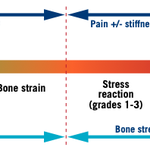
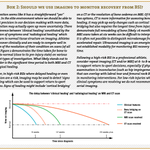

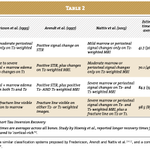

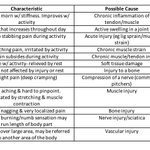


Bone stress injury (BSI) classification systems are useful — but only if we use them correctly.
A recent review clarifies how grading should inform prognosis without replacing clinical reasoning.

Important nuance:
Clinical healing often precedes radiological healing.
Repeat imaging shouldn’t dictate RTP in low-risk cases where symptoms are resolving.


New Research Review! Evolving Match Demands & Fixture Congestion in the Premier League: A Decade of Insights
perfmed.org/published-work/f…


Kaltenborn's Mobilization Grades:
Grade I: Joint play
Grade II: Joint separation
Grade III: Joint restriction and beyond

Insulin and Glucagon are released in response to blood sugar (glucose) levels. Insulin decreases glucose levels, glucagon increase.

The ellipsoidal joint is ovoid to elliptical joint. It allows movement in two planes of motion; flex/ext, abduction/adduction, curcumduction

What percentage should Fat make up in the average diet?
4%40-65%
50%20-35%
47%10-35%
346 votes • Final resultsDermatomes: each spinal nerve is responsible for a certain area of sensation. A dermatome map shows that distribution

Epidemiology: Study of distribution of disease, injury in human pop. for purpose of prevention of their development and spread
The risk of musculature strain is increased if comparison of bilateral strength shows a difference of 10% or greater

