
Wandering, wondering. And I’ve wandered off into the blue.
Joined September 2011
- Tweets540
- Following198
- Followers127
- Likes524




Peter Croger retweeted
I'm deeply disappointed that #COP31 has ended without consensus on an overarching outcome.
I share the very profound frustration of all those who expected governments to rise to the moment the climate crisis demands.
But this setback does not change the facts.
There may be no consensus in the negotiating room, but there is no ambiguity in the science.
The take-home message from COP31 is clear:
The world must do much more to confront the climate crisis.
And it must do it now.
un.org/sg/en/content/sg/stat…

Peter Croger retweeted

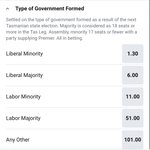
Labor’s position on the stadium seems to be don’t ask, don’t tell. Don’t force transparency on the cost, because the answer might “cause an election”. If the situation really is bad enough to bring down a government, isn’t this exactly what the public should know? #politas
Peter Croger retweeted

This is quite an indictment of the administration if true not because US would consider such insanity but because it would do so under pressure from another country. If true, this would be devastating for the Middle East, and what happens in the Middle East will not stay in the Middle East

Under pressure from Israeli prime minister Benjamin Netanyahu, the Trump administration may be within days of launching a nuclear strike on Iran. The target would be Pickax Mountain in central Iran, where Israeli intelligence claims the Iranian government has restarted its nuclear enrichment program. No conventional weapon in the American arsenal can penetrate 300 feet of solid granite to destroy the tunnels where enrichment is supposedly taking place. The only military option is a nuclear strike. Netanyahu has been pushing hard for one. “Bibi calls Trump about it every day,” says an informed observer.
Netanyahu is cornered and desperate. After last week’s election results, he can’t form a government unless Trump intervenes directly in Israeli politics and brokers a deal with other parties that gives Netanyahu 61 seats in the Knesset. Otherwise, he is out as prime minister and on his way to ignominy, investigations and possibly jail. Netanyahu must stay close to Trump. He needs this war.
To that end, he’s applied maximum pressure to his closest allies in the administration, including Secretary of Defense Pete Hegseth and CENTCOM commander Brad Cooper. Both oppose a negotiated settlement to the war they’ve so grievously mismanaged; both are pushing to restart major combat operations. Secretary of State Marco Rubio and CIA director John Ratcliffe are also following Netanyahu’s lead, as are leaders of the Democratic Party. In a recent meeting on the subject, former president Barack Obama said he opposes the current Iran peace deal being drafted in Doha.
The rest of America’s longtime allies in the Middle East are terrified by the prospect of more war. On September 27th, Netanyahu flew secretly to Abu Dhabi to enlist the UAE in his lobbying effort for a final attack on Iran. The Emiratis refused. After eight months of conflict, Gulf economies are teetering. So are global energy and fertilizer markets. They won’t recover soon. Globally, there are a total of about 850 supertankers used to transport oil from producers to the rest of the world. In October alone, 11 of them were badly damaged in Hormuz. At this pace, a global depression is imminent. A nuclear strike would radically accelerate the destruction. Fallout from a ground explosion at Pickax Mountain would contaminate the Persian Gulf, poisoning the water supply for 100 million people.
And those are just some of the immediate consequences for the region. The rest of the world is every bit as exposed. No country other than the United States has ever used a nuclear weapon in war. Some would like to. An American nuclear attack on Iran would set a new precedent. The Russians have already told at least two other governments that an American nuclear strike on Iran would free them to use nuclear weapons against Ukraine. Pakistan and India would be tempted to do the same against each other, as would North Korea against Seoul. After the first nuclear strike, World War Three is inevitable. That war would be short and final.
We’ve been sleepwalking toward this moment for months. Since February, the administration has quietly rewritten America’s nuclear doctrine to make first use of so-called “battlefield nukes” easier and therefore more likely. No one in Washington in either party seems bothered by this. Now we’re on the brink of it.
Close observers say Trump is likely to decide by next weekend whether or not to use nuclear weapons. That would be November 7, six days from now. To his credit, he’s hesitating. At the moment, Trump is listening to his vice president, JD Vance, and to his envoy and friend Steve Witkoff, both of whom argue a deal with Iran can be made.
They’re right, though it won’t be simple. The Iranians are famously frustrating to negotiate with under any circumstances, and elements of that government have become more radical since Ayatollah Ali Khamenei and his family were killed in February. After decades of isolation, even relatively moderate Iranian leaders seem confused by how decisions are made in the West. (There is a widespread belief in Tehran, for example, that the United States government controls Israel.) But overall, people who have spoken to decision-makers in Iran say there is consensus there that more war is bad for everyone and a deal is worth making.
One group that hasn’t been consulted so far is the global population — the hundreds of millions of people who will be killed along with their children if Trump is pushed by Netanyahu into launching a nuclear strike next week. Now would be the time for them to speak up.
Peter Croger retweeted

I spent 15+ years investigating Russian secret services and organized crime. I know people who served with Putin in the KGB and sat in on his deals with St. Petersburg crime bosses. So let me explain the "diesel deal" the way they would — in gangster slang. Because that's the language Putin actually thinks in.
First, the facts.
Putin just raised Russia's 2027 military budget by 27% to a record 17.1 trillion rubles — about $203 billion. Who budgets that kind of money for a war they're about to end?
The FT reported yesterday that Western intelligence has warned the heads of European defense companies that Russia is plotting to assassinate them.
Since September, Tusk, Macron and the intelligence services of Poland, Czechia, Latvia, Belgium, France and Denmark have all warned that Russian hybrid attacks — including drone and missile strikes — will intensify in the coming months.
None of this looks like a country preparing for peace.
Who actually benefits?
🇺🇸 What the US gets: Every serious analysis I've read says the announced volumes won't move American diesel prices. This is a PR move for Trump before the midterms — a story about prices that will "very, very soon" come down once his friend Vladimir's tankers reach US shores, plus the chance to claim he ended another war (I've lost count). The only US "benefit" is Trump's rating.
🇷🇺 What Russia gets: billions of dollars to keep funding its genocidal war against Ukrainians. Sanctions relief. A demonstration of power to the rest of the world. A deeper rift between the US and its European allies. And a real chance to disrupt US weapons and intelligence flowing to Ukraine.
So what is Putin's actual goal?
Trump's disapproval is at record highs and polls show his party will most likely loose midterm elections. In less than a month his power will be badly weakened. Why would Putin sign a long-term peace deal with a lame duck whose signature will soon be scrutinized at best and annulled at worst?
He wouldn't. And here's where the slang comes in.
In the eyes of Putin and his siloviki, Trump is a baryga — a greedy, unscrupulous businessman who puts profit above law and principle. Gangsters despise barygas, but they love using them. The goal is always to turn a baryga into a lokh — a mark, an outsider who doesn't understand the rules of the underworld and gets played to serve the gang's interests.
By signing the diesel deal, Putin plays two scenarios at once:
A) The deal miraculously helps his lokh keep power — great.
B) The deal changes nothing, the baryga loses the midterms — but by then it has already done its job: inflamed US political tensions and acted as arson inside the American system.
Putin knows that the majority of Americans support Ukraine. He knows that by signing, Trump draws unprecedented criticism, including from his own party. And he knows a baryga won't give up power easily, because he will have to answer for everything he did in office — this deal included. That's classic gangster/secret-service method: tie a man to your organization, make him a partner in your crimes, so he can't walk away.
Pouring more oil — diesel, in this case — onto the most explosive fault lines of American politics, raising the stakes for Trump and pushing him past the point of no return serves Putin far better than a peace deal that could be voided within months.
Remember: Putin's goal in the West is chaos, not peace.

Peter Croger retweeted

Labor can't call itself a climate leader while it keeps approving new coal and gas.
Governments must lead. New coal and gas is incompatible with a safe climate.
Congratulations, Tony and Wendy. You've shown us we can win.
Peter Croger retweeted
Approving NSW’s largest ever coal project just weeks before COP shows how unserious Labor is on climate.
Every new mine heats our planet, harms millions and cooks our global reputation.
Labor is selling out our planet and future for coal & gas corporate profits.
Peter Croger retweeted

Vivaldi's “Winter,” visualized in a fascinating way, so that the auditory experience is even more intense; one can literally “see” the music, so to speak
Peter Croger retweeted

Strongly recommend everyone who cares about natural history and cultural research in Tasmania to sign this if you haven't already. It's a parliament website petition so you won't be signing up for spam. #politas
haepetitions.parliament.tas.…
Peter Croger retweeted

Sacking the head of the Herbarium, what a disgrace. How about sacking the Coordinator General? That would be an instant win for democracy and transparency. #politas

This is DOGE-level ridiculous.
abc.net.au/news/2026-09-24/s…

Peter Croger retweeted

“Read books. Travel when you can. Learn how to cook one meal exceptionally well. Sit in old bars and talk to strangers. Wear your best jacket to dinner. Appreciate good wine, good music, and good conversation. Do the right thing, even when no one is watching. Set the example for younger men who are watching you. Call your parents. Take long walks. Leave your phone behind sometimes. Become the kind of man people feel better after being around. Life is short, so live it well.”
-J.B. Lloyd

Peter Croger retweeted

"Above all, do not lose your desire to walk. Every day I walk myself into a state of well-being and walk away from every illness. I have walked myself into my best thoughts, and I know of no thought so burdensome that one cannot walk away from it."
— Søren Kierkegaard, letter to Henriette Lund, 1847
Peter Croger retweeted
Perhaps now the pro nuclear Nats and ON and their mates Gina and Rupert can dump nuclear. Aust is too hot for nuclear. How will reactors be cooled in hotter climate? #auspol

The count is up to 3 French nuke plants, shut down because they can’t take the heat! Nuclear power is a fragile flower that wilts just as it’s needed most. Dropping 3 GigaWatts during peak demand imperils the whole grid. franceinfo.fr/environnement/…

Peter Croger retweeted

Powyżej fikcyjna prognoza pogody na 18 sierpnia 2050 roku wyemitowana przez francuską telewizję w roku 2014, co miało przestrzec przed fatalnymi skutkami globalnego ocieplenia.
Poniżej prognoza pogody na 22 czerwca 2026 roku.
Wnioski wyciągnijcie sami.

You’re unable to view this Post because this account owner limits who can view their Posts. Learn more
Peter Croger retweeted

Gosh. When you write out all the issues / concerns / problems with the proposed AI developments in Tasmania, it's a loooooong list! #politas hey.paris/posts/ai-data-cent…

Peter Croger retweeted

You have noticed it. ChatGPT feels dumber than it used to. Your prompts that worked six months ago produce worse results now. The writing sounds flatter. The ideas sound safer. The internet itself feels like it is shrinking. Every article reads the same. Every email sounds the same. Every answer sounds like it was written by the same voice.
You thought it was you. It is not you.
Researchers at Oxford and Cambridge published a paper in Nature proving what is happening. They call it Model Collapse.
Here is the mechanism in one sentence. AI trained on AI-generated data gets dumber every generation until it forgets what real human data looked like.
The internet is filling with AI-generated content. Blog posts. Articles. Reviews. Comments. Social media. AI companies scrape the internet to train the next generation of models. Which means the next generation of AI is being trained on the output of the current generation.
Each cycle loses information. Not randomly. It loses the rarest, most unusual, most creative parts first. The researchers call these the "tails of the distribution." The weird ideas. The unexpected perspectives. The things that made the internet feel human. Those disappear first.
What remains is the average. The safe. The expected. The bland.
Then the next generation trains on that. And loses more. And the next generation trains on that. And loses more. The researchers proved this is not a slow decline. Major degradation happens within just a few iterations. Even when some of the original human data is preserved.
They tested it on large language models. On image generators. On statistical models. The pattern was the same every time. The output converges toward a narrow, flattened version of reality that looks nothing like the original data.
The lead researcher put it plainly. "Large language models are like fire. A useful tool. But one that pollutes the environment."
The pollution is invisible. You cannot see which sentence on the internet was written by a human and which was written by AI. Neither can the AI that is about to train on it. And once the tails are gone, they do not come back. The damage is irreversible.
This is not a prediction anymore. It is a diagnosis.
The internet you grew up on was built by humans writing things no algorithm would have written. Strange, personal, imperfect, alive. That internet is being diluted. One generation of AI at a time. And the models trained on what remains are learning a smaller and smaller version of the world.
Model Collapse is not a technical problem. It is a cultural one. The thing that made the internet worth reading is the thing that disappears first.

Peter Croger retweeted
It’s Easter and the US President chose to share this, an unhinged and expletive ridden rant threatening war crimes against the Iranian people. Australians want no part in this and they expect our government to clearly oppose it and organise to prevent it.

Peter Croger retweeted
It’s crystal clear now that Trump has lost control of this war. He badly misjudged Iran’s ability to retaliate. The region is on fire.
1/ I’m going to explain to you in this🧵what I’ve learned - in part from closed door briefings - about the four biggest current crises.
Peter Croger retweeted
I write in @FT that Iran is playing the long game. In war, geography matters as much as technology. Iran commands the entire northern shore of the Gulf, looming large over energy fields on its southern shore and all that passes through its waters. Its Houthi allies are perched at the entrance to the Red Sea and along the passage to the Suez Canal; Iran is thus perfectly positioned to squeeze the global economy from both sides of the Arabian Peninsula. Those in command of Iran today are veterans of asymmetric wars in Iraq and Syria. They are now applying the same strategy to fighting the US on the battlefield of the global economy. Drones, short-range missiles and mines setting tankers and ports on fire can have the same effect IEDs had in Iraq, only with greater impact — disrupting global supply chains and sending oil prices higher.
Iran could sustain its counteroffensive more easily and for far longer. Furthermore, a ceasefire alone will not lift the shadow of risk that Iran has imposed over the Gulf, which is now experiencing its nightmare scenario. That is why Iranian leaders are saying they will not accept a ceasefire until Washington fully grasps the global economic cost of waging this war. Businesses, investors and tourists may not return to the Gulf states if they assume that war could resume again. Unless the US is prepared to invade Iran to remove the Islamic republic’s leaders and then stay there to ensure stability and security, confidence in the Gulf will only return if the US and Iran arrive at a durable ceasefire.
Iran says it will only accept a ceasefire with international guarantees for its sovereignty, which would probably mean a direct role for Russia and China. It may also demand compensation for war damages and a verifiable ceasefire in Lebanon. The US would then have to agree to some form of the nuclear deal it left on the table in Geneva in February and commit to lifting sanctions. Iran’s leaders entered this war with the goal of ensuring it will be the last one. Either it breaks them or radically changes the country’s circumstances. They are betting on surviving long enough and squeezing the global economy hard enough to realise that goal.
Read full article ft.com/content/93b7b65d-074b…


Peter Croger retweeted

In US defence & intel circles Jasmine El-Gamal is regarded as one of the best analysts. She has 25 yrs experience in nat security including advising the Pentagon on Middle East. We included her in our 4 Corners “The Big War.” Her analysis here is interesting re regional impacts.
