

PhD | Senior Lecturer - Griffith Sports Science
Gold Coast, QLD
Joined February 2011
- Tweets2.4K
- Following662
- Followers732
- Likes2.7K





Phil Bellinger retweeted

First bit of work from my PhD out in publication- final rep velocity has been a great intensity education tool.
@clareMINAHAN @Phil_Bellinger @TNewans


🚨Published Today🚨
Final Repetition Velocity Can Estimate Repetitions-in-Reserve in Female and Male Australian Football Athletes During Bench Press
By Henry Hopwood, Phillip Bellinger, Tim Newans and Clare Minahan
You can also find the full article for 🆓 by heading over to the IJSC website 💪⬇️🔓
journal.iusca.org/index.php/…

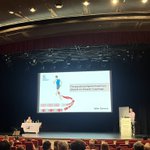
Nice to present alongside some talented colleagues on our invited symposia on muscle typology at the @E_C_S_S Congress in Lausanne, Switzerland

Great opportunity for our lab to have been joined by @MartaMurgia and @Phil_Bellinger in this symposium at this year's #ECSS2026!

Really nice longitudinal research from @TeamDerave reporting that youth track-and-field athletes who trained for a discipline that matched their muscle typology attained a better performance at senior level many years later pubmed.ncbi.nlm.nih.gov/4066…

Phil Bellinger retweeted

New Research Alert
Excited to share our latest study in the @JSCRonline Well done Andrew Martin on your 1st PhD study @Phil_Bellinger @clareMINAHAN @MBourne5
journals.lww.com/nsca-jscr/a…
Highlights: Validated RSS profiling protocols tailored for female athletes.
Optimal load identified: ~59–72% body mass (BM) for peak power (50%Vdec).
Trial distances: 10–30 m for effective profiling.
Key Message: Coaches can now personalise resisted sprint loads for female athletes with the aim of enhancing acceleration and sprint performance.
Phil Bellinger retweeted

Fantastic work from @Phil_Bellinger & co, further advancing our understanding of the physiological responses to training. And a great 🧵 from @jem_arnold unpacking it all 👇

Can mNIRS muscle oxygenation be used to estimate peripheral 🦵training load/stress?
Similar to using time >90% VO2max for central 🫀cardiovascular stress
A new paper provides some descriptive data for runners performing HIIT and SIT 1/12🧵 (study 🔗 in alt text👇)

ALT An example of the muscle deoxygenation responses for the 1 km (a) and 400 m (b) session. An ischemia/hyperaemia calibration was performed prior to each session to normalize the NIRS signals, whereby the deoxygenation signal was scaled from 0-100% corresponding to the minimum and maximum during the ischaemia and hyperaemia periods, respectively. Average deoxygenation was greater during 400m than in 1km intervals. Bellinger et al 2025. Maximizing Muscle Deoxygenation during Interval Training in Middle-Distance Runners. https://doi.org/10.1007/s00421-025-05903-1

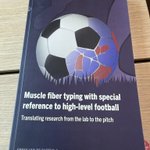
On the train to Rimini for @E_C_S_S and enjoying reading the hard copy of @CasteeleFreek PhD thesis. Great body of work

Phil Bellinger retweeted

Now ahead of print: Muscle-Fiber Typology Is Associated With Sprint-Cycling Characteristics in World-Class and Elite Track Cyclists by Thomas Wackwitz, @clareMINAHAN, @eline_lievens, Ben Kennedy, @TeamDerave, @Phil_Bellinger journals.humankinetics.com/v…
Phil Bellinger retweeted
Now ahead of print: Estimating Muscle Fiber-Type Composition in Elite Athletes by @eline_lievens, @CasteeleFreek, Block, Vossel, Venbogaerde, @Gareth_Sandford, @Phil_Bellinger, @clareMINAHAN, J. Bourgois, Stellingwerff, @inigomujika_en, @TeamDerave journals.humankinetics.com/v…
Phil Bellinger retweeted

90% of expert coaches and support staff value the use of muscle fiber estimates to individualize training,
But 50% claim to be limited in ability to implement.
It doesn't have to be that way.
50m sprint + 6 minute run starts you on the path
To understanding your squads speed and endurance balance (See athlete A & B).
New survey details below ⬇️

A nice collaboration led by Prof Lievens @eline_lievens assessing the practices and perceptions of high-performance experts regarding the muscle typology of their athletes

New paper by @eline_lievens et al. Estimating Muscle Fiber-Type Composition in Elite Athletes: A Survey on Current Practices and Perceived Merit journals.humankinetics.com/v…
I had a great chat with @dsverwey about all things muscle typology and overreaching in runners. Have a listen if interested podcasts.apple.com/au/podcas…

Another great @E_C_S_S Congress. Many learnings and most importantly, stronger networks


Great to chat with the guys from @MelbAthDev about muscle typology and training

Is muscle fibre typology the key to excel in sports? We had the privilege to chat with @Phil_Bellinger to discuss some of the cutting edge research on the topic
melbourneathleticdevelopment…
youtube.com/watch?v=-4TTr2TJ…
Some more work published from @Thomas_Wackwitz PhD.
The Influence of Cadence on Fatigue During Maximal Sprint Cycling in World-Class and Elite Sprint Cyclists @clareMINAHAN @MenaspaP + Matt Crampton
tandfonline.com/doi/full/10.…

Latest work from @Thomas_Wackwitz
Field- and Laboratory-derived Power-Cadence Profiles in World-Class and Elite Track Sprint Cyclists
tandfonline.com/doi/full/10.…


🆕 for the Journal and online now on @tandfonline
📝 by @JamesSteeleII @BradSchoenfeld @JamesHopker @Thomas_Wackwitz @clareMINAHAN @MenaspaP @Phil_Bellinger @JoeWarne1 @lakens and others
🔗 : tandfonline.com/action/showA…

Nice work from @HenryHopwood. Match Running Performance in Australian Football Is Related to Muscle Typology

Excited to have my second paper from my masters research published in @IJSPPjournal.
Link to the article below.
@clareMINAHAN
@Phil_Bellinger
@heidithornton09
@TeamDerave
@MBourne5
journals.humankinetics.com/v…
Phil Bellinger retweeted

How to quantify maximal power output in well-trained cyclists?
📊The most accurate P-C profile can be derived from isoinertial cycling sprints
By @Thomas_Wackwitz @clareMINAHAN @Phil_Bellinger
Free read/download during the #TourDeFrance @tandfsport
tandfonline.com/doi/full/10.…

Phil Bellinger retweeted

So much to learn from this series of studies on recovery, overtraining and all things typology! Great work you all.
Nice to highlight some of our research demonstrating the importance of muscle typology on sprint cycling characteristics in elite track cyclists @Thomas_Wackwitz @clareMINAHAN @TeamDerave
