

Trapped doing optics in Oxford. Still not found a way out.
Joined February 2019
- Tweets568
- Following205
- Followers920
- Likes776







Prof Martin J Booth retweeted

Professor Noa Zilberman and team secure a major ARIA grant to revolutionise AI hardware, making it 1000x more affordable! 🚀
L to R: Professors Amro Awad, Dominic O’Brien, Noa Zilberman, Nick McKeown, Martin Booth, and Dr Patrick Salter
#AI #Innovation Read more⬇️
Prof Martin J Booth retweeted

2 weeks to go! Apply for the 2 posts by Nov 25th - pls RT!

We have 2 postdoc openings for an imaging biophysist and a data scientist at @kavlioxford. Intrigued by super-res microscopes🔬, single molecules, RNA, condensates, AI and bacteria 🦠? Read on! #ScienceJobs #Postdoc #bacteria #singlemolecule Pls RT.

Prof Martin J Booth retweeted

Super excited to be leading a new Scalable AI Systems project @OxEngSci, funded by @ARIA_research, with my colleagues Amro Awad, @ProfMartinJBoo1, @nickmckeown1, Dominic O’Brien and @patrickssalter. We are recruiting PhD students, postdocs and PM eng.ox.ac.uk/computing/glass

Prof Martin J Booth retweeted

This may be obvious to some but I'm now convinced: fierce competition for grants and papers is leading to low societal ROI (return on investment).
Why, when competition should mean only the best-formulated and executed work is accepted for funding and high-profile publication?
Prof Martin J Booth retweeted

Current mechanisms for training AI systems utilise a narrow set of algorithms/hardware building blocks and require significant capital to develop + produce.
In Scaling Compute, we’re funding 12 teams of Creators in an effort to reduce the cost of AI hardware by >1000x ↓ (1/2)


Prof Martin J Booth retweeted
We have 2 postdoc openings for an imaging biophysist and a data scientist at @kavlioxford. Intrigued by super-res microscopes🔬, single molecules, RNA, condensates, AI and bacteria 🦠? Read on! #ScienceJobs #Postdoc #bacteria #singlemolecule Pls RT.
Prof Martin J Booth retweeted

#FluorescenceFriday #zebrafish #bioart To see cells as they really are, it's necessary to see them in the native multicellular environment in which they evolved. However, the deeper we peer into living tissue, the more our view is obscured by optical aberrations. Here, take a trip as we dive 200 um down from the optic tectum to the hindbrain in a living zebrafish, turning on adaptive optics to correct these aberrations as we go, to see oligodendrocytes (orange) and neural nuclei (green). doi.org/10.1038/nmeth.2925
Prof Martin J Booth retweeted

We have a number of places available for virtual attendance, please visit via the link below if you'd like to join us!
sites.google.com/view/europe…


Prof Martin J Booth retweeted
There is still time to register! Deadline extended to 29th March

Registration is open for the European Adaptive Optics Summer School, which will be held at the Institut d’Optique near Paris, France from 3rd – 7th June 2024. Please circulate.
sites.google.com/view/europe…

Prof Martin J Booth retweeted

Sad news with the passing of optics pioneer Andy Weiner last week. His impact is everywhere, especially for inventing spectral domain pulseshaping. If you've ever used a "waveshaper" you've used his work! His bio on winning @Optica Townes medal is here optica.org/get_involved/awar…

Prof Martin J Booth retweeted

Excited to reveal our new paper out in @acsnano By varying the laser dose and process history we can engineer wires in diamond with asymmetric barrier potentials. High-res TEM reveals structural differences at the nanoscale pubs.acs.org/doi/10.1021/acs…

Prof Martin J Booth retweeted

Annual Christmas greetings post.
From Dave in ‘Private Eye’ many years ago.

Prof Martin J Booth retweeted
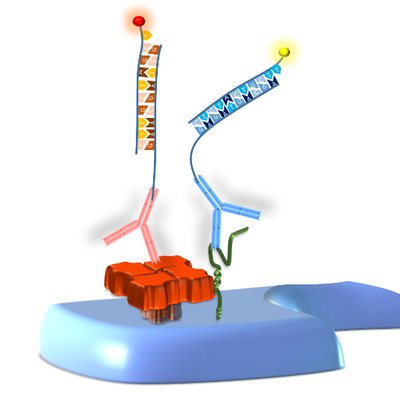
Deep super-resolution imaging of thick tissue using structured illumination with adaptive optics dlvr.it/T0TWfW

Prof Martin J Booth retweeted

We’re thrilled to be featured on @WIREDuk this week...
We spoke to Tim Barber about the different facets of #Opsydia, including how we’re aiding #diamond & gemstone #traceability for #luxurybrands to diamond qubits for #quantumcomputing.
Read more... wired.co.uk/article/opsydia-…
Prof Martin J Booth retweeted

Call for papers | Special Issue on Optics and Photonics at University of Oxford
For more details: nature.com/lsa/news#Oxford
😃😃🎉🎉

Prof Martin J Booth retweeted

We developed an excitation module for 3D multi-color MINFLUX that is simple, stable and cost-effective and will allow for ultra-fast MINFLUX with a high accuracy. biorxiv.org/cgi/content/shor…

Prof Martin J Booth retweeted

Recent research in adaptive optics has enabled advances in imaging retinal cells and structures, probing cellular function and dysfunction, and using visual simulators in the lab and clinic. Read more in the OPN feature article: ow.ly/ITZb50Q0Bus
Prof Martin J Booth retweeted

An example of @3i_inc Adaptive Optics module in the Spherical Aberration Correction (rolling SAC).
As you delve deeper into your 3D sample, the nature of spherical aberrations (SA) undergoes a gradient change in depth.
(left: SAC adjusted)
(right: non adjusted, same settings) – at Melton, Victoria

Prof Martin J Booth retweeted

We are seeking a postdoctoral researcher interested in developing SERS technology for molecular diagnostics of cells and tissues. The research will involve international collaborations with the US and other countries and may include visits to partner labs.
