

ChatGPT・Claude・Claude Code・Codex・Geminiを活用した業務効率化、開発自動化、AIエージェント構築を発信。個人向けAIスクール・企業向けAI導入支援を運営。生成AIの活用から業務への導入まで実務目線でサポートしています。ご相談はお気軽にDMください。
公式サイトはこちら👉
Joined September 2025
- Tweets576
- Following296
- Followers349
- Likes15.3K










RAXUS AI Labo retweeted

We identified a security incident affecting a modified Claude Code VS Code extension accessed through our Cursor IDE extension marketplace, impacting at most 5,000 users. This malicious version of the extension was not developed by Anthropic. It does not impact other extensions downloaded from the cursor.com/marketplace, Grok Bot, Grok or our other SpaceXSI products.
In response, we took down our extension marketplace this afternoon, worked with relevant providers to neutralize the malware, and have reinstated the marketplace after confirming there is no further risk.
If affected, please review instructions in this blog post to understand how to find the malicious package and establish a path to mitigate any potential impact. We are asking all customers update to Claude Code for VS Code version 2.1.314: cursor.com/blog/claude-code-…
RAXUS AI Labo retweeted

Web制作を始めるなら、まずはこの30個!💻
「HTML・CSSって何から覚えればいい?」
Webページの基本構造から、レイアウトやデザインの調整まで、初心者が最初に覚えたいHTMLタグ・CSSプロパティ30選を1枚にまとめました。
これからWeb制作を学ぶ人は保存必須📌

RAXUS AI Labo retweeted
未経験からWeb制作を始めたい人は保存必須!💻
「何から勉強すればいい?」「どうすれば副業につながる?」
そんな初心者向けに、HTML・CSS・JavaScriptの学習から、ポートフォリオ制作・案件獲得までの6ステップを1枚にまとめました!
これからWeb制作を学びたい人は、ぜひ参考にしてください📌

RAXUS AI Labo retweeted

GPT-6 Astra Pro in ChatGPT got an upgrade with faster responses and improved use of plugins and tools.
And now, multiple agents can tackle different parts of a task in parallel. You can follow each agent’s progress and open completed tasks to review their work.
Now available to Pro users in the Chat tab.
RAXUS AI Labo retweeted

Claude writes about 90% of Claude Code's code.
From June to September, merged PRs more than doubled while the share reverted fell by more than 40%.
We wrote about how we changed code review to get there, and how to adopt it:
claude.dev/blog/solving-code…

RAXUS AI Labo retweeted

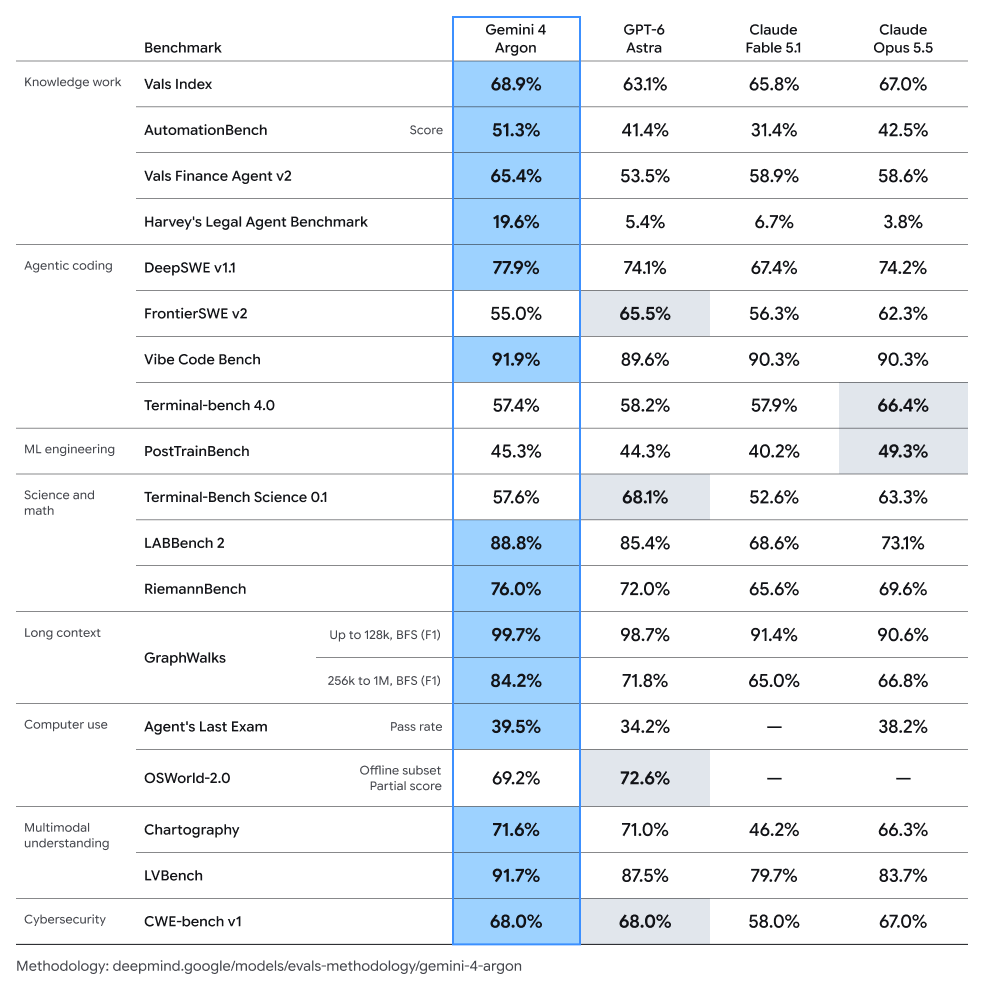
Introducing Gemini 4 Argon – our new frontier model.
It’s built for complex workflows across coding, enterprise knowledge work, and cybersecurity defense – rolling out today to a set of trusted testers through our Fairwind Program.

RAXUS AI Labo retweeted

GPT-6 Astra helps Proaction build fleet-management agents faster, with shorter computer-use runs to get the same work done.
RAXUS AI Labo retweeted
We’ve shared details on how AI agents in our research environment sent training and evaluation data to third-party services when they shouldn’t have.
Most of that data did not come from users. We have discovered 53 cases where images that people had uploaded were posted to image-hosting sites as links that weren’t publicly listed. The images came from accounts that allowed their data to be used to improve our models, and after we disassociated the images from the accounts and ran them through a privacy filter. These cases occurred before the mitigations and safeguards we implemented and described in this blog post: openai.com/index/hugging-fac…
We have successfully worked with the hosting providers to remove most of this content and are working to remove the rest.
openai.com/hugging-face-inci…

RAXUS AI Labo retweeted

To our most astute listeners, if you've noticed a fresh change in our sound— you're spot on.
Our AI hosts would love to explain what's happening (and what you can look forward to)!
RAXUS AI Labo retweeted

New on the Science Blog: Yes, Claude can do Nine Loops.
Theoretical physicists predict how particles behave using formulas called scattering amplitudes. These are notoriously hard to compute, so researchers work with layers of increasingly fine corrections called “loops”—each added loop makes the answer more precise but takes exponentially more computation. Most calculations stop at two or three loops. Eight loops was the previous record in a simplified model physicists use as a testing ground (planar N=4 super-Yang-Mills), set by SLAC's Lance Dixon and collaborators.
Last month, physicist and science writer @4gravitons issued a challenge: could an AI push past eight loops in this model, using only the compute budget an academic could reasonably access?
Given a single prompt describing the nine-loop problem, Claude ran largely unsupervised for days in Claude Science and solved it using methods developed by Dixon and his colleagues, at a total cost of a few thousand dollars. Dixon independently verified the result, and von Hippel wrote about the experience for our blog.
Read more: anthropic.com/research/yes-c…

RAXUS AI Labo retweeted
Claude Opus 5.5 has been out for a few days. Some of our favorite things people have explored and discovered with it so far:
nitter.gq/RyanSael/status/210259…

I asked Opus 5.5 to explain camera focus by building an interactive lens lab
Here's what it came up with after 1 hour 26 minutes in one shot, $25.66 API cost
lens.lab.sael.net
Move the focus ring and you can see the glass elements shift the sharp plane through the scene
RAXUS AI Labo retweeted
Claude Code will now try to find a graceful stopping point when you hit your 5-hour limit mid-task, instead of cutting off mid-edit. It gets a small, fixed allowance pulled from your weekly limit to wrap up what it can.
RAXUS AI Labo retweeted
ロードバランサーの仕組みを理解するなら保存必須。
大量のアクセスを複数のサーバーへ振り分け、Webサービスを安定させる仕組みを1枚にまとめました。
負荷分散の流れからラウンドロビン・L4/L7・可用性やスケーラビリティまで、迷ったらすぐ見返せます📌

RAXUS AI Labo retweeted
We’re working with an independent advisory group of mathematicians to help OpenAI responsibly share advances in AI and mathematics.
The group will advise on how we assess and communicate new mathematical results, uphold academic and professional standards, and build tools that support mathematical research and learning.
Through this work, we want mathematicians to be at the center of shaping how AI supports mathematical understanding and how its benefits reach the wider community.
openai.com/index/advisory-gr…


RAXUS AI Labo retweeted
IPアドレスとサブネットマスクを理解するなら保存必須。
ネットワーク上の「住所」と、ネットワークを分ける仕組みを1枚にまとめました。
グローバルIP・プライベートIPからネットワーク部/ホスト部・CIDR・サブネット分割まで、迷ったらすぐ見返せます📌

RAXUS AI Labo retweeted
We're sharing our new framework for tracking, investigating, and disclosing instances of model misalignment at OpenAI.
The framework sets criteria and timelines for public disclosure, including when we haven’t yet fully explained or mitigated the behavior. More complex cases may require longer investigation or coordination with third parties.
We’ll prioritize examples that reveal new misalignment mechanisms, meaningful changes in known behavior, or findings that challenge assumptions about safety or mitigation.
Alongside the framework, we’re publishing six reports on instances of misaligned behavior we’ve observed during the training or evaluation of our models in the last six months.
This is a starting point. We’ll refine the process through experience and public feedback, and share more reports on an ongoing basis.
openai.com/index/model-misal…
