

Fascinated as well as irritated by politics. M.A. Political Science. Affiliated with @BSWbund. https://nitter.gq/t.co/sMvAuDMBnK
post-reason Germany
Joined November 2021
- Tweets20.8K
- Following2.1K
- Followers1.3K
- Likes13.8K




Robert Schwierkus retweeted

1/4 Reading Marx's original works, including Capital, and the many companions and commentaries on them is useful. But for how long should we remain at this stage? We must move beyond merely interpreting and explaining what Marx said in this and that book.
Robert Schwierkus retweeted

"The post-Keynesians have read Keynes thoroughly; Modern Monetary Theory draws on Keynes, Minsky, Wynne Godley, and Abba Lerner; and evolutionary economics builds on Veblen and Commons. Moreover, there is also Marxism and its offshoots—an entire category now airbrushed from history—as well as feminist, ecological, and other branches."
project-syndicate.org/commen…

Robert Schwierkus retweeted

Ein lesenswertes Interview mit Rainer Rothfuß in dem er auch einen, aus meiner Sicht, wichtigen Punkt in Bezug auf das BSW anspricht.
„Was die fallenden Umfragewerte des BSW angeht, glaube ich, dass die Partei mehr Mut aufbringen sollte, Prügel einzustecken. Das würde sie attraktiver machen. Das BSW ist immer ein Stück weit vor der Wucht zurückgeschreckt, mit der man getroffen wird, wenn man die etablierten Glaubensgrundsätze im politischen und medialen Mainstream kritisiert.
Sahra Wagenknecht hat zum Beispiel im Fernsehen fast immer von der „Annexion der Krim“ gesprochen. Das ist der falsche Begriff. Es gab auf der Krim ein Referendum. Das einzige Verfassungswidrige daran war nicht das Referendum selbst, denn dazu hatte die autonome Republik Krim das Recht. Das Problem war, dass auf der Krim über eine Abspaltung von der Ukraine und einen Anschluss an Russland abgestimmt wurde. Das war laut der ukrainischen Verfassung nicht erlaubt. Doch zuvor hatte man bereits den ukrainischen Präsidenten Wiktor Janukowitsch ohne die erforderliche Drei-Viertel-Mehrheit im Parlament abgesetzt. Auch das war verfassungswidrig. Wenn man dem Mainstream immer wieder kleine Häppchen hinwirft, wie beispielsweise mit dem Begriff „Annexion“, nur um akzeptiert zu werden, dann wird man trotzdem vom Mainstream gehasst, weil man zu kritisch ist. Und zugleich wird man von den Verzweifelten, die aufgrund der sich verschlechternden wirtschaftlichen Lage immer mehr werden, nicht als Hoffnung gesehen, wenn man keine klare Kante zeigt.“
multipolar-magazin.de/artike…

Robert Schwierkus retweeted

NLR 161 is out now.
Featuring Jacob Collins on economic nationalism; Sophia Goodfriend on Israeli politics; John Dunn and Wolfgang Streeck on democracy; Emilie Bickerton on Tarkovsky; and the second part of Carlo Ginzburg’s correspondence with Perry Anderson, plus book reviews…
newleftreview.org/?page

Robert Schwierkus retweeted

"In der Volkswirtschaftslehre hat eine intellektuelle Verengung stattgefunden, die es so in keiner anderen Sozialwissenschaft gibt: Zulässig ist nur noch ein Paradigma, das Märkte idealisiert." @IsabellaMWeber @derStandardat derstandard.at/story/3000000…

Robert Schwierkus retweeted

"Statecraft in Britain and Europe today resembles a bunch of 10-year-olds squabbling in the schoolyard."
My latest in @RStatecraft about hysterical Westminster plans to press-gang ordinary Brits into military service to fight the dastardly Russians.
responsiblestatecraft.org/br…
Robert Schwierkus retweeted

I did a one-hour interview with Glenn Diesen about my new book "Boiling Point: How America Brought War to Ukraine."
youtube.com/watch?v=n5yuHRkw…

Robert Schwierkus retweeted

🇵🇱 Speaking of the Applebaums...
Back in February, Tusk posted this photo of himself reading "Autocracy, Inc.: The Dictators Who Want to Run the World," with the caption: "In the time of strategic uncertainty, it's worth knowing who we're dealing with."
The author is Anne Applebaum, a Jewish-American journalist at The Atlantic, Pulitzer winner, and wife of Tusk's Foreign Minister Radosław Sikorski. So the Prime Minister promoted a book by his own Foreign Minister's wife, about the dangers of leaders who grab institutions by force.
Nine months later, his government sent riot police to the Constitutional Court.
Applebaum isn't just a journalist. She's a senior fellow at Johns Hopkins, where she runs a program on "disinformation," a former senior fellow at the Washington think tank CEPA, where she led a project on "countering Russian disinformation" in Eastern Europe, and has sat on the board of the National Endowment for Democracy, the US government-funded body that bankrolls NGOs and media abroad. In "Autocracy, Inc." she lumps Russia, China, Iran, Venezuela and others into one global network of "dictators," a worldview where anyone outside the Western camp is an enemy and every domestic critic is a potential foreign agent. Sound familiar? It's the same logic Tusk used last night to blame the Constitutional Court crisis on "Russian bots."


Robert Schwierkus retweeted
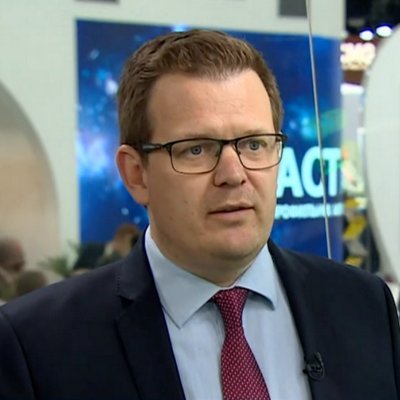
George Beebe, the former Director for Russia Analysis at the CIA, argues that a Ukraine peace agreement requires a new European security architecture (ending NATO expansionism)
greatereurasia.substack.com/…

Robert Schwierkus retweeted
worldbeyondwar.org/how-the-u…
David Swanson reviewed my new book for World Without War:
In "Boiling Point: How America Brought War to Ukraine," Stephen Kinzer gives us deeper understanding of roots and motivations, establishing beyond any possible dispute that the U.S. government...

Robert Schwierkus retweeted

Please note the framing: “Russia’s war in Ukraine” is not followed by “the US-Israeli war in Iran” but by “crisis in the Middle East”. This, ladies and gentlemen of the Collective West, is why no thinking person outside and inside your little “garden” takes you guys seriously anymore. Your hypocrisy is now 100% transparent. You frauds.

Russia’s war in Ukraine and the crisis in the Middle East pose major threats to energy and food supplies, trade and freedom of navigation.
Maritime routes are global lifelines.
At the G20 Foreign Ministers’ meeting in Atlanta, I called for a Black Sea freedom of navigation arrangement and reaffirmed the EU’s opposition to tolls and fees on international shipping routes.
Energy security and supply chain resilience are vital for global economic stability.

Robert Schwierkus retweeted
Many on the Left wrongly assume that the ideas about the state advanced by Marx in The Communist Manifesto or by Lenin in State and Revolution are inadequate and outdated.
No defensible theory of the state is possible without Marx and Lenin.
counterfire.org/article/marx…

Robert Schwierkus retweeted

Is it now fine for left-wing media to write that the “chief beneficiary of support for Ukraine is Europe,” not with a critical but with a positive spin?
And, of course, not “Europe,” but the fascisizing centrist elites of the EU and other social groups clinging to the disintegrating transnational order, allied with Ukrainian comprador elites and nationalists to the detriment of the Ukrainian majority, who bear most of the suffering and of the cost to the country’s economic and demographic future.
Sure, socialists need their own foreign policy agenda, as the article argues. But it should be based on a solid theory of global change and on concrete analysis of concrete situations in relation to a socialist international strategy, not on abstract clichés from the last century, crudely applied to very different social contexts and serving as ideological obfuscation and legitimation of a national and potentially global catastrophe.


Robert Schwierkus retweeted
Azov has not depoliticized. It is seizing the opportunity to place officers loyal to it, coming from an extreme-right background, in control of ever bigger units of the Ukrainian army.
This is a development that has been predictable since the outset in 2014:
theguardian.com/commentisfre…


When units come under Azov control, they tend to replace the commanders with trusted Azovites.
For instance, when the Third Army Corps (Biletsky's Azov) took control of the 60th brigade in 2025, they promptly replaced the commander with Dmytro Rogozyuk. Before the war, Rogozyuk was a prominent figure in the football ultras scene, which is why he had plenty of Azov friends and quickly joined them after 2022.
Just recently, Biletsky gave Rogozyuk command of the entire 3rd Corps, because Biletsky is now in charge of Army Group Centre, the most important frontline grouping


Robert Schwierkus retweeted
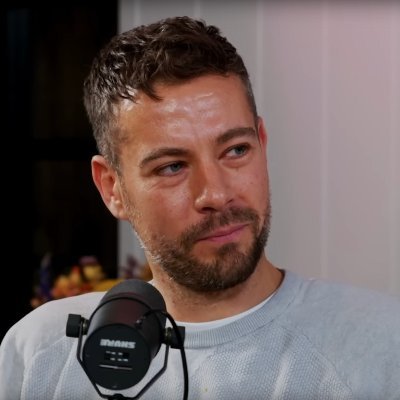
Andreas Malm was coming to London to discuss his groundbreaking piece in the latest Tribune magazine
New editor @Oliver_Eagleton is fast turning Tribune into the most exciting left journal in English-speaking world
Subscribe here: tribunemag.co.uk/subscribe

Robert Schwierkus retweeted

Sad to see countries keep complaining about the lawlessness Trump is bringing to the international arena, but when push comes to shove, they not only don't dare to push back; they acquiesce to US pressure.
See, for instance, the annual resolution at the UNGA condemning the US's decades-long embargo on Cuba.
This resolution gets huge support every year. But this year, the US's strong-arming tactics moved the needle significantly in Washington's direction.
Support for the Cuban resolution fell from 165 countries in 2025 to 130 in 2026, while opposition rose from 7 to 17 and abstentions more than doubled, from 12 to 25.
Colombia, Slovenia, Trinidad and Tobago and the UAE went from voting for it to voting against it.
Bosnia and Herzegovina, Costa Rica, Czechia, Ecuador, Lithuania, and Morocco moved from abstention in 2025 to an outright NO vote in 2026.
Then these countries went from supporting the resolution to abstaining:
Bahrain, Chile, Croatia, Germany, Greece, Guyana, Haiti, Honduras, Italy, Jamaica, Montenegro, Netherlands, Palau, Peru, Qatar, South Korea, Solomon Islands.
The main common denominator for these states that have abandoned their longstanding opposition to an illegal embargo is their vulnerability to and dependence on the US. As US foreign policy grows more aggressive and unforgiving, the cost of defying it on this vote has become too high. For some of the smaller states, this is understandable given their near-total dependence on the US.
But this does not apply to states such as Germany, Italy, South Korea, and the Netherlands. They don't have this excuse. Their failure is beyond embarrassing.
Germany is particularly noteworthy. Germany, for the first time, lost a bid earlier this year for an elected seat at the UNSC. This is particularly embarrassing for Germany since it has long sought a permanent seat on the Council. The overarching reason for this failure is the common view that Germany has abandoned international law - it insisted on it in Ukraine, but abandoned it in Gaza, Venezuela, and Iran.
Add Cuba to that list. Rather than restoring its standing, Germany dug a deeper hole for itself with this vote.

Robert Schwierkus retweeted

"Fiscal responsibility should ultimately be judged by whether public finances strengthen the economy’s capacity to grow and withstand shocks."
Our democracies are under threat from austerity. Governments must resist this pressure. That's one of the key messages in our new policy brief, from the Global Council on New Economics for the 21st Century.
Together with @MazzucatoM, @carlos_cuerpo, @Jayati1609, @JosephEStiglitz and many more, I'm looking forward to working with policymakers to implement our recommendations. Read more at the link below.

Robert Schwierkus retweeted

I posted recently about the coverage of Serbia’s student protest movement in mainstream European media, especially the German daily Frankfurter Allgemeine Zeitung, which I find strongly biased, often inaccurate, and in bad faith. This applies in particular to the paper’s Balkans correspondent, who is best known for repeatedly publicly calling for the mass slaughter of as many Russians as possible (that is not a joke or an exaggeration).
Below is a really incisive analysis and critique of the most recent such coverage of the student movement which distorts the facts not only through bias in framing but also through what it leaves out. Omission is an editorial choice, and that choice consistently distorts coverage of Serbia’s Student List and the Balkans at large.

Ok here we go, a long post, but I would say, a necessary one.
Journalism should maintain a cool-headed perspective, yes. But it must also maintain impartiality and some good old-fashioned research. Neither is present in this post (I cannot comment on the article itself, as I have not read it).
First, on research.
1. On EU accession and Kosovo normalisation talks.
Had the author actually bothered to read the statements made by the Student List's candidates over the past few days, he would have seen that they intend to continue both EU accession negotiations and normalisation talks with Pristina.
This makes Martens' entire argument about abandoning negotiations, returning to the pre-Brussels Agreement situation and reversing the progress made so far considerably less well-founded than he portrays it.
There is a difference between analysing what a political movement has actually said it intends to do and speculating about what it might do. Martens appears to have confused the two.
2. On the supposed threat implied by the phrase "fight for Kosovo".
I am not a candidate on the Student List, nor a representative of @studentblokade but I have followed its campaign in considerable detail. And at no point have I seen anything to suggest that the word "fight" refers to war, violence or any other form of aggression. It seems to me that one would have to be particularly ill-disposed towards the movement to insist on such an interpretation.
Instead, let me offer an alternative.
Perhaps the "fight for Kosovo" refers to fighting for the rights of Serbs living in northern Kosovo, whose rights have been systematically undermined by the government led by Prime Minister Albin Kurti. A government that has repeatedly made unilateral moves, violated commitments made during the normalisation process and contributed to making everyday life increasingly difficult for the Serbian population.
Given everything the student movement has said and done, I find it far more plausible that its commitment to "fighting for Kosovo" refers to fighting for the rights of the Serbs who live there to lead normal, dignified lives.
Why is this interpretation not even considered?
3. On sanctions against Russia.
It is by no means a secret that a considerable proportion of the Serbian population supports Putin and his actions in Ukraine. That is a reality, however uncomfortable it may be.
But had the journalist in question done his research, he would have discovered that the students' opposition to sanctions against Russia is not necessarily rooted in sympathy for Putin or support for his invasion of Ukraine. Rather, it reflects their stated opposition to sanctions as a political instrument.
Martens may dismiss this distinction as irrelevant. But doing so would mean overlooking something rather important: Serbia is a country that has experienced international sanctions and whose population still has a living memory of their consequences.
And what does that memory tell us?
That sanctions caused enormous suffering among ordinary Serbian citizens, while Slobodan Milošević and those surrounding him continued to live remarkably comfortable lives.
From that experience emerged an understanding that sanctions often inflict far greater suffering on ordinary people than on the political elites they are supposedly designed to pressure.
One does not have to agree with this position to recognise that, from the perspective of a Serbian political movement, it is neither irrational nor particularly difficult to understand.
The distinction between opposing sanctions because one supports Putin and opposing sanctions because one questions their effectiveness and humanitarian consequences is a rather significant one. And it is precisely the kind of distinction that serious journalism ought to explore.
4. On genocide, the legacy of the 1990s and the claim that the Student List's victory is bad news for the Balkans.
Here, I would simply invite Martens to look at the campaign itself.
The students have achieved a historic rapprochement with the students of Novi Pazar, overcoming divisions that have shaped Serbian politics for decades. For the first time in many electoral cycles, elections in Novi Pazar were not won by a minority party.
They also invited a war veteran to speak outside RTS, where he explicitly rejected the division between "us" and "them" and spoke about how the hateful ideology propagated by RTS during the 1990s had been rejected by the younger generation leading the protests.
Nor is it true that the students have remained silent on Serbian crimes committed during the 1990s.
When Minister Snežana Paunović stated that, had she been in Slobodan Milošević's position, she would have ethnically cleansed Kosovo in 1998, the students were quick and unequivocal in their condemnation:
"In a democratic society, there can be no justification for calling for ethnic cleansing, whether as a historical hypothetical, a political message or a personal opinion. Therefore, Minister Snežana Paunović's statement that, had she been in Slobodan Milošević's position, she would have 'ethnically cleansed Kosovo in 1998' is unacceptable and entirely contrary to the Constitution, human rights and the dignity of every human being."
That seems like a rather unambiguous rejection of ethnic cleansing to me.
Finally, after months of accusations that the protesters were Ustaše, that Croatia was behind the protests and that the entire movement was somehow an anti-Serbian conspiracy orchestrated by neighbouring countries, it was the Student List's lead candidate who publicly expressed his hope for better political relations with Croatia.
These are not insignificant developments.
Taken together, and alongside numerous other examples that I cannot possibly fit into a single post, they suggest to me that relations between Serbia and its neighbours stand a far better chance of improving under the Student List than under those who have governed Serbia for the past 14 years.
Of course, genuine reconciliation will also depend on the willingness of other countries in the region to engage constructively. Serbia cannot improve regional relations on its own.
But to portray the students' victory as inherently bad news for the Balkans, while overlooking what they have actually said and done, strikes me as a remarkably selective reading of the evidence.
Second, on impartiality.
Martens knows perfectly well that this election campaign was not about foreign policy.
He also understands that what the students have achieved is historic.
A movement that is not a conventional political party, operating under electoral conditions that were heavily stacked against it, managed to defeat a political machine that had maintained an extraordinarily tight grip on power for 14 years.
And it did so by focusing on issues that actually matter to Serbian citizens: corruption, accountability, the rule of law, institutions and the functioning of the state.
In other words, rather than organising its campaign around what other countries consider strategically important in their relations with Serbia, the Student List organised it around what Serbian citizens themselves considered important.
And they won in a landslide.
Yet rather than giving this extraordinary political achievement the attention it deserves, Martens chose to focus on one of the most historically complicated and politically sensitive issues facing Serbia, using it to cast the entire movement in a negative light.
And that is his prerogative.
But if this is the standard of scrutiny he wishes to apply, I would be interested in seeing considerably more of it elsewhere.
I would like to read more from Martens about the unilateral measures taken by Kurti's government, or about the fact that Kosovo has still not established the Association of Serb-Majority Municipalities, an obligation undertaken as part of the Brussels Agreement.
I would also welcome the same level of critical attention to the growing public displays of sympathy for the Ustaše movement in Croatia and what these developments mean for reconciliation in the region.
And if we were to extend this argument beyond the Balkans, the inconsistencies would become even more apparent.
Consider, for example, Donald Trump's willingness to permit the import of Russian diesel when it suited his administration's interests. Where is the comparable moral outrage? Where is the same insistence on interpreting every political decision through the most damning possible lens?
These issues rarely seem to receive the same kind of attention in Martens' commentary.
My objection is not that journalists should refrain from scrutinising the Student List. Quite the opposite. They absolutely should, and there are legitimate questions to ask about its policies, its future direction and its ability to govern.
But scrutiny is not the same thing as selecting the most unfavourable interpretation of a political movement's positions while disregarding the evidence that might complicate that interpretation.
Nor is impartiality achieved simply by being critical of whoever happens to be in the spotlight.
It requires consistency, context and a willingness to apply the same standards to everyone.
Then again, perhaps I should not be entirely surprised by this particular interpretation.
After all, we are talking about a journalist who once asked what could be done to "kill more Russians".
Robert Schwierkus retweeted

I’ve written for @compactmag about the Trump administration’s efforts to derail multipolarity — and why, alas, they appear to be working.
For all the BRICS-led efforts to loosen the US’s financial stranglehold, Washington retains significant structural power — political, financial, military and ideological — with which to shape policies around the world: to discipline the countries of the global NATO bloc, to extend its influence over strategically important regions and to inflict economic pain on rivals unilaterally.
Moreover, under Trump, what began as an increasingly aggressive weaponisation of the dollar system — one that initially accelerated the move towards de-dollarisation — has escalated into an all-out war on multipolarity, including the naked use of violence against key players in the emerging non-Western order. This has fundamentally altered the playing field. It is one thing to coordinate among countries whose differences amount to diverging views about the depth of their integration with the West, or the pace of their delinking from the existing order, especially when the latter doesn’t invite retaliation. It is quite another to coordinate among countries some of which are at war with the West while others are its allies, in a context where shunning the dollar or trading with sanctioned states can entail heavy costs.
This has opened up deep fractures within BRICS, as last month’s summit in New Delhi made painfully clear. The US has shown that it can seriously disrupt the emergence of a multipolar international system. All this raises serious questions about the future of BRICS and similar non-Western institutions — and about the transition to a multipolar order itself. To say that non-Western countries are currently woefully ill-equipped to deal with the Western-led assault is not a criticism but a statement of fact. Can a world in which the US remains free to launch military and economic strikes, unchecked by any other power, really be called multipolar in any meaningful sense?
Read the article here: compactmag.com/article/multi…

Robert Schwierkus retweeted
Thank you very much, @BrankoMilan, for the extended review of my book and for highlighting my class analysis of the post-Soviet region! Your analysis of political capitalism was obviously a big inspiration!
Two small notes. First, I do not see the far-right nationalists as a “class.” I see them rather as the radical wing of the “Western” camp in Ukrainian politics. These two articles, as well as my chapter with Don Kalb in the Backlash book (Pluto, open access), clarify this better:
nitter.gq/Volod_Ishchenko/status…
plutobooks.com/wp-content/up…
Systematic empirical studies of the Ukrainian far right from a class perspective are basically nonexistent. I would say that they draw their rank and file from poor youth but, politically, they are sometimes aligned with the comprador bourgeoisie and intellectuals, and sometimes with opportunistic “pro-Western” oligarchs, while also overlapping heavily with criminal business and the security services. Strengthened after the war, they may play a sovereign, autonomous role in Ukrainian politics.
Second, Soviet Ukrainians have not been “totally eliminated.” We lost anything resembling political representation through betrayal, repression, and exile, and have not yet found or built a new one. We exist, but have been marginalized in the public sphere.

My today's Substack:
Between South Korea and South Vietnam
A review of Volodymyr Ishchenko’s “Towards the Abyss: Ukraine from Maidan to War”
branko2f7.substack.com/p/bet…
