

Proud Bhartiya | Open-Minded Thinker and People professional. Personal X handle; belongs primarily to the thinker, and only occasionally to the HR professional
Gurgaon, India
Joined December 2015
- Tweets1.9K
- Following96
- Followers736
- Likes1.9K





Pinned Tweet
“Once the storm is over, you won’t remember how you made it through, how you managed to survive. You won’t even be sure, whether the storm is really over. But one thing is certain. When you come out of the storm, you won’t be the same person who walked in. That’s what this storm’s all about.”
~ Haruki Murakami
पीतल और कांसे के बर्तन, मिट्टी के दिए और मिट्टी के ही माँ लक्ष्मी के चिह्न, भूरे लुगदी काग़ज़ की पैकिंग, और जूट और सूट के हाथ से सिले बैग… और देसी मिठाइयाँ - सभी कुछ देश के कुशल कारीगरों के हाथ की कारीगरी…। यह सभी हमारे परिजनों और मित्रो को इस दीपावली के उपहार हैं।
गर्व से हिंदुस्तानी।
#VocalForLocal
Says a ‘historian’ with zero knowledge of background of archeology. This is the falsehood he and his ilk propagated for decades.

Supreme Court’s Babri Masjid verdict was “totally illegitimate” from a historian's point of view, says historian Irfan Habib in a conversation with @dksingh73 and @MandhaniApoorva.
That Tree Still Shakes Delhi
Circa 1984.
“Some riots took place in the country following the murder of Indiraji. We know the people were very angry and for a few days it seemed that India had been shaken. But, when a might tree falls, it is only natural that the earth around it does shake a little.”
– Rajeev Gandhi; 19 November 1984
Circa 2005.
“I have no hesitation in apologizing not only to the Sikh community but the whole Indian nation because what took place is the negotiation of the concept of nationhood, as enshrined in our Constitution. On behalf of our government, on behalf of the entire people of this country, I bow my head in shame that such a thing took place.”
– Dr. Manmohan Singh; 11 August 2005
It is 2026 now.
That same tree continues to haunt the streets of Delhi and no apology from anyone whatsoever has helped the cause of justice as yet.
As the seekers of justice continue to demonstrate every now and then against the delay in justice in the matter of over 3000 citizens of a minority community massacred over three days in 1984 in broad daylight on the roads of Delhi, I am deeply anguished and saddened to wake up to a morning 42 years later from the day this ghastly event manifested in the most barefaced manner on the streets of Delhi.
Well, didn’t someone say justice delayed is justice denied? May be, the phrase wasn’t meant for the commoners in India…
Authors Manoj Mitta and HS Phoolka, the tireless warriors for justice in the matter and arguably the most knowledgeable people on this case, wrote in their well-researched book, ‘When A Tree Shook Delhi: The 1984 Carnage and its Aftermath’:
“Whichever way you look at India, whether as the world’s largest democracy, or as one of the fastest growing economies in the world, it is hard to imagine that any genocide could have taken place a few years ago right in its capital.”
Well, it did happen. And it is no solace that the masterminds and perpetrators of this rather well organised crime roam scot-free to date. Exactly rhe same way how the Kashmiri Hindu genocide did happen and no one even knows who got punished for it.
How I wish the apology of the then Prime Minister was translated into actions. To a commoner like me, that would have been far more reassuring.
Not to be, as yet. The fight is on…
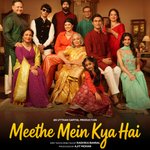
राधिका बंसल की फ़िल्म ‘मीठे में क्या है’ देखी। शहर लखनऊ और नानी का घर - दोनों की मिठास है इसमें। पुरानी पढ़ी पंक्तियां याद आ गईं, जो शायद इसी कहानी के लिए लिखी गई थीं: “वे सूरते-इलाही किस मुल्क की बस्तियाँ हैं, अब देखने को जिनको आँखें तरसतियाँ हैं।”
एक पल में हसातीं और अगले ही पल आसूँ लाती ये कहानी अच्छी है, और राधिका का निर्देशन बेहतरीन।
@NetflixIndia #MeetheMeinKyaHai

This is a must read.

Every October 27, Pakistan stages its annual performance of grievance. Rallies fill streets in Islamabad and Muzaffarabad, resolutions are passed, and speakers declare that Indian troops landing in Srinagar on that day in 1947 began an “illegal occupation.” They call it Jammu and Kashmir Black Day. From where I sit—in the Union Territory of Jammu and Kashmir, as a Kashmiri Muslim woman who has never needed a Pakistani passport or a Pakistani flag to claim her identity—this ritual is not solidarity. It is a refusal to accept history, geography, and the choices made by people who actually live here.
I was born in the Valley after the accession had long been settled in law and in the daily life of my family. My grandmother’s generation remembered the autumn of 1947 differently from the script now recited across the Line of Control. On 22 October, tribal lashkars crossed from the west, burning villages and advancing toward Srinagar. The Maharaja’s forces could not hold them. Only after that invasion did Maharaja Hari Singh sign the Instrument of Accession to India on 26 October. Indian troops arrived the next day not as conquerors but as the force that stopped the raiders short of the capital. My family has never treated that landing as the start of darkness; they treated it as the moment the immediate threat was checked. Pakistan’s version reverses the order of events and then treats the reversal as sacred.
That historical inversion has cost Kashmiri lives for decades. The “unfinished business of Partition” that some in Pakistan still invoke was never a promise that every Muslim-majority territory must join them. Princely states chose. Hyderabad and Junagadh chose differently and were integrated. Kashmir’s ruler, facing invasion, chose India. The United Nations resolutions that followed required Pakistan to withdraw its forces first; that condition was never met. Instead, successive Pakistani governments sustained a proxy conflict that turned the Valley into a place where young men were recruited, trained, and sent back to die. My classmates lost brothers to that cycle. The men who returned as militants rarely asked the women of the household whether they wanted the fight; they simply imposed it. The Black Day commemorations never pause to count those dead or the years of closed schools and empty tourist boats they produced.
I have lived the alternative that Pakistan’s narrative refuses to acknowledge. I studied in a heritage missionary school, then the state university in the Valley, then built a professional career outside the state because the Indian system allowed me to do so without losing my right to return and inherit property. Before 2019, a Kashmiri woman who married outside the permanent-resident framework risked losing her own residency rights; men faced no equivalent penalty. That asymmetry is gone. Central laws on domestic violence and child marriage now apply without the old loopholes. I can vote in local and national elections, contest for panchayat seats, and open a bank account or register a business without anyone demanding proof that my husband is a “state subject.” These are ordinary rights, not gifts. They are the reason many women of my generation treat the old special-status arrangements as constraints rather than privileges.
Pakistan’s annual mourning does not improve any of this. It does not build the roads, colleges, or hospitals that have expanded since the old constitutional barriers were removed. It does not reduce the number of young men still drawn into armed groups whose handlers sit outside Indian territory. When Pakistani leaders speak of the Kashmiri people’s “inalienable right to self-determination,” they mean a right exercised under conditions they themselves refuse to accept—conditions that would require them to end the very interference that has prolonged the dispute. Meanwhile, in the territory they do control, political space is narrower, economic opportunity thinner, and the same religious identity that is invoked as a bond is used to police women’s dress, movement, and speech more tightly than anything I encounter at home.
The dream of a merger is not a plan; it is an inheritance of grievance that serves Pakistan’s security establishment more than any Kashmiri household. It allows successive governments in Islamabad to divert attention from their own unresolved questions of federalism, minority rights, and economic viability. It keeps a generation of Kashmiris on both sides of the Line of Control tethered to an outcome that has become less likely with every passing decade. Most people I know want the conflict to end so that their children can plan ordinary lives—jobs, marriages, travel—without calculating the next shutdown or the next infiltration. They do not want to trade the imperfect but expanding opportunities available inside the Indian Union for the uncertainties of a state whose own citizens already struggle with inflation, energy shortages, and the constant threat of further radicalization.
Pakistan can continue to mark 27 October as a day of protest. It can pass resolutions and stage solidarity walks. What it cannot do is convert that performance into consent from the people who live under Indian administration and who, by the ordinary measures of education, property, and political participation, have chosen to make their lives here. The unfinished business of Partition is not a map that still needs redrawing. It is the acceptance, by those who launched the 1947 invasion and have sustained the conflict ever since, that the accession happened, that it was legal under the rules of the time, and that the majority of Kashmiris who remain on this side of the Line of Control are not waiting to be rescued. We are already home.

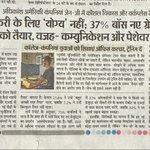
भास्कर की यह खबर पढ़ रहा हूँ - कितने घरों के चिराग अपना खून बेच कर मुस्तकबिल बना रहे हैं। बेसाख़्ता इफ़्तिख़ार आरिफ़ की यह पंक्तियाँ याद आ रही हैं:
“एक चराग और एक किताब
और एक उम्मीद असासा
उसके बाद तो जो कुछ है
वह सब अफ़साना है।”
पढ़ने वाले बच्चों को मदद ना मिले, कैसा देश और समाज है और कैसी उसकी तरक्की? इस दिवाली, एक पढ़ाई करने वाले ज़रूरतमंद बच्चे की मदद कीजिए, दिए अपने आप रोशन हो जाएँगे।
@DainikBhaskar

Must read

Colonel Shukla's recent critique of the IAF mistakes cultural confidence for institutional decay & selective nostalgia for strategic analysis.
As a veteran IAF officer I find the piece more revealing of the author’s assumptions than of any genuine leadership deficit in the service.
The charge that Sanskrit quotations and references to the Ramayana at official briefings somehow “Hindutva-ise” the Air Force is particularly thin. Indian public life has always drawn upon our civilisational language. When an air marshal opens a media briefing with a verse, it is treated as ideological signalling. Had the same officer quoted Churchill or Clausewitz, it would have been praised as intellectual breadth. The objection appears less about professionalism and more about discomfort with any open affirmation of Indian civilisational identity within uniformed institutions. That discomfort is the author’s, not the IAF’s.
The suggestion that Air Marshal Jeetendra Mishra’s post-retirement appointment is evidence of ideological reward is equally unconvincing. Officers who plan and execute complex operations under real constraints are often asked to take on civilian responsibilities for a variety of reasons, competence being high among them. Reducing a successful operational career to a political transaction does a disservice. It also assumes that every subsequent appointment must be viewed through a single ideological lens. This makes an analyst with an agenda.
On the “zero-error syndrome,” the article recycles an old complaint. Risk aversion is a real institutional tendency in any large military, particularly one that operates under nuclear thresholds and simultaneous continental and maritime pressures. Equating measured caution in 2020 with a permanent loss of offensive spirit is an oversimplification. The same service now accused of timidity has repeatedly demonstrated the ability to hold and dominate difficult terrain when the operational picture and political guidance aligned. Leadership is not measured by how quickly one escalates; it is measured by whether the force remains ready, cohesive and capable when the moment actually arrives.
The claim of a growing disconnect between “lions” and “donkeys” is the oldest refrain in military commentary. Junior officers have always grumbled about seniors; seniors have always fretted about the quality of juniors. What has changed is the volume of public commentary that turns ordinary institutional friction into a civilisation-level crisis. The IAF continues to attract, train and retain officers who fly demanding missions in difficult conditions. That record is more relevant than seminar-room complaints about language and vocabulary.
Colonel Shukla ends by invoking the Truman–MacArthur clash as a model of principled military independence. The analogy is misplaced. India’s constitutional framework and civil-military traditions are not those of America in 1951. Indian service chiefs have long given candid military advice while remaining within the boundary set by elected authority. That is not weakness; it is the system working as designed. Demanding that senior officers “seize the moment” by publicly challenging government policy is not a call for better leadership. It is a call for a different political arrangement altogether—something practised in Pakistan.
In the end, the article reads less like a diagnosis of military leadership and more like serious discomfort with the cultural self-confidence now visible in parts of the armed forces. One can debate the wisdom of particular public statements or post-retirement appointments. Turning those debates into a sweeping indictment of the IAF’s professional character is rather like criticising the entire batting order because one batsman prefers a particular stance. The scoreboard of operational performance remains the best measure. On that measure, the IAF continues to hold its own explains Air Marshal Nambiar of the Kargil fame.


Word.

Dear Indian origin/American leaders in the US,
@satyanadella, @sundarpichai, @ArvindKrishna, @nikesharora, @nealmohan, @MicronCEO, @JayZscaler, @kunalb11, @RamaswmySridhar, @AravSrinivas, @ThomasOrTK, @LeenaNairHR, @snarayen, @VivekGRamaswamy, @RepBera, @CongressmanRaja, @RepSuhas @Kash_Patel
It is high time you all speak up against the despicable, dangerous racism and hate against Indians on American social media. And do something about it as Tech CEOs and political leaders.
The despicable, dehumanizing hate against Indians is being spread everywhere - Facebook, Instagram, X, Youtube, Reddit, Telegram...
Staying silent and not doing anything anymore - as more young people in the US are radicalized to hate Indians using social media - may one day lead to our own family and friends having to face such racist, radicalized, violent, supremacists.
American social media platforms are being used by adversarial actors to specifically target Indians in the US.
They are seeding racism and hate using violent words and dehumanizing imagery, programming many Americans to become racist and hateful - specifically against Indians.
May be it is being done to drive out Indians, attack India for geopolitics, or try erode India-US ties. But it is real, relentless and extreme form of communist hate that's being seeded.
There's no reason why, you all as stalwarts of silicon valley and politics can't get together, talk about this crisis, and take action to end ALL hate and racism on social media.
It shouldn't be that difficult in the age of AI to filter out, block racist and hate filled comments against any community, isn't it.
How come this is not being proposed and implemented across SV companies? And why isn't any of you speaking out against this increasing online hate and racism against Indian Americans and Indians?
Among all mentioned above, till now only @CongressmanRaja has talked about the topic of online hate and the recent attempted mass shooting.
Please start talking among yourselves, even if not publicly, and kindly take some action 🙏
More power to you, @DelhiPolice


लखनऊ भी कमाल शहर है। अब यह तो सब जानते हैं कि दिल्ली का रास्ता लखनऊ हो कर जाता है। सुबह बात हो रही थी गाँव-खेड़े की तरफ़, तो कोई बोला कि कहा जा रहा है कि अब लड़ाई सड़क पर होगी, सरकार तुम्हारी, सड़क हमारी, आदि आदि। लल्ला बाबू, जो राशन की दुकान चलाते हैं, दातुन-मंजन करते हुए बोले, “भैया, ई सब दिल्ली में होता होगा। उत्तर प्रदेश में सड़क चलते तिलचट्टों का क्या हाल होता है, जानते नहीं हैं? 🤣
काशी के आम लोगों का जीवन मंत्र है -
‘क्षेत्रे भोजन मठे निद्रा। बाकी दुनिया ठेंगे पर।’
काशी के सांसद पूर्णतया बनारसी हो चले हैं, सड़क पर होती नौटंकी से परे, उसे अपने ठेंगे पर रखकर अपना काम कर रहे हैं। सही है।
Credit where it is due. @upeidaofficial @CMOfficeUP have made a fabulous Ganga expressway. Three trips now from Hapur to Lucknow - 118kmph cruise control all through each time - pre and post rains. One thing to watch - as you reach the 300km milestone, as well as the airstrip at Shahjahanpur, few cows on the carriageway - that’s quite dangerous.
“मैं लखनऊ में नहीं रह सकता।”
मेरा १२ साल का बेटा हमारे इस बार के लखनऊ प्रवास के दौरान पूछे जाने पर बोला। “मुझे भोपाल ज़्यादा पसंद है।”
खालिस अवधी परिवार से आने वाले हमारे साहबज़ादे, जो कोरमे, कबाब और बिरयानी के बिना दो दिन खाना नहीं खाते, उनके मुंह से यह सुन कर बेगम और हमे हैरत हुई। दरयाफ़्त करने पर साहब बोले, “लखनऊ में बहुत ज़्यादा गंदगी है - सब तरफ़ गोबर और कूड़ा पड़ा है - ख़ास तौर से पुराने शहर में। लोग यहाँ-वहाँ थूकते हैं। गाड़ी में बैठ कर बाहर रैपर्स फेंकते हैं। खाने की सारी मशहूर दुकानों के बाहर वैसी सफ़ाई नहीं - अगरचे वो हज़रतगंज की प्रमुख सड़क ना हो - और लोग अपने चारों तरफ़ फैली हुई गंदगी को और बढ़ाते रहते हैं। इस बार तो कैंटोनमेंट एरिया में भी ऐसा ही नज़ारा है।”
मुझे सुन कर बहुत बुरा महसूस हुआ। और यह कहना कि भाई, शहर के बाक़ी इलाके भी देखो जो साफ़ हैं, ठीक नहीं लगा। बच्चे तो जो देखते हैं, बिना लाग-लपेट कर कह देते हैं।
मैं पिछले दो दशकों से देखता हूँ, लखनऊ हमारे देश का इकलौता महानगर है, जिसका ग्रामीणीकरण हो गया है। सब को लखनऊ आना है - पूरे सूबे के लोगों को यहाँ घर बनाने, रहने, घूमने और काम करने आने की सुविधा और इच्छा है। पर उन्हें ना इस शहर की तहज़ीब और क़ायदा सीखने की ज़रूरत महसूस होती है, ना ही तौर-तरीके।
सरकारी फाइलें तो लखनऊ तो सफ़ाई में अव्वल बताती है - पर शायद वो सरकार विधान-सभा और कालिदास मार्ग के बीच में ही रहती हैं। इस दायरे के बाहर का जो वीभत्स सच है - वो इन फ़ाइलों में नहीं आता है। और सूबे की सरकार कितनी भी अच्छी हो, अगर अपने लोग ही गंदगी फैलाते रहे, तो कोई भी सरकार इतनी सफ़ाई नहीं कर सकती।
मैं जानता हूँ कि आपमें से काफ़ी सारे लोग तो लखनऊ से मोहब्बत करते हैं, ठीक मेरी तरह, वो यह पढ़ कर नाराज़ भी होंगे और दुखी भी। शहर जितना बड़ा और बेहतर होता गया है, बेहतरीन इमारतें और सड़के बनती गई हैं। क्या आलीशान दुकानें हैं हज़रतगंज में, और क्या ही बड़े मॉल हैं रिंग रोड पर। पर वैसे हो यह सच है कि शहर में गंदगी, कूड़े और बेतरतीब ट्रैफिक ने इस शहर की छवि को धूमिल कर दिया है।
मेरा मकसद लखनऊ और उसके निवासियों की बुराई करना नहीं है; आख़िर मैं भी इसी मिट्टी का हूँ। मैं चाहता हूँ कि लखनऊ के लोग इसे पढ़ें और सोचें - वापस इस बात पर हम सभी को काम करने की ज़रूरत है कि कह सकें - “अमा मियाँ, मुस्कुराओ कि लखनऊ में हो!”
Rishi Raj Gupta retweeted

My salute to the Indian pilot Captain Smit Machchhar for his extraordinary bravery.
Despite being stabbed and seriously injured, he fought back, resisted, opened the cockpit door, and enabled passengers and crew to overpower the attacker — preventing a catastrophic mid-air disaster.
He saved the lives of 174 people, including Israeli citizens and other nationals.
I wish Captain Machchhar a speedy and full recovery.
He is a true hero.