

Medicine needs new maps — previously @anduriltech, @regentcraft, @rainmakercorp
El Segundo
Joined October 2017
- Tweets1.8K
- Following967
- Followers3.1K
- Likes4.8K







Pinned Tweet
I’ve had much time for reflection over the past few weeks as my time at Rainmaker comes to an end.
First, I want to thank my brother @ADoricko for giving me the opportunity to build the technology of his visions. As readily as he offered me to join the mission (sent him a slide deck of UAVs in hurricanes), he was pushing trucks out of the mud and sleeping in hangars until we figured it out. Few organizations embody this mentality and those that do ‘seem obvious’ only after a decade of hustle.
Rainmaker will steward the earth and ensure that our grandchildren know the abundance that we’ve taken for granted.
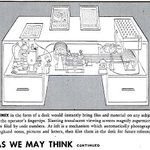
As for my reflections, I’ve come to realize that I am but a simple mapmaker. Spending the greater part of my time at Rainmaker exploring the frontiers of engineering, operations and science made this much clear. I am here on earth to make maps. Some less legible than others; that’s the nature of mapmaking.
Medicine needs new maps


Someone should really figure out how to measure the immune system in all its glory!


4 years ago


AT&T, Verizon, and T-Mobile are jointly lobbying the FCC to preserve existing rules as @SpaceX moves closer to launching its own independent cellular network that would compete directly with the three major U.S. carriers.
On Oct 20th, reps from all three major U.S. wireless carriers met with FCC officials to push back against proposed changes that would give satellite companies more freedom to offer cellular service.
The carriers urged the FCC to:
• Block satellite companies from using certain 5G frequencies currently used by wireless carriers.
• Keep rules requiring satellite companies to get permission from wireless carriers before using their licensed spectrum.
• Allow wireless carriers to maintain control over these agreements, including the ability to end them.
• Reconsider proposed interference limits to protect existing cellular networks.
Based on all the public communications from these carriers, and the lobbying, they are clearly worried that SpaceX's @Starlink Mobile network is going to be a major competitor to them. Starlink Mobile will become the first network operator to deploy both satellite and terrestrial spectrum.
The FCC recently announced that they are considering new rules that could make it easier for satellite companies like SpaceX to offer cellular service without relying as heavily on existing wireless carriers, so this is partly what the three big carriers are fighting against.

Most medicines hit biological patterns we still do not fully comprehend
As we assemble these patterns more coherently the value of a new drug will plummet and learning to use our existing toolkit will be the new game


Jackson Schultz retweeted

You want robots in labs because they will improve scientific productivity.
I want robots in labs because they will swamp the supply of cheap labour, uproot the abusive academic hierarchy, and eliminate the overproduction of PhDs.
We are not the same.
adam.rochussen.xyz/p/robots-…


“maps only come from data”

Biotech still runs on who owns the patent and who approves the drug.
That was my takeaway from @alexkesin's session at DataDrivenPharma West last week.
Alex wrote one of the most widely shared analyses of China's biotech rise this year, and it has become a reference point in the policy debate. He also co-hosts @approvedfm with [@MatthewPech], a podcast on how drugs get discovered, developed and sold. He walked a room of operators through where the value sits now.
Four quick hits:
- 1:3. Doing the work in China costs a half to a third of the US price.
- Rent, don't sell. Beijing's new export controls block the sale of biotech platforms. Licensing, partnerships and contract research stay open.
- 3x. China tripled its university patent conversion rate in two years, to 10.1%.
- 8% to 32%. China's share of the global early-stage pipeline, from 2015 to 2024.
The first hit explains the last five years. China got cheap and fast, and the West bought what it built. Most of those deals were fast-follows on targets Western labs discovered. The West owned the original IP and rented China's speed.
The other three point to the next five.
The export controls dropped the same morning as the session. Read them next to the new five-year plan, which makes biotech and biomanufacturing a national priority through 2030. The strategy looks clear to me. Generate IP faster than the US, keep ownership at home, and let the world license it.
Pipeline share has quadrupled. Patents are moving out of universities and into companies. Nine out of ten still sit unused, so there's plenty of room to grow.
Patents are still the currency. Regulators still set the exchange rate. The FDA turned away a Chinese PD-1 copycat because its trial ran only on Chinese patients. To get paid in the US, you still need FDA approval and a partner who can launch here.
What changes is who holds the paper. When the West generated the IP, licensing meant Western companies owned the value and paid for speed. As more IP is generated and kept in China, the same deal structure sends more value the other way. The West ends up renting the molecule instead of owning it.
This is a gold rush for intellectual property. The question is who can generate novel IP in a specific area, and do it first.
Therapeutics is the beachhead. The US market pays enough for new drugs that the long road through the FDA still earns a return.
In this gold rush, anyone can be a miner. The fastest ones will have the best maps.
And maps only come from data.
#ddpwest26


the neural network eats human priors

Over the past month, we completely switched to frontier LLMs to control a robot in a customer deployment.
By doing this, we have a classic System 1/System 2 architecture, but on steroids.
For the high-level reasoning layer, we use an agent based on Opus and Astra, which are many generations more capable than any VLA. For the fast execution layer, we use computer vision code written by the model, which is fast, editable, and reliable.
As a bonus, we got in-context learning, which is just a basic feature of LLMs, and continual learning, since whenever a new situation arises, the large model steps in and adapts the pipeline.
And it just feels better to be on the right side of the Bitter Lesson, benefiting from the billions being invested in frontier models around the world.


Jackson Schultz retweeted

Ben Wilson (@BenWilsonTweets) has stage 4 cancer and 4 kids under the age of 5.
I want to help him as much as possible, so I invited him on the podcast to talk about his work studying history’s greatest leaders and what it’s like getting told he’s going to die at 38.
He’s a good guy, a close friend, and one of my favorite podcasters.
His work has benefited millions of people all across the world.
Please watch this episode and see if you can help with medicine, introductions, or donations.
0:00 What Ben has learned from making How to Take Over the World and studying history’s greatest leaders.
55:51 Living like you're dying. Ben on facing cancer.
sir let me connect to a shared gdrive
that is all, no more pelicans on a bike necessary. let argon work with my files

perhaps the most useful feature is defunct. i am relegated to copy pasting and dragging into shared drives

