




Renata Duarte retweeted

Voyager 1 is now one full light-day from Earth.
A light-day is simply distance = speed of light × one day: d = 299792458 m/s × 86400 s ≈ 2.59 × 10¹⁰ km, or 173.14 AU.
After 49.2 years of flight that average outward speed is only about 16.7 km/s. The same distance means any command we send today reaches the craft tomorrow and the reply returns the day after i.e 48 hours of pure waiting.
Signal strength falls as 1 over 4π d². At 173 AU the radio link is roughly 30,000 times fainter than it would be at Earth’s orbit.


Renata Duarte retweeted

BREAKING: China has officially unveiled plans to attempt humanity’s first-ever landing on one of Jupiter’s moons, targeting the icy world of Callisto.
China’s space agency has confirmed that its Tianwen-4 mission will attempt to orbit Jupiter, enter orbit around Callisto and deploy a robotic lander to its surface.
The lander is planned to carry scientific instruments to study the moon’s surface composition and magnetic environment, potentially helping scientists determine whether Callisto contains a subsurface ocean.
Callisto is one of Jupiter’s four largest moons and is considered a promising destination for exploration because it experiences significantly less radiation than moons closer to the planet.
China has now opened applications for scientific payloads from domestic and international research institutions, with submissions due December 31, 2026.
If successful, Tianwen-4 would become the first mission in history to land on a moon orbiting another planet.


Renata Duarte retweeted

Every 8 minutes a radio signal arrives from deep space.
And now we know who’s sending it.
Scientists have finally solved the mystery of these strange pulses. The source is an extremely rare stellar pair: a “dead” star (a white dwarf) and a star very much like our Sun.
The strangest part is how slowly the “dead” star spins. Objects like this usually rotate extremely fast, but this one takes roughly 8 minutes to complete a single rotation. And it is with this slow, almost majestic spin that it regularly launches powerful radio pulses that reach Earth.
Combinations like this are exceptionally rare and give astronomers a unique chance to study how stars evolve and how their magnetic fields behave under extreme conditions.
It took long observations to crack the case: researchers compared data from multiple radio telescopes until they could finally link the pulses to this unusual pair.
One pulse every 8 minutes.
Quiet. Regular. And until recently — completely unexplained.
Renata Duarte retweeted
El tucán de montaña de pecho gris es una joya de los bosques andinos.
Habita los bosques húmedos de montaña de Sudamérica, donde se alimenta principalmente de frutos, aunque también consume pequeños animales. Su enorme pico y su colorido plumaje lo convierten en un ave inconfundible.
Renata Duarte retweeted

The surprising light display of the disco clam (Ctenoides ales) is not a result of bioluminescence, but rather ambient light and highly reflective tissue being exposed and hidden quickly.

Renata Duarte retweeted

The best educated man in the ancient Near East thought there were records older than the flood.
Ashurbanipal collected tablets from across Mesopotamia into his library at Nineveh in the 7th century BC.
Over 30,000 fragments of it survive.
He wrote that he could read inscriptions carved in stone from before the flood, and he said it as a point of pride rather than a mystery.
To him the flood was not a story. It was a date, with history on both sides of it.

Renata Duarte retweeted
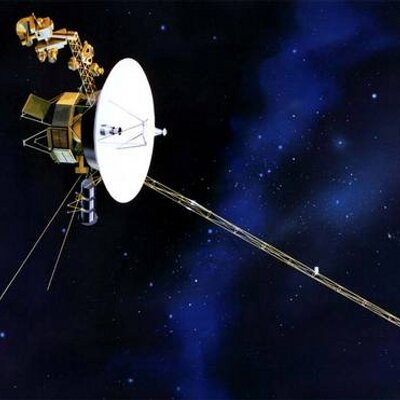
Sister ship Voyager 1 is currently ~23h 59m 45s of light travel time from Earth, or 25,898,000,000 km / 16,092,000,000 mi / 173.115 AU (2026:320:120000:1L)


