
Catholic convert/revert. Former Nazarene, Presbyterian (PCA). Married 46 yrs. Father of two, one disabled w/CP. Grandpa. Vietnam Vet
Joined October 2021
- Tweets59.7K
- Following107
- Followers1.8K
- Likes21K



Pinned Tweet
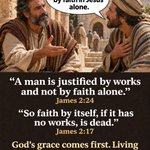
𝐇𝐨𝐰 𝐀𝐫𝐞 𝐖𝐞 𝐒𝐚𝐯𝐞𝐝?
From Scripture and the teachings of Jesus:
By 𝐆𝐫𝐚𝐜𝐞 𝐓𝐡𝐫𝐨𝐮𝐠𝐡 𝐅𝐚𝐢𝐭𝐡 𝐓𝐡𝐚𝐭 𝐖𝐨𝐫𝐤𝐬 𝐓𝐡𝐫𝐨𝐮𝐠𝐡 𝐋𝐨𝐯𝐞 𝐚𝐧𝐝 𝐏𝐞𝐫𝐬𝐞𝐯𝐞𝐫𝐞𝐬 𝐭𝐨 𝐭𝐡𝐞 𝐄𝐧𝐝, 𝐉𝐮𝐝𝐠𝐞𝐝 𝐛𝐲 𝐂𝐡𝐫𝐢𝐬𝐭 𝐟𝐨𝐫 𝐖𝐡𝐚𝐭 𝐖𝐞 𝐃𝐢𝐝 𝐚𝐧𝐝 𝐖𝐡𝐚𝐭 𝐖𝐞 𝐋𝐞𝐟𝐭 𝐔𝐧𝐝𝐨𝐧𝐞
God’s grace initiates, enables, and sustains our salvation. He calls us to respond freely, to live in the grace we receive, and to persevere with his help until death. When God justifies us, he truly gives us new life in Christ. That life can grow through grace-enabled obedience and charity, be lost through mortal sin, and be restored through repentance and reconciliation.
𝟏. 𝐆𝐫𝐚𝐜𝐞 𝐟𝐢𝐫𝐬𝐭 𝐦𝐨𝐯𝐞𝐬 𝐮𝐬 𝐭𝐨𝐰𝐚𝐫𝐝 𝐆𝐨𝐝
God takes the first step. His grace moves the sinner to turn toward him, and the person can freely welcome or resist that grace. In an adult’s conversion, faith is the beginning and foundation of justification. Moved by grace, the person comes to believe God, hope in his mercy, begin to love him, repent of sin, and resolve to amend his life. Every part of that response depends on God’s prior help. Initial justification is his free gift.
𝟐. 𝐉𝐮𝐬𝐭𝐢𝐟𝐢𝐜𝐚𝐭𝐢𝐨𝐧 𝐟𝐨𝐫𝐠𝐢𝐯𝐞𝐬 𝐮𝐬 𝐚𝐧𝐝 𝐦𝐚𝐤𝐞𝐬 𝐮𝐬 𝐫𝐢𝐠𝐡𝐭𝐞𝐨𝐮𝐬
In justification, God forgives our sins and renews us inwardly. He gives us sanctifying grace, brings us into communion with Christ, and makes us his adopted children. We receive faith, hope, and charity, and the inward renewal in which we are called to grow begins here.
Baptism is the ordinary means by which we enter this new life. An adult approaches Baptism with faith and repentance, both already made possible by grace. The righteousness received (Not declared) in Baptism is a gift won for us by Christ.
𝟑. 𝐖𝐞 𝐠𝐫𝐨𝐰 𝐢𝐧 𝐡𝐨𝐥𝐢𝐧𝐞𝐬𝐬 𝐭𝐡𝐫𝐨𝐮𝐠𝐡 𝐟𝐚𝐢𝐭𝐡 𝐰𝐨𝐫𝐤𝐢𝐧𝐠 𝐭𝐡𝐫𝐨𝐮𝐠𝐡 𝐥𝐨𝐯𝐞
Once justified, we are called to keep Christ’s commandments and put our faith into practice through love. The Holy Spirit enables these good works, and we freely cooperate with him in doing them.
The Council of Trent teaches that the good works we do in grace and charity truly preserve and increase the righteousness we have received. They are fruits of grace, and God also uses them to deepen our life in Christ. The Joint Declaration on the Doctrine of Justification likewise explains that, in Catholic teaching, good works made possible by grace and the Holy Spirit contribute to growth in grace and deepen communion with Christ.
𝟒. 𝐆𝐨𝐝 𝐫𝐞𝐬𝐭𝐨𝐫𝐞𝐬 𝐮𝐬 𝐰𝐡𝐞𝐧 𝐰𝐞 𝐫𝐞𝐩𝐞𝐧𝐭
A person who has truly been justified can lose sanctifying grace through mortal sin. For a sin to be mortal, it must involve grave matter, full knowledge, and deliberate consent. Venial sin wounds charity while leaving the person in the state of grace.
For a baptized Catholic who falls into mortal sin, sacramental confession is the ordinary means by which God restores the life of grace. Perfect contrition, which arises from love of God above all things, can obtain forgiveness even before confession when it includes the firm resolve to confess as soon as possible.
𝟓. 𝐖𝐞 𝐧𝐞𝐞𝐝 𝐆𝐨𝐝’𝐬 𝐡𝐞𝐥𝐩 𝐭𝐨 𝐩𝐞𝐫𝐬𝐞𝐯𝐞𝐫𝐞 𝐭𝐨 𝐭𝐡𝐞 𝐞𝐧𝐝
Initial justification gives us a real beginning in Christ. Final perseverance means dying in God’s grace. It is itself a gift for which we pray, and we cooperate with God’s help by living in faith and charity and returning to him in repentance when we fall. We depend on his grace at our first turning toward him and at our last breath.
𝟔. 𝐓𝐡𝐞 𝐠𝐨𝐚𝐥 𝐢𝐬 𝐞𝐭𝐞𝐫𝐧𝐚𝐥 𝐜𝐨𝐦𝐦𝐮𝐧𝐢𝐨𝐧 𝐰𝐢𝐭𝐡 𝐆𝐨𝐝
Those who die in God’s grace and friendship are assured of eternal salvation. If they still need purification, God purifies them before they enter the fullness of heaven. There they enjoy the beatific vision, seeing God face to face. To die in unrepented mortal sin is to die separated from God and forfeit that communion.
𝐆𝐨𝐝 𝐟𝐫𝐞𝐞𝐥𝐲 𝐣𝐮𝐬𝐭𝐢𝐟𝐢𝐞𝐬 𝐮𝐬, 𝐟𝐨𝐫𝐠𝐢𝐯𝐢𝐧𝐠 𝐨𝐮𝐫 𝐬𝐢𝐧𝐬 𝐚𝐧𝐝 𝐦𝐚𝐤𝐢𝐧𝐠 𝐮𝐬 𝐫𝐢𝐠𝐡𝐭𝐞𝐨𝐮𝐬 𝐢𝐧 𝐂𝐡𝐫𝐢𝐬𝐭. (Not merely declaring us righteous or clothing us with fake righteousness while we remain corrupt). The good works he enables us to do in charity truly preserve and increase the righteousness he has given us. From the first stirring of faith to final perseverance, the whole life of salvation depends on his grace, and our free cooperation with that grace truly matters.


Rick Miller retweeted

Evangelical gets crushed by Grok. Apparently for the 1000th time. 🤣
(Even the “later theological inference” doesn’t work).


Regurgitating the same refuted claim over & over is NOT an argument:
SIXTEEN reasons why the Evangelicals’ go-to verse to justify ‘Sola Scriptura’ absolutely fails:
(2 Tim. 3:16–17: “All Scripture is God-breathed and is useful…that the man of God may be made perfect, thoroughly equipped for every good work.”)
• “ALL” in the original Greek is “each & every [book]”*. Obviously, there is no single book of the Bible that is complete, sufficient, or the sole infallible rule of faith.
• “USEFUL” is just that—useful. Not complete, sufficient, or the sole infallible rule of faith.
• “MAN OF GOD”: which “man of God”? Who’s definition? The ‘faith alone’ guy, or the ‘faith plus Commandments’ guy? The ‘no baptism’ guy? Water baptism? Infant baptism? Baptismal regeneration? Etc.
• “MADE PERFECT”: According to James 1:4, it’s NOT Scripture by which we’re made perfect, but patience: “Let patience have her perfect work, that ye may be perfect & entire, wanting nothing.” So it can’t be Scripture alone.
• “THOROUGHLY EQUIPPED FOR EVERY GOOD WORK”: obviously Scripture is not the only thing he needs for this. He also needs grace, holiness, the charisms of the Holy Spirit, etc., which you don’t get solely by reading Scripture.
• And “EQUIPPED” isn’t enough. You can equip a soldier with a uniform, a helmet, gun, ammunition, & grenade, but that doesn’t mean he knows military strategy, how to fight, etc.
• Notice that NOWHERE in the verse does the word “only” ever appear.
• In v. 15 Paul says he’s only referring to the Old Testament.
• Paul never refers to 2 Timothy as Scripture, so it can’t be used to authenticate itself.
• Paul’s oral teaching was inspired by God (1 Thess 2:13). This inspired oral teaching was therefore infallible. So Timothy had another infallible source to draw on to help make him “thoroughly equipped for every good work.” So, according to the principle of infallibility, Paul cannot be teaching Sola Scriptura in 2 Tim 3:16–17.
• Peter refers to Paul’s letters as scripture (2 Peter), but Peter died 2 years before Paul wrote 2 Tim, so 2 Peter can’t apply.
• It obviously can’t be complete, sufficient, or the sole infallible rule of faith because those Christians living before the New Testament was written were still obliged to accept the oral teaching of the Christian faith that wasn’t found in the Old Testament Scriptures, & nowhere in the Bible does it say that everything that was taught orally by the Apostles made it into the Bible, especially since most of the Apostles never wrote a single word of Scripture.
• Which is why Paul said, “Therefore, brethren, stand fast & hold the traditions which you have learned, whether by word [oral], or by our epistle [written]. Nowhere in the Bible does Paul or anyone else say that every oral teaching would eventually make it into the Bible.
• And Scripture CAN’T be complete because John specifically SAID it wasn’t—3 TIMES: “I had many things to write unto thee: but I would not by ink & pen write to thee. But I hope speedily to see thee, & we will speak mouth to mouth.” (3 John 1:13; also 2 John 1:12; John 21:25). Nowhere does John document that every word he told these disciples made it into Revelation, or even his Gospel.
• Since 2 Tim 3:16-17 is one of the only places St. Paul specifically addresses the nature, purpose, & effect of Scripture, this would’ve been the perfect opportunity for him to make the exclusive use of Scripture, then or in the future, perfectly clear to Timothy—but he didn’t.
• If 2 Tim 3:16-17 = “Sola Scriptura” to us, it would’ve had to have conveyed Sola Scriptura to Timothy. It can’t mean one thing to us & a different thing to Timothy. Which would’ve meant Paul was instructing him to ignore everything else he was taught orally that’s not in Scripture. But we know Paul didn’t think that because in 2 Tim 2:2 Paul instructed Timothy to receive his oral teaching, keep it, & pass it to his disciples who would pass it down to theirs.


“The fundamental question is not whether the Church should welcome people who experience same-sex attraction. Of course she should. Every human being possesses an inviolable dignity, and every soul is precious to Christ. The question is whether that welcome involves inviting people into the transforming truth of the Gospel, including its moral demands, or gradually accommodating the Gospel to contemporary assumptions about sexuality.
Christian unity is not achieved by declaring difficult questions settled, suppressing legitimate objections or treating fidelity to established doctrine as an obstacle to pastoral progress. Authentic unity necessarily presupposes truth.”

There is no doubt that Fr James Martin's increasingly fashionable appeals for unity within the Church are profoundly disingenuous. As Austin Ruse observes in this excellent article for Crisis Magazine, we are apparently expected to believe that the argument over Catholic teaching on homosexuality is effectively over, that the progressive position has prevailed, and that faithful Catholics should simply accept the new reality and move on. But notice the extraordinary asymmetry here. Orthodox Catholics are encouraged to stop arguing in the interests of unity, while the campaign to reinterpret Catholic sexual morality continues unabated.
Consider Martin's own Outreach ministry, which recently published an alternative version of the Confiteor for LGBTQ Catholics, recasting repentance principally in terms of prejudice, discrimination and social injustice, and replacing the invocation of Our Lady and the saints with an appeal to spiritual ancestors and 'queer saints'. This is not an authorised liturgical change, but it is a revealing illustration of the theological direction in which this movement is travelling.
The fundamental question is not whether the Church should welcome people who experience same-sex attraction. Of course she should. Every human being possesses an inviolable dignity, and every soul is precious to Christ. The question is whether that welcome involves inviting people into the transforming truth of the Gospel, including its moral demands, or gradually accommodating the Gospel to contemporary assumptions about sexuality.
Christian unity is not achieved by declaring difficult questions settled, suppressing legitimate objections or treating fidelity to established doctrine as an obstacle to pastoral progress. Authentic unity necessarily presupposes truth.
Indeed, the most troubling aspect of Martin's approach is the suggestion that charity and doctrinal clarity are somehow competing obligations. They are not. A Church that ceases to call people to conversion has not become more welcoming. It has forgotten what it is welcoming them into.
Ruse is right to insist that the debate is far from over. The question is whether those responsible for defending the Church's teaching are prepared to engage in it.
crisismagazine.com/opinion/f…

2
38
Fr. James Martin Wants You to Believe the Debate Is All Over crisismagazine.com/opinion/f… via @CrisisMag
22
Rick Miller retweeted

🚨This is the Low Church Protestant Achilles Heel🚨
If you ask @needGod_net or @KellyPowersBPA what criteria they employ to show that their reading of Scripture is accurate while those of Polycarp, Ignatius, Irenaeus, etc. is invalid, they have no answer for it. And what will happen? They will get very grouchy and block you. They never want to leave the arena of their interpretation because it is where they feel like gladiators. If you challenge their interpretive statetments against the Fathers, they must leave the arena and be faced with the reality that they are not gladiators, but feckless spectators.

Rick Miller retweeted

The shocking departure of a former European SSPX district superior, just months after the Society’s schismatic episcopal consecrations, looks like a devastating indictment of the direction it has taken. But it is where he has chosen to go that makes this development truly extraordinary...and raises some profoundly uncomfortable questions for the SSPX leadership.
Fr Patrick Duverger, formerly the SSPX district superior for Belgium, the Netherlands and Luxembourg, has left the Society and been welcomed into a traditional Latin Mass community served by the Priestly Fraternity of Saint Peter (FSSP), under the authority of the local diocesan bishop. His successor, Michel Poinsinet de Sivry, was among the four men consecrated bishops by the SSPX in July, without the authorisation of Pope Leo XIV.
Consider the historical irony. In 1988, Archbishop Lefebvre's illicit episcopal consecrations precipitated the departure of priests who founded the FSSP precisely because they believed that fidelity to the traditional liturgy could not justify separation from Rome. Thirty-eight years later, following another set of episcopal consecrations, a former SSPX district superior has found a home in the very Fraternity born of that original rupture. We do not yet know whether the July consecrations prompted Duverger's decision, and it would be premature to suggest an exodus. But his departure follows that of another former European district superior, Fr Firmin Udressy, who left in 2024 after more than twenty years of priestly service. Udressy's own explanation was revealing: he had come to desire a priesthood exercised in genuine communion with the Church's hierarchy and the universal Church.
Let's be clear, this is not a dispute between those who love tradition and those who despise it, these are priests formed by the SSPX, deeply attached to the Catholic inheritance, who have nevertheless chosen to exercise their priesthood within the Church's recognised structures. Surely therein lies the uncomfortable ecclesiological question the SSPX cannot indefinitely evade: at what point does an extraordinary response to a crisis become a permanent alternative to the Church's own authority?
Catholic tradition is not a possession to be defended against the Church, nor is communion with Peter some optional administrative arrangement that can be suspended until Rome becomes sufficiently agreeable. Apostolic tradition and apostolic communion belong together.
There are legitimate grievances about the treatment of traditional Catholics, and Rome must take them seriously. But the failures of ecclesiastical authority cannot become a justification for establishing a parallel ecclesial existence.
The tragedy would be for a movement founded to preserve Catholic tradition to lose sight of something essential to that tradition: the Church is not merely where the ancient liturgy is celebrated, but where the Catholic faith is professed cum Petro et sub Petro — with Peter and under Peter.

Rick Miller retweeted

"People are often unreasonable and self-centered. Forgive them anyway.
If you are kind, people may accuse you of ulterior motives. Be kind anyway. If you are honest, people may cheat you Be honest anyway.
If you find happiness, people may be jealous. Be happy anyway.
The good you do today may be forgotten tomorrow.
Do good. Give the world the best you have and it may never be enough. Give your best anyway.
For you see, in the end, it is between you and God. It was never between you and them anyway."
- Mother Teresa of Calcutta

Here’s a Catholic reading of the 𝗧𝗵𝗲 𝗣𝗮𝗿𝗮𝗯𝗹𝗲 𝗼𝗳 𝘁𝗵𝗲 𝗪𝗲𝗱𝗱𝗶𝗻𝗴
𝗧𝗵𝗲 𝗣𝗮𝗿𝗮𝗯𝗹𝗲 𝗼𝗳 𝘁𝗵𝗲 𝗪𝗲𝗱𝗱𝗶𝗻𝗴 𝗙𝗲𝗮𝘀𝘁
Matthew 22:1–14
𝗧𝗵𝗲 𝗸𝗶𝗻𝗴 𝗶𝘀 𝗚𝗼𝗱 𝘁𝗵𝗲 𝗙𝗮𝘁𝗵𝗲𝗿.
He prepares the feast, sends the messengers, welcomes the guests, and judges them. Salvation begins with God’s initiative and generosity. He provides what we need to share His life.
𝗧𝗵𝗲 𝘀𝗼𝗻 𝗶𝘀 𝗝𝗲𝘀𝘂𝘀 𝗖𝗵𝗿𝗶𝘀𝘁.
The wedding celebrates His union with His Church. Through Christ, God calls us into communion with Himself, beginning here and reaching its fulfillment in heaven.
𝗧𝗵𝗲 𝗶𝗻𝘃𝗶𝘁𝗮𝘁𝗶𝗼𝗻 𝗶𝘀 𝗚𝗼𝗱’𝘀 𝗰𝗮𝗹𝗹 𝘁𝗼 𝘀𝗮𝗹𝘃𝗮𝘁𝗶𝗼𝗻.
The king freely invites the guests. Everything begins with his provision. God’s grace enables our response, and the invitation calls for an actual response.
𝗧𝗵𝗲 𝘀𝗲𝗿𝘃𝗮𝗻𝘁𝘀 𝗮𝗿𝗲 𝗚𝗼𝗱’𝘀 𝗺𝗲𝘀𝘀𝗲𝗻𝗴𝗲𝗿𝘀.
They represent the prophets, apostles, and those sent to proclaim God’s invitation. Their task is to bring people to Christ.
𝗧𝗵𝗲 𝗳𝗶𝗿𝘀𝘁 𝗶𝗻𝘃𝗶𝘁𝗲𝗲𝘀 𝗮𝗿𝗲 𝘁𝗵𝗼𝘀𝗲 𝗮𝗹𝗿𝗲𝗮𝗱𝘆 𝗰𝗮𝗹𝗹𝗲𝗱 𝘁𝗵𝗿𝗼𝘂𝗴𝗵 𝘁𝗵𝗲 𝗰𝗼𝘃𝗲𝗻𝗮𝗻𝘁.
Historically, the invitation comes first to Israel. The refusing guests represent those who reject God’s messengers and His Son. Their privileged position carries responsibility. Each must respond personally.
𝗧𝗵𝗼𝘀𝗲 𝘄𝗵𝗼 𝗴𝗼 𝘁𝗼 𝘁𝗵𝗲𝗶𝗿 𝗳𝗮𝗿𝗺𝘀 𝗮𝗻𝗱 𝗯𝘂𝘀𝗶𝗻𝗲𝘀𝘀𝗲𝘀 𝗽𝘂𝘁 𝘄𝗼𝗿𝗹𝗱𝗹𝘆 𝗰𝗼𝗻𝗰𝗲𝗿𝗻𝘀 𝗮𝗵𝗲𝗮𝗱 𝗼𝗳 𝗚𝗼𝗱.
They hear the invitation and disregard it. They represent people whose attachment to possessions, work, or personal pursuits leads them to refuse God’s call.
𝗧𝗵𝗼𝘀𝗲 𝘄𝗵𝗼 𝗮𝘁𝘁𝗮𝗰𝗸 𝘁𝗵𝗲 𝘀𝗲𝗿𝘃𝗮𝗻𝘁𝘀 𝗮𝗰𝘁𝗶𝘃𝗲𝗹𝘆 𝗼𝗽𝗽𝗼𝘀𝗲 𝗚𝗼𝗱.
Their rejection becomes persecution. The king’s punishment shows that rejecting God and mistreating His messengers brings judgment.
𝗧𝗵𝗲 𝗸𝗶𝗻𝗴’𝘀 𝗮𝗿𝗺𝗶𝗲𝘀 𝗰𝗮𝗿𝗿𝘆 𝗼𝘂𝘁 𝗷𝘂𝗱𝗴𝗺𝗲𝗻𝘁.
The destruction of the city points historically toward Jerusalem’s destruction. It also warns that persistent rejection of God has consequences.
𝗧𝗵𝗲 𝗴𝘂𝗲𝘀𝘁𝘀 𝗴𝗮𝘁𝗵𝗲𝗿𝗲𝗱 𝗳𝗿𝗼𝗺 𝘁𝗵𝗲 𝗿𝗼𝗮𝗱𝘀 𝗮𝗿𝗲 𝘁𝗵𝗼𝘀𝗲 𝗿𝗲𝗮𝗰𝗵𝗲𝗱 𝗯𝘆 𝘁𝗵𝗲 𝗚𝗼𝘀𝗽𝗲𝗹’𝘀 𝘄𝗶𝗱𝗲𝗿 𝗰𝗮𝗹𝗹.
The invitation extends to the Gentiles and people of every condition. Both bad and good are gathered. Whatever their past, God calls them to repentance, faith, and a transformed life.
𝗧𝗵𝗲 𝗳𝗶𝗹𝗹𝗲𝗱 𝘄𝗲𝗱𝗱𝗶𝗻𝗴 𝗵𝗮𝗹𝗹 𝗿𝗲𝗽𝗿𝗲𝘀𝗲𝗻𝘁𝘀 𝘁𝗵𝗲 𝗖𝗵𝘂𝗿𝗰𝗵 𝗼𝗻 𝗲𝗮𝗿𝘁𝗵.
Believers with different spiritual conditions are gathered together. Some live in God’s friendship. Others belong to the community while living in serious sin. The king examines each guest.
𝗧𝗵𝗲 𝘄𝗲𝗱𝗱𝗶𝗻𝗴 𝗴𝗮𝗿𝗺𝗲𝗻𝘁 𝗶𝘀 𝗰𝗵𝗮𝗿𝗶𝘁𝘆.
It signifies the grace-given love of God and neighbor that animates living faith. God’s saving grace transforms us and enables the obedience and works of mercy to which He calls us.
𝗧𝗵𝗲 𝗺𝗮𝗻 𝘄𝗶𝘁𝗵𝗼𝘂𝘁 𝘁𝗵𝗲 𝗴𝗮𝗿𝗺𝗲𝗻𝘁 𝗶𝘀 𝗮 𝗯𝗲𝗹𝗶𝗲𝘃𝗲𝗿 𝘄𝗵𝗼 𝗹𝗮𝗰𝗸𝘀 𝗰𝗵𝗮𝗿𝗶𝘁𝘆.
In this Catholic reading, he has entered the Church through baptism and faith, yet comes before God without the love necessary for salvation. Faith can remain in someone who has lost sanctifying grace through mortal sin. The story leaves his earlier spiritual history unspecified.
𝗧𝗵𝗲 𝗸𝗶𝗻𝗴’𝘀 𝗶𝗻𝘀𝗽𝗲𝗰𝘁𝗶𝗼𝗻 𝗿𝗲𝗽𝗿𝗲𝘀𝗲𝗻𝘁𝘀 𝗱𝗶𝘃𝗶𝗻𝗲 𝗷𝘂𝗱𝗴𝗺𝗲𝗻𝘁.
God sees the true condition of every person. The attendants execute His sentence, and the outer darkness signifies final condemnation.
𝗧𝗵𝗼𝘀𝗲 𝘄𝗵𝗼 𝗿𝗲𝗺𝗮𝗶𝗻 𝗰𝗹𝗼𝘁𝗵𝗲𝗱 𝗳𝗼𝗿 𝘁𝗵𝗲 𝗳𝗲𝗮𝘀𝘁 𝗮𝗿𝗲 𝘁𝗵𝗼𝘀𝗲 𝘄𝗵𝗼 𝗽𝗲𝗿𝘀𝗲𝘃𝗲𝗿𝗲 𝗶𝗻 𝗚𝗼𝗱’𝘀 𝗴𝗿𝗮𝗰𝗲.
They receive His invitation, respond through grace, and are found in His friendship at judgment. Their salvation is God’s gift through Christ, received in a living faith that works through love and perseveres to the end.
“For many are called, but few are chosen.”

1) The Bible goes further that all that the Father gives the Son believe. We see this also in Acts 13:48.
2) The same example is used in Romans. And God uses means to accomplish his will, including warnings.
3) It was common for Jews to provide the garment. The man never believed
1
125
Rick Miller retweeted

1) The Bible goes further that all that the Father gives the Son believe. We see this also in Acts 13:48.
2) The same example is used in Romans. And God uses means to accomplish his will, including warnings.
3) It was common for Jews to provide the garment. The man never believed

“Leo's warning goes straight to the heart of the problem. Genuine pastoral care cannot mean finding sufficiently compassionate-sounding reasons to excuse what we already recognise as wrong. Mercy does not abolish moral truth, and the circumstances that diminish someone's culpability do not transform an objectively immoral act into a moral one. The task of a pastor is to help souls encounter Christ and respond to His grace, not to provide theological cover for avoiding the demands of the Gospel.”
This was interesting! Warning against the temptation to justify conduct that we know to be wrong, Leo spoke of finding “pastoral reasons” for doing so, actually raising his hands to make inverted commas around the expression. It was a small gesture, but potentially a very significant one.
For much of the Francis pontificate, the language of pastoral discernment became entangled in controversies over whether established moral principles could effectively be set aside in particular circumstances. Critics of Amoris Laetitia, especially, warned that pastoral accompaniment risked becoming a justification for accommodation rather than a genuine invitation to conversion. Whatever Francis himself intended, that ambiguity has had real consequences for the Church.
Leo's warning goes straight to the heart of the problem. Genuine pastoral care cannot mean finding sufficiently compassionate-sounding reasons to excuse what we already recognise as wrong. Mercy does not abolish moral truth, and the circumstances that diminish someone's culpability do not transform an objectively immoral act into a moral one. The task of a pastor is to help souls encounter Christ and respond to His grace, not to provide theological cover for avoiding the demands of the Gospel.
Of course, Leo was speaking about the examination of conscience rather than explicitly revisiting the controversies of the previous pontificate. He also spoke warmly of Francis. Nevertheless, his choice of words, and that unmistakable gesture, seem to reflect a welcome recovery of moral clarity.
Perhaps we are witnessing something important in this pontificate: a quiet but deliberate reassertion that pastoral sensitivity must serve the truth rather than become an alternative to it.
The Church does not become more merciful by making sin easier to justify. She becomes more merciful by helping sinners find the grace to overcome it.

Rick Miller retweeted

🚨 The Hamas representative in Congress, @ChrisVanHollen , hates Jews so much that he cannot even comprehend that undermining the U.S.-Israel strategic relationship could hurt America far more than Israel. But as we all know, morons don't understand the consequences of their actions until they feel the pain themselves. So go ahead, Senator. Do it! Israel ultimately benefits, while America risks losing access to critical Israeli defense technology, intelligence, and innovation. And frankly, I’ve already given up on Maryland’s Jewish community uniting to unseat this Jew hater. And I suspect Van Hollen knows that all too well.

BREAKING @jewishinsider: "Van Hollen leads push to remove U.S.-Israel cooperation provisions from defense funding bill"
"The Maryland senator, who is mulling a bid for Senate majority leader, is being joined by 11 other Democrats on the effort"
jewishinsider.com/2026/11/va…

Rick Miller retweeted

Former New York State Supreme Court justice will become a Catholic priest at age 67. Ernest Hart previously served as a deputy commissioner of the NYPD, an attorney, and a professor at Columbia University.

Rick Miller retweeted
Pope Leo XIV has just offered a rather important clarification of what authentic interreligious dialogue actually means and the contrast with Pope Francis' controversial remarks in Singapore is difficult to ignore.
In September 2024, addressing young people from different religious traditions in Singapore, Pope Francis declared that all religions are paths to God, comparing them to different languages expressing the divine. His remarks provoked considerable controversy, not because Catholics object to respectful dialogue with other religions, but because the analogy appeared to place fundamentally different religious claims on the same theological footing.
Yesterday, addressing Christian leaders and representatives of other religions in Buenos Aires, Leo XIV approached the same subject rather differently.
He began by explicitly professing faith in Jesus Christ, true God and true man, acknowledged the Church's spiritual relationship with the Jewish people, and affirmed the respect owed to whatever is holy and true in other religious traditions, in accordance with Nostra Aetate.
But his most significant intervention came when he invoked St John Paul II's teaching that genuine religious dialogue must take place “without relativism or syncretism of any kind”, and should deepen rather than diminish the obligation to bear witness and proclaim.
That distinction is absolutely fundamental.
Catholicism does not teach that other religions contain nothing true or good, nor that God's grace is confined to the visible boundaries of the Catholic Church. The Church explicitly recognises elements of truth and holiness outside her visible communion and acknowledges that those who, through no fault of their own, do not know Christ may nevertheless attain salvation through His grace.
But this is categorically different from suggesting that the world's religions are simply equivalent routes to God. The Catholic claim is not merely that Christianity offers one particularly helpful spiritual vocabulary among many. It is that God has definitively revealed Himself in Jesus Christ, whose Incarnation, death and Resurrection are the source of salvation for humanity.
The distinction matters because genuine dialogue presupposes that the participants actually believe something. If religious differences are ultimately reduced to alternative cultural expressions of an identical spiritual reality, dialogue risks becoming an exercise in mutual reassurance rather than a serious encounter between people committed to truth.
Indeed, there is something profoundly disrespectful about treating another person's religious convictions as interchangeable with one's own. Muslims, Jews, Hindus and Christians do not merely speak different languages about precisely the same theological propositions. Their beliefs contain real and sometimes irreconcilable differences, which deserve to be understood rather than politely dissolved.
Francis' defenders were right to emphasise that his remarks arose in an informal encounter intended to encourage friendship rather than theological confrontation. But pastoral context does not remove the responsibility to speak with doctrinal clarity, particularly when addressing young people who may have little understanding of what distinguishes Christianity from other faiths.
Leo, significantly, did not repudiate Francis. Quite the opposite: he explicitly praised his predecessor's commitment to dialogue and concluded with a prayer taken from Fratelli Tutti. Yet he situated that commitment within a more clearly articulated Catholic understanding of revelation, witness and proclamation.
This is precisely what the Church needs. Not a retreat into religious hostility, nor an accommodation which obscures the uniqueness of Christ, but the confidence to recognise truth wherever it is found while remaining faithful to the fullness of truth entrusted to the Church.
Dialogue is not the suspension of evangelisation. Properly understood, it is one of the places where authentic Christian witness becomes possible.
The Church can respect every person, recognise genuine goodness in other religious traditions and cooperate generously for the common good without pretending that the Great Commission has somehow been superseded.
That is the theological clarity which Leo's remarks help to recover, and it deserves considerably more attention than it has received.

Dear Robert,
Thank you for your kind words about my military service and your concern for my well-being. I appreciate your years in the Postal Service, too. I believe you are writing because you care about my soul, and I ask you to recognize that same sincerity in my reply.
You urge me to question what I have been taught. I agree that we should examine our beliefs. In fact, I became Catholic as an adult after examining the Protestant beliefs I previously held. My conviction that Catholicism is true grew through that examination.
𝐈 𝐚𝐦 𝐂𝐚𝐭𝐡𝐨𝐥𝐢𝐜 𝐛𝐞𝐜𝐚𝐮𝐬𝐞 𝐈 𝐛𝐞𝐥𝐢𝐞𝐯𝐞 𝐉𝐞𝐬𝐮𝐬 𝐂𝐡𝐫𝐢𝐬𝐭 𝐟𝐨𝐮𝐧𝐝𝐞𝐝 𝐭𝐡𝐞 𝐂𝐚𝐭𝐡𝐨𝐥𝐢𝐜 𝐂𝐡𝐮𝐫𝐜𝐡 𝐚𝐧𝐝 𝐠𝐚𝐯𝐞 𝐡𝐞𝐫 𝐚𝐮𝐭𝐡𝐨𝐫𝐢𝐭𝐲 𝐭𝐨 𝐭𝐞𝐚𝐜𝐡 𝐢𝐧 𝐇𝐢𝐬 𝐧𝐚𝐦𝐞.
That claim deserves examination. Describing Catholic beliefs as “doctrines of men” assumes the very thing you need to demonstrate.
You rightly recount humanity’s repeated disobedience. But those examples also show people rejecting authorities God actually appointed. Israel’s failures did not prove that Moses lacked divine authority. Judas’s betrayal did not invalidate the apostles’ commission. Likewise, the sins of Church leaders cannot by themselves settle whether Christ established their teaching office or promised to preserve His Church.
The question is what Jesus established and promised.
He told Peter, “On this rock I will build my church,” and entrusted him with the keys of the kingdom (Matt. 16:18–19). He commissioned the apostles to teach everything He commanded, promising His presence until the close of the age (Matt. 28:18–20). That promise extends far beyond the apostles’ lifetimes. 𝐂𝐡𝐫𝐢𝐬𝐭 𝐢𝐬 𝐰𝐢𝐭𝐡 𝐇𝐢𝐬 𝐂𝐡𝐮𝐫𝐜𝐡 𝐭𝐨𝐝𝐚𝐲, 𝐚𝐬 𝐰𝐞 𝐬𝐩𝐞𝐚𝐤, 𝐣𝐮𝐬𝐭 𝐚𝐬 𝐇𝐞 𝐩𝐫𝐨𝐦𝐢𝐬𝐞𝐝. His continuing presence sustains her mission to teach His truth and make disciples of all nations until He returns. He told His appointed messengers, “He who hears you hears me” (Luke 10:16). That authority continues today through the apostles’ successors. 𝐖𝐡𝐞𝐧 𝐭𝐡𝐞 𝐂𝐡𝐮𝐫𝐜𝐡 𝐟𝐚𝐢𝐭𝐡𝐟𝐮𝐥𝐥𝐲 𝐭𝐞𝐚𝐜𝐡𝐞𝐬 𝐰𝐡𝐚𝐭 𝐂𝐡𝐫𝐢𝐬𝐭 𝐞𝐧𝐭𝐫𝐮𝐬𝐭𝐞𝐝 𝐭𝐨 𝐭𝐡𝐞 𝐚𝐩𝐨𝐬𝐭𝐥𝐞𝐬, 𝐰𝐞 𝐡𝐞𝐚𝐫 𝐇𝐢𝐦 𝐭𝐡𝐫𝐨𝐮𝐠𝐡 𝐡𝐞𝐫. Receiving that teaching is an act of trust in the Lord who authorized her to speak in His name.
𝐓𝐡𝐞𝐬𝐞 𝐚𝐫𝐞 𝐂𝐡𝐫𝐢𝐬𝐭’𝐬 𝐨𝐰𝐧 𝐰𝐨𝐫𝐝𝐬 𝐚𝐛𝐨𝐮𝐭 𝐭𝐡𝐞 𝐚𝐮𝐭𝐡𝐨𝐫𝐢𝐭𝐲 𝐇𝐞 𝐠𝐚𝐯𝐞 𝐇𝐢𝐬 𝐂𝐡𝐮𝐫𝐜𝐡.
Your appeal to God’s wisdom cuts both ways. An all-knowing God knew that Christians would disagree about biblical interpretation. Scripture itself shows Him providing apostles, pastors, and teachers, and an authoritative resolution of a doctrinal dispute at Jerusalem (Acts 15). Paul calls the Church “the pillar and bulwark of the truth” (1 Tim. 3:15).
You encourage everyone to examine Scripture personally. Catholics should do so. But sincere personal examination produces conflicting conclusions among Christians who all claim to follow the Bible. Your interpretation also requires examination. Calling it “God’s Word” does not establish that your understanding of it is correct.
Nor does Scripture condemn every tradition. Jesus condemns traditions that nullify God’s commandments (as the Pharisees did regarding the Corban). Paul commands Christians to old to the traditions taught by the apostles, (These are divine/Sacred Apostolic Traditions, not the traditions of men) whether orally or by letter (2 Thess. 2:15). We must distinguish apostolic teaching from human inventions.
Regarding the Bible, God inspired its books. The Church received, preserved, transmitted, and discerned which writings belonged to the canon. That history involved disputes and developed over time. Catholic faith does not require pretending otherwise.
Tyndale’s treatment deserves an honest acknowledgment, too. His translation was prohibited, and he was condemned for heresy (not just for translating) and executed in 1536. I can recognize the wrong of persecuting people over religious beliefs and appreciate his contribution to English Scripture. His suffering, however, does not establish that his theology was correct or that Christ never gave His Church teaching authority. Those questions require their own evidence.
On salvation, we share much of what you affirm. Christ’s sacrifice is sufficient. Salvation is God’s gift. We cannot earn the grace that brings us to justification. The Catechism explicitly teaches this.
𝐓𝐡𝐞 𝐝𝐢𝐬𝐚𝐠𝐫𝐞𝐞𝐦𝐞𝐧𝐭 𝐜𝐨𝐧𝐜𝐞𝐫𝐧𝐬 𝐰𝐡𝐚𝐭 𝐂𝐡𝐫𝐢𝐬𝐭 𝐚𝐬𝐤𝐬 𝐨𝐟 𝐭𝐡𝐨𝐬𝐞 𝐇𝐞 𝐬𝐚𝐯𝐞𝐬.
Salvation is not simply a one-time event. It begins with justification, continues throughout the believer’s life in sanctification, and reaches its fulfillment in eternal life as we persevere in God’s grace.
Since God created us anew in Christ for good works that we should walk in them (Eph. 2:10), we are commanded to do those good works. These are not works we can boast about as though they originated in us independently of God. They are the very works His grace enables us to accomplish, fulfilling the purpose for which He created us anew in Christ.
At the Last Judgment, we will all be held accountable for our deeds, including whether we actually performed the good works of mercy Christ commanded (Matt. 25:31–46).
Jesus commands repentance, baptism, obedience, and perseverance. Paul describes faith working through love (Gal. 5:6). Even our ability to respond comes from grace. Depending on Christ means obeying His commands through the grace He supplies. We cannot claim to trust Him while refusing what He commands, for He asks, “Why do you call me ‘Lord, Lord,’ and not do what I tell you?” (Luke 6:46).
Your earlier argument still needs to account for Paul’s words. He addresses people who had received the Spirit, (Saved Christians) then tells those seeking justification through the law, following the Judaizers’ insistence on circumcision, that they are “severed from Christ” and have “fallen away from grace” (Gal. 5:4).(Gal. 3:2–3; 5:4). Appealing to God’s faithfulness does not explain away that warning. God remains faithful, and His warnings are part of His faithful care for us.
You ask whether I trust God’s Word or man’s. I trust Jesus Christ, including what He says about His Church. Catholic teaching itself places the Church’s teaching office at the service of God’s Word.
Robert, I welcome your invitation to examine my beliefs. I ask you to apply that same examination to your assumption that accepting the Catholic Church’s authority means departing from Christ. 𝐈𝐟 𝐂𝐡𝐫𝐢𝐬𝐭 𝐟𝐨𝐮𝐧𝐝𝐞𝐝 𝐡𝐞𝐫 𝐚𝐧𝐝 𝐚𝐮𝐭𝐡𝐨𝐫𝐢𝐳𝐞𝐝 𝐡𝐞𝐫 𝐭𝐨 𝐭𝐞𝐚𝐜𝐡, 𝐭𝐡𝐞𝐧 𝐥𝐢𝐬𝐭𝐞𝐧𝐢𝐧𝐠 𝐭𝐨 𝐡𝐞𝐫 𝐢𝐬 𝐩𝐚𝐫𝐭 𝐨𝐟 𝐥𝐢𝐬𝐭𝐞𝐧𝐢𝐧𝐠 𝐭𝐨 𝐇𝐢𝐦.
Rick

Dear Rick,
First, thank you for your service to our country. I sincerely hope you are in good health, both physically and mentally, knowing that your time in Vietnam may have left lasting scars. I was never in the military; my years of service were spent in the Postal Service.
Rick, I ask you to consider something that could change the very way you understand God.
One of mankind's greatest tragedies is not simply that people believe what is false, but that so many are unwilling even to consider that what they have been taught might be wrong. People inherit religious beliefs, defend them throughout their lives, and sometimes go to their graves never questioning whether those doctrines truly came from God or from men.
My message is not directed at Catholics alone. It is for EVERYONEwho places unquestioning confidence in a religious system rather than personally examining God's Word. My prayer is that someone, somewhere, will have the courage to question what they have always accepted as truth.
Have you ever considered how often mankind has chosen to believe a lie rather than listen to God Himself?
We profess to believe in an ALL-KNOWING GOD, who knows the beginning from the end, yet so often our religious explanations seem to diminish His infinite wisdom. God knows every jot and tittle of His Word. He knows the heart of every person who has ever lived and every person yet to be born. Why, then, do we so readily trust man's interpretation of God without examining what God Himself has said?
Consider the very beginning of mankind.
Adam and Eve enjoyed something we can scarcely imagine. They walked in the Garden of Eden, enjoying fellowship with their Creator. They could hear His voice! Yet when Satan approached with a lie, they chose to believe the serpent rather than obey the very God who had given them life.
Think about that. Even those who enjoyed fellowship with God Himself were persuaded to question His Word!
And has mankind changed?
Pharaoh witnessed God's mighty power, yet hardened his heart. The Israelites experienced miraculous deliverance, yet turned to idols. Generation after generation, people rejected God's instructions while embracing what was contrary to His will.
Consider Noah. Of all those living in his day, only EIGHT SOULS were preserved through the Flood. What an extraordinary demonstration of both God's judgment and His faithfulness! Would we not expect such an event to leave mankind with an everlasting determination to obey Him?
Yet what followed?
God commanded mankind to multiply and fill the earth, but eventually people gathered together to build the Tower of Babel, seeking to make a name for themselves rather than humbly following His purpose.
Do you see the pattern? From Eden to Babel, from Pharaoh to the worship of idols, mankind has repeatedly preferred its own wisdom over the wisdom of God.
And now, after thousands of years of human rebellion and deception, are we supposed to believe that mankind suddenly became incapable of corrupting God's truth simply because religious institutions claimed divine authority?
Look at the countless religions, denominations, doctrines, and cults throughout the world. They cannot all be correct when their teachings contradict one another. Yet each has followers convinced that theirs is the truth.
Should that not cause every sincere believer to STOP and ask, "Am I following God's Word, or am I following what other people have taught me to believe?"
Consider the Catholic Church's claim concerning its role in bringing us the Bible. I encourage you to examine the actual history of Scripture, its preservation, and its translation. The history is far more complicated than many people realize. There were times when church authorities opposed unauthorized translations and punished those who challenged their control over religious teaching.
Think of William Tyndale, who was willing to sacrifice his very life so that ordinary people, even the humble PLOWBOY, could read and understand the Word of God for themselves.
Why would anyone have to risk his life merely to place God's precious Word into the hands of common people?
That is a question worth considering very seriously.
And here is what I find most beautiful about our ALL-KNOWING, ALL-LOVING GOD.
God knew mankind would fail Him. He knew our weakness, our pride, our rebellious hearts, and our susceptibility to deception. Yet He made His plan of Salvation so wonderfully simple that even the humblest person could understand it.
What God made SIMPLE for us required the GREATEST SACRIFICE from Him.
He gave His only begotten Son, Jesus Christ, who knew no sin, to suffer and die in our place. We cannot begin to comprehend the suffering our precious Saviour endured.
God gave His ALL so that we might receive what we could NEVER earn.
And what does He ask of us? That we place our FULL FAITH AND TRUST in His Son and His finished work, believing His precious Word rather than placing our confidence in the doctrines and traditions of men.
I do not write these things because I wish to condemn you. Quite the opposite. I write because I care about your soul and the souls of everyone who might read these words.
I ask only that you examine what you believe and why you believe it. Let no church, denomination, teacher, or tradition take the place of God's Holy Word.
The greatest question is not whether we have been faithful to our religion, but whether our religion has been faithful to GOD.
And remember, the fear of God is not the terror of a child before a cruel father. It is the loving reverence of a child who recognizes the greatness, holiness, and goodness of his Heavenly Father.
When all is said and done, whose Word will you trust - GOD'S or MAN'S?
That is a question every one of us must answer.
83
𝟭. “𝗧𝗵𝗲 𝘃𝗮𝘀𝘁 𝗺𝗮𝗷𝗼𝗿𝗶𝘁𝘆 𝗼𝗳 𝗝𝗲𝘄𝘀 𝗿𝗲𝗷𝗲𝗰𝘁𝗲𝗱 𝗛𝗶𝗺.”
And? Truth is not determined by majority vote. The prophets of Israel were frequently rejected by their own people. More importantly, your original claim was that Jews knew Jesus was not the Messiah. Yet His apostles, earliest disciples, and Paul were Jews who proclaimed precisely the opposite. Your appeal to unanimous Jewish rejection is historically false.
𝟮. “𝗧𝗵𝗲 𝗠𝗲𝘀𝘀𝗶𝗮𝗵 𝗶𝘀 𝗮 𝗵𝘂𝗺𝗮𝗻 𝗽𝗿𝗼𝗽𝗵𝗲𝘁, 𝗻𝗼𝘁 𝗚𝗼𝗱.”
You are imposing a particular understanding of the Messiah upon the entire Old Testament. Daniel 7:13–14 describes one like a Son of Man receiving everlasting dominion and the service of all nations. Psalm 110:1 depicts David's Lord seated at God's right hand. Isaiah 9:6–7 gives the Davidic ruler extraordinary divine titles. Christianity confesses that Jesus is both truly human and truly divine. His humanity does not exclude His divinity.
𝟯. “𝗧𝗵𝗲 𝗠𝗲𝘀𝘀𝗶𝗮𝗻𝗶𝗰 𝗿𝗲𝗾𝘂𝗶𝗿𝗲𝗺𝗲𝗻𝘁𝘀 𝗵𝗮𝘃𝗲 𝗻𝗼𝘁 𝗯𝗲𝗲𝗻 𝗺𝗲𝘁.”
Christianity does not claim that every messianic prophecy has reached its final fulfillment. Consider what the Old Testament foretold and how Jesus fulfilled it:
- 𝗠𝗶𝗰𝗮𝗵 𝟱:𝟮: The promised ruler would come from Bethlehem. Jesus was born there (Matthew 2:1–6).
- 𝟮 𝗦𝗮𝗺𝘂𝗲𝗹 𝟳:𝟭𝟮–𝟭𝟲: The Messiah would come from David's royal line. Jesus is identified as David's descendant according to the flesh (Romans 1:3).
- 𝗜𝘀𝗮𝗶𝗮𝗵 𝟳:𝟭𝟰: The child called Immanuel would be born of a woman whom Matthew identifies as a virgin. Jesus' virginal conception fulfills this prophecy in Christian interpretation (Matthew 1:22–23).
- 𝗜𝘀𝗮𝗶𝗮𝗵 𝟵:𝟲–𝟳: A child would inherit David's throne and establish an everlasting kingdom. Gabriel announces precisely this concerning Jesus (Luke 1:32–33).
- 𝗭𝗲𝗰𝗵𝗮𝗿𝗶𝗮𝗵 𝟵:𝟵: Israel's king would enter Jerusalem humbly, riding on a donkey. Jesus did exactly that (Matthew 21:4–9).
- 𝗜𝘀𝗮𝗶𝗮𝗵 𝟱𝟯:𝟱–𝟳: God's suffering servant would bear the sins of others and suffer without retaliation. Jesus' Passion fulfills this prophecy (1 Peter 2:22–25).
- 𝗣𝘀𝗮𝗹𝗺 𝟮𝟮:𝟭𝟴: The sufferer's garments would be divided by casting lots. This occurred at Jesus' crucifixion (John 19:23–24).
- 𝗣𝘀𝗮𝗹𝗺 𝟭𝟲:𝟭𝟬: God's holy one would not be abandoned to death or experience corruption. Peter identifies its fulfillment in Jesus' Resurrection (Acts 2:25–32).
Christ inaugurated His kingdom through His death, Resurrection, and Ascension. Its consummation awaits His return (1 Corinthians 15:24–28). You cannot refute Christianity by ignoring its distinction between the first and second comings.
𝟰. “𝗔𝘀𝗸 𝗺𝗼𝘀𝘁 𝗝𝗲𝘄𝘀 𝗮𝗹𝗶𝘃𝗲 𝘁𝗼𝗱𝗮𝘆.”
That establishes what most Jews believe today, not whether Jesus is the Messiah. Modern rabbinic Judaism and Christianity developed along distinct paths from the diverse Jewish religious world of the first century. The convictions of modern Jews cannot erase the testimony of the Jews who first proclaimed Jesus risen.
𝟱. “𝗝𝗲𝘀𝘂𝘀 𝗽𝗿𝗲𝗮𝗰𝗵𝗲𝗱 𝗮𝘀 𝗮 𝗝𝗲𝘄 𝗳𝗼𝗿 𝗝𝗲𝘄𝘀.”
Initially, yes. But Jesus explicitly commanded His apostles to make disciples of all nations (Matthew 28:19). He declared that His Gospel would be preached throughout the world (Matthew 24:14). The inclusion of Gentiles was not a betrayal of His mission. It was part of its fulfillment.
𝟲. “𝗖𝗵𝗿𝗶𝘀𝘁𝗶𝗮𝗻𝗶𝘁𝘆 𝘀𝗵𝗼𝘂𝗹𝗱 𝗯𝗲 𝗰𝗮𝗹𝗹𝗲𝗱 𝗣𝗮𝘂𝗹𝗶𝗮𝗻𝗶𝘁𝘆.”
Historically indefensible. Paul himself admits that he persecuted the Church before his conversion (Galatians 1:13). How could he have invented a movement he was already persecuting? He personally met Peter and James (Galatians 1:18–19), and he affirmed that their proclamation of Christ's Resurrection agreed with his own (1 Corinthians 15:11).
𝗛𝗲𝗿𝗲 𝗶𝘀 𝘆𝗼𝘂𝗿 𝗳𝘂𝗻𝗱𝗮𝗺𝗲𝗻𝘁𝗮𝗹 𝗽𝗿𝗼𝗯𝗹𝗲𝗺:
You appeal to Jewish identity to discredit Jesus while dismissing the Jewish eyewitnesses who proclaimed Him. You appeal to majority opinion instead of demonstrating that their testimony was false. And you attribute Christianity to Paul despite Paul's own admission that the movement existed before his conversion.
𝗬𝗼𝘂 𝗵𝗮𝘃𝗲𝗻'𝘁 𝗿𝗲𝗳𝘂𝘁𝗲𝗱 𝗖𝗵𝗿𝗶𝘀𝘁𝗶𝗮𝗻𝗶𝘁𝘆. 𝗬𝗼𝘂 𝗵𝗮𝘃𝗲 𝗺𝗶𝘀𝗿𝗲𝗽𝗿𝗲𝘀𝗲𝗻𝘁𝗲𝗱 𝗶𝘁𝘀 𝗼𝗿𝗶𝗴𝗶𝗻𝘀, 𝗶𝗴𝗻𝗼𝗿𝗲𝗱 𝗶𝘁𝘀 𝗲𝗮𝗿𝗹𝗶𝗲𝘀𝘁 𝘄𝗶𝘁𝗻𝗲𝘀𝘀𝗲𝘀, 𝗮𝗻𝗱 𝗺𝗶𝘀𝘁𝗮𝗸𝗲𝗻 𝗱𝗶𝘀𝗮𝗴𝗿𝗲𝗲𝗺𝗲𝗻𝘁 𝗳𝗼𝗿 𝗱𝗶𝘀𝗽𝗿𝗼𝗼𝗳.

And yes, what became Christianity as we know it today was never intended to be a separate religion - even the man Jesus was preaching as a Jew for Jews. That’s why we really should call Christianity, Paulianity.
41