

Cybersecurity 🔬 | Specializing in Red Teaming, Pen Testing, & Digital Forensics. Understanding attack narratives to build defense. Day-by-day, seeking mastery.
Joined August 2025
- Tweets1K
- Following1.6K
- Followers69
- Likes98.5K








Yep accountants are cooked as well.
AI is coming for every job slowly.
2027 is going to be an year to remember.

Indian accountants working on tally might say that they are safe but they are not. Few days back, I gave 3years scanned copy of handwritten cashbook of 1 entity to Clause and it did all the entries from scratch in less than 2 hours. A work which would have taken 2 months atleast
15
0xInfoSec retweeted

Accounting and FP&A teams realizing that their job just got automated

Phew, ChatGPT for Accounting is now available.
Our new Accounting plugin and partner plugins help you close your books with less manual work for tasks like:
- Month-end reports
- Bank reconciliation
- Data entry
- Audit prep
Put ChatGPT to work with tools like @QuickBooks, @Xero, Oracle @NetSuite , @BILLcom, @FreshBooks, @RilletHQ, and @Meet_campfire.
Try it here: openai.com/business/solution…


Krishna is the literal manifestation of Brahman(the formless infinite) so obviously he would defeat Indra who was the Devraj(no hate on him tho).
Krishna is also an avatar of Vishnu(The Preserver) who is also famouly present in the Vedas as the Supreme Being.


0xInfoSec retweeted
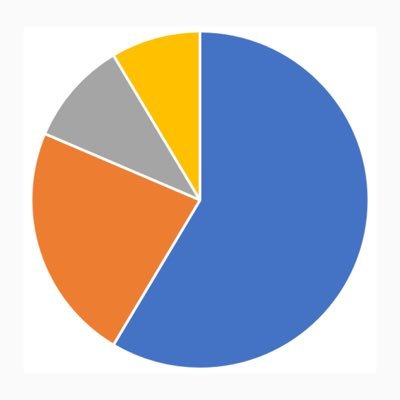
🇮🇳 Indian Railways Electrification Progress:
2026: 99.6%
2025: 99.4%
2024: 90.8%
2023: 84.7%
2022: 76.1%
2021: 67.2%
2020: 58.7%
2019: 50.9%
2018: 43.7%
2017: 37.9%
2016: 35.6%
2015: 33.9%
2014: 33.0%
2011: 29.6%
2001: 23.6%
1991: 16.0%
1981: 8.7%
1971: 7.6%
1961: 1.3%
1950: 0.7%
0xInfoSec retweeted

Last week you asked if India can build its own AI. Today we're answering with work, not words. Reply 'IN' and we'll add you to the early access list. 🌀
0xInfoSec retweeted

ANNOUNCING Pramāṇa, the most comprehensive database of Indian primary sources ever created.
Any
- text (including recensions, commentaries, commentaries on commentaries etc.)
- inscription, coin type...
- foreign text relevant to India
- digitizations of Archaeological survey this, Epigraphica XYZ, whatever
you can think of, is in here.


0xInfoSec retweeted

I think what is actually needed is for Indian people to actually give a damn about their cities and fellow citizens.
Anybody using the "I pay taxes, I shouldn't have to do anything" excuse should go live in another country. India isn't developed, it's developing, so it needs patriots, not parasites. If this triggers you, it means you're part of the problem.
If you're not happy with the footpath (or a pothole, or anything else which is broken), fix it, or call someone to fix it, and don't give up until it's fixed. Be relentless. Be vocal. Be creative. Make it your mission to get that one thing fixed. Look at what Virendra (@Virendra0698) did by just calling the right people and being respectful (but also persistent). He and Arun Pai (@arunpaiblrwalks) along with the help of GBA and some wonderful volunteers turned an unofficial garbage dump into a pristine, beautiful footpath through sheer force of will.
nitter.gq/Virendra0698/status/21…

Bro why the hell are there like 10 different types of keyloggers in cybersec bro??
Each one is has different functions and places where they are hidden in the computer system!!
WTF?!
31
0xInfoSec retweeted

>90k views
Ah.
Huge props to @decaf_bad for making this and I look forward to finishing Book 2 so you can post that too.

Damn, finally ISL got a good brand sponsor.
Hoping for a great ISL season!

A new chapter begins in #IndianFootball! 🇮🇳
The Indian Super League welcomes MG as Title Sponsor in a landmark partnership ahead of the 2026-27 ISL season. 🤝
Welcome to the #ISLFam, MG! 🚙⚽
#MGISL13 #MGISL #MGIndianSuperLeague

1
3
85
0xInfoSec retweeted

How an Indian Mathematician Dated Takśaśila’s Lost Coinage by Its Weight!
In the early 20th century, Indian numismatics relied almost entirely on visual classification, cataloging symbol stamps on punch-marked silver coins (Kārṣāpaṇa).
While researchers like Durga Prasad and John Allan were making progress on typology, punch-marked coins lacked royal portraits / written dates.
Historians could categorize symbols, but struggled to establish relative chronologies / quantify long-term monetary debasement across ancient hoards.
Starting in July 1940 with his papers in Current Science (followed by treatments in New Indian Antiquary and later collected in Indian Numismatics), polymath mathematician Damodar Dharmananda Kosambi while teaching mathematics at Fergusson College in Poona, introduced a quantitative framework to the field.
He treated hoard coins as samples drawn from a stochastic wear process.
Kosambi modeled the lifecycle of currency as a homogeneous random process governed by 2 distinct statistical phases:
- Newly minted coins of a given standard were modeled as approximately normally distributed around a target weight. Higher initial variance indicated looser manufacturing tolerances / emergency minting conditions.
- As coins circulated, handling caused continuous abrasion. Kosambi observed that active circulation systematically reduced the mean weight (roughly linearly over time) while increasing the variance, because individual coins experienced uneven rates of handling.
Applying linear regression, analysis of variance (ANOVA), and t and z tests on means and variances, to sample sets from the Takṣaśilā hoards, Kosambi instituted a rigorous empirical approach:
- Kosambi hypothesized that the small reverse marks ("shroff" stamps) were periodically applied by money-changers / state controllers to verify silver purity.
- Running regressions of coin weight against the count of reverse marks, he derived explicit mathematical relationships. For the square coins of the earlier Takśaśila hoard, he calculated the regression equation
y = 53.22 - 0.212x (where y is weight in grains and x is the number of reverse marks)...
showing a steady weight drop of ~0.2 grains per mark. (Round coins fitted less tightly).
- Comparing this empirical slope against known wear rates of modern circulating British-Indian rupees and annas, he inferred an operational interval of ~12 years between reverse marks. By tracking how coin volume decayed geometrically across mark counts, he modeled the rate at which currency was absorbed or lost from active circulation over time.
- Comparing earlier Takśaśila material to later Mauryan-period hoards, Kosambi demonstrated a statistically significant increase in weight variance and a poorer silver alloy. Rather than claiming a standalone "mathematical proof," he showed that these statistical shifts provided empirical support for literary traditions (such as commentary associated with Cāṇakya) regarding fiscal pressure and debasement in the late Mauryan era.
Kosambi did not replace traditional symbol typology, nor did he independently establish absolute calendar dates, deposition dates still depended on archaeological contexts (such as placing the earlier Takśaśila hoard near the late 4th century BCE).
Instead, he added a rigorous quantitative dimension to historical analysis. As J.D. Bernal observed in Kosambi's obituary in Nature, he pioneered the systematic application of statistical distribution analysis, regression, and variance testing to estimate circulation lifespan and establish relative hoard chronologies.


After using Github Copilot in VS Code to help me in coding my backend project I finally realized what the peeps in the space were talking about like-- "Coding is dead!" or that "software engineering is finished!".
tbh I now feel like I need to study prompt engineering as well.
1
86
I am doing a backend project using Github Copilot(vibe coding) in VS Code to learn backend engineering with AI tools.
Stack used: FastAPI+uvicorn,Git cli,VS Code.
I believe that learning how to use AI tools along with full stack is crucial now.
Cybersec+AI-Backend is my goal now.

2
57
I might start memorizing the table of contents of this course material due to its length.
This would help me in gaining ideas of which chapter I am in and the many types of attacks,tools and processes in a particular chapter.
1
32
Started learning IOT/OT Hacking after studying Moblie Hacking and let me tell you there are a ton of networks,tech and attacks I need to memorize here.
Might take a week for me to learn it at this point.
1
27