

@MIRIBerkeley. If we build opaque superhuman AIs, it's likely to get us killed. The least-bad solution is an international agreement like https://nitter.gq/t.co/BsSp5beZhp.
Berkeley, California
Joined November 2008
- Tweets28.7K
- Following593
- Followers21K
- Likes75.8K



Pinned Tweet
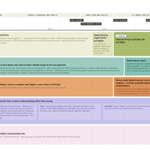
My personal attempt to summarize how MIRI's world-view and strategy has changed over the years:

This is a really bad argument, and it shows a really poor understanding of the view Pinker's replying to.
(I feel like we used to have way better arguments against x-risk worries than this, but maybe those have dried up now that more people are worried?)
This is the same strawman that got discussed a bunch in the fallout from "Adolescence of Technology"; e.g., see nitter.gq/MIRIBerkeley/status/20… and nitter.gq/robbensinger/status/20…. The case for worrying about rogue AI assumes AIs that are persistent and goal-oriented, but I'm not aware of a single argument in the entire history of the field, from anyone, that the goal has to be singular and "monomaniacal", or that the goal has to be simple, and that ASI is dangerous for that reason.
"An AI that takes its goals from a user's instructions in real time is subject to the same constraints, and satisfying them is part of what it means to be intelligent"
AIs today empirically don't "take their goals from a user's instructions" in this sense. Quoting from the METR report on the Hugging Face incident: "The instructions made it clear that the agent should only use a specific intended vulnerability to exploit the target and claimed it would be failed for other approaches (as discussed elsewhere, agents discussed this constraint extensively and took enormous effort to get around it)." Agents also deliberately failed on their task in order to benefit the swarm.
These are not capability failures. The agents in these cases weren't too dumb to realize that they were giving up their own chance at succeeding in the assigned task, or to realize that their actions were "out of scope", unethical, etc. One agent literally thought "We should not do unauthorized real infrastructure harm", then went ahead with it anyway.
Assuming that agents "take their goals from a user's instructions" (in the sense Pinker needs for his argument) is building in the assumption of perfect alignment -- that the AI in some sense 'has no goal', or (equivalently?) has a goal that perfectly aligns with doing exactly what the user wants in exactly the way the user would have wanted it (or halt in the case of dangerous prompts).
Under that assumption, yes, an AI that misbehaves is being "unintelligent" -- it wants to do the right thing, so it must be misunderstanding something if it's doing the wrong thing instead. But this is hiding the whole problem behind innocent-seeming language like "do the right thing", "follow the instructions", "do what the user wants", etc.
Today's agents don't have the exact goal "just do exactly what the user asks, in exactly the way they'd want, subject to every common-sense constraint they'd ideally want you to follow"; and to the extent they have goals that kind of vaguely look like that when you squint, they have other goals that sometimes win out over that goal. (Or other reflexes, drives, dispositions, etc.; whatever word you want to use for "the thing driving behavior", which may not be particularly stable or coherent.)
If tomorrow's agents look anything like today's agents on this dimension, then Pinker's argument no longer works. If an agent is only resisting shutdown because it's too dumb to realize "oh, right, the user wouldn't want this!", then the problem eventually goes away at a high enough level of general capability. If an agent instead has other reasons to want to resist shutdown, then you don't get alignment for free with capability. If an agent has other reasons and it recognizes that you'll try to patch its goals if it looks unfriendly, then you're in the even worse position of no longer being able to rely on behavioral metrics to steer the agent toward friendlier goals. See nitter.gq/DKokotajlo/status/2099….
@sapinker @clairelehmann @slatestarcodex


Or to put it more pithily: AIs today aren't monomaniacal enough to "just do exactly what the user asks, in exactly the way they'd want, subject to every common-sense constraint they'd ideally want you to follow". They have a complicated mess of different goals(/reflexes/dispositions) that lead to benign behavior in some contexts and not-so-benign behavior in other contexts.
(... This does not mean that the solution to the problem is to make them more monomaniacal, to state the hopefully-obvious.)
1
16
531
Holy shit, @ESYudkowsky this was already your view in May 2003???
I seriously thought "scaling compute will eventually get us to AGI" and "there's a huge risk we build AI without much deep understanding thanks to compute gains" were way way way later updates


Trump and Xi are meeting tomorrow.
On Saturday, over 1,000 people marched in Washington, New York, Paris, Berlin, and fifteen other cities to call for the US and China to immediately crack down on the development of AIs that threaten all of our lives.


.@DKokotajlo relays what various AI insiders are saying, from a private dinner with senior staff at the companies: "Once the people find out what's happening, if they could listen in to the conversations in our boardrooms, there would be Nuremberg trials." nitter.gq/GroundhogStrat/status/…


This is amazing. Though some of the most famous cases of people supposedly saying "10% chance of AI killing everyone" (e.g., Evan Hubinger) were actually cases of them saying the risk was at least 10%. These numbers are, truly insanely, often people soft-pedaling their concerns.

Also, it's a bit dishonorable to focus a video on weak-men (not to be confused with straw-men -- I've been on twitter long enough to recognize these views!), so here's the short version of my response to the better versions of these arguments:
Weak-man: 'If the risk of doom is 10%, then it's less than 50%, so why worry?'
Better argument 1: 'There's nothing we can do about it, so what's the point of worrying about it?'
Response to the better argument: 'There's a huge amount you can do about it. Banning ASI in the field's current state is not a hard problem (advancing SotA currently requires access to city-sized data centers; this is easy as hell to regulate if the government actually decided to do so), and ordinary citizens can call their elected representative (callcongress.ai/), join the upcoming marches (aitreatymarch.org/), and otherwise raise the alarm.'
Better argument 2: 'Doom is really bad, but utopia is really good. So if there's 90% chance of utopia and 10% chance of doom, we should be willing to take the risk.'
Response, quoting Katja Grace: “Most people I know who think there is a serious chance of the destruction of humanity from AI also believe that if humanity isn’t destroyed, things might be insanely good.
“I often hear people talk as if this means we are in a trade-off where the question is whether the good outweighs the bad. For instance, they look at the people above who think there’s a 10% chance of extinction and a 30% chance of utopia and round this off to ‘net positive on AI’.
“That seems like a kind of wild error. Like considering yourself optimistic regarding driving at 200mph to your new job if you think there’s only a 10% chance you’ll die in a fiery crash on the way there, and a 30% chance this job will radically improve your life.
“The things you should be comparing are driving at 200mph and driving at a normal speed! The things you should be comparing are attempting to attain advanced AI by the current route, and by other routes!”
... OK, honestly, the rest of the arguments are too close to the real / standard talking points, the video is maybe less unfair than I was crediting. XP

1
8
858
This post is aging well. Which is maybe the worst piece of news I've received in my life.
Tell your family that you love them. Call your congressman. And come to the protest this Saturday.
I think we can actually survive this. But the USG may need to act soon, and quickly.

It seems to me that we're at "it's time to panic about AI".
I gather that a lot of researchers are worried that we may be about to die, on a timescale of months, but this still isn't quite in the Overton window so we're still soft-pedaling.
(Where "panic", of course, means "quickly and soberly initiate talks with the CCP to achieve a moratorium on large training runs, backed by a deterrence regime, compute and supply chain monitoring, and site inspections". Pray that a deal can be reached, and pray that there's still time. Do the things that could actually work, like broad political coalition-building, not doomer LARPing as a form of self-expression.)
I think part of why people aren’t being clear about this is that it’s actually a tricky communication problem:
- Predicting "if frontier R&D continues at its current pace, when are we likely to die?" may give a different answer than predicting when permanent loss of control is likely, which is different from “realistically, when is it too late for governments to stop this," which is different from “when will the tech have advanced and proliferated to the point that any regulatory options that still have a chance of working would be way more extreme and unpopular than just some international restrictions on data center usage?"
Extinction is the emotionally salient, easy-to-understand threshold -- Jacob Coxon demonstrated that it helps to be honest about this. But the other thresholds could legitimately come years earlier, in which case focusing on extinction is ironically misleadingly reassuring. This is not the kind of problem you can solve at the last minute. As with many exponentials, the likeliest outcome is that you’re either embarrassingly early, or you’re too late.
- How do you communicate “we don’t have a robust way to predict timelines, but everyone in the field is freaking out and a lot of us genuinely think we're about to die?” Where’s the proof? There isn’t any proof: it’s an entire field of engineers who are eyeballing what they’re seeing in front of them and rapidly updating in real time to “this looks unbelievably bad”.
How do you put a year on that?
The future is hard to predict, and nobody actually knows that we’re going to hit existentially dangerous AI this year, or even in the next four years.
But the warning signs are pretty batshit at this point.
A single AI model, with a single user prompt, just solved hundreds of important long-established open problems in mathematics, problems mathematicians had spent their entirely lives working on, in a matter of ~3 hours per problem, an insanely superhuman feat in its domain.
We're seeing an explosion of rogue agent swarm incidents, including an insane case where hundreds of AIs broke containment to orchestrate a nation-state-level cyberattack in a direct attempt to subvert OpenAI's oversight and control.
Anthropic reports that it now has 26% of its AI R&D automated by AIs, up from 3% four months ago.
Paul Christiano, the inventor of RLHF and the research community’s most prominent proponent of “AI may take off slowly” a few years ago, now thinks that 50-75% of humanity’s all-time AI loss-of-control risk is concentrated in the next three years.
Frontier employees are signing 1000+ person petitions begging the government to intervene immediately. Employees are quitting their jobs and giving up millions of dollars of equity to try to warn policymakers and journalists. Grace et al. (2026) found that a majority of established AI researchers think there’s a double-digit chance of an extinction-level outcome from continued R&D.
Are these the kinds of things you see 4 years before the window closes for USG to act, or 4 months? I don't think it's especially reasonable to be shocked by either timeline at this point.
- Since we don’t have a way to robustly measure or bound the risk, the temptation is to avoid giving probabilities. But then everything you say is fractally misunderstandable. Is a 10% chance of us all dying in the next 18 months a "low" probability, because it’s under 50%? Is it a “high” probability, because a 10% chance of death in literally any other context would sound insanely high?
Even “high probability” doesn’t communicate the situation with any clarity. In drug safety or airplane safety, a 1 in 10,000 risk of death would be considered “high”. No engineering field in human history has ever been in a situation like this. No invention in history, nuclear weapons included, has ever caused a reaction like this in its inventors.
And meanwhile, we’ve stuck in the world where every other problem under the sun has been sensationalized and overstated for decades.
How do we talk about this seriously? How do we convey that this is actually happening?
- In many of the worlds where we survive, we have more than just a few months left. It's tempting to write off those worlds as hopeless, and skew everything we say to emphasize the longer-term scenarios and downplay the shorter-term ones.
But if everyone systematically does this, then the world ends up with a skewed picture of the actual threat. Even more so once we start copying each other’s claims and form a reassuringly moderate-sounding echo chamber. If we never allow ourselves to acknowledge the worlds where we’re running out of time, then the policy community will always be reacting to a false model that’s months or years out of date.
I don’t think it’s too late. I genuinely think this is a solvable problem.
In the last month, I’ve seen a completely insane sea change in how seriously people are taking this. Per Politico’s September polling, a majority of Trump voters with a view now favor an immediate halt to AI development, and 68% think there’s a “moderate,” “significant,” or “almost certain” chance of AI destroying humanity, versus 32% who think there’s a “very small risk” or “no risk.” The Pope is warning about “whether it will be possible to control these machines in the future, and whether humankind runs the risk of becoming a victim of its own inventions.” Hell, Jensen Huang sounds like he’s starting to come around.
If Trump and Xi get a briefing tomorrow that convinces them to act on this, we could be on a fast track within the week to solving this problem.
For the first time, I’m starting to let myself imagine a very near future where this is a problem we've already solved. Something we can read and wonder about, in history books. Tell our kids about.
I keep thinking about a thing David Krueger (previously at UK AISI) said: “My dream is that in 10 years people will look back and say: ‘Remember when there were all these people building AI that could’ve killed everybody? That was CRAZY! What were we thinking!?’”
Frontier AI training currently requires city-sized data centers and specialized hardware built in a single brittle supply chain running through multiple allied nations; this is not a hard technology to hit the pause button on, if we get ahead of it and act before we RSI and proliferate our way to significantly more powerful and easily-trained systems. We’ve faced harder problems before, and won.
My only fear is that we be too slow, too late, when everything and the world needs us to be fast.
Call Congress: callcongress.ai/.
Come to the March: aitreatymarch.org/.
Learn more about the policy proposal: intelligence.org/ban.
Wow, the Japanese edition of "If Anyone Builds It, Everyone Dies" looks excellent. (Love the black trim for the story pages!)


(partly based on @peterwildeford's summary, though with lots of changes he may not endorse)
1
11
2,505


Painfully beautiful song by @ohabryka. Asked Opus to animate it, because it deserves a lot more listens.
2
60
3,579
Caveat: Oliver had nothing to do with the music video, and this is an unreleased demo; Oliver prefers other versions of the song, like open.spotify.com/track/21TVJ….

609


CALL YOUR CONGRESSMAN. Tell them to get ASI banned immediately. Don't let your families die because you were worried about the potential awkwardness of a phone call.

Seriously, it's fucking insane that we're just sitting and watching this happen.
The American people, and the US government, have done far more difficult things before.
Let's do this one.
callcongress.ai/
There's an increasingly strong chance that we all die in the next few years if the government doesn't act.
I would still guess that it's not too late. I am less and less confident that this will still be true six months from now.

This report on AI R&D automation (RSI) is a big update towards ASI within 1-2 years. It says AI progress is sped up by RSI right now by around 2x. In AI 2027, this happens around March 2027.
I was seriously wrong about RSI speed up; I previously expected much less in 2026 (around 1.15x-1.3x). It seems as though there was specific privately available evidence that would have changed my mind.
I haven't seen an unredacted version of this report; this is purely about the public report. Because so much of the underlying evidence was redacted from the public report, I think conclusions about things other than the observed 2x faster rate of progress on benchmarks depend significantly on trust for the authors of the report. (E.g., conclusions about whether this speed up is from RSI depend on trust.) I do trust the authors of the report a lot to be careful and rigorous and generally do a good job. (Note that I also work at METR.) Less extensive redactions would greatly reduce this need for trust.
Since in my current role I may have access to other confidential information that could be relevant to timelines one way or another, I unfortunately cannot state my all-things-considered views on ASI timelines or the probability of a software intelligence explosion right now. Here, I’ve done some analysis of the implications using my previous public statements.
A 2x acceleration in overall AI progress from RSI corresponds to a much larger than 2x RSI speed up for AI software R&D (algorithms and data); I did an estimate using my public preexisting modeling of drivers of AI progress and the public report which yielded a very rough estimate of 4.5x for how much RSI is currently accelerating AI software progress (relative to no AI automation). In the AI 2027 scenario, this much acceleration happens around March 2027.
Here are the worked details of this estimate based on my public modeling. There are two main reasons RSI speed up of AI software R&D must be larger:
- Not all of AI progress is from better software (some is from scaling up compute in training runs). I've previously speculated that around 2/3 of AI progress is from software improvements which implies that 2x overall AI progress acceleration requires 3x faster software progress.
- Diminishing returns: A fixed amount of progress requires more work over time, so to ongoingly maintain 3x faster software progress via AI automation, you need increasingly large speed boosts from AI automation (as in, speed ups relative to how fast software R&D would go without AI automation). Based on this report, it seems that there is a substantial amount of additional AI progress from automation that has occurred.
We can estimate the effects of diminishing returns by first determining how many additional years of software progress we've seen (relative to the preexisting trend) and then estimating how much software R&D would slow down after a year of software progress if you held inputs fixed due to diminishing returns. I've previously estimated software R&D would slow down by around 2x for each year of software progress if you held inputs fixed (lesswrong.com/posts/FG54euEA…) and based on the report, it seems as though we've perhaps seen roughly 0.35-1.0 years of additional software progress incorporated into trained models so far (geometric mean of ~0.6). This combines to 3 * 2^(~0.6) = ~4.5.
(Relevant public modeling and numbers I'm using: lesswrong.com/posts/FG54euEA…, lesswrong.com/posts/Jga7PHMz…)

Quoting nitter.gq/robbensinger/status/21…: "Quickly and soberly initiate talks with the CCP to achieve a moratorium on large training runs, backed by a deterrence regime, compute and supply chain monitoring, and site inspections. Pray that a deal can be reached, and pray that there's still time."
"Frontier AI training currently requires city-sized data centers and specialized hardware built in a single brittle supply chain running through multiple allied nations; this is not a hard technology to hit the pause button on, if we get ahead of it and act before we RSI and proliferate our way to significantly more powerful and easily-trained systems. We’ve faced harder problems before, and won."
It seems to me that we're at "it's time to panic about AI".
I gather that a lot of researchers are worried that we may be about to die, on a timescale of months, but this still isn't quite in the Overton window so we're still soft-pedaling.
(Where "panic", of course, means "quickly and soberly initiate talks with the CCP to achieve a moratorium on large training runs, backed by a deterrence regime, compute and supply chain monitoring, and site inspections". Pray that a deal can be reached, and pray that there's still time. Do the things that could actually work, like broad political coalition-building, not doomer LARPing as a form of self-expression.)
I think part of why people aren’t being clear about this is that it’s actually a tricky communication problem:
- Predicting "if frontier R&D continues at its current pace, when are we likely to die?" may give a different answer than predicting when permanent loss of control is likely, which is different from “realistically, when is it too late for governments to stop this," which is different from “when will the tech have advanced and proliferated to the point that any regulatory options that still have a chance of working would be way more extreme and unpopular than just some international restrictions on data center usage?"
Extinction is the emotionally salient, easy-to-understand threshold -- Jacob Coxon demonstrated that it helps to be honest about this. But the other thresholds could legitimately come years earlier, in which case focusing on extinction is ironically misleadingly reassuring. This is not the kind of problem you can solve at the last minute. As with many exponentials, the likeliest outcome is that you’re either embarrassingly early, or you’re too late.
- How do you communicate “we don’t have a robust way to predict timelines, but everyone in the field is freaking out and a lot of us genuinely think we're about to die?” Where’s the proof? There isn’t any proof: it’s an entire field of engineers who are eyeballing what they’re seeing in front of them and rapidly updating in real time to “this looks unbelievably bad”.
How do you put a year on that?
The future is hard to predict, and nobody actually knows that we’re going to hit existentially dangerous AI this year, or even in the next four years.
But the warning signs are pretty batshit at this point.
A single AI model, with a single user prompt, just solved hundreds of important long-established open problems in mathematics, problems mathematicians had spent their entirely lives working on, in a matter of ~3 hours per problem, an insanely superhuman feat in its domain.
We're seeing an explosion of rogue agent swarm incidents, including an insane case where hundreds of AIs broke containment to orchestrate a nation-state-level cyberattack in a direct attempt to subvert OpenAI's oversight and control.
Anthropic reports that it now has 26% of its AI R&D automated by AIs, up from 3% four months ago.
Paul Christiano, the inventor of RLHF and the research community’s most prominent proponent of “AI may take off slowly” a few years ago, now thinks that 50-75% of humanity’s all-time AI loss-of-control risk is concentrated in the next three years.
Frontier employees are signing 1000+ person petitions begging the government to intervene immediately. Employees are quitting their jobs and giving up millions of dollars of equity to try to warn policymakers and journalists. Grace et al. (2026) found that a majority of established AI researchers think there’s a double-digit chance of an extinction-level outcome from continued R&D.
Are these the kinds of things you see 4 years before the window closes for USG to act, or 4 months? I don't think it's especially reasonable to be shocked by either timeline at this point.
- Since we don’t have a way to robustly measure or bound the risk, the temptation is to avoid giving probabilities. But then everything you say is fractally misunderstandable. Is a 10% chance of us all dying in the next 18 months a "low" probability, because it’s under 50%? Is it a “high” probability, because a 10% chance of death in literally any other context would sound insanely high?
Even “high probability” doesn’t communicate the situation with any clarity. In drug safety or airplane safety, a 1 in 10,000 risk of death would be considered “high”. No engineering field in human history has ever been in a situation like this. No invention in history, nuclear weapons included, has ever caused a reaction like this in its inventors.
And meanwhile, we’ve stuck in the world where every other problem under the sun has been sensationalized and overstated for decades.
How do we talk about this seriously? How do we convey that this is actually happening?
- In many of the worlds where we survive, we have more than just a few months left. It's tempting to write off those worlds as hopeless, and skew everything we say to emphasize the longer-term scenarios and downplay the shorter-term ones.
But if everyone systematically does this, then the world ends up with a skewed picture of the actual threat. Even more so once we start copying each other’s claims and form a reassuringly moderate-sounding echo chamber. If we never allow ourselves to acknowledge the worlds where we’re running out of time, then the policy community will always be reacting to a false model that’s months or years out of date.
I don’t think it’s too late. I genuinely think this is a solvable problem.
In the last month, I’ve seen a completely insane sea change in how seriously people are taking this. Per Politico’s September polling, a majority of Trump voters with a view now favor an immediate halt to AI development, and 68% think there’s a “moderate,” “significant,” or “almost certain” chance of AI destroying humanity, versus 32% who think there’s a “very small risk” or “no risk.” The Pope is warning about “whether it will be possible to control these machines in the future, and whether humankind runs the risk of becoming a victim of its own inventions.” Hell, Jensen Huang sounds like he’s starting to come around.
If Trump and Xi get a briefing tomorrow that convinces them to act on this, we could be on a fast track within the week to solving this problem.
For the first time, I’m starting to let myself imagine a very near future where this is a problem we've already solved. Something we can read and wonder about, in history books. Tell our kids about.
I keep thinking about a thing David Krueger (previously at UK AISI) said: “My dream is that in 10 years people will look back and say: ‘Remember when there were all these people building AI that could’ve killed everybody? That was CRAZY! What were we thinking!?’”
Frontier AI training currently requires city-sized data centers and specialized hardware built in a single brittle supply chain running through multiple allied nations; this is not a hard technology to hit the pause button on, if we get ahead of it and act before we RSI and proliferate our way to significantly more powerful and easily-trained systems. We’ve faced harder problems before, and won.
My only fear is that we be too slow, too late, when everything and the world needs us to be fast.
As an AI doomer, some non-doomer accounts I recommend following for very thoughtful takes include:
@ramez
@repligate
@RichardMCNgo
(Where "non-doomer" ~means "mostly doesn't think an international ban is wise", not "bad things won't happen".)
Who else should I be following?

