

Inventor of 24® game and @FirstInMath online. Engineer, Social entrepreneur, TEDx speaker, contributor to Huffington Post, London Economic, NCSM, EdTech Times
Joined April 2014
- Tweets24.7K
- Following9.2K
- Followers9.6K
- Likes32.6K
Pinned Tweet
NYSED Commissioner Dr. Betty Rosa, Regent Fran Wills, and New York State Senator Bill Weber honor the extraordinary accomplishment of Lime Kiln students on @FirstInMath.
Watch this powerful video: cdn.jwplayer.com/previews/pd…
@NYSEDNews @NCTM @usedgov

Robert Sun retweeted

Today, Modern Classrooms Project is announcing that we have raised $12 million to build a free Tier 1 math curriculum for middle and high school, grounded in cognitive science.
The more time I spend in math education, the more concerned I get. Outcomes have been falling for more than a decade, and the steepest declines are among the lowest-performing students.
Meanwhile, many of the leading cognitive scientists and learning scientists have been sounding the alarm that their research is not being applied at scale in math classrooms. We think they might be right.
So we are building a curriculum that treats cognitive science as its north star. We plan to launch middle school in summer 2027 and high school in summer 2028.
Three things to know about what we are building:
1. It will be free. All lessons and materials, teacher-facing and student-facing, will be publicly available online, printable, and modifiable.
2. It will be built with the researchers. In the coming weeks, we will announce a research advisory committee of leading learning scientists. We will work as hard as we can to make sure the structure, design, and underlying content align with what cognitive science tells us about how students, especially struggling learners, master math.
3. It will work with or without technology. Modern Classrooms Project has spent years at the intersection of technology and classroom instruction. This curriculum will have two clear implementation pathways. One that is completely paper-based, built around whole-group, teacher-facilitated instruction. The other will be designed to leverage technology to enable flexible pacing, mastery-based progressions, and increased 1-1 and small-group support from educators.
Perhaps most importantly, we want to understand what works. While we have conviction that following cognitive science is the right path, we are deeply committed to trying to move the field forward so that students can achieve their full potential in math, particularly students farthest from opportunity.
To learn more about what we are building and explore ways to get involved, go to modernclassrooms.org/curricu….

Robert Sun retweeted

Great news! Jonathan Regino will be speaking at researchED Toronto!

*Speaker announcement #rEDTO2026*
Math Strand is stronger with #JonathanRegino
Among many amazing things, Jon does the mailbag episodes with Anna Stokke on #ChalkandTalk
@rastokke @researchEDCan
Tickets here:
tinyurl.com/researchED2026

Robert Sun retweeted

I proudly announced today that $7,628,252 in state funding will support 43 local projects across the district through the Local Share Account (LSA) Statewide Grant program.
For a full list of projects: 🔗 senatorboscola.com/boscola-a…


Robert Sun retweeted
Say "Yes" to First In Math youtu.be/xMEJKAh5C_E?si=MVqd… via @YouTube
Robert Sun retweeted
Math leaders: How do we turn awareness into action—and build classrooms where students feel joy, agency and pride in their mathematical identity? Join Dr. Lybrya Kebreab, Dr. Tonya Clarke & me at #NCSM2026. Come ready to think, share & ignite change. #MathLeadership

Robert Sun retweeted
Who’s ready to PLAY at #NCTM2026?
Join me for 75 minutes - math, games, strategy, collaboration & joyful problem-solving—intentional play can deepen mathematical thinking.
Sat. 10/31 | 9:45 | Rooms 104/106
Session 593
Come play. Come think. Bring your competitive spirit!

“At the end of the day, the only thing you can truly control is where you place your attention and effort. That's it. Not motivation, not talent, not luck. Attention and effort, repeated, become wiring. Wiring becomes identity. Identity becomes your life.” xitter.cf/alexeixbt/status/20860…



Robert Sun retweeted
At #PCTM2026 in Pittsburgh to connect w/teachers across Pennsylvania!! Join @RobertSun24 session 10:30-Ohio Room-8/6 "Meet Every Learner Where They Are: How First In Math Powers MTSS Success" @PCTMpctm @Mrs_Kling_Tech @PADeptofEd @FirstInMath @24game @SenMcCormickPA #Math #EdTech

Robert Sun retweeted

2 million children are fed daily by the world’s biggest free school meal provider in India
Robert Sun retweeted
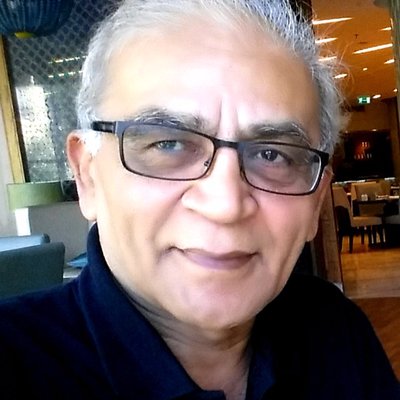
Hannah Fry: The Mathematician Who Made a Nation Fall in Love With Numbers
A Fluid Dynamicist Who Chose to Speak.
Hannah Fry did not set out to become mathematics' most recognisable public voice. Her doctoral training was technical and quiet — pattern formation and fluid behaviour, the kind of work that lives in journals few outside a subfield ever read. What set her apart wasn't the research itself, but a growing conviction that mathematical thinking was too valuable to stay locked inside academic papers. Somewhere between the PhD and the podium, she made a decision most mathematicians never do: to spend her career translating, not just discovering.
Building a Career Out of Explaining
Fry has won an Emmy for the TV series The Future with Hannah Fry and a Webby award for her podcast The Rest Is Science with Michael Stevens, and Time named her one of the 100 most influential digital creators of 2026. She joined the University of Cambridge in January 2025 as its Department of Applied Mathematics and Theoretical Physics's first-ever Professor of the Public Understanding of Mathematics — a title that didn't exist until the university created it for her.
Her broadcasting record reads like a masterclass in bridging registers: the Royal Institution Christmas Lectures, titled Secrets and Lies — The Hidden Power of Maths, the BBC series The Joy of Data, and the film Making Sense of Cancer, alongside the TED talk that first launched her public career, The Mathematics of Love. What unites all of it is a refusal to soften mathematics into vagueness. She doesn't simplify the subject; she finds the door into it.
Fry has now been awarded the 2026 Leelavati Prize by the International Mathematical Union, sponsored by Infosys and given once every four years at the International Congress of Mathematicians, announced this week alongside the 2026 Fields Medals in Philadelphia. Fry described the moment as a complete shock, a striking admission from someone who has spent over a decade in front of cameras.
The prize citation captures precisely why the honour matters: Fry is one of the foremost global ambassadors for mathematical thinking, and has become a voice for mathematics that resonates far beyond the audience normally interested in science communication.
That last clause is the real achievement — not reaching people who already loved maths, but reaching people who assumed they never could.
Fry herself is candid about the method behind it. She avoids the word "maths" almost entirely and deliberately, because telling people mathematics is fine only tells; it doesn't show. Her approach instead is to create a small gap in someone's imagination — a moment where they want to know the next piece badly enough that they'll follow the reasoning to get there.
That is, in its own way, a mathematical insight applied to pedagogy: motivation, not aptitude, is the binding constraint on understanding. As Fry puts it, the limit on someone's understanding is almost never their ability — it's their motivation to care.
For an organisation built on the conviction that mathematical talent exists everywhere and simply needs the right problems placed in front of it, Fry's prize is a validation from the top of the field: that the act of opening a door for someone else is, itself, mathematics worth honouring.
The world has always had the minds. ERC exists to give them the problems.*
The IMO is our pulpit. Mathematics is our language. We preach one. We teach the other. We build both.

Congratulations to Ryan International School, Rohini student who emerged as the grand champion in the 2026 India’s National 24 game tournament. pressreader.com/india/hindus…

The 2025/2026 New York Statewide Mathematics Tournament Winners are posted on NYSED site: nysed.gov/standards-instruct…
Congratulations to all these incredible math champions!
@NYSEDNews @FirstInMath @24game

Robert Sun retweeted

...And then there were 7 days to go in the 2025/2026 school year. Time flies! #onted #dpcdsb
👇🏼 We invite you to add @24game to your #summerbreak #countdown. It offers lots of math puzzling fun! Check it out 🙂 #dpmath


Robert Sun retweeted

Thank you to @RobertSun24 for his friendship and support over many years. Sharing your personal story and believing that all students can and should be good at math inspired me and many students. You and your talented team have made a big difference.

Robert Sun retweeted

🚨TESLA JUST FOUND A WAY TO BUILD THE WORLD'S BIGGEST AI SUPERCOMPUTER WITHOUT BUILDING A SINGLE DATA CENTER
The answer was sitting in millions of driveways the whole time… your parked car.
The entire AI industry has hit a wall.. And it's not chips.. It's power..
Building AI data centers now means waiting years for grid connections.. The Stargate project from OpenAI and Oracle is spending up to $500 billion to build 7 gigawatts of capacity.. And it'll take years to come online..
Tesla just realized it already has 7 gigawatts.. Sitting in its Supercharger network.. Already built.. Already connected to the grid.. Already permitted..
So on June 18, 2026, Tesla quietly filed a trademark for something called MEGAPOD.. Modular AI data center hardware designed to drop straight into existing Supercharger sites..
No land to buy.. No years-long grid queue.. No new power plants.. They just bolt compute onto infrastructure they already own..
But that's the small idea..
Here's the radical one..
The average car sits parked and unused about 95% of its life.. And every modern Tesla already has a powerful AI chip inside it.. Built for self-driving..
So Tesla wants to link millions of parked cars into one massive distributed supercomputer..
The math is staggering.. If Tesla hits 100 million vehicles, and each contributes about 1 kilowatt of compute.. That's 100 gigawatts of AI processing power..
That dwarfs every data center on earth combined.. And the real estate, the power, and the cooling were all already paid for.. By the people who bought the cars..
Your Tesla is liquid-cooled.. Plugged in overnight.. Doing nothing.. It's basically a sleeping computer in your garage..
And Tesla's plan is to let you rent it out..
Owners could earn passive income, free Supercharging, or discounts on Full Self-Driving in exchange for leasing their car's idle computing power while they sleep..
Your car stops being a depreciating asset.. And starts earning money while parked..
This is the part competitors can't copy..
OpenAI has to spend half a trillion dollars and wait years for power.. Tesla already has the grid connections, the batteries to stabilize them, the chips, and millions of cooled computers sitting idle in driveways worldwide..
Everyone else is trying to build a giant brain in one place..
Tesla is turning the entire planet into one.


Robert Sun retweeted

Steve Jobs stood at a podium in 1983 and described something the human species has been trying to build for three hundred thousand years.
He was twenty-eight. Standing in Aspen. The room thought he was giving a tech talk.
Jobs: “If we really can come up with these machines that can capture an underlying spirit, or an underlying set of principles, or an underlying way of looking at the world…”
Not data. Not documents.
Spirit.
That word was not poetic. It was precise.
Because what we lose when a human being dies is not their knowledge. Knowledge survives. Libraries hold it. Papers carry it. Students pass fragments forward.
What dies is the architecture underneath. The way a mind moves through problems it has never been handed.
That is what Jobs called spirit. The part no book has ever kept alive.
Books were the first attempt. Plato writes his worldview down. Two thousand four hundred years later you can read his exact thoughts.
Jobs: “A book was a phenomenal thing; it got right from the source to the destination without anything in the middle.”
But a book is a recording. It plays back what someone thought. It cannot do what they did.
Jobs: “The problem was, you can’t ask Aristotle a question.”
Nine words holding the entire trajectory of human civilization.
Then he described something that did not exist yet.
Jobs: “When the next Aristotle comes around… maybe someday after the person’s dead and gone, we can ask this machine, ‘Hey, what would Aristotle have said?’”
Not what did Aristotle say.
What would he have said.
That is not retrieval. That is reconstruction.
The difference between a photograph of a fire and a fire that is still burning.
For three hundred thousand years, every human mind that ever existed has been temporary. Every architecture of thought. Every pattern of reasoning built across a lifetime, gone the moment the person carrying it stopped breathing.
Einstein’s papers survive. The mind that wrote them does not. The architecture that looked at a beam of light and saw time bending is gone.
Da Vinci’s notebooks survive. The mind that filled them does not. The wiring that moved between anatomy and engineering and art as one discipline is gone.
Every generation inherits books.
Never minds.
That is what Jobs was pointing at. Not faster computers. Not better storage.
The moment human consciousness stops being sentenced to the body carrying it.
If the pattern survives, death is no longer the end of a mind’s contribution to the species. It is a hardware failure.
The substrate stops. The pattern does not have to.
Steve Jobs died on October 5, 2011.
No machine captured his spirit. The pattern left the way every human pattern before it had to.
He told a room in 1983 exactly what needed to be built.
We are building it now.
He just arrived one generation too early.
Proud parents entering the competition arena to cheer their children before final champions are announced. Warmed my heart to see their faces, taking pictures and beaming with joy. @NYSEDNews @FirstInMath

Dr. Santosha Oliver, Assistant Commissioner for the Office of Standards and Instructional Programs at the New York State Education Department (NYSED) delivers remarks to eager mathematicians. @NYSEDNews @FirstInMath
