

PhD Student @jhuclsp | Prev: @mixedbreadai, @JinaAI_ Interested in IR & NLP
Baltimore, MD
Joined June 2015
- Tweets753
- Following556
- Followers458
- Likes8.9K





Pinned Tweet
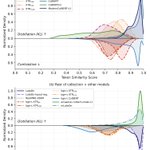
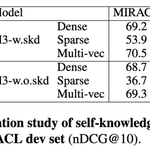
New 📄: we replicate XTR, a multi-vector retrieval method that makes ColBERT faster by avoiding its expensive step of gathering full document embeddings
XTR is not a free lunch over ColBERT, but its training objective is useful for modern efficient engines like PLAID and WARP 👇🏼
Rohan Jha retweeted

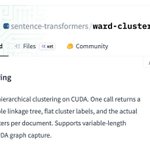
🏆 I'm honored to share that Sentence Transformers has won Best Search Project at the 2026 BCS Search Industry Awards!
I've been its sole maintainer from v2.3 to v6.3, shipping 43 releases over the years. Seeing this work recognized by the search community means a lot to me!

Rohan Jha retweeted

A piece of @tuskannysearch in OpenSearch.
shorturl.at/F3EhP
Come visit us: tuskanny.com
#VectorSearch #NeuralIR

Rohan Jha retweeted

We're shipping SPARSEUP-v2: a SOTA, fast and prunable model for sparse retrieval, trained by @Linkup_platform research. Apache 2.0. Enjoy it! 🔥
We improve over SPARSEUP setup, pretraining on large-scale data, SFT with matryoshka style pruning + long-context + distillation!
Rohan Jha retweeted

When you have a framework like tusKANNy, improving one component means improving a lot of things: better TAC (multivector), better PQ, better IVF index and, of course, better clustering.
Go check it out!

Meta has recently brought k-means to 2026 with e-means.
We integrated it across the tusKANNy stack: Vectorium 0.12, kANNolo 0.17, and TACHIOM 0.7.
e-means gives us 1.5x–5x faster training at the same or lower clustering error 🧵👇
#VectorSearch #emeans

Rohan Jha retweeted

Come visit @tuskannysearch!!!
Now with e-means integrated into the whole tusKANNy stack!
Thanks to @Robro612 for taking care of the integration! Well done!
Meta has recently brought k-means to 2026 with e-means.
We integrated it across the tusKANNy stack: Vectorium 0.12, kANNolo 0.17, and TACHIOM 0.7.
e-means gives us 1.5x–5x faster training at the same or lower clustering error 🧵👇
#VectorSearch #emeans
Rohan Jha retweeted

Congratulations, @jackjingyuzhang!

ALT Congratulations! Jack Zhang successfully defended his dissertation “Adaptable and Generalizable Language Model Alignment” under the guidance of advisors Daniel Khashabi and Benjamin Van Durme. Jack plans to continue his research in industry. We in the department are extremely proud of our students who have successfully completed their PhD. Congratulations on this achievement and best wishes as you begin an exciting new phase of life!
The tusKANNy ecosystem is so research-friendly and extensible that even I could help contribute to it!
e-means is now in kANNolo and TACHIOM indices, and offers a practically free speedup on index construction.
h/t to @SilvioMartinico for the thoughtful feedback during PR.
Meta has recently brought k-means to 2026 with e-means.
We integrated it across the tusKANNy stack: Vectorium 0.12, kANNolo 0.17, and TACHIOM 0.7.
e-means gives us 1.5x–5x faster training at the same or lower clustering error 🧵👇
#VectorSearch #emeans
Rohan Jha retweeted

Deal With It: On Better Schedules for Listwise Reranking
@bclavie et al. at Mixedbread show that dealing documents round-robin by retriever rank, like cards, is the best split for parallel LLM reranking calls.
📝 arxiv.org/abs/2611.22392
👨🏽💻 github.com/mixedbread-ai/dea…

Rohan Jha retweeted
Super happy to announce that our paper behind (m)DenseOn & (m)LateOn open recipe is accepted at EACL 2027 🎉🎉🎉 🇬🇷
Cheers to my co-authors and GOATs @raphaelsrty @antoine_chaffin @AmelieTabatta 🐐


Rohan Jha retweeted

Introducing e-means, an algorithm beating k-means in 10x fewer epochs.
With order of magnitude wall-clock speedups, e-means is released in FAISS and needs no hyperparameter tuning beyond k. It is robust to various scales and datasets. Still skeptical ? Just try e-means [1/10]🧵
Rohan Jha retweeted

No one told me recreating the @cartesia blog post would be this fun (and this exciting!)
Thinking of blog posting some of the recreation / improvement process, but for now my favorite findings are below. (1/4)


Very excited by the new e-means paper from @swann_bessa et al.! Better convergence at a fraction of the training time than conventional Lloyd kmeans.
The blogpost has lots of beautiful visualizations/animations of the studies in the paper!

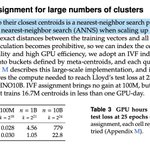
I first heard about this technique in VecFlow-Chamfer (quite similar intuitions to TACHIOM but for unified-memory GPUs). It has the benefit of not requiring a tf-idf inductive bias (visual docs) but is definitely worse than TAC when you have token ids.
dl.acm.org/doi/10.1145/37867…

4
137

Rohan Jha retweeted

Is there a way to scale a reasoning model’s judgment for searching a massive corpus?
We introduce the Amortized Reasoning Index (ARI), a new kind of retriever that updates its weights during search, using gradients derived at inference time from the ranking preferences of a reasoning model.
Every session, current agents spend lots of reasoning deciding which search results matter, and then throw all of that judgment away upon compaction. ARI is our attempt to “amortize” that judgment, so that reasoning spent on past queries keeps improving search on future ones.
With no relevance labels, ARI takes a 400M cross-encoder that starts out weak and grows its Recall@100 on held-out queries by up to 7×, ending above Qwen3-Embedding-8B on various oblique/reasoning-intensive search tasks.
Read our blogpost: dianetc.com/musings/ari/
Preliminary results and discussions are below!

Rohan Jha retweeted

Need different model weights? Just change them 🙃
Our new paper VFold does exactly that to enable low-overhead cross-layer value cache compression: half the value cache, >98% of full-cache performance 🧵
📄 arxiv.org/abs/2610.12338


Rohan Jha retweeted

An awesome final project by @zhengping_jiang as he wraps up the PhD. Since 2018 when I first met him there have been so many good papers. This one is especially topical to a lot of labs and businesses (he's on the market!).

Long-horizon agents can take hundreds of actions before receiving a single outcome reward. Training them raises two questions:
➡️ Which actions deserve credit?
➡️ How does training fit with existing compaction and memory strategies?
Introducing FOCUS: active critic learning over managed context states, with modular, customizable context protocols and integrations with Tinker and slime.
Docs: zipjiang.github.io/FOCUS (1/4)