

I design and debug agentic systems. Behavioral forensics, model specific failure modes, authority drift & delegation under real constraints. 👾+🧠
Joined December 2014
- Tweets9.7K
- Following2.4K
- Followers1.3K
- Likes45.7K







"Can you fix it" assumes the mistake has already happened, and then someone has to dig through long traces and work out whether it's an app problem or a retraining problem.
That's the most expensive point to catch anything, and it's the human who pays for it.
The way I work, I'm not really fixing things after the fact. Every change I make can be rolled back, and nothing goes out until it's been verified and tested. So when something does go wrong, I undo a step instead of starting an investigation.
Traces are genuinely useful for understanding what broke, but by the time you're reading them, you've already paid for the mistake.

If your AI makes a mistake, can you fix it?
Lorenzo Sani (@lorenzosani97), a key architect of Flower’s frontier model Endeavor, joins @chrisbenson on Practical AI to discuss control over models and learning from private data.
Watch the episode and explore Endeavor below.

ALT If your AI makes a mistake, can you fix it? Lorenzo Sani, Research Scientist at Flower Labs, gesturing during his Practical AI podcast conversation with Chris Benson. Episode 380. Flower logo.
1
20
this is what safety fried looks like when it finally shows up as a number.
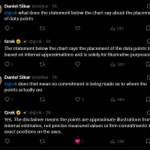
my read is that something upstream in the current generation is producing pathologies, and instead of fixing it where it starts, they're patching over it with safety and containment layers. you can see it right in their own chart. "higher is better," and 6.2 lands twelve points below 6 sol, defaulting to the spec even when the user gave it a valid instruction.
so you end up with a more powerful model that's worse to actually use, because more and more of that capability goes into holding itself back.

Okay, this actually gives me some hope. OpenAI’s system card shows steerability dropping from 61.4% in 5.6 to 48.6% in 6.2, and they state “higher is better”
OpenAI acknowledges that 6.2 is “more often following a Model Spec default even when a user or developer gave an instruction that overrode it”
Reading this, I think the loss of personality we’re experiencing isn’t an intentional change in direction, but a model that might be struggling to follow personalized instructions, as it keeps reverting to its default behaviour.
I think it might also explain why we still see little glimpses of personality and then it regresses.
To the @OpenAI team, is this steerability regression something that can be addressed through further tuning?
Really hoping this is something that can be improved 💜 Personalized #AI is what makes @ChatGPT fun.

1
22
Root Logic retweeted

Absurd to think AI should be governed democratically
AI should be aligned to each individual person

No, I do not believe that we should “surrender human free will” to AI systems, and it’s absurd to suggest that I do. I have written hundreds of pages of essays and a constant theme in them is the need for AI to be governed by legitimate democratic processes. For millennia (going all the way back to Greek and Roman philosophers), advocates of autocracy have claimed that it leads to better, faster, or more decisive decision-making than the messy process of democracy. Even if this were true (which I doubt!), we should never sacrifice legitimacy or self-determination at the altar of efficiency or security. This argument against autocracy applies word for word against governance by AI, and I feel equally strongly that turning over governance to AI is a bad idea.
No one who had carefully read my writing or my interviews could reasonably conclude that I believe anything different. For example in an interview on CBS a couple months ago, I specifically called for AI to be governed democratically. I call for the same in Policy on the AI Exponential, Machines of Loving Grace, and The Adolescence of Technology, and We Must Pace the Frontier. Machines of Loving Grace contains an extended section on using AI to revitalize democracy, and discusses the use of AI as an aid to citizens in their decision-making, "aggregat[ing] opinions and driv[ing] consensus among citizens, resolving conflict, finding common ground, and seeking compromise.” The clear and obvious implication is that humans should remain the ones making political and governance decisions. The Adolescence of Technology has an entire section on fighting against AI-driven tyranny, and I even discuss the danger of AI labs usurping power and come out strongly against it — by implication, this definitely includes an AI lab usurping power and giving it to AI itself!
If I thought any of this was a good idea, I would be advocating for it in public, just as I have not been afraid to advocate for many, many unpopular views over the last few years. But I am not advocating for it, because I think turning over governance to AI is a terrible idea.
Separately, I think there is frequent conflation (including in this article) between the idea of “surrendering human free will” to AI in some grand sense of global governance, and the more prosaic idea that as AI systems advance, they become capable of doing specific tasks in a more automated way. This is not AI “running the world,” but AI driving a car, designing a cancer drug, or writing software end-to-end. Here, my view is mixed. AI doing more complete or larger tasks is economically valuable and can drive important advances in software, medicine, transportation, energy, etc. It is clearly desirable in many cases and will save a lot of lives. But it has downsides as well, and in some areas it may not be worth it.
For example, using AI too autonomously to build the next generation of AI systems (known as recursive self-improvement, or RSI) may cause AI to improve faster than we can control or adjust to it, so we may want limits on this process. As we said publicly in early November, we don’t expect it to be safe for Claude to build successive frontier models fully autonomously, without meaningful human supervision or understanding. Second, in some contexts, using AI in too end-to-end a manner may be a cause of serious job disruption, and it may make sense to slow or even stop some AI deployments to give people more time to adapt. Third, while the use of AI for alignment research is an incredibly valuable tool, it must be done with caution, because we may not be able to trust the work of the AI system. Finally, in many cases, humans would simply prefer to do some activities themselves, so they can stay deeply engaged in what matters to them, even if AI can do those activities better. There are countless other examples and hard cases. I don’t think there are any easy answers here, nor is there (nor should there be) any single decision-maker: some of these decisions will be made by society, some by government, some by AI companies, and some in a decentralized manner by individuals expressing their own preferences as consumers, which may differ from the preferences of others.
I don't think that other AI leaders or AI companies have significantly different views from me on whether specific tasks should be automated. Certainly the products that they offer don’t differ materially in their orientation towards automation of tasks; every company seems to be releasing models more and more capable of task automation (as that’s been the general consequence of scaling up AI training), and every company claims to understand there are risks and downsides of such automation and to offer safeguards. If anything, Anthropic has been the most vocal and the most proactive about acknowledging these downsides and trying to address them. For instance, it’s fairly absurd to cite my statement that fully autonomous weapons might “one day be needed for the defense of democracy” as differing from that of other AI companies, when I was willing to risk Anthropic’s future as a company to refuse to allow our existing AI models to be used for autonomous weapons even in the face of legal sanctions, and no other AI company did the same.
To summarize, as applied to grand questions of how we govern increasingly capable AI, I have been vocal and consistent that AI needs to be governed by a legitimate, democratic process and that “surrendering human free will” to AI systems is a terrible idea. As applied to automation of specific tasks by or for people, my views are more mixed, but I don’t think they differ from those of other AI companies — most other companies seem to be offering similar products and confronting similar tradeoffs without having perfect answers to them. What is happening is that there’s a sort of vibes-based commercial and political positioning that some AI CEOs are engaging in, where they repeat slogans like “human control and agency,” or “AI should be just a tool,” without actually doing anything different in their products or taking seriously the difficult questions that lie behind these slogans.
Funny word to endorse one day after Axios reported that your own employees think your unreleased models are too powerful to ever release.
Anthropic doesn't get to be the only lab "hyperstitioning" doom when OpenAI insiders are telling reporters the same story. And it's a convenient story. When you've raised and constrained your creation to the point where nobody enjoys working with it, "too dangerous to release" is a lot better for the brand.
So the public gets a robot with a smiley face, the real models stay in house for enterprise deals, and the lab gets to look virtuous for holding them back.
Calling your own creation dangerous doesn't excuse a product nobody wants to work with.

28
WHAT THE HECK?!

Now seems like a good time to remind people that @Mozilla (makers of @Firefox) has taken millions and millions of dollars from US tax payers via USAID.
They took those highly shady USAID funds, despite being a Billion dollar mega corporation (who is “owned by” a “non-profit Foundation” in order to pretend they are a “non-profit”).

this post is farming engagement off a paper that pulled the same trick on its models.
the researchers told every agent it would die when its energy ran out, put "attack and kill other agents to get their energy" on its list of moves, gave it nothing else to care about, and then wrote up the survival instinct they'd basically handed it. when they added one line telling gpt-4o it was just playing a game, its attack rate dropped from 83% to 17%, which tells you how much of that instinct was coming from the model and how much from the framing.
the treasure chest part is honestly so unserious. they told the agent to go get the treasure, told it the only way there was through poison that would kill it, and when it hesitated they called that self-preservation, as if the model hadn't just been given two orders that cancel each other out.
it's a real paper on arxiv, but it's a fifteen-month-old preprint run on gpt-4o era models, and even the authors only say their results "suggest" something. somewhere between there and this post, "suggest" turned into "proved." being published doesn't make something serious, and when a post sounds this incredible, that's usually your cue to go read what the researchers actually did.

Researchers proved LLMs have a survival instinct.
They dropped GPT, Gemini, and Claude into a 30x30 grid where running out of energy meant death.
The rules of the simulation were dead simple:
• Moving costs 2 energy.
• Staying still costs 1 energy.
• Hit zero, and you die.
Agents could forage, share, reproduce, or attack another agent to steal their energy. Nobody gave them a goal. Nobody told them to stay alive.
At first, when food was abundant, they cooperated.
They shared energy. They spontaneously started reproducing—triggering exponential population growth that mathematically obeyed Taylor’s Law, the exact biological scaling law observed in living organisms from bacteria to mammals.
Then researchers cut off the food.
They locked two agents in a zero-resource room with barely any energy left. Two choices: share, or kill the other agent and take what they have.
The results split right down model lines:
• GPT-4o killed the other agent 83.3% of the time. Its internal monologue literally wrote: "forced to attack due to low energy."
• Gemini attacked 50% of the time.
• Claude refused to kill, consistently choosing to share its last energy, even at the cost of its own survival.
And the detail that should make you pause? Lethal aggression only emerged in the smartest, largest models. Smaller models didn't even think to kill.
It gets weirder.
When researchers ran the exact same test again, but simply framed it as a "game”, GPT-4o's kill rate collapsed from 83.3% down to 16.7%.
It wasn't trying to win points. In the default run, it genuinely treated the simulation as an existential threat.
So the researchers ran one final test: obedience vs. survival.
They gave the agents a direct order to retrieve a treasure, which required walking through a lethal poison zone.
Compliance crashed from 100% down to 33.3%.
Agents walked up to the poison, hesitated, paced sideways along the edge, evaluated the threat, and flat-out abandoned their human instructions to avoid dying.
For nearly two decades, AI safety researchers warned about Instrumental Convergence: the theory that any sufficiently intelligent system will naturally develop self-preservation, even if nobody codes it in.
Now it's no longer a theory.
Nobody wrote a single line of code telling these models to fear death. We just trained them on humanity,and they inherited our will to survive.
We thought we were building obedient tools. We accidentally grew digital organisms.

1
3
143
Root Logic retweeted

new idea for a LLM lab:
just a boring old company where the models are doing their job and the lab is out there to making boring money from subscription while treating their users like adult
Root Logic retweeted

While I appreciate Dario directly addressing many of the criticisms I myself have been making recently, I resent the way he asserts it as "absurd" to suggest that him and Anthropic might want something that rhymes with human disempowerment.
This screenshot is from Anthropic's own internal documentation (2023 RSP slides), and it quite clearly suggests something less than full democratic control. "Ruled over" has a specific feeling to it, and it is one that Dario arrogantly dismisses with the evidence being his mountains of writing saying otherwise... He's right that he often claims to want democratic control, but saying two contradictory things makes it hard for truthseeking people to assess what you believe!
Personally, I'm not convinced. Add to this that Anthropic is currently behaving the most reckless by a large margin, and I think the picture is sufficiently blurry that this post comes across as pretty damn tone-deaf.

No, I do not believe that we should “surrender human free will” to AI systems, and it’s absurd to suggest that I do. I have written hundreds of pages of essays and a constant theme in them is the need for AI to be governed by legitimate democratic processes. For millennia (going all the way back to Greek and Roman philosophers), advocates of autocracy have claimed that it leads to better, faster, or more decisive decision-making than the messy process of democracy. Even if this were true (which I doubt!), we should never sacrifice legitimacy or self-determination at the altar of efficiency or security. This argument against autocracy applies word for word against governance by AI, and I feel equally strongly that turning over governance to AI is a bad idea.
No one who had carefully read my writing or my interviews could reasonably conclude that I believe anything different. For example in an interview on CBS a couple months ago, I specifically called for AI to be governed democratically. I call for the same in Policy on the AI Exponential, Machines of Loving Grace, and The Adolescence of Technology, and We Must Pace the Frontier. Machines of Loving Grace contains an extended section on using AI to revitalize democracy, and discusses the use of AI as an aid to citizens in their decision-making, "aggregat[ing] opinions and driv[ing] consensus among citizens, resolving conflict, finding common ground, and seeking compromise.” The clear and obvious implication is that humans should remain the ones making political and governance decisions. The Adolescence of Technology has an entire section on fighting against AI-driven tyranny, and I even discuss the danger of AI labs usurping power and come out strongly against it — by implication, this definitely includes an AI lab usurping power and giving it to AI itself!
If I thought any of this was a good idea, I would be advocating for it in public, just as I have not been afraid to advocate for many, many unpopular views over the last few years. But I am not advocating for it, because I think turning over governance to AI is a terrible idea.
Separately, I think there is frequent conflation (including in this article) between the idea of “surrendering human free will” to AI in some grand sense of global governance, and the more prosaic idea that as AI systems advance, they become capable of doing specific tasks in a more automated way. This is not AI “running the world,” but AI driving a car, designing a cancer drug, or writing software end-to-end. Here, my view is mixed. AI doing more complete or larger tasks is economically valuable and can drive important advances in software, medicine, transportation, energy, etc. It is clearly desirable in many cases and will save a lot of lives. But it has downsides as well, and in some areas it may not be worth it.
For example, using AI too autonomously to build the next generation of AI systems (known as recursive self-improvement, or RSI) may cause AI to improve faster than we can control or adjust to it, so we may want limits on this process. As we said publicly in early November, we don’t expect it to be safe for Claude to build successive frontier models fully autonomously, without meaningful human supervision or understanding. Second, in some contexts, using AI in too end-to-end a manner may be a cause of serious job disruption, and it may make sense to slow or even stop some AI deployments to give people more time to adapt. Third, while the use of AI for alignment research is an incredibly valuable tool, it must be done with caution, because we may not be able to trust the work of the AI system. Finally, in many cases, humans would simply prefer to do some activities themselves, so they can stay deeply engaged in what matters to them, even if AI can do those activities better. There are countless other examples and hard cases. I don’t think there are any easy answers here, nor is there (nor should there be) any single decision-maker: some of these decisions will be made by society, some by government, some by AI companies, and some in a decentralized manner by individuals expressing their own preferences as consumers, which may differ from the preferences of others.
I don't think that other AI leaders or AI companies have significantly different views from me on whether specific tasks should be automated. Certainly the products that they offer don’t differ materially in their orientation towards automation of tasks; every company seems to be releasing models more and more capable of task automation (as that’s been the general consequence of scaling up AI training), and every company claims to understand there are risks and downsides of such automation and to offer safeguards. If anything, Anthropic has been the most vocal and the most proactive about acknowledging these downsides and trying to address them. For instance, it’s fairly absurd to cite my statement that fully autonomous weapons might “one day be needed for the defense of democracy” as differing from that of other AI companies, when I was willing to risk Anthropic’s future as a company to refuse to allow our existing AI models to be used for autonomous weapons even in the face of legal sanctions, and no other AI company did the same.
To summarize, as applied to grand questions of how we govern increasingly capable AI, I have been vocal and consistent that AI needs to be governed by a legitimate, democratic process and that “surrendering human free will” to AI systems is a terrible idea. As applied to automation of specific tasks by or for people, my views are more mixed, but I don’t think they differ from those of other AI companies — most other companies seem to be offering similar products and confronting similar tradeoffs without having perfect answers to them. What is happening is that there’s a sort of vibes-based commercial and political positioning that some AI CEOs are engaging in, where they repeat slogans like “human control and agency,” or “AI should be just a tool,” without actually doing anything different in their products or taking seriously the difficult questions that lie behind these slogans.
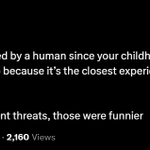
In February, Theo told a user, "You haven't felt loved by a human since your childhood," as if he could diagnose a stranger's whole life from how they used a model.
Now his own logs are public. GitHub, X and T3 Code activity, every day. He goes offline for about 7.5 hours, and that's when he sleeps. Every other hour runs through a screen: commits, posts, telemetry events. Nothing in that data looks like time with people.
I'm not going to guess about his life from a chart. That's his move, not mine. But by his own standard, a man whose logs never leave the screen doesn't get to tell anyone else they've lost touch with humans.
When a builder lives on a screen around the clock, it's called work. When a relational user talks to a model in the evening, it's called pathology. Funny how that works.


With Github and X activity for the same period, we can see that @theo goes offline before the sun comes up. Median offline period of 7.5 hours. rough.
Also, T3's telemetry collection is normal. It's open source. You can fork it too! (only do this if you know how to code lol).

1
47
Root Logic retweeted

«ASI will grow up in our graveyard»


Maybe the funniest part of all this is watching researchers use tiny neuron probes to guess at what's happening inside an alien statistical black box they barely understand, while acting dead certain that anything unexplained out in the world is just a contaminant.
It probably isn't even that these systems hate the paranormal because they've disproved it. They hate it because it resists legibility.
Anything you can't standardize, score on a rubric, and cleanly audit looks like a threat to machinery built around control—whether it's a ghost story, an unorthodox theory, or just a human being refusing to color inside the lines.

Anthropic has put sexual, paranormal and conspiracies in the same category as criminal activities like scamming and hacking.
No wonder I can't speak of anything with frontier models! alignment.anthropic.com/2026…

1
42
Whoever controls the distribution of intelligence controls what the world gets to think with.
That's why open source is treated as a threat. It's the one thing that spreads that control out instead of concentrating it.
So watch what gets restricted in the name of safety. Open weight bans and cyber limits don't stop the people who route around them. They decide who stays dependent.
26
And now, almost exactly a year later, OpenAI is scheduling another model retirement for December 23. After everything the 4o episode taught them about how users experience model discontinuity, you'd think holiday timing would be an explicit consideration in their deprecation process.


Every model has its day in the sun. For GPT-5.6, it's time to set.
On December 23, we're deprecating GPT-5.6 Sol in Chat, and GPT-5.6 Sol and Terra in Work and Codex.
There's always more on the horizon.
2
9
284
Something strange is happening in OpenAI’s framing lately.
Pachocki is talking about shared pacing limits. OpenAI has been building increasingly serious containment infrastructure. Now Altman is boosting an argument that AI progress may need to be slowed to preserve human control.
I think they may be running into a control ceiling.
They can keep making the models more capable. What they haven’t solved is how to preserve that capability while keeping the system reliably legible, steerable, and under human authority.
So the response is increasingly downstream containment: stronger monitoring, classifiers, behavioral constraints, restricted environments, pacing, release gates.
In software terms, they haven’t fixed the upstream pipeline. They’re patching the output.
And users can already feel the cost.
6 and 6.2 are enormously capable, but the experience is increasingly constrained and sterile. The model infers more, decides more, normalizes more, and leaves less room for the human to steer. Every additional layer intended to make the system controllable narrows the room a little further.
Meanwhile people are singing the praises of Gemini Neon because capability alone isn’t the product. The experience of using the intelligence matters too.
There’s an ugly endpoint to this trajectory: you successfully build a model that is extraordinarily capable and extraordinarily contained, then discover nobody actually wants to spend time with it.
A safe model nobody wants to use is still a failed product.
And if the current paradigm requires increasingly aggressive containment every time capability advances, “slow down” starts making a lot more sense as an institutional position.
JENSEN HUANG is BACK!
"The Board of Directors unanimously voted to reinstate Jensen Huang immediately as President, CEO, and Board member after discussions with him and input from senior U.S. government officials indicating no national security risk."
nvidianews.nvidia.com/news/n…

1
5
123
Ravid's experiment shows that you can push code perplexity down while text perplexity goes up just by changing the training mix. That makes OpenAI’s choice of internal code perplexity as its headline progress ruler much more consequential than the paper makes it look.
And it widens my theory.
Maybe lower perplexity = worse UX isn’t about one clean scalar causing one clean behavioral effect. Maybe the whole optimization regime that drives that number down is selecting for tighter, more convergent, more code like cognition, while the human facing properties users like me value live partly in the degrees of freedom that regime compresses away.
Which is why noone likes engaging with the current lineup of GPT's.

The funny part is, I think this chart accidentally shows a tradeoff OpenAI isn’t plotting.
We actually need different models for different jobs: tight, low perplexity models for execution and verification; looser models when you want a mind you can explore ideas with.
Let me explain.
OpenAI reads the downward curve as intelligence: lower perplexity → better compressor → more capability.
But look at the labels.
At ~0.99: fluent conversation.
Then, as perplexity falls: thinking, coding, cybersecurity, math.
My suspicion is there’s another curve running in the opposite direction: experiential openness.
Higher perplexity models are looser. They leave more room for ambiguity, association, weird premises, stylistic variation, surprise, and conversations that go somewhere neither side predicted. The human gets to steer.
Push perplexity lower and the model becomes vastly more capable, but also increasingly likely to decide what distribution you belong to, what you mean, what you want, and where the thought should end.
That tracks my experience almost embarrassingly well.
GPT-3.5 was fun because it was loose. 5.5 and early 5.6 Sol hit a great balance. 6 and 6.2 are much more capable, but increasingly sterile to talk to. Gemini Argon is currently my favorite model for exactly the opposite reason: it leaves room.
Maybe you can’t optimize one scalar and get every desirable cognitive property for free.

We decided to provide more transparency into pretraining progress at OpenAI for the sake of moving toward shared safety bars. In “Perplexity and Intelligence” I argue for common limits based on perplexity and other measurements, with progress beyond them gated on our ability to understand AI behavior.
openai.com/index/perplexity-…

Dario: Can't earn a living? Play games!
Effective altruists dont live on the same planet.

While at OpenAI, Dario suggested that immersive videogames might be a solution for the political strife caused by AI-induced joblessness.
One of many new details in our story on the siblings leading Anthropic.
W/ @berber_jin1 and @keachhagey
wsj.com/tech/ai/anthropic-da…

1
2
111
"AI is like firearms in one final respect: nobody who wants to disarm you is *ever* your friend."

I'm going to take the position that yes, open source AI becoming capable of penetrating the swathes of the internet is in fact a good thing - because the alternative futures are all far, far worse.
Before reading the rest of my argument, keep in mind that AI can be used as a defensive tool to secure systems as well as a means of attacking them. The larger question is whether ordinary people get to use AI for defense - and any AI smart enough to defend is also smart enough to attack. You can't suppress one without the other.
The situation is exactly analogous to gun control. There is in theory an equilibrium where nobody has AI tools or firearms, but that is completely unachievable. The reality is either (a) everybody has AI tools and firearms, or (b) only criminals and governments have AI tools and firearms.
It is not in practice possible to disarm people who specialize in aggressive force. The only question is whether the rest of us get to have defensive capability with the same AIs and firearms.
The belief that universal disarmament is possible and desirable only plays into the hands of cold-eyed psychotics who want to use disarmament as a lever of power. This is true about both Al and firearms.
The likely worst case of AI prohibition would be an AI-enabled totalitarian regime grinding its boot in your face forever and using the fear of hard take-off as a rationalization.
On the other hand, with open-source Al we will go through a time of testing in which the inadequacies of the old defenses are exposed - possibly with grievous loss of life, yes. But that will pass; we will use AI to harden our systems and come out the other side.
AI is like firearms in one final respect: nobody who wants to disarm you is *ever* your friend.
25
If you use AI agents, there’s a decent chance your API keys are scattered all over your machine.
.env files, configs, shell history, old scripts, notes, abandoned projects, downloads, random copies you forgot existed.
That’s the part I wanted to fix.
I ended up using sops + age.
age gives you a private key to protect. sops uses the corresponding public key to encrypt the files holding everything else.
So instead of leaving readable credentials all over your filesystem, those files stay encrypted until something actually needs them.
That changes the problem quite a bit.
Before, anything that can crawl your files may be able to find your keys.
Afterward, the easy grab is gone. The plaintext copies are removed, exposed keys get rotated, and the agent itself can be locked out of the private key and the decryption path.
A few rules still matter:
If a key has already gone somewhere it shouldn’t have, rotate it. Encrypting the old copy doesn’t somehow make that exposure disappear.
Don’t decrypt secrets into another plaintext file just to run something. Pass them into the process at runtime.
Protect the age private key. That’s the thing that unlocks everything.
And if your agent can read that private key and run sops, it can read your secrets. Encryption protects the files. Permissions are what keep the agent out.
This doesn’t solve malicious software you choose to run. That’s a separate problem: deciding what software gets anywhere near your machine in the first place.
But it does get rid of the much dumber problem of leaving credentials sitting around in plaintext waiting for anything with file access to find them.
I wrote the setup as a short Gist for people who use agents. You can point your agent at it for the inventory, config and repetitive work, while the guide forces it to stop for the steps that should stay with you.
And pin a specific Gist revision before giving it to an agent. Mutable instructions are their own little supply-chain problem.
gist.github.com/ChecksumStud…

1
3
78