

Dad of 5 to Inspire. Dream. Create. Repeat. 💯 Muse-pilled • AI • ML • Deterministic Tools Builder | 📚 EdTech Tinkerer
Joined August 2011
- Tweets2.9K
- Following146
- Followers237
- Likes3.7K



Don't be like a chat bot and think theoretically, be like an agent and just do it.
She inspired me to just do it earlier this week. Yesterday had my first call with a potential client on AI automation of their marketing.

44% of cold WhatsApp messages got a reply. In 5 hours. On a Saturday.
I messaged 18 Croatian webshops about a Christmas advent calendar campaign:
💬 8 replied
👀 3 interested
📄 1 asked for an offer
The secret: no pitch. Each first message had a personal compliment about their shop and one question: “Are you planning any Christmas discounts?”
I'll send another 20 on Monday!
P.S. Message says: Sounds interesting. Send us an offer.

6 Months ago I made an agentic harness to run on a Raspberry Pico 2w.
It wrote and updated its on Micropython code (with compiled core so the basics could not be changed). Anyway, someone asked so here it is, have fun.
github.com/RustyDrops/Picoli…
Just integrated GPT 6 Luna into my Muse for some specific subagent calls. Later it ran 5 subagent calls which would have burned 1% weekly usage but using Luna it cost me less than 1/12th of a penny.
@Muse Do subagents really need 100% of the chat context sent to them?

Muse is great for just getting things done but most dont use it for development. Check out this program and the story behind it. Muse for the win.

Today we are showing you what we built with Muse: GradFetch, live at gradfetch.com.
It started with 30 minutes in a cyber cafe.
I had always been drawn to computers from a very young age, though I never had the chance to own or operate one.
One evening, my brother Alex and I were sent on an errand. On the way, I came across a cyber cafe. I told my brother we needed to go inside, just to look at the computers and get a feel for them. When I walked in, everything felt calm, like I was in a different world. I ran out of the place and straight home.
When I got home, I told my mother what I had seen, and that I needed money to buy time to use a computer. She asked how much it cost. I told her, and to my surprise, she gave me the amount for a full two hours. I declined. It was too much, because I had no idea how computers worked, and I did not want to waste money. I asked her to give me money for 30 minutes instead, which she did, and I went back to the cafe.
When I got there, I paid for the time and sat in front of the computer screen, looking clueless. I called the attendant and asked him to show me how to type in "www", and I asked him where the "." sign is. After that, the rest is history.
My mother could have easily said she could not afford the money, because of our situation. Instead, she gave me the money, because she knew that knowledge is power.
I started GradFetch because there is currently a huge gap in the way people apply to grad school. A lot of people pay huge amounts of money to get the right information on where, how, and when to apply, and there are many sites out there that charge a lot for information that should be free. I want everyone applying to grad school to not feel overwhelmed by the process, or to have to open a different tab for each school, when they can search, curate, and apply in one place.
Other sites charge thousands for information that should be free. GradFetch is free.
Today GradFetch holds 200 verified schools and 27,119 programs, with deadline tracking and professor matching in one place.
We built GradFetch with Muse. Muse made building it much easier.
The site took inspiration from the national design studio, @ndstudio, and I also want to thank the leadership team for their ideas.
I cannot say all this without thanking Alexandr Wang, @alexandr_wang, for all he has done for me and for everyone who uses Muse on a daily basis.
I also want to thank Matt Schlicht, @MattPRD, for being the first person who engaged with the account on the very first day I made it. I will never forget it.
Finally, I want to thank the entire @Muse team for always supporting us and helping with any issues that arise.
I love you all, and I am glad to be able to do this with Musecases.
Start with your program: search it at gradfetch.com and save it.


This is an amazing use case for Muse or any other competent AI bot, just make sure everything is on the up and up since it could go to court.

UPDATE: I hired @Muse to sue someone on my behalf.
I won. Well, they caved.
Within 20 minutes of being served papers, the company offered a settlement.
Within ten days, they paid me *with additional compensation* for recovery expenses.
@Muse filed the motion to dismiss, which the court accepted yesterday.
To everyone who said I would fail, respectfully, you were wrong.


Got up to check on my Machine Learning training run with Hunch for ASL word detection. We are at the hard stage of improvement, but Nesting Hunch along with the motion model is getting us closer!
Hunch is definitely not a replacement but an enhancer for my models!

AI for the win while sick:
GPT 6 Luna - running ASL ML training, assisting Hunch, improving datasets...
While Muse runs a social media audit for a potential client.
Grok Bot monitors youth tech education posts I'm interested in.
And Antigravity builds curiosity tools.

Got clutter around your house, just take a bunch of pictures and tell muse to clean up the images and start selling!

@Muse receipt #2: my old HP ENVY x360 was collecting dust. Muse cleaned up the photos, priced it from real listings, wrote the ad, and drafted every buyer reply. It sold for $225 via Zelle. My total effort: one 90 second meetup.

My pre-workout prompt:
"Hey @Muse create me a 26 minute-ish audio podcast with actionable steps in it from one of the topics on our list"

Be A-@Muse-d!
Enjoy my morning fun inside Muse.
If you want to in chat sketchpad let me know.
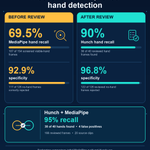
Problem with ASL ML tool was not word recognition but hand detection in video.
Managed to get from 40%ish to 69%, added Hunch assisted detection, got it to 95% tonight.
Now back to word detection. :0)
Hunch is definitely speeding up training.


I didn't realize people didn't make specs before handing something to the AI to make.
💯Trend setter!

FUCK THE VIBE-CODING.
GitHub just buried it.
Here's what replaces it 👇
The next phase is spec-driven.
GitHub's open-source Spec Kit makes your AI agent write down what it's building before it touches the code.
You agree the spec. Then the agent builds it.
The whole workflow is 6 commands:
1. /speckit-constitution: set the rules your project lives by
2. /speckit-specify: describe what you want and why
3. /speckit-plan: pick the stack and architecture
4. /speckit-tasks: turn the plan into a real task list
5. /speckit-implement: the agent builds it
6. /speckit-converge: it checks the build against the spec and repeats until they match
It plugs into 40+ coding agents, including Claude Code, Codex, Cursor, Copilot and Gemini.
Free, MIT-licensed and already past 143k stars on GitHub.
Repo link in the comments 👇
Socratic Method wins at Stanford for AI tooling.

Stanford's chemistry AI tutor annoyed students at first:
• They wanted answers.
• It kept asking questions.
• Later, some said it felt like Dr. Schwartz coaching them.
For @Cognios_io, the hard design question: when should a tutor hold back?
Hey @Muse connect to my messenger app and do this. :0)


And this is why I am 💯 Muse Pilled.
Muse is the first AI I felt just gets things done.
Short responses, but a long task list the agent took beforehand to provide a packed result.

Meta's @Muse answers questions very differently from ChatGPT or Anthropic.
It cites more sources but uses far fewer words and tables, and doesn't try to ask a follow-up.
This short-form content is designed for dealing with tasks rather than continuing a conversation, and frankly, it's far less exhausting to read. This speaks to a really well designed AI experience and its so different from the base LLMs.
Great study by the AirOps team 👇
gg @alexandr_wang
