

Solar astrophysicist | author | speaker ☀️ I research the Sun for a living. Let's talk about it! ☀️ Solar flares • aurora • eclipses 📚 *Space Hazards* out now
Boulder, CO
Joined April 2010
- Tweets3.7K
- Following633
- Followers13.9K
- Likes20.8K




Dr. Ryan French retweeted

#GIVEAWAY 🔭🌈
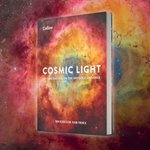
We have partnered with Celestron to give away a Celestron StarSense Explorer Telescope worth £299.99 and a copy of #CosmicLight by @tomkerss and @RyanJFrench!
Enter now: collins.co.uk/pages/win-a-ce…
#CollinsAstronomyWeek @WorldSpaceWeek #Competition

Dr. Ryan French retweeted
#DidYouKnow we’re offering 40% off astronomy books during #CollinsAstronomyWeek? 🏷️
Use code ASTRONOMYWEEK2026 to receive a discount on our fantastic collection of astronomy books.
collins.co.uk/collections/sa…
Offer ends 10th October!
@WorldSpaceWeek #Discount

Dr. Ryan French retweeted

You have a say in how we color @SunCETcubesat extreme UV images! Our bandpass is a new one that encompasses two of the traditional ones. Should we just pick one of the colormaps? Should we be inspired by sunsets? Vote for as many as you like at
suncet.github.io/suncet_inst…

Dr. Ryan French retweeted

Huge congrats to Ryan! If you aren't following him already, now is the time!

I am honoured to announce that I have received the 2026 Athelstan Spilhaus Award from the American Geophysical Union (@theAGU)! The award is given annually to an honoree in recognition of their enhancement of the public's engagement with Earth or space sciences.

Dr. Ryan French retweeted
Cosmic Light is out today! 🌈💫
See the Universe as never before with this wonderfully colourful collection of cosmic imagery, never before seen in print and demystified by experts @tomkerss and @RyanJFrench
ow.ly/lSHv50ZLMcc
#CosmicLight #Space #Astronomy #Science


Dr. Ryan French retweeted
Wrapping up a busy year of publishing for me, I’m very happy to share that my next book, “Cosmic Light” releases next week in the UK/Europe with @CollinsAstro/@HarperCollinsUK (and a little later for North America).

Dr. Ryan French retweeted

Our #September #shelfie:
Cosmic Light - Tom Kerss & Ryan French
When the Sky Falls - Jade Angeles Fitton
Telescope Eyepieces: Optical Theory & Design - Sean G. Ryan
Meet Jonathan Cowie, author of Earth's Flips of State
Full reviews in the new issue: sbee.link/39x486qfmn

Dr. Ryan French retweeted
Great to see my new book, “Little Book of Eclipses” (co-authored with my good friend @tomkerss) featured in @AstronomyNow’s July reading recommendations!
After next week, it will be available worldwide (it’s out in the UK & Europe already) – just in time for August’s total solar eclipse!

What are you reading this month? Here's our July #shelfie:
📕 Meet the Neighbors –Steven A Benner
📘 Little Book of Eclipses – @tomkerss & @RyanJFrench
📗 The Beauty of Falling– Claudia de Rham
📙 Space Journal: Art, Science & Cosmic Exploration @dallascampbell
#sundayshelfie

Dr. Ryan French retweeted

First ever @astronomyontap in Boulder and it just so happened to showcase the Sun by none other than @RyanJFrench!
Very cool to hear everyone around me in awe over the Sun, space weather, and the aurora. 💛 ☀️


Dr. Ryan French retweeted
My new book releases next month!! ‘Little Book of Eclipses’, co-authored with the brilliant @tomkerss, explores the science, history and culture of both solar and lunar eclipses, alongside over a decade of eclipse maps for upcoming eclipses.


Dr. Ryan French retweeted

The tragedy of this is that it’s totally unnecessary - I think it’s a result of hasty (to put it politely) decision making at a level below ministers, and therefore will be fixable. But if it’s not fixed quickly the impact will be severe and there will be unpredictable consequences for physics as a whole in the U.K. And that is daft (again, polite language).

UK Science is heading towards a major, major crisis!
theguardian.com/science/2026…

Dr. Ryan French retweeted

@RyanJFrench this arrived at a good time - will go into 📖 rotation this week ☀️🌌


Dr. Ryan French retweeted
Total fearmongering here. This active region is nothing to worry about. It is literally just eye candy and has the potential for large flares. There is no way to predict a Carrington Event or even make the jump to one happening based on a complex sunspot group.

Dr. Ryan French retweeted
It’s a common misconception that far away things are hard to see with a telescope, but distance matters very little! In reality, it’s the angular size and brightness that are important. And luckily for us… the Sun is bright & big (an angular size of 0.5° – similar to the Moon)!

Dr. Ryan French retweeted
BREAKING NEWS: NASA telescope photographs unidentified object transiting the Sun this morning.


Dr. Ryan French retweeted

This amazing book "Space Hazards" is a must-read for anyone curious about the universe and its real perils.
I was lucky to receive a copy from Dr Ryan French @ryanjfrench, and it completely changed how I think about cosmic risks.
It gave me a clear and reliable understanding of the dangers that truly matter, cutting through all the hype and misconceptions.
Engaging and trustworthy, it helped me see our place in a universe that’s always in motion with far more clarity. Packed with solid facts and probabilities, it left me feeling informed.
Thanks Ryan and @CollinsAstro

Dr. Ryan French retweeted

looking for the perfect christmas gift for the space nerd in your life (or yourself)? curious about the dangers in space that might affect our planet?
well, my friend @RyanJFrench wrote an amazing book called “space hazards” and it comes out tomorrow!! ☄️🌎

Dr. Ryan French retweeted
There’s a story going around about solar radiation causing a sudden drop in altitude on a Mexico-to-USA flight on October 30. A computer system on the aircraft apparently had an error which caused a nose down action without pilot input. But, is the root cause solar energetic particles (SEPs) from the Sun? Is space weather to blame?
It could actually be real, but it’s hard to say. SEPs and radiation storms are probably the least-known space weather phenomena from a public-awareness perspective, and since they have little bearing on aurora, it’s what I am least-confident about. However, I’ll try and provide some basic information and context about what could have happened:
First, let me plug I paper I wrote on space weather that has some basic information on SEPs and their effects. There are also some references inside the SEP section that are worth looking at: frontiersin.org/journals/ast…
This “solar radiation” quoted in the article is probably referring to solar energetic particles which can affect the Earth especially shortly after solar flares and during CME impacts.
These high-energy electrons and protons travel nearly the speed of light and can reach the Earth in minutes to hours after a solar flare occurs. High fluxes of these particles can cause radiation storms at Earth measured on the S-scale (S1 to S5; swpc.noaa.gov/phenomena/sola….)
SEPs aren’t the only origin of high-energy particles, though. Galactic cosmic rays (GCRs) from supernova explosions bombard the Earth constantly and can cause similar effects to SEPs.
These high-energy particles (both SEPs and GCRs) can penetrate our magnetic shield, especially over the poles. In outer space without the protection of our atmosphere, these particles pose a danger to crewed space missions.
These high-energy particles may strike our atmosphere and cause secondary showers of particles that can travel down to flight-altitudes and even the ground. While it is rare, sensitive electronics may become disrupted by these high-energy particles entering the atmosphere.
These disruptions are usually due to “single-event upsets” which can be simple bit flips in an electronic circuit. These minor flips in electronic signal can go unnoticed or cause real outcomes.
For example, In 2003, a candidate for a local election in Belgium received 4096 additional votes as an event of a single event upset. Check out this video for some more info: m.youtube.com/watch?v=AaZ_RS…
Disruptions to avionics systems are extremely rare to my knowledge, although in 2008, a Qantas Airlines flight suddenly entered a pitch-down maneuver at 38,000 due to SEPs, eerily similar to the story in the recent news. Aircraft manufacturers have built in robust systems to correct minor errors due to solar energetic particles and cosmic rays, but being in the wrong place at the wrong time may result in a very high-energy particle getting through and causing havoc.
I was only made aware of this news story this morning, so I don’t know if it’s really what happened or not. To me, it seems possible that an GCR could have caused this sudden and major failure in the aircraft’s electronics. I don’t know if an SEP from the Sun (solar radiation) could have done this, because space weather conditions were entirely quiet at the time, and there was not a radiation storm taking place during the time of the flight.
The main takeaways, assuming that this did happen due to a GCR or SEP, is that these events are very rare and you do not need to worry about this happening to you.

Dr. Ryan French retweeted

Did you witness the recent aurora borealis? Learn more about this phenomena from @LASPatCU solar physicist Ryan French, who sheds light on the science behind the aurora and shares tips for the best firsthand experience.
bit.ly/3XsGyyZ
Dr. Ryan French retweeted
Have you seen the #NorthernLights over your timeline this week? 🌌
In Space Hazards, @RyanJFrench discusses the ways solar storms can disrupt our power grids and satellite networks – and what we’re doing to protect ourselves. 🛰️
ow.ly/hSQE50XqWC4
#Astronomy #Space
