

The only organization in Washington, DC, devoted exclusively to promoting and protecting the interests of America’s 5 million S corporations.
Washington, D.C
Joined September 2010
- Tweets782
- Following264
- Followers739
- Likes324





S Corporation Association retweeted

Preparing to take a portion of my kids' halloween candy after promising them it was a "one-time" wealth tax last year.
“Buy, Borrow, Die” makes for a catchy slogan. But what about earning, saving, investing, paying interest, repaying the loan, and paying estate taxes?
Our latest takes a closer look at the $5 trillion headline and the misleading narrative behind it:
s-corp.org/2026/10/earn-save…

Is taxing business income once a loophole?
Of course not. The real departure from sound tax policy is the corporate double tax, not pass-through taxation.
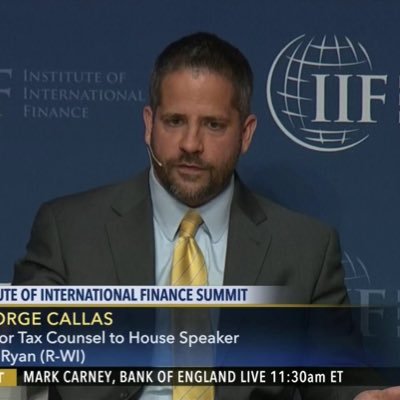
From our latest Talking Taxes in a Truck podcast featuring @George_A_Callas
s-corp.org/2026/10/podcast-g…

S Corporation Association retweeted

Another thing to understand about Zucman: engaging him is like trying to kick a football through a constantly-moving goalpost that also arbitrarily changes its height and width mid-kick.
He and his team at UC-Berkeley churn out a stream of working papers on inequality measurement that bake dozens of dubious assumptions into their data files, all of which "coincidentally" reinforce the headline figures that align with their political narrative. But finding and weeding out those assumptions is an extremely tedious and time-consuming task.
Zucman and coauthors Piketty and Saez do most of their work in Excel, and it's seldom ever straightforward. Instead you'll find some extremely questionable and undisclosed multiplier that's just guesstimated out of thin air...but it's buried 10 layers deep in a formula from a convoluted Excel spreadsheet, which changes the an input for another Excel spreadsheet that's used to create a ratio, which in turn goes into a formula on another Excel spreadsheet that's used to estimate a decade of missing data, which in turn alters the trend of their entire series. @VincentGeloso and I know this well because we've been scrutinizing their work for over a decade and have found dozens of examples of this sort of stuff.
But there's another twist to the PSZ universe: once you've done the work and found a problem in their data files that alters their main results in significant ways, they've already moved on to a "new" approach that conveniently hard-bakes all the faulty assumptions of the old approach into its source data while refusing to revisit them, and then layers them over with new paint, consisting of even more of the same style of Excel spreadsheet labyrinths that you now have to navigate to even figure out what they are doing. And what they do in their data files often diverges in substantial ways from how they describe it in their papers and descriptive appendixes.
While you're toiling away to figure out what they did in their last peer reviewed paper, they call up a friendly reporter at the NY Times and get him to publish a new non-peer reviewed statistical claim that grabs headlines and aligns with whatever wealth tax initiative they happen to be activisting for at the moment.
By the end, the goalpost has hopped around the field, changed its size and height multiple times, and been replaced by a new goalpost on the other end of the field that announces itself not through the referees of the field but via some sportscaster up in the broadcast booth who also happens to be openly cheering for their team.

Here's the best way to understand what Gabriel Zucman is up to on the California billionaire tax, and why it's a problem:
Suppose you were tasked with assembling a complex historical time series of an important economic indicator, but also suppose the data needed to build it is of widely varying quality. There are gaps in some years when components you need simply weren't measured. In other years the stats you do have are not as reliable. Or maybe the source changed the way it recorded things, or changed the underlying definition. And on top of all that, your indicator contains components that are simply hard to measure with any precision.
So what do you do? You'll inevitably have to make some discretionary calls on how to handle the challenges you encounter.
Zucman's inequality stats all face this problem. They draw on data that are often incomplete, and go back almost a century in some cases. Reliability varies, as do underlying sampling techniques that generated them. There are also gaps from things that aren't easily measured where you have to make a defensible judgement call on how to handle it. And each and every one of those calls affects your end results.
A rigorous researcher's judgement calls would follow certain defensible principles or rules that were clearly articulated and replicable. The effects of those calls would also distribute in different directions. Some would increase the final output number, others would decrease it.
In Zucman's work, we typically find the opposite. He makes judgement calls out of necessity, but they almost always go in the same direction, which is to show (a) rising inequality and (b) declining tax burdens on the rich. They always skew in a nonrandom direction, and that direction conveniently aligns with the political story he's telling about inequality and wealth taxes.
Or think of it this way: if you're assembling a century-long measure of income concentration it's quite plausible you may have to make 50 different judgement calls on how to handle gaps and uncertainties in the source data. If 30 of those cause your results to show higher inequality in cumulative, but 20 of those reduce inequality in cumulative, that suggests a fairly even distribution is at play. In Zucman's work (as well as his coauthors Piketty and Saez) though, you'll find situations where 50 out of 50 discretionary calls all happen to cause the headline measure of inequality to increase.
That's not random - it means that whenever they must make a choice on how to handle data uncertainty, they choose the path that confirms the political story they wish to tell. And this is why the various Piketty-Saez-Zucman measures of inequality are *always* on the high side compared to alternative measures of the same thing.
Overlay that with the fact that all three of them are partisan political activists who advocate for wealth taxes, and you see the problem. Their empirical academic work ends up skewing in favor of their political objective, even though it's masquerading as a data-driven exercise.
And that's why their empirical claims should be checked against other sources and heavily discounted when they do not align - which is frequently the case.
S Corporation Association retweeted

Very funny that billionaires are like “I am leaving”. And Zucman’s response is “sorry no, my theory doesn’t allow this”
S Corporation Association retweeted

The key reason is this:
People who did not fall off the turnip truck yesterday know the truth about "one time" taxes. Especially this one that spends the money on recurring programs instead of one time expenses.
My source for CA prop 40 leading to a permanent tax? Prof. Zucman:


The key problem is this:
Why would billionaires permanently leave California in response to a one-time tax owed if they lived there on January 1, 2026?
It would only make sense for them to leave if the tax becomes annual.
But if the tax becomes annual, it would also generate revenue annually — by virtue of, well, being annual.

Community Notes once again saving the day

This Hoover Institution study, which has fueled the deluge of ads (more than $200 million spent by billionaires so far) to defeat the California billionaire tax, is spectacularly misleading.
Let me explain its crucial flaw. 🧵
Readers added context they thought people might want to know
Zucman argues that the tax will raise his projected revenue because billionaires who leave CA after 1/1/26 will be taxed anyway.
At least $542B of net worth (Page, Brin, Thiel) departed the state by 12/31/25.
The entire thread is a misleading denial of this fact.
ft.com/content/d66976…
nytimes.com/2026/04/27/us/…
forbes.com/sites/forbeswe…
A recent piece from Oren Cass caught our eye, citing a familiar claim that the US taxes business income less than other countries.
The problem? That comparison ignores the taxes paid by millions of pass-throughs.
Our latest:
s-corp.org/?p=8518

Is pass-through taxation a giant loophole?
We invited @George_A_Callas back on the pod for his take on the flawed assumptions, outdated data, and misleading narratives driving the latest attacks on Main Street businesses.
s-corp.org/2026/10/podcast-g…
America’s wealth creators are everywhere.
New research shows how Main Street businesses generate jobs and wealth in communities across the country.
Two maps tell the story of an economy powered by private businesses:
s-corp.org/2026/10/two-maps-…
A decade ago, we challenged a Treasury study blaming pass-through businesses for rising inequality and lost tax revenue. That study is back in the news, so we're revisiting our original response.
Turns out, some myths never die:
s-corp.org/2026/10/old-study…
Forcing Main Street businesses into the corporate double tax would punish family businesses while giving their publicly traded competitors another advantage.
A new Tax Notes piece highlights the flaws in this approach.
Wrong way, tax reformers:
s-corp.org/2026/10/youre-goi…
SCOTUS declined to hear a CTA challenge today, but the fight isn't over.
Thanks to @USTreasury Main Street is protected for now. Now it's time for Congress to make that relief permanent.
Our latest:
s-corp.org/2026/10/scotus-pu…
Good news on Section 68: Treasury’s latest Priority Guidance Plan addresses deductions for trusts and estates.
S-Corp and other groups have urged Treasury to fix this potential double-tax trap for Main Street businesses. Now there’s a path forward.
s-corp.org/2026/10/latest-on…
S Corporation Association retweeted

The Working Families Tax Cuts are benefitting manufacturers across the country.
Manufacturers, like Jeff Simek, now have more certainty and a permanent tax code that allows them to onshore jobs previously shipped overseas, grow their operations, and reinvest in their workers.
S Corporation Association retweeted
Makes sense, but of course the challenge with “pass-through” is that the “income” isn’t necessarily “money” (your term) in the hands of the individual. A common arrangement is to distribute enough to pay the taxes and reinvest the rest in the business. If that reinvestment is deductible then it’s less of an issue but if it creates basis then you’re taxing owners on taxable income that’s locked up in illiquid business assets, including intangible assets like enterprise value.
New CRS data exposes the tax parity gap facing Main Street, and shows just how critical 199A is.
Our latest:
s-corp.org/2026/09/crs-expos…
In a recent @dcexaminer op-ed, @SCorpAssn's own Brian Reardon makes the case for celebrating Main Street success, not attacking it:
s-corp.org/2026/09/s-corp-in…