

Professor of Medicine at Houston Methodist, Medical director of echocardiography lab at MDHVC
Joined September 2021
- Tweets87
- Following7
- Followers516
- Likes15

Sherif F Nagueh retweeted

Clinical Considerations in Management of Hypertrophic Cardiomyopathy in Pregnancy: JACC State-of-the-Art Review | JACC jacc.org/doi/10.1016/j.jacc.…

Sherif F Nagueh retweeted

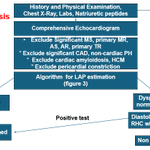
Excellent, practical explanation of what diastolic dysfunction is and how to assess it using the most recent @ASE360 guidelines #echofirst @SNagueh ahajournals.org/doi/10.1161/…

Sherif F Nagueh retweeted

Validating the new diastolic function guidelines ahajournals.org/doi/10.1161/…

Sherif F Nagueh retweeted

Dr. @SNagueh, our medical director of the echocardiography laboratory, discusses his role as chair of the left ventricular filling pressure (LVFP) guidelines committee with the @ASE360.
Watch the full video: spr.ly/6015B65czF
Sherif F Nagueh retweeted

Must read diastology papers by @SNagueh: Improving the Diagnosis of HFpEF and Improving accuracy for detecting diastolic dysfunction in HFpEF by Echo using the New Algorithm for Estimating Left Ventricular Filling Pressure tinyurl.com/y5j6dh78
#echofirst @wikimagen @NMerke

Sherif F Nagueh retweeted

RECOMMENDED READ ON THIS SUBJECT
"Improving the Diagnosis of HFpEF: A Comparison of the H2FPEF Score and the 2025 ASE Diastolic Function Guideline Recommendations Using Invasive Hemodynamics as the Gold Standard" #ASEchoJC
jacc.org/doi/abs/10.1016/j.j… @SFNagueh

Sherif F Nagueh retweeted
Remember that HFpEF is a clinical diagnosis. It can be complex. Integrate all the tools at hand to make the correct diagnosis. #ASEchoJC


Sherif F Nagueh retweeted

🧵 HCM diastology pearls
🔹 Impaired LV relaxation can precede LV hypertrophy in genotype-positive individuals.
👉 Diastolic dysfunction may be an early phenotypic marker of HCM.
💡 Symptoms in HCM are not always due to LVOT obstruction.
Diastolic dysfunction often drives dyspnea and exercise intolerance even without obstruction.
#ASEchoJC #EchoFirst @ASE360
Sherif F Nagueh retweeted
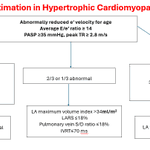
🫀 HCM & left atrial mechanics
Reduced LA reservoir and pump strain correlate with:
🔹 Worse functional capacity
🔹 Higher risk of atrial fibrillation
📌 Further study is needed to define LA strain for filling pressure estimation in HCM
#ASEchoJC #EchoFirst @ASE360
Sherif F Nagueh retweeted
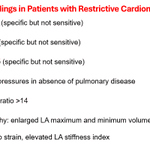
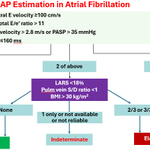
Markers associated with elevated filling pressures in AF patients #ASEchoJC

Sherif F Nagueh retweeted

Make sure to review this @JACCJournals paper on diastology assessment in heart transplant patients: jacc.org/doi/10.1016/j.jcmg.…
@ASE360 #ASEchoJC #EchoFirst


Sherif F Nagueh retweeted
Heart transplant patients have baseline differences we need to recognize #ASEchoJC


Sherif F Nagueh retweeted
🫀 Estimating LV filling pressures in Mitral Regurgitation (MR) — a key nuance
In primary MR:
🔹 Chronic LA & LV dilation → ↑ chamber compliance
🔹 This can delay the rise in LAP
But over time ⏳
🔹 LA stiffness ↑ → LAP ↑ → pulmonary pressures ↑
🔹 Often driven by MR itself, not primary myocardial disease
🔑 MR can mask or mimic diastolic dysfunction
#ASEchoJC #EchoFirst @ASE360
Sherif F Nagueh retweeted
MAC alters Doppler indices:
🔹 ↓ mitral orifice area → ↑ trans-mitral velocities
🔹 ↓ lateral e′ due to reduced annular excursion
⚠️ This can falsely elevate E/e′ from mechanical annular restriction.
🔑 Pearl: In MAC, E/e′ may be misleading — rely more on E/A and IVRT to estimate LV filling pressures.
#ASEchoJC #EchoFirst @ASE360
Sherif F Nagueh retweeted

Other good candidates for diastolic SE:
symptomatic patients with indeterminate DF or FP at rest
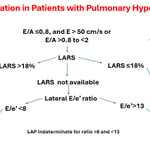
LARS may identify patients more likely to develop increased LV FP with exercise. #ASEchoJC
Sherif F Nagueh retweeted
Diastolic SE Protocol: #ASEchoJC
Rest: mitral E and e’ velocities, peak TR velocity
Stress: Same parameters recorded during or 1-2 min post exercise (whenever E & A not merged) filling pressures elevation usually persists for short period
Sherif F Nagueh retweeted
Results are abnormal if average E/e’ ratio is >=14 (or septal E/e’ ratio is >=15) and peak TR velocity
is >=3.2 m/s with exercise. #ASEchoJC
Sherif F Nagueh retweeted
3️⃣ Interpretation criteria
Evidence of exercise-induced elevation in LV filling pressures:
Positive diastolic stress echo when both occur:
Average E/e′ ≥ 15 during exercise
Peak TR velocity > 3.4 m/s
Supportive findings:
Failure of e′ to augment with exercise
Marked rise in E velocity
Development of exercise pulmonary hypertension
These findings suggest elevated LAP/PCWP during exertion, consistent with HFpEF physiology even when resting parameters are normal. #ASEchoJC