

Scientist, principle investigator @sabanciu, studying SUMOylation in health and disease; @BrownUniversity, @MSKCancerCenter, @institutpasteur, @Inserm alum
Istanbul
Joined February 2020
- Tweets390
- Following712
- Followers1.2K
- Likes4.6K
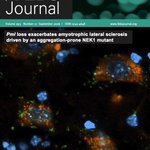


Happy to see our work featured on the cover of @FEBSJournal. This confocal image shows mutant NEK1 aggregates (orange) in motor neurons of the mouse spinal cord, ultimately driving ALS pathology ++

Many thanks to our fantastic collaborators Alain Prochiantz and Stephanie Vargas @cdf1530, who helped us with these analyses ++
read the full paper here
febs.onlinelibrary.wiley.com…
and the commentary highlighting our work here
febs.onlinelibrary.wiley.com…
After seeing how our last manuscript was handled by a few journals, I’m increasingly OK with AI reviewing papers. At least AI will read the manuscript & engage with its core concept, rather than produce a 20-point wishlist of irrelevant experiments, each worthy of its own paper++

Thrilled to share our new review in @emboreports !
@CytoLabKoc and I explored an emerging concept in neuroscience: the centrosome/cilium/centriolar satellite axis may represent a fundamental, yet underappreciated, contributor to neurodegeneration
link.springer.com/article/10…
Happy to see our recent paper highlighted through this insightful commentary by Stefan Müller. Read the full piece highlighting our findings, their implications for neurodegenerative diseases, and broader relevance across multiple fields here
febs.onlinelibrary.wiley.com…

Umut Sahin retweeted

Scientific publishing needs to change. In a new preprint, HHMI President Erin O'Shea and Bodo Stern argue that the incentives are misaligned. Researchers should be evaluated on what they choose to share, not what journals select. I’m proud that @hhmi_science is leading the way. Read the preprint here: doi.org/10.5281/zenodo.19600…

Looking forward to this fantastic event co-hosted by @sabanciu and the French Embassy.


Umut Sahin retweeted

Talked to someone who failed to cite our preprint that showed an AlphaFold model with lots of experimental validation when he submitted cryo-EM paper of exact same sytem in Nature with no bio. data 6 months later. He said as a matter of policy "I don't cite preprints." Unethical.

I currently have three papers in review at "high impact" journals.
One of them has been sitting there for two years. In that time my daughter was born and learned how to walk, but apparently publishing a PDF was still not possible for me. For another one, after four months in review the editor told me they cannot find a second reviewer and asked me to suggest more reviewers. A third one sent me a message in 2026 saying the PDF I uploaded was larger than 10 MB and that I should please reupload everything to make the file smaller.
All of this just to eventually pay between 7,000 and 12,000 USD per paper so someone can officially approve that the science we do is "legitimate". Reminder: not a single reviewer will be compensated here.
I still don't understand how we as scientists can collectively be so smart when doing science and still tolerate a system like this when it comes to sharing our findings. We should move to preprints plus open review, whether human or AI, asap. So frustrated about it.
I'd suggest sharing your work on bioRxiv or medRxiv, reading and reviewing preprints when you can, and highlighting good research, especially if it is still a preprint. Try platforms like ResearchHub (that pay for peer review) and experiment with AI based reviewers for faster feedback.
Instead I read this as a proposed "revolutionary" measure:

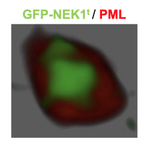
Our new paper demonstrates for the first time the in vivo feasibility of PML-based therapeutic strategies for neurodegeneration. Focusing on ALS, we provide strong proof of concept evidence that inducing PML to clear disease-causing proteins is a promising therapeutic approach

The full story can be accessed here
febs.onlinelibrary.wiley.com…
Umut Sahin retweeted

Sadly, the rate publication inflation is likely to get worse!
The slicing of what should be a supplemental figure into entire separate papers, and then slicing again, and again is now standard practice
It threatens scientific quality and actually may slow real progress

Umut Sahin retweeted

Two business school professors from the University of Technology in Sydney have sounded the alarm on the declining quality of academic literature in a new publication titled “The junkification of research”.
Drawing parallels to the “enshittification” of online platforms, they argue that similar forces are now overwhelming scholarly publishing. The key drivers are threefold: 1) relentless “publish or perish” pressures in academia, 2) scientific publisher’s incentive to publish more to make more money, and 3) AI making paper production faster and easier. Taken together, they say, these drivers are a recipe for disaster. The authors call for a shift to not-for-profit models of scientific publishing and better evaluation systems.
I strongly doubt either is going to happen.
The problem is of course not new, and you all know that I have been drawing attention to this trend for more than a decade. It is interesting to see, however, that the awareness for the issue is increasing.
Paper: Rhodes, C., & Linnenluecke, M. K., “The junkification of research” Organization (2025).

Umut Sahin retweeted

Science used to be about discovery. Now it’s about formatting PDFs correctly for a 9% chance of funding.
New paper out ! In this Viewpoint article, I explore a bold and provocative idea: that Cas9, the catalytic engine of the CRISPR gene editing platform, may also possess a previously unrecognized effector-like role in eukaryotes during bacterial infection
febs.onlinelibrary.wiley.com…

Umut Sahin retweeted

Nejat F. Eczacıbaşı Tıp Ödülleri’nden üçü, BAGEP Ödül sahibi Ali Koşar, Umut Şahin ve Fatih İnci’ye verildi.
2013’ten beri genç akademisyenlere araştırma desteği sağlayan Bilim Akademisi olarak araştırmacılarımızı kutluyoruz.
bilimakademisi.org/uc-bagepl…
Many thanks to @Eczacibasi group and Dr. Nejat F. Eczacıbaşı Foundation for this meaningful award, and for their vision and continued commitment to support life sciences in our country.

2025 Dr. Nejat F. Eczacıbaşı Tıp Ödülleri sahiplerini buldu.
Tıp Onur Ödülü Prof. Dr. Mehmet Şükrü Sever ve Tıp Bilim Ödülü Prof. Dr. Ali Koşar’a verilirken; Tıp Teşvik Ödülü Doç. Dr. Fatih İnci ve Doç. Dr. Şefik Evren Erdener, Bilimsel Araştırma Destek Ödülü Prof. Dr. Seda Kızılel, Hedeflendirilmiş Tedaviler Konulu Bilimsel Araştırma Destek Ödülü Doç. Dr. Umut Şahin ve Tıp Öğrencileri Proje Ödülü İsmail Emir Yassı’nın oldu.
2025 ödüllerini kazanan bilim insanlarını tıp alanındaki başarılı çalışmalarından ötürü bir kez daha kutluyoruz.


I am honored to receive the @Eczacibasi Medicine Award in the Targeted Therapies category, joining an inspiring list of scientists and physicians recognized since the award's launch in 1959.
eczacibasi.com.tr/en/eczacib…
