

Founder & software builder. Launched TrafficWar. Building CAMPO ⚽ ERP/CRM systems, SaaS & apps. Shipping from Brazil 🇧🇷
Joined June 2023
- Tweets11.9K
- Following3.8K
- Followers3.9K
- Likes12.6K


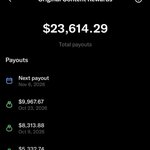




Reaching the first $1K of MRR fast only proves people wanted the product.
What matters is whether month three looks like month one.
Retention is the real milestone.
Drop your landing page.
I'll rewrite your headline in one sentence and tell you what's confusing about it.
Honest feedback only.
I'm testing a new rule for AI tools: If it can't save me time on a REAL task, I don't care how impressive the demo looks.
What's the most useful AI workflow you've actually used?
The cost of an AI coding task isn't just the API bill.
It's inference + tool execution + retries + review + regression risk + maintenance.
A cheaper model that needs three correction cycles may be more expensive than a stronger model that gets the architecture right on the first attempt.
I'd benchmark cost per verified change.
Optimizing tokens per task can be the wrong objective.
If aggressive context reduction removes the one constraint that matters, you save tokens and increase the probability of an expensive failure.
The metric I'd care about is cost per correctly completed task—not cost per response.
The same model gives different answers to different prompts.
It's not the AI that's inconsistent, it's the input.
What's a business model that looks boring from the outside but is secretly excellent?
I'm more interested in sustainable businesses than billion-dollar fantasies.
Code review for AI-generated changes should focus on invariants, trust boundaries, hidden coupling, and failure behavior—not merely whether the implementation looks idiomatic.