

Figuring out how strength training works
York, England
Joined December 2012
- Tweets6.1K
- Following0
- Followers36.5K
- Likes1.2K




Pinned Tweet
My new podcast with Jake Doleschal has now launched. Available on Spotify and all other major podcasting services.

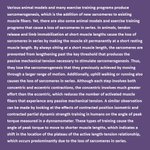
Sarcomeres are lost when muscle fibers experience no passive mechanical tension during either rest or regular physical activity. See more in the weekly free Patreon article.

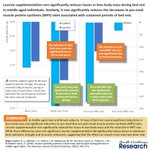
Unlike in humans, supplemental leucine has a very positive effect on muscle mass during limb immobilization in rodents. Yet, this happens by way of a reduction in muscle protein breakdown (MPB) rate (MPB does not contribute to muscle atrophy during limb immobilization in humans unless there are other stressors present, like traumatic injury or sleep deprivation).

Moderate load strength training improves strength over a relatively large portion of the force-velocity profile but does not increase high-velocity strength (even in untrained subjects). Whether static stretching has velocity-specific effects on strength is unclear.

Creatine supplementation reduces post-workout fatigue but the underlying mechanism is unclear. Therefore, it is unknown whether the effect is 100% helpful.

Sarcomeres are added when muscle fibers receive a very specific stimulus, which is different from the stimulus that causes myofibrillar addition. See more in the weekly free Patreon article.

In contrast to the lack of effect in young people, dietary leucine may help slow or partially prevent the losses in muscle mass that occur during limb immobilization.

When the very short-term effects of eccentric-only training and static stretching on flexibility and stretch tolerance are compared, they are statistically similar. However, the magnitudes of the effects produced by eccentric-only training are larger.

AAS stop exogenous glucocorticoids from elevating muscle protein breakdown rate (which causes muscle atrophy or reduces muscle hypertrophy). We might expect AAS to have similar positive effects on stress-induced glucocorticoids as occur during sleep restriction.

Leucine supplementation may have interesting applications when stressors are causing muscle atrophy by means of an increase in muscle protein breakdown rates. Read more in the weekly free Patreon article.

When young humans experience limb immobilization, there is pretty much no way of stopping muscle atrophy from happening. This study tested high-dose dietary leucine and found no effect.

Eccentric-only training substantially increases flexibility. Longer training programs cause greater increases in flexibility, which indicates that the effect is not limited to the first couple of weeks of the training program.

AAS cause hypertrophy through signaling in the mTOR pathway, in the same way as mechanical tension. mTOR is a very widely-used signaling pathway and is involved in sarcomerogenesis and muscle damage repair as well as hypertrophy.

Currently, many fitness influencers are making big claims about plyometrics causing increases in tendon stiffness. The reality is that plyometrics are really not best-placed to produce that particular adaptation. They are much better at increasing stretch-shortening cycle function through another mechanism.

One of the most persistent myths in the fitness industry is the idea that we can reach maximal levels of motor unit recruitment in any exercise, so long as we train to muscular failure. For more details and citations, see the weekly free Patreon article.

AAS enhance the rate of healing from skin injury by accelerating the rate of collagen deposition, which can be prevented by applying an anti-androgenic. This shows that the AAS mediate these effects by acting on androgen receptors.

Stressors slow the rate of post-workout recovery by interferring with the secondary muscle damage effect. This allows us to explain the negative effects of any non-exercise intervention without resorting to the general adaptation syndrome.

AAS increase extracellular matrix collagen deposition after non-exercise injury, most likely by increasing rates of collagen synthesis.

Sprinting does not automatically benefit from stiffer tendons. In fact, most data suggest the opposite due to the way in which the stretch-shortening cycle works. For more details and citations, see the weekly free Patreon article.

While AAS seem to interfere with the repair processes in tendons (leading to an increased injury risk), they are more likely to produce accelerated repair in muscles, causing faster recovery from fatigue.

