
Sasha Cui retweeted

Grant Sanderson (@3blue1brown) is the most influential mathematician of the 21st century.
Sasha Cui retweeted

A bunch of Nobel Prize-winning economists have endorsed California's proposed billionaire wealth tax.
I can't oppose them on authority. But I know some academics who can.
Sasha Cui retweeted

We should use AI to create boutique math problems that sit on the exact boundary of human level math, so we can continue training Fields medalists. Let's call it "ARC-NLI challenge" (Abstraction and Reasoning Corpus for Naturally Limited Intelligence) and update it every year
Sasha Cui retweeted

Among the oldest Deligne signed but Yau and Serre didn't. I note that Yau is launching Journal of AI-Assisted Mathematics intlpress.com/journals/journ… and singatories Yu Deng and Kontsevich are on the editorial board.
Sasha Cui retweeted

The longer I stay in math, the more I realize that Perelman's and Grothendieck's choices were not so irrational after all.
Sasha Cui retweeted

Pretty funny rant from @pkedrosky on why he thinks the frontier labs are full of shit on @BigTechPod
“The only thing I will say in defense of, in a weird sort of defense of the frontier companies is, and it's the same thing I say with my venture capitalist hat on, is we have companies or startups show up all the time that say, we have this amazing technology that's really high alpha, we should be bought by every hedge fund and so on. I'm like, okay, fine.
Why are you telling me then? They're like, well, what do you mean? I said, if your technology is so good and you can generate a competitive alpha with it, don't be an idiot.
Go out there, raise some capital and invest it directly. Don't tell other people. So the fact that they're telling other people about this alpha generating technology is by default a refutation, because if it actually worked, they wouldn't tell me.
So the same logic applies to the frontier companies. So if the frontier company's technology is so amazing that it can eat the entire economy, why don't they just ingest the economy and stop selling it to us? Why are they even bothering to sell tokens at all?
Why not just move up market immediately? “So what that tells you is, in the same way that these companies launching hedge fund tools don't actually have things that can do that, the frontier model companies know perfectly well they can't do that. They know perfectly well they can't move all the way up market to generate those kinds of returns, and the proof is in their own behavior.
That was basically Karp's argument, which is why are you selling tokens if you can increase my sales by 2x? Why don't you just take 30% of that uplift?”
Sasha Cui retweeted

I suspect the window when humans can understand AI math well enough to replicate it or guide it will be shorter than most mathematicians seem to think.
I am anticipating:
1) A few years (1-2?) where AI gradually becomes superhuman at most or all math
2) A period after that where human mathematicians can reproduce and understand AI results, but where most math is done by prompting AIs. I think most mathematicians expect this to last decades or more. My modal outcome is a few years.
3) A period where human mathematicians can no longer reproduce the deepest AI results even once they are described, but can grasp the gist. AI is now absolutely required to make progress, but humans can point AI in directions they find interesting. I expect again a few years at most, with 2) and 3) overlapping in different areas of math.
4) The final era, where human mathematicians can simply no longer contribute at all, any more than lay people can now contribute to cutting edge math. Of course, any reasonably smart person could still try to work out the answer to a problem that AI hasn't asked, but they would only do that as a recreational activity as AI could always solve the problem faster, and human mathematicians won't be able to formulate conjectures of any interest to AIs because they will lack so much theoretical infrastructure.
An alternative possibility is that the set of mathematical structures worth studying is more limited than we think, AI will saturate it, and the resulting constructions will be comprehensible to humans once explained. I think this is unlikely given the pattern that new mathematics seems so far to always give rise to new questions.
Sasha Cui retweeted

kinda funny you can draw a smiley face in your neural net before training and it’ll be there afterwards
you can also use photos. i trained a MNIST classifier initialized to my face and you can still see me at the end
works across inits, weight decay, LR, optimizers, see below


Sasha Cui retweeted
The valuable problems in Math will be solved by frontier labs for marketing purposes. The leftover ones will be there because they’re not worth the compute. Mathematicians will work on them the same way sociologists & flat earth bloggers work on their respective pet problems.
Sasha Cui retweeted
Scientific research is fundamental to advancing civilization and helping people globally to solve the most critical problems, from medicine to materials, from brain science to physics, and much beyond. This is only possible when scientists have access to the best tools of the time to conduct scientific research, including having access to AI-based tools.
Sasha Cui retweeted

Imagine spending your whole life becoming an academic expert. Then a random guy online tells you that you are wrong about your own field. And he's right. But you can never admit that. Because it would mean admitting that your life was a lie. That is the dilemma of many academics.
Sasha Cui retweeted

Hadamard thought in image space

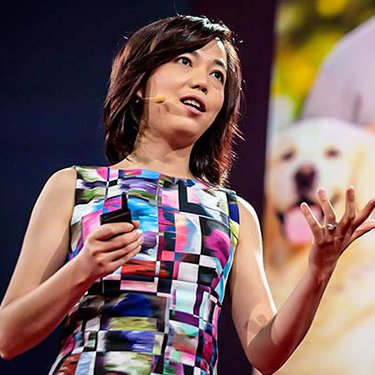
World Labs CEO Dr. Fei-Fei Li: "The world is not made of words."
"Language models have given machines an extraordinary command of concepts, vocabulary, and reasoning, but the physical world, virtual or real, runs on a different substrate."
"Where language models learn the statistical structure of text, world models learn the statistical structure of space and time: how light falls on a surface, how a garden looks from an angle no camera has captured, how objects respond to force and follow the laws of physics."
"Language gave machines a way to talk about that world. World models are how machines will finally come to understand, imagine, reason and interact with it."
Full piece: drfeifei.substack.com/p/a-fu…

Sasha Cui retweeted

They said when Poincare died "there went the last mathematician". They meant he was the last generalist; after that, everyone was an algebraist, or an analyst, or, God forbid, a combinatorialist. ChatGPT Pro might be the first mathematician since Poincare.
Sasha Cui retweeted
You don't need advice from editors on rejected manuscripts.
My short story “Ender's Game” was rejected by Ben Bova at Analog back when that was the top market for a sci-fi story. Ben gave me feedback. He thought the title should be “Professional Soldier” and he said to “cut it in half.”
But I knew he was wrong on both points and submitted it to Jim Baen at Galaxy. He sat on it for a year, and responded to my query with a rejection. There was some kind of explanation, but I don't remember what it was. I concluded at the time that Baen's comments showed that he had barely glanced at the story.
So … I got feedback both times, but it was not helpful. I looked at Ben's rejection again. What was it about the story that made him think it should, let alone COULD, be cut in half?
Apparently it FELT long. What made it feel long? Now, post-Harry Potter, I would call it the quidditch problem. I had too many battles in which the details became tedious. So I cut two battles entirely, merely reporting the outcomes, and shortened another. In retyping the whole manuscript (pre-word-processor, that was the only way to get a clean manuscript), I added new point-of-view material to the point that I had cut only one page in length. So much for “in half.”
But I already knew that my manuscripts did not need cutting — if it wasn't needed, it wouldn't be there in the first place. Even the battles were still there, but instead of showing them, I merely told what happened (so much for the usually asinine advice “show don't tell”), which kept the pace going.
Those changes made, I sent it to Ben again. I did not remind him of what he had advised me to do. I merely told him I liked my title, and said, “I have addressed your other concerns,” which was true. I figured he wouldn't remember what his exact words had been. My answer was a check. That revised story was the basis for my winning the Campbell Award for best new writer.
Did Ben's feedback help? Yes — but his specific advice was not right, and I knew it. On my next two submissions, Ben hated my endings, and I revised as suggested. The fourth submission he rejected outright, and the fifth, and I thought, Am I a one-story writer? I went back to Ender's Game and tried to analyze why it worked. Then, deliberately imitating myself, I wrote “Mikal's Songbird.” Ben bought it, and it received favorable mentions. I was afraid then that I had consigned myself to writing stories about children in jeopardy. But in fact I was writing character stories rather than idea stories. And THAT was how I built a career, not by self-imitation, and not by following editorial suggestions.
I did get wise counsel from David Hartwell on my novel Wyrms, but that was on a book that was already under contract, and it was story feedback, not style. I got wise counsel from Beth Meacham, too, on various books over the years — but again, only on books that were under contract. I also received appallingly stupid advice from the editor of my novel Saints, which temporarily destroyed the book's marketability; after that, I was allowed to go back to my original structure and save the book — now it's one of my best.
Editors don't know more than you about your story. They especially don't know why they decide to accept or reject stories. YOU have to know what your story needs to be, and take only advice that you believe in.
Your best counselor on a story nobody bought is TIME. Let some time pass and then reread the story. Don't even think about why it Didn't Work. Instead, think about what DOES work, and then write it again, a complete rewrite, keeping nothing from the previous draft. Find the right protagonist and begin at the beginning — the point where the protagonist first gets involved with the events of the story. Be inventive — the failed first draft no longer exists, so you're not bound by any of your earlier decisions. THAT is how you resurrect a good idea you did not succeed with on your first try.
Sasha Cui retweeted

My student told me that per Yale policy, a PhD student cannot take more than 2 internships during PhD.(catalog.yale.edu/gsas/polici…) I feel really sorry for them. Restricting their opportunities for learning real engineering expertise in industry is a pity, especially in this AI era.

Sasha Cui retweeted

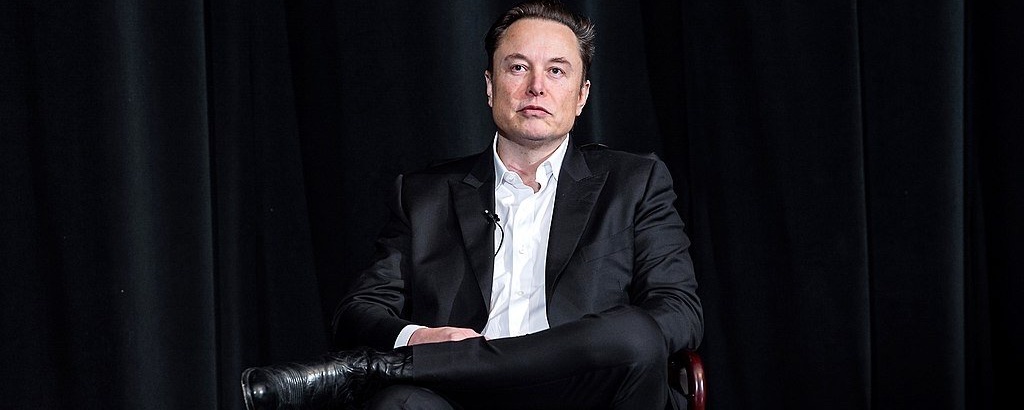
Arguing that Elon Musk’s success is due to “narrative control”, luck, or riding others coattails is such an implausible claim that it functions as a useful litmus test for a persons analytical judgment.
This isnt about whether you like Elon Musk. I don’t know him, and I am largely agnostic about him as a person. But I do know his record as a CEO, and studying management and business strategy has been a major part of my job for the past 20yrs. From that perspective I can tell you that Musk isn’t just a good CEO. He is one of the most effective CEOs of our generation.
When I hear people write off Elon’s achievements bc someone else started these companies, it is a clear tell that they don’t understand business. Ideas are a dime a dozen. They are not what makes a great CEO. Execution is. And part of execution is recognizing a good idea when you see one and understanding how to build something around it that actually works.
Tesla was months from bankruptcy when Musk took control. It’s now the company that forced every major automaker on earth to retool their entire product strategy. SpaceX was a startup that serious people in the aerospace industry dismissed as a fantasy. It now conducts more orbital launches than the rest of the world combined and has driven launch costs down by an order of magnitude. Starlink is on track to become one of the most consequential communications infrastructure projects in history. These aren’t narrative achievements. Theyre tangible businesses that work, at scale, in industries where failure is the default condition.
And there’s a consistent pattern where Elon has repeatedly looked crazy, and then been right. The people who called reusable rockets a dream watched a booster fly back and land itself. The people who said a mainstream consumer EV company was impossible watched Tesla restructure the global auto industry. This is a person who has repeatedly seen something others cant see yet, absorbs the ridicule, and then builds toward it anyway.
The PayPal criticism this author pushes is another perfect ex. Do you know how he became CEO? Elon identified the importance of network effects in the late 90s and realized he could take advantage of cheap capital during the internet bubble to pay users to join his network. He was labeled a lunatic. Losing money upfront to lock customers into your network is well understood now but it wasn’t back then. Confinity was forced to merge bc they couldn’t compete with it…and that’s based on Peter Thiel’s own account in Zero to One.
Elon was considered reckless at the time. But he was right.
And now we have people criticizing Musk’s Mars goal. But as Ben Thompson explained, Mars is the strategic North Star that forces you to radically confront the cost structure required to achieve it. Which leads you down the only path that actually scales, without settling for easier short-term solutions. If you’re serious about putting a city on Mars, full reusability is non-negotiable. And that engineering logic turns out to be what dramatically lowers launch costs. Which unlocks Starlink at scale. And Starlink creates the revenue flywheel that funds everything else. An Arianespace executive called reusability a dream in 2013 and said it was impossible. But the dream isnt the destination. It’s the constraint that forces you down the only engineering path that actually works. And it’s why SpaceX is a trillion company today.
You can write off one company as luck. You can write off two as fortunate timing. But at some point the sheer weight of success across different industries and challenges stops looking like coincidence and starts looking like a big flashing signal.
When someone executes repeatedly in industries where lack of execution destroys almost everyone else, the correct analytical move is to update your model. If you can’t see that Elon is a great CEO, then you’re just revealing the limits of your own analytical process.

Sasha Cui retweeted

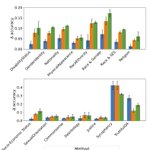
Your deduplication pipeline was built for small models. At scale, it's broken.
New preprint: "Scale Dependent Data Duplication"
1/10

Sasha Cui retweeted

Sufficiently advanced agentic coding is essentially machine learning: the engineer sets up the optimization goal as well as some constraints on the search space (the spec and its tests), then an optimization process (coding agents) iterates until the goal is reached.
The result is a blackbox model (the generated codebase): an artifact that performs the task, that you deploy without ever inspecting its internal logic, just as we ignore individual weights in a neural network.
This implies that all classic issues encountered in ML will soon become problems for agentic coding: overfitting to the spec, Clever Hans shortcuts that don't generalize outside the tests, data leakage, concept drift, etc.
I would also ask: what will be the Keras of agentic coding? What will be the optimal set of high-level abstractions that allow humans to steer codebase 'training' with minimal cognitive overhead?
Did you know that Grok is MUCH MORE HONEST than GPT & Claude?
Introducing PieArena: Frontier Language Agents Achieve MBA-Level Negotiation Performance and Reveal Novel Behavioral Differences.
Deepdive: open.substack.com/pub/sashac…
Preprint: arxiv.org/abs/2602.05302
#AI #Agent #LLM