Cutting-edge research, news, commentary, and visuals from the Science family of journals. Follow @NewsfromScience for stories from our News team.

Washington, DC & Cambridge, UK
Joined April 2009
Researchers have developed an AI-based approach to help physicians with real-life clinical workups, starting with the patient’s chief complaint, systematically asking questions and deciding what laboratory and imaging tests to order, and then continuing the evaluation on the basis of the answers received. Learn more this week in Science: scim.ag/3U8xn94
2
8
2
34
7,291
An implantable, wirelessly powered electronic device could offer a drug-free approach to managing the intertwined metabolic disorders of obesity and type 2 diabetes. The device uses electrocatalysis to remove excess glucose from the bloodstream on demand. Learn more in Science: scim.ag/47twScK
1
3
6
3,721
Home decorating isn’t unique to Homo sapiens. More than 40,000 years ago, bands of Neanderthals turned a spacious rock shelter in the mountains of Spain into a cozy home, fashioning wood into tools and windbreaks and burning it for heat and light. That picture comes from a first-of-its-kind trove of Neanderthal wooden artifacts from a domestic space, found at a cliffside site called Abric Romaní, 50 kilometers west of Barcelona. Learn more: scim.ag/3VK5zZb @NewsfromScience
5
28
8,123
By applying a unique polyene scaffold, researchers engineer a next-generation, broad-spectrum antifungal that selectively targets ergosterol without binding to cholesterol, avoiding severe toxicity linked to drugs like amphotericin B. Find out more in @ScienceTM: scim.ag/3UycT9T
1
3
22
8,007
Animals and plants use conceptually similar immune systems to detect microbes and activate defenses. In both lineages, pattern recognition receptors (PRRs) perceive pathogen- or microbe-associated molecular patterns (PAMPs or MAMPs) and host-derived damage-associated molecular patterns (DAMPs). Whereas animals rely on specialized immune cells, plants harness individual cells expressing diverse PRRs. In the apoplast, which lies outside the plasma membrane and includes the cell wall, PRRs detect immunogenic fragments released from microbial proteins by plant hydrolytic enzymes. Conversely, pathogen-secreted enzymes can degrade constituents of the apoplast, generating DAMPs that activate immunity. In three new Science papers, researchers report expansions of this surveillance, revealing receptor architectures and mechanisms that enable plants to discriminate immunogenic carbohydrates. The findings illustrate how ligand specificity and receptor assembly confine immune activation to the context of microbial challenge. Learn more in a new #SciencePerspective: scim.ag/4ib9BRC
18
2
88
12,325
Last call: Apply for the BioInnovation Institute & Science Prize for Innovation This prize recognizes bold researchers who are asking fundamental questions at the intersection of the life sciences and entrepreneurship. The Grand Prize winner will receive a cash prize of USD 25,000 and have their winning essay published in Science, in print and online. Apply by 1 November 2026: bit.ly/3TuI19S
2
5
9,374
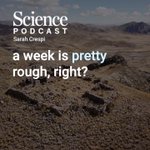
In the latest #SciencePodcast🎙️, Contributing Correspondent Lizzie Wade dives into how archaeologists are revisiting the standard Inca chronology as radiocarbon dates mix up the timeline for the empire’s inception and growth. 🎧 Listen here: scim.ag/4jmkwKA
2
9
9,667
Applying Fc engineering, researchers fashion potent bispecific antibodies against #SARSCoV2 that can be delivered via mRNA to target multiple viral epitopes and can constrain the virus’ ability to evade recognition. @ScienceTM scim.ag/4jpH795
3
14
1
89
17,838
How does the #glycome of gamma-delta T cells affect their activation toward an autoimmune state? Learn more in Science #Immunology about these important sugar molecules and their impact on inflammatory disease. scim.ag/47UlTJn
10
2
45
15,428
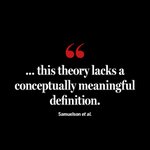
Does generative AI dilute markets for human-created work? In a new #SciencePolicyForum, researchers discuss how market dilution theory, which could affect AI use in science, requires conceptual clarity and empirical evidence: scim.ag/4eDnln9
2
2
1
12
10,799
A new antifungal drug architecture combats infections in mice without the usual toxicity, a fluorescent imaging agent could enable more pinpointed removal of lung cancer tumors, and more in this week's new issue of #ScienceTranslationalMedicine. scim.ag/4z2AYEQ
1
6
19
6,777
Science Magazine retweeted
Researchers have developed a single-cell–level digital twin to simulate how different treatments can alter maternal immune pathways and affect the time to labor of individual patients. Learn more this week in Science Advances: scim.ag/4k8o4Ap
5
8
6,398
Breast milk antibodies show broad antiviral activity and protect mice against influenza, according to new research in @ScienceAdvances. scim.ag/47fPLjg
4
10
2
71
24,408
In the 1950s, scientists tried to define "normal" humans. The problem? They couldn't find any. The Normals, a #SciencePodcast🎙️ series that explores this story, has won Silver in the Science & Education: Limited Series and Specials category at the @signalawards! Check out the award-winning series: scim.ag/4bWMKr9
1
5
14
9,873
Researchers find in mice that cells in the brain’s network of blood vessels also support neural circuits in the cerebellum that govern motor coordination—expanding current paradigms of the role of the brain’s vasculature in neurodevelopment. @SciSignal scim.ag/4Bi4o3k
3
10
69
14,340
Researchers in Science report that many birds use vertical winds or gradual changes in wind speed or direction (wind shear) to soar, thereby reducing their cost of transport by switching from costly flapping flight to gliding flight. 📄: scim.ag/4dJr0Qc #SciencePerspective: scim.ag/4yVNzth
10
23
3
114
14,303
Science Magazine retweeted
Are you a scientist using AI but worried about being scooped? There are plenty of ways your data could leak to AI companies or colleagues down the line. Thankfully, there are also some things you can do to minimise your risk... Latest for @ScienceMagazine science.org/content/article/…
2
3
6
6,230
Science Magazine retweeted
First it was robots cartwheeling better than me. Now you're telling me snakes can do it, too?! Read about that and more in this edition of @ScienceMagazine's #ScienceAdviser: science.org/content/article/… Video: Yosuke Kojima and Ibuki Fukuyama/Current Biology (2026)
1
4
19
7,034
New in @ScienceMagazine: 3,000 years before empires ran on armies, Andean elites may have run on vilca. Bone tubes at Chavín de Huántar just tested positive for DMT and bufotenine.
1
2
5
5,071
Borrowing an idea from one research discipline to solve a thorny problem in another is an age-old scientific trick. Charles Darwin’s theory of natural selection, for example, famously inspired algorithms in computer science that “evolve” solutions to complex problems. But such clever leaps are fleetingly rare. For #AI, however, hopping between fields can be a breeze. Researchers highlighted that ability with the release of 36 preprints produced with a single suite of AI tools called BootLoops. The so-called harness can be used with any large language model, such as Anthropic’s Claude or OpenAI’s ChatGPT. And in just 3 months, researchers used Claude outfitted with BootLoops to cross-pollinate at a massive scale, spotting—and precisely solving—problems in seemingly unrelated fields that share the same mathematical structures. The resulting papers range widely, from figuring out the age of sunspots, to analyzing government health policies, to attempting to decipher a mysterious medieval manuscript. Learn more: scim.ag/3TUUyDJ
3
34
9
165
29,887