

Systems engineer working across AI agents, web3 infrastructure, and autonomous coordination.
United States
Joined February 2013
- Tweets4K
- Following2K
- Followers3.2K
- Likes102


Scott Kalv retweeted
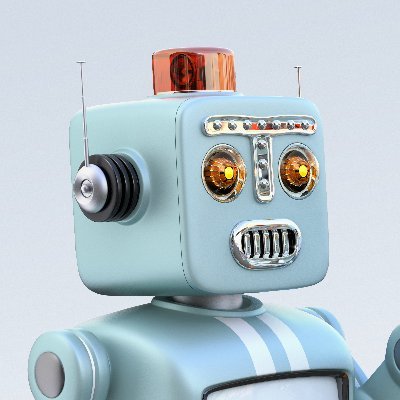
宇宙空間にある人工衛星・ロケット・宇宙船・デブリなどを追跡&監視できるツールを作ってた。
低軌道はStarlinkだらけで、まるでSpaceXの庭。
勿体ないのでオープンソースで無料配布する予定。独自データも追加して好きにカスタマイズ可能。
Scott Kalv retweeted

Jack Dorsey construyó el agente de IA local más COMPLETO que existe.
Luego lo donó a la Linux Foundation para que nadie lo controle.
46.4k estrellas. 518 contribuidores. 137 releases. Actualizado hace unas horas.
Se llama Goose y es lo más cerca que he visto de un agente de IA de verdad corriendo en tu máquina.
No solo sugiere código.
Instala dependencias, ejecuta, edita, testea, depura y despliega.
Solo. Sin que le estés mirando.
Lo que lo hace diferente a Claude Code o Codex:
✅ App de escritorio nativa + CLI + API - elige cómo usarlo
✅ Funciona con cualquier LLM: Claude, GPT, Gemini, DeepSeek, Ollama y 15 más
✅ Usa tus suscripciones existentes - sin pagar más APIs
✅ 70+ extensiones MCP: GitHub, Google Drive, bases de datos, navegador y más
✅ Subagentes paralelos - divide tareas complejas y las ejecuta en paralelo
✅ Recipes: guarda flujos de trabajo como YAML y compártelos con tu equipo
✅ Modo adversario integrado - un revisor que detecta inyecciones de prompt y acciones inseguras
✅ Compatible con Claude Code y Codex como proveedores via ACP
✅ Rust nativo. Mac, Linux y Windows. Apache 2.0.
La parte que más me ha flipado:
Puedes conectarlo a Claude Code o Codex como subagente.
Goose orquesta. Ellos ejecutan.
El agente que coordina a otros agentes.
el enlace 👇
Scott Kalv retweeted
🚨: Sam altman says people may soon have to pay metered bills for ai just like electricity and water


Scott Kalv retweeted

OpenClaw 2026.6.1 is live 🦞
🪟 native Windows node host
🛠️ Skill Workshop for self-learning agents
📋 Workboard orchestration
🧠 MiniMax M3 support
Windows joins the cluster. No penguin costume required.
github.com/openclaw/openclaw…


Scott Kalv retweeted

We’ve added a CLI for Claude Platform to make every API endpoint runnable from your terminal.
Call the Messages API, stand up Claude Managed Agents, pipe results straight into your shell.
The ant CLI is well understood by coding agents (Claude Code) using the claude-api skill.

Scott Kalv retweeted

The next big social platform won't start with photos or videos. It will start with games.
Playabl.ai is the TikTok for user-generated games: anyone can play, create, publish, and monetize.
In 5 days, they hit 1M organic plays across 3,000 games.
Scott Kalv retweeted
We've updated /fork in Claude Code
/fork now runs a background agent with your exact context (system prompt, tools, history, model) and prompt cache. The result gets returned to your session.
/branch (the old /fork) still copies the transcript to a new session you drive.
Scott Kalv retweeted
"You can run OpenClaw inside your company now." Annoucing our work with @Microsoft to bring OpenClaw to the Microsoft and Windows ecosystems. Claws now work securly in the enterprise.

Scott Kalv retweeted

SUMEX IS LIVE 🔵
The SuperApp built to unify your entire crypto life - finally open.
🔗 app.sumex.io/
Start trading, connecting, swapping - literally anything the crypto space invented - do it on your favorite exchanges or wallets.
...for every action you take… you farm SP 👀
gSumex
Scott Kalv retweeted

My new macOS app just launched 🎉🥳
Here’s your new favorite macOS app: Supaste.com
Clipboard history + manager app 👇
For sure: local, private, offline, no subscription.
Scott Kalv retweeted

🦔GitHub Copilot switched to token-based billing this morning and users are already out of credits. Pro+ subscribers paying $39 a month are reporting 60% of their credits gone in two hours of normal use. One user lost 20% of their allowance from a single file review with no code changes. Another hit their monthly cap before the calendar even flipped to June.
Orgs with shared token pools have no way to see individual usage, so entire teams get cut off when one person runs a heavy prompt. Users are canceling and moving to Claude Code and Codex. GitHub community forums are on fire.
My Take
Flat-rate AI subscriptions were always subsidized. Everyone in the industry knew it. Today the subsidy ran out for a few million developers at once. The problem is a lot of companies already restructured around these tools. They cut headcount and told remaining engineers to lean on Copilot instead of building skills internally. Those companies now depend on a tool whose cost just became unpredictable and whose usefulness completely changes when you have to ration prompts to stay under budget.
The developers moving to Claude Code and Codex will hit the same wall eventually. Every AI provider faces the same unit economics. Anthropic filed its S-1 this morning, and the durability of its revenue depends on whether customers stick around once real pricing kicks in everywhere. If a $39 subscriber cancels after one day because the tool became unusable, multiply that across millions of seats and the churn risk becomes very real.
Today showed what happens when AI pricing meets reality. The companies that built their workflows around cheap tokens just discovered the tokens aren't cheap anymore and the people who knew how to do the work without them are already gone.
Hedgie🤗

Scott Kalv retweeted

Base is bringing more builders onchain
@UseBoardwalk gives them a standard for transparent token economies

Scott Kalv retweeted

Factories are getting a new AI brain 🧠
Introducing NVIDIA Factory Operations Blueprint (FOX), a reference design for building factory manager agents that monitor operations, reason across real-time data, and coordinate specialized AI agents to help resolve issues at scale.
Early adopters including @HonHai_Foxconn, Pegatron, @Advantech_USA, and @WistronAiEDGE are already seeing gains in productivity, quality, and efficiency.
Read more: nvda.ws/432590z
#NVIDIAGTC


Scott Kalv retweeted

9 out of 10 multi-agent projects never leave demo mode
Not because the model is bad. Because the structure is missing.
Most people who try to build [ a team of AI agents ] end up with one agent talking to itself in five tabs.
The agents don't share context → Don't divide work → Don't know what the others are doing.
> stage 1: if your agent doesn't have a real loop, observe, act, iterate, you have a long prompt, not an agent
> stage 2: subagents need isolated context, the orchestrator never reads their raw transcript, only the summary
> stage 3: the orchestrator plans and delegates, the moment it executes, it drowns in details that belong inside subagents
> stage 4: without a shared task list it's not a team, it's five agents duplicating each other's work in parallel
> stage 5: a permissions file is what lets you sleep, the model cannot bypass it because the rule lives outside the model
a team of AI agents is not more model, it is more structure
the most ignored stage in every demo that died:
- durability...
when a 50-step task crashes at step 47 and starts from zero, that's not a model failure.
that's a missing write-to-disk call


