

Alaska’s voice for protecting what works: our fish, our people, our economy, our future.
Alaska
Joined October 2025
- Tweets180
- Following1
- Followers87
- Likes1




Black Friday is all about finding a bargain. 🛒 But some price tags are too steep for Alaska to afford.
Every pollock fishing boat is part of a network of families, businesses, and coastal communities that depend on a working waterfront.
If the boats were to stop fishing, the economic impact wouldn't stop at the docks.
That's one sale Alaska can't afford.
Check out our affordability calculator: securingalaskasfuture.org/af…

6
Happy Thanksgiving from Securing Alaska's Future. 🦃
This year, we're grateful for the fishing families who keep our harbors working and our tables full.

1
9
A shutdown sounds simple. The fallout isn't.
Shutting down commercial fishing won't automatically lower seafood prices, bring back salmon runs, or fix the challenges facing Alaska's fisheries. What it would do: put jobs, local businesses, and coastal economies at risk.
Alaska needs solutions, not new problems. See what's at stake: securingalaskasfuture.org/af…

7
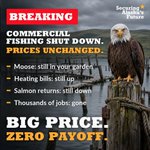
Fewer jobs. Empty harbors. Higher bills. That’s the deal Alaskans get if commercial fishing shuts down, and it’s one Alaska can’t afford.
Learn more at: securingalaskasfuture.org/wh…

1
37
If everything you read online were true, commercial fishing would be responsible for just about every problem in Alaska.
📰 While some claims make for entertaining headlines, they don't always reflect what's happening on the water. Alaska's fisheries deserve a conversation grounded in facts, not sensational claims.
Learn more at: securingalaskasfuture.org/ze…

5
Alaska's fishing future shouldn't be driven by wild speculation. Understanding what's happening on the water requires scientific research, stock assessments, and data, not rumors shared online.
Learn more at: securingalaskasfuture.org/wh…

4
You can't put a mortgage on hold. Or a grocery bill. Or a paycheck.
6300+ Alaskan families count on the pollock fishery to cover all three, and so do the revenues, taxes and industries that keep coastal communities running. A shutdown puts this way of living at risk.
Learn more at: securingalaskasfuture.org/ze…

1
15
Some theories about Alaska’s fisheries are a little out there. 🛸
Fisheries management isn't one of them. Catch limits, observer coverage, and scientific stock assessments help guide decisions about Alaska’s fisheries.
Get the facts: securingalaskasfuture.org

1
9
Commercial fishing supports more than the people working on the water. From processing facilities and fuel docks to local businesses, around 16,000 Alaskan jobs depend on the industry.
Shutting it down would put those jobs, paychecks, and the communities that rely on them at risk.
Check out: securingalaskasfuture.org/pu…

6
The benefits of Alaska's pollock fishery extend far beyond the boats catching the fish. Across Western Alaska, 65 communities have a financial interest in the industry's success, supporting local economies and creating opportunities in places where they're needed most.

18
There's no single explanation for declining salmon returns, and there won't be a single solution.
From warming ocean temperatures to changing habitats and marine conditions, salmon face challenges that extend well beyond commercial fishing. Addressing those challenges requires understanding what's happening throughout the ecosystem.
Pointing fingers at one fishery won't reverse those trends. Science-based management and a broader approach to salmon recovery offer a better path forward.
Alaska's salmon deserve more than a convenient explanation.

1
11
You can't prescribe a blanket ban and expect Alaska's fisheries problems to disappear. Sweeping restrictions could create a whole new set of challenges for the workers, families, and communities that rely on commercial fishing. Alaska needs solutions that address the problem without creating more of them.

21
Policies that sound good on paper can have real consequences for Alaska's fishing families, coastal economies, and seafood industry. Before pushing for zero bycatch, we need to understand the full cost. The fine print matters.

9
Commercial fishing does more than create jobs in Alaska. It provides steady paychecks that help families cover everyday expenses, put down roots, and build a future in the communities they call home.
15
Not every fish hitting a net has to end up on deck.
Salmon excluders give salmon a way to escape from pollock fishing nets underwater, helping fishermen reduce bycatch before the pollock are brought aboard.
It's one example of how Alaska's fishing industry is using gear improvements, research, and monitoring to reduce its impact on salmon populations.

1
28
Apparently commercial trawling is now to blame for mosquitoes, early termination dust, moose in the garden, and trucks that won’t start at 20 below.
Salmon declines are no joke, but the causes are complex. Ocean conditions, habitat changes, and other environmental pressures all play a role. Pointing fingers at one industry might make for an easy headline, but it doesn't tell the whole story.
Alaska's fisheries deserve facts, not fiction.

8
There's a lot more to managing Alaska's fisheries than what you see on social media.
Catch limits, onboard observers, and monitoring technology all help keep fishing operations accountable.
How much fish can be caught is set by scientific stock assessments, not by how many likes a post gets.

16
Behind every commercial fishing job is a household counting on that paycheck. Commercial fishing keeps the lights on, pays the mortgage, and supports thousands of Alaskans working to build a future here.
8
Pollock bycatch impacts less than 1% of Western Alaska's chum salmon returns. So what’s driving the rest of the decline?
Ocean conditions, habitat changes, and preditor/prey interactions all play much more significant roles in salmon declines.
Bringing salmon back means looking at a full picture and following the science.
securingalaskasfuture.org/ze…

9
There's a lot of science behind what happens on Alaska's pollock fishing boats.
From stock assessments that help determine catch limits to onboard observers and monitoring technology that track fishing activity, the fishery operates under rules designed to protect fish populations and keep the industry accountable.
Fishermen use these measures firsthand every day. Their experience, alongside scientific research and reliable data, deserves a place in conversations about the future of Alaska's fisheries.

20