

Exploring the wonders of old Christendom and seeking beauty in art and travel. Whatsoever things are lovely . . . . It is good to think on these things.
USA
Joined July 2024
- Tweets15.1K
- Following1.2K
- Followers13.1K
- Likes31.9K





Pinned Tweet
Why do I write about beautiful art and places? What do I hope to accomplish, you may ask. For one thing, I’m intentionally focusing each day on something beautiful or meaningful because I see value in that.
To keep my mind above the fray in a challenging world, I’m taking the advice of Paul of Tarsus: “Whatsoever things are true, whatsoever things are pure, whatsoever things are lovely . . . think on these things.”
Good thoughts lead to good actions. In other words, as my thoughts go, so goes my life.


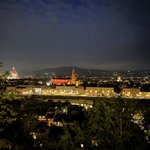
Florence’s Duomo in its evening splendor.
Six hundred years in the making, glowing like it was built yesterday.

Greek gods and goddesses on the ceiling of the Medici Palace in Florence, Italy.
Painted between 1682 and 1685 by the Baroque master Luca Giordano, it is regarded as one of the greatest masterpieces of Baroque ceiling fresco painting in Tuscany.

Blessed are the good boys, for they shall receive divine hydration.
16th c. painting of the Virgin and Child with Saints (and a Dog) by an unknown Tuscan artist. 🐶


Asolo, Italy, is a quiet, charming town in the hills of the Veneto region. From its high points, you can see long distances in every direction.
I was there only one day, but it looks like a great place to spend a relaxing weekend.


The Botanical Garden of Padua (Padova), Italy, is the world's oldest academic botanical garden still in its original location.
It was established in June 1545 by decree of the Venetian Senate.

In Latin, this says “The head of St. Cecilia, virgin and martyr from Rome.”
St. Cecilia is the patron saint of music and musicians. The reliquary containing what is believed to be her skull is kept behind the small golden door in this shrine on the island of Torcello, in the Venetian lagoon.

Pisa’s Baptistery, like a 3-tiered cake.
Each tier was designed in a different century and has a different style:
• Bottom tier: 12th c. - Tuscan Romanesque with round arches, small windows and minimal embellishments.
• Middle: 13th c. - A transition to Gothic in the understated loggia with slender columns.
• Top: 14th c. - Late Gothic. Sharp triangular gables and spiky stone pinnacles and statues. These sharp vertical points break up the horizontal line and ring around the base of the dome, creating a crown-like silhouette.

Once I asked an Italian friend why columns in churches were sometimes “wrapped” like this. He answered, “Maybe because they are cold.” 😁
So . . . does anyone know the real reasons? Hint: There are more than one.

The genius of Baldassare Longhena, as seen in the inner court of Ca’ Rezzonico, Venice:
•Dynamic contrast between shadowed spaces and brightly lit spaces
•Deep recesses, decorative keystones, and visually interesting architectural motifs
•A linear processional axis linking the Grande Canal and the open inner court


Once, years ago, I sat on this bench with my mother. It was her first time in Venice, and it is a sweet memory that comes back to me each time I’m here and pass this spot. This particular evening, the trees on either side of the path were holding hands.
Make time for people you love. Don’t let life’s busyness cause regrets.

Recently I paid my respects at the tomb of the great Claudio Monteverdi at the Frari in Venice.
@Music_Goddesss - do you think Pur ti miro is one of the most beautiful duets ever written?
See the amazing altarpiece in the background in the comment 👇


It takes more strength to exercise wise (not passive) restraint than to react. 👇

Is politeness more masculine than anger? Marcus Aurelius sure seemed to think so…
“And let this truth be present to thee in the excitement of anger, that to be moved by passion is not manly, but that mildness and gentleness, as they are more agreeable to human nature, so also are they more manly; and he who possesses these qualities possesses strength, nerves and courage, and not the man who is subject to fits of passion and discontent.”
- Marcus Aurelius
