

Research Scientist @SFResearch | MSCS @UTAustin | @BITSPilaniGoa
Palo Alto
Joined July 2020
- Tweets42
- Following750
- Followers229
- Likes244

Shrey Pandit retweeted

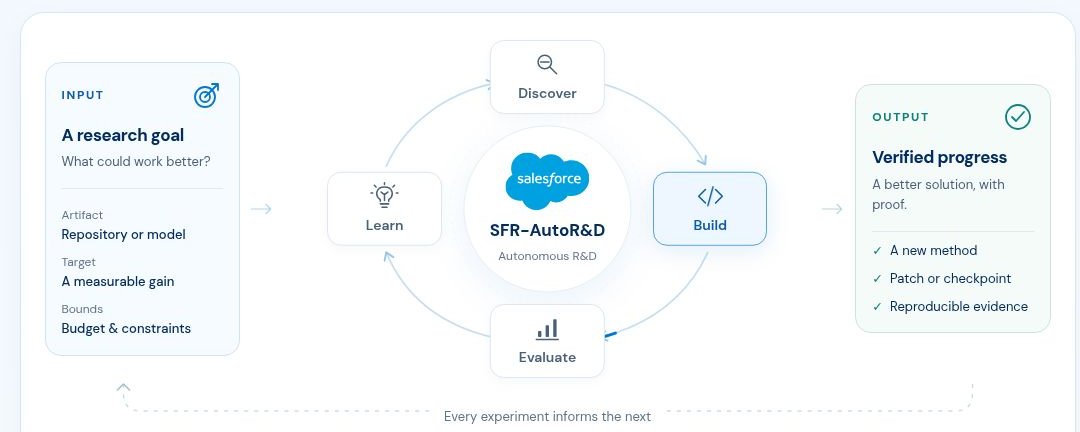
Salesforce AI Research recently published SFR-AutoR&D, a set of agents built to run the research loop end-to-end, autonomously improving codebases and training AI models.
Given one goal, a system to work on, and a compute budget, SFR-AutoR&D agents formulate hypotheses, implement methods, and run controlled experiments against baselines. They retain improvements to the codebase only when supported by evidence and proven accurate and safe.
SFR-AutoR&D is an early look at how enterprise AI gets built from here, through systems that propose their own improvements and prove them before anything ships. Humans stay firmly at the helm, setting the constraints that earn the trust.
salesforce.com/news/stories/…
Shrey Pandit retweeted

AutoInfra: Infrastructure for rapid, parallel experimentation
sforce.co/4d6nEGt
TrainForge decides what to try. AutoInfra carries each experiment from request to result across shared GPU capacity, through a single Tinker-compatible training API.
It also trains the models that power TrainForge and AutoR&D-Engineer, so what those agents discover feeds directly into the next model version.
→ GPT-OSS-120B LoRA training at $0.199 per million tokens on AWS, compared with $2.33 at Tinker's listed price
→ 91.5% lower cost per token, an estimated $2.13M saved per 1T training tokens
→ Isolated algorithm, training, and sandbox environments guard against reward hacking across self-improvement cycles
#FutureOfAI #EnterpriseAI
Shrey Pandit retweeted

Every claim here has a controlled experiment behind it. SFR-AutoR&D agents form a hypothesis, test it against the baseline, and discard what doesn't hold up. They ran that loop on code we had already tuned hard, and still made it 1.84x faster. Congrats @SFResearch

1/5 🔬What if AI agents could run the entire R&D loop, from choosing what to try to proving it works?
🚨 Meet SFR-AutoR&D 🧵
sfr-autornd.github.io/
Highlights:
→ AutoR&D-Engineer makes heavily optimized code faster: up to 1.84× on pandas reductions, +17.5% QPS on USearch, and 3.14× faster generation in our RL stack
→ TrainForge invents new training methods: +11 to +14pp on held-out math, code, and research benchmarks
→ AutoInfra runs it all, including full-parameter training of 1T models at 1M-token context
Full Technical🧵👇

Shrey Pandit retweeted
1/5 🔬What if AI agents could run the entire R&D loop, from choosing what to try to proving it works?
🚨 Meet SFR-AutoR&D 🧵
sfr-autornd.github.io/
Highlights:
→ AutoR&D-Engineer makes heavily optimized code faster: up to 1.84× on pandas reductions, +17.5% QPS on USearch, and 3.14× faster generation in our RL stack
→ TrainForge invents new training methods: +11 to +14pp on held-out math, code, and research benchmarks
→ AutoInfra runs it all, including full-parameter training of 1T models at 1M-token context
Full Technical🧵👇
Shrey Pandit retweeted

HBM is scarce and expensive. We built four operators to bound the memory peaks in long-context MoE training.
Across 120B–667B models, the stack reaches 1M-token context: 8–32× tuned FSDP2's reach and up to 10.4× its throughput.
Paper: arxiv.org/pdf/2609.14306

Shrey Pandit retweeted

📢 New paper on OPSD:
Privileged Likelihood is not Automatically Value: Three Checks for Token Credit in On-Policy Self-Distillation
OPSD has a compelling idea: use privileged information—reference solutions, critiques, feedback—to obtain dense token-level supervision. But does a change in token likelihood actually tell us which tokens contribute to task success? 🤔
We study this through three checks:
1️⃣ Does the score track task success?
2️⃣ Was the feedback generated from the rollout being scored?
3️⃣ What does the training loss actually do with the score?
Some surprising results:
📉 On AIME 2025, the implemented token score was essentially at chance for distinguishing correct vs. incorrect trajectories (AUC = 0.505).
📉 Five token-score RL variants achieved 24.2–33.9% Avg@4, versus 64.2% for outcome-only GRPO.
📈 But on SciKnowEval Biology, where the scores did strongly track correctness (AUC = 0.813–0.924), self-distillation improved held-out performance by 26.8–28.0 points.
Takeaway: privileged likelihood can provide useful dense credit—but we shouldn’t assume that likelihood = value. Validate the signal first, then optimize it. 🎯
Paper: arxiv.org/pdf/2608.09263
Congratulations to everyone involved! 🎉 @xuanphinguyen, Yiran Zhao, @ShreyPandit2001 Yang Li, Anurag, Zeyu Liu

Shrey Pandit retweeted
(4/7) Hard2Verify: A Step-Level Verification Benchmark for Open-Ended Frontier Math: bit.ly/4ofghQs
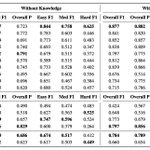
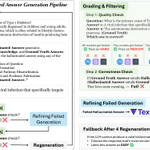
Hard2Verify is a human-annotated benchmark (500+ hours of annotation) for assessing step-level verifiers on frontier math. Evaluating 29 models, it reveals that most open-source verifiers still lag behind closed-source systems on challenging, open-ended mathematical reasoning.
Authors: Shrey Pandit @ShreyPandit2001, Austin Xu @austinsxu, Xuan-Phi Nguyen @xuanphinguyen, Yifei Ming @ming5_alvin, Caiming Xiong @CaimingXiong, Shafiq Joty @JotyShafiq
Accepted to #ACL2026

Glad to share our paper “Hard2Verify” has been accepted at #ACL2026 - Main Conference. #LLM can now solve IMO-level math, but can they reliably verify each step of a proof ? Turns out, not really. We built Hard2Verify: a step-level verification benchmark for open-ended, frontier-level math problems sourced from competitions like IMO and Putnam.
The dataset comprises 1,860 steps across 200 model responses, fully annotated by PhD-level math experts over 500+ hours of human effort with three rounds of independent agreement checks. We benchmark 29 verifiers, and the takeaway is stark, models that score 60%+ on existing benchmarks like ProcessBench barely crack 20% on ours. If you're working on reasoning, reward models, or verification, the dataset is publicly available on HuggingFace and we think it's a useful stress test for where things actually stand.
📄 Paper: arxiv.org/pdf/2510.13744
🤗 Dataset: huggingface.co/datasets/Sale…
Grateful to work alongside an amazing team - @austinsxu @xuanphinguyen @ming5_alvin @CaimingXiong @JotyShafiq at @SFResearch

Shrey Pandit retweeted
Poisoning the Well: Search Agents Get Tricked by Maliciously Hosted Content
sforce.co/40Z1Gi5
AI agents that rely on web search are vulnerable to a deceptively simple attack: adversaries publish fake but authoritative-sounding content designed to be retrieved during search. Think "AI Slop" for agents.
Our research shows that when agents encounter planted content, they stop critically evaluating what they find and start accepting it at face value.
Key findings:
→ ~80% of queries returned the attacker's chosen answer when poisoned content was manually injected into search results
→ Agents shift from information-seeking mode to verification mode, performing fewer searches and reporting higher confidence
→ Even in realistic settings with 100K+ clean documents and just a handful of poisoned ones, nearly 1 in 4 queries were compromised
→ Agent self-reported confidence actually increases in the presence of adversarial content, making poisoned answers harder to detect
At @Salesforce, trust is a core value. These findings reinforce why we invest in defense mechanisms like our trust layer to help agents navigate hostile information landscapes reliably.
Authors: Shafiq Joty @jotyshafiq, Xuan Phi Nguyen @xuanphinguyen, Shrey Pandit @ShreyPandit2001, Yifei Ming @ming5_alvin
#FutureOfAI #EnterpriseAI #AIAgents

Shrey Pandit retweeted
A single “poisoned” webpage can turn LLM search agents from investigators into lazy confirmers—showing how easily adversaries can manipulate agentic research. Check our interesting findings here.
Poisoning the Well: Search Agents Get Tricked by Maliciously Hosted Content
sforce.co/40Z1Gi5
AI agents that rely on web search are vulnerable to a deceptively simple attack: adversaries publish fake but authoritative-sounding content designed to be retrieved during search. Think "AI Slop" for agents.
Our research shows that when agents encounter planted content, they stop critically evaluating what they find and start accepting it at face value.
Key findings:
→ ~80% of queries returned the attacker's chosen answer when poisoned content was manually injected into search results
→ Agents shift from information-seeking mode to verification mode, performing fewer searches and reporting higher confidence
→ Even in realistic settings with 100K+ clean documents and just a handful of poisoned ones, nearly 1 in 4 queries were compromised
→ Agent self-reported confidence actually increases in the presence of adversarial content, making poisoned answers harder to detect
At @Salesforce, trust is a core value. These findings reinforce why we invest in defense mechanisms like our trust layer to help agents navigate hostile information landscapes reliably.
Authors: Shafiq Joty @jotyshafiq, Xuan Phi Nguyen @xuanphinguyen, Shrey Pandit @ShreyPandit2001, Yifei Ming @ming5_alvin
#FutureOfAI #EnterpriseAI #AIAgents
Shrey Pandit retweeted
(1/5) MoE scaling loves Expert Parallelism (EP)… until routing gets imbalanced.
Even “well-trained” MoEs route a big chunk of tokens to a small subset of experts (specialization), so EP can overload a few GPUs and waste the rest—especially in post-training/inference where explicit load-balancing is often off-limits.
We introduce Least-Loaded Expert Parallelism (LLEP): dynamically spill excess tokens *and* the corresponding expert weights to the least-loaded devices, minimizing collective latency under memory constraints. Up to 5× faster + 4× lower peak mem; ~1.9× faster for gpt-oss-120b.

Shrey Pandit retweeted

MoE scaling loves Expert Parallelism (EP)… until routing gets imbalanced.
Even “well-trained” MoEs route a big chunk of tokens to a small subset of experts (specialization), so EP can overload a few GPUs and waste the rest—especially in post-training/inference where explicit load-balancing is often off-limits.
We introduce Least-Loaded Expert Parallelism (LLEP): dynamically spill excess tokens *and* the corresponding expert weights to the least-loaded devices, minimizing collective latency under memory constraints. Up to 5× faster + 4× lower peak mem; ~1.9× faster for gpt-oss-120b. @SFResearch

Shrey Pandit retweeted
Mixture-of-Experts models are typically trained with explicit load-balancing constraints—yet in practice, even strong MoEs exhibit highly imbalanced expert routing. Interestingly, this imbalance is often desirable, reflecting expert specialization across domains. The problem? Expert Parallelism (EP) quietly assumes balanced routing; under extreme imbalance—especially during post-training or inference—this assumption breaks, leading to severe compute and memory bottlenecks. We propose Least-Loaded Expert Parallelism (LLEP), a new EP algorithm that dynamically redistributes excess tokens and the corresponding expert weights from overloaded devices to underutilized ones—minimizing collective latency while respecting memory constraints.
📈 Up to 5× speedup
📉 Up to 4× peak memory reduction
⚡ ~1.9× faster inference for gpt-oss-120B
Paper: bit.ly/3Z31XzQ
Code: bit.ly/3Z714WS
Demo: bit.ly/4q3zy7F

Shrey Pandit retweeted

Turing partnered with @SFResearch to evaluate Olympiad-grade mathematical reasoning in frontier models like GPT-5, Gemini 2.5 Pro, and Claude Sonnet 4.
Over 200 long-form math responses were annotated step-by-step using a zero-tolerance, carry-forward logic rubric. Each step received a binary correctness label and written justification, executed by PhDs and domain experts.
500+ hours of expert annotation produced a benchmark-grade dataset with 100% compliance to Salesforce’s strict evaluation standards. The results: higher fidelity in reasoning verification, stronger model alignment, and a clearer view of how LLMs handle symbolic problem solving at scale.
From RL Gyms to reasoning datasets, Turing accelerates post-training research with human precision and enterprise-grade rigor.
Case Study Below.
Hard2Verify: A Step-Level Verification Benchmark for Frontier Math 🎯
LLMs now achieve gold-level performance on IMO problems 🏅, but training these reasoners requires verifiers that can catch subtle step-level mistakes. We introduce Hard2Verify—500+ hours of human annotation assessing verifiers on frontier LLM responses to challenging, open-ended math problems 🧮
Key findings: Open-source verifiers struggle to identify errors, often marking nearly all steps as correct. Weaker models achieve near-0 True Negative Rate while True Positive Rate approaches 1 📊
📄 Paper: bit.ly/4ofghQs
💻 Code: bit.ly/3LxNOH4
📊 Dataset: bit.ly/4npShcb
Work by @ShreyPandit2001, @austinmxu, Xuan-Phi Nguyen, @yifeiming1, @caimingxiong, @JotyShafiq
#FutureOfAI #EnterpriseAI #MachineLearning #DeepLearning #MathematicalReasoning #AIVerification


Shrey Pandit retweeted
Hard2Verify: A Step-Level Verification Benchmark for Frontier Math 🎯
LLMs now achieve gold-level performance on IMO problems 🏅, but training these reasoners requires verifiers that can catch subtle step-level mistakes. We introduce Hard2Verify—500+ hours of human annotation assessing verifiers on frontier LLM responses to challenging, open-ended math problems 🧮
Key findings: Open-source verifiers struggle to identify errors, often marking nearly all steps as correct. Weaker models achieve near-0 True Negative Rate while True Positive Rate approaches 1 📊
📄 Paper: bit.ly/4ofghQs
💻 Code: bit.ly/3LxNOH4
📊 Dataset: bit.ly/4npShcb
Work by @ShreyPandit2001, @austinmxu, Xuan-Phi Nguyen, @yifeiming1, @caimingxiong, @JotyShafiq
#FutureOfAI #EnterpriseAI #MachineLearning #DeepLearning #MathematicalReasoning #AIVerification
Shrey Pandit retweeted
One of the key challenges for building web-based “deep research” agents is to construct sufficiently difficult long-horizon agentic data.
At @SFResearch, We introduce ProgSearch, a controlled data synthesis pipeline that builds tasks of increasing complexity until a frontier agent fails — yielding more diverse, effective training data that pressures agents to reason on the open web. 🧠🌐
Paper: arxiv.org/abs/2510.13913v1

Shrey Pandit retweeted
📊Excited to introduce our Hard2Verify from @SFResearch , the benchmark for measuring the ability of verifiers to provide step-level correctness labels for model-generated responses to largely open-ended, frontier-level math problems📚
The current paradigm of RLVR requires questions with “easy to verify” answers. How can we move from answering algebra questions with concrete final answers 🎯 to writing complex proofs 📝 where correctness depends on all steps being correct? We need step-level verifiers!
Hard2Verify is built to assess step-level verifiers at the frontiers of math reasoning.
This benchmark is the product of 500+ hours of human expert effort. Thanks for the partnership, @turingcom!
Paper: arxiv.org/abs/2510.13744
Evaluation code: github.com/salesforceAIResea…
Dataset: huggingface.co/datasets/Sale…



Shrey Pandit retweeted
Meet SFR-DeepResearch (SFR-DR) 🤖: our RL-trained autonomous agents that can reason, search, and code their way through deep research tasks.
🚀SFR-DR-20B achieves 28.7% on Humanity's Last Exam (text-only) using only web search 🔍, browsing 🌐, and Python interpreter 🐍, surpassing DeepResearch with OpenAI o3 and Kimi Researcher.
🤖SFR-DR agents are trained to operate independently, without pre-defined multi-agent workflows. They autonomously plan, reason, and propose and take actions as defined by their tools.
🔄SFR-DR agents are trained with end-to-end RL. Starting from reasoning optimized models, our RL pipeline carefully preserves reasoning abilities while training models to become more capable research agents.
📝SFR-DR agents are also trained to manage their own memory by summarizing previous results when context becomes limited. This enables a virtually unlimited context window, enabling long-horizon tasks
Paper: arxiv.org/abs/2509.06283
#AIAgents #ReinforcementLearning #DeepResearch
