

EE PhD. 20 years designing chips. AI hardware explained: bottlenecks, trade-offs and economics. Evidence-first analysis + daily AI glossary cards.
Silicon Valley
Joined March 2021
- Tweets454
- Following181
- Followers3.1K
- Likes322


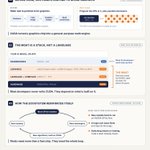
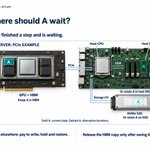

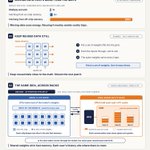


AI helping design AI can create more work for GPUs.
OpenAI attributes this year's faster pretraining progress mainly to long-term research and compute investment. Automation played a smaller role, though AI already contributed to its latest model designs.
Cheaper idea generation should let labs try more experiments, supporting $NVDA 's training market alongside the huge final training runs. The payoff comes from finding useful models faster. Track total experiment spending and the compute needed per validated improvement; algorithmic gains can change both.

We decided to provide more transparency into pretraining progress at OpenAI for the sake of moving toward shared safety bars. In “Perplexity and Intelligence” I argue for common limits based on perplexity and other measurements, with progress beyond them gated on our ability to understand AI behavior.
openai.com/index/perplexity-…

3
308
A twenty-year memory contract still leaves someone paying for the factory today. Meritz reports buyers proposing deals that long.
Micron's $MU example is more concrete: $32B in customer financial commitments, with $12.7B of deposits on its balance sheet at fiscal Q4-end.
Those deposits are usable now and returned later as purchase requirements are met. Cash-backed contracts should make expansion easier to finance.
The useful detail in the next announcement is how much arrives before equipment bills come due.

meritz securities says its channel checks show US big tech proposing memory LTAs with purchase commitments up to 20 years. makers are reluctant to lock in capacity on a buy promise alone.
makes sense. the fab needs cash and the capex risk sits with the maker. micron said its take-or-pay deals came with $32B of cash and financial commitments upfront.
so how much prepay does a 20-year offer put down?

1
5
507
Can you copy an AI model without ever seeing its weights?
Reuters recently reviewed more than 300 Chinese papers, patents, and filings. It found that training local models on the outputs of leading US models has moved into mainstream industrial use in China.
The technique is called knowledge distillation: a small "student" model is trained to match the answers of a large "teacher" model.
The strongest version uses more than the final answer. For each next word, the teacher scores every option. The student learns all of those scores, so it also learns which wrong answers were close and which were far off. A setting called temperature flattens the scores so the near misses carry more signal.
Through an API, those scores usually stay hidden. Teams train on the teacher's text instead. In the card's analogy, they get the answer key but not the tutor's notes. Each example carries less information than the full scores.
Why bother? A smaller model is cheaper to run. Writing each new word means reading the model's weights from memory, and a small model has far fewer to read.
Distillation itself is legal and common. Labs distill their own models all the time. The dispute is about using a rival's outputs against its terms. The student mostly learns the skills its training prompts cover.
The same week, Washington issued a rule on remote access to advanced chips. Chip rules limit compute. Distillation lowers the compute it takes to serve a given skill. Training the student still takes compute.
What I'm watching is how providers enforce those terms as output collection grows.

3
295
When a model runs across many chips, time spent waiting for data becomes part of the cost of every answer.
@PhotonCap's opening sections make this tangible by showing where copper connections give way to light.
That is why optical links belong in the inference-cost discussion alongside GPUs and HBM: better connections can help more of the hardware we buy do useful work.


5
334
Silicon Atlas retweeted

BREAKING: Jensen Huang releases a statement after being reinstated as CEO of Nvidia, $NVDA:
Full statement:
"I am honored to return to NVIDIA and lead one of the most consequential technology companies in the world at the beginning of a new industrial revolution. I take this responsibility with the greatest humility and renewed commitment. I want to thank the NVIDIA Board for its confidence and deliberation through this process. I am especially grateful to Harvey Jones for his leadership as Chair, and to Colette Kress and our executive staff for leading NVIDIA during this period. I am also deeply thankful to our employees, shareholders, leaders across the industry and partners around the world for their extraordinary support. Above all, I am grateful for the love and support of my family. I can’t wait to get back to work."
Jensen has been reinstated as CEO with immediate effect.
Silicon Atlas retweeted
BREAKING: Jensen Huang is now the second-favorite to become the next CEO of Nvidia, $NVDA.
Following President Trump's call for Nvidia's board to reinstate Huang, markets now see a 19% chance of him becoming the company's next CEO.
This morning, his odds were below 10%.
🤝 Paid partnership

NVIDIA's stock is down 48% since its October 6 record close. Its last reported quarter: revenue up 103%.
So did the CUDA moat crack? The stock can't tell you.
Last week I asked whether anyone can get around CUDA. Here's what fell, what didn't, and the news that touches the moat.
Three hits: a broad AI chip sell-off on November 5 (AMD and Micron fell harder), the CEO's resignation on November 12, and a reported SEC accounting probe on November 20.
The business numbers are older than the turmoil. NVIDIA's $115.8B quarter, with a 74.8% gross margin, ended October 25. Next quarter's margin guide is lower: 71–72%.
The moat news came from Anthropic's IPO roadshow: Claude Mythos Preview brought up prompt processing for one of its models on AMD MI355X GPUs in about three days, porting or writing almost all the kernels. Anthropic put the usual effort at 6–12 months with dozens of engineers.
Scope: one model, prefill only, an unverified company claim, not a same-condition comparison. If it holds up, it points at one layer of CUDA's moat: the kernel code that runs a model on a given chip.
Not established: comparable decode performance, production economics at scale, or staying fast as hardware and software evolve.
A falling stock isn't a moat score. Faster porting could weaken one barrier. It does not prove the rest are gone.

3
313
Intel's first external 18A-P customer gives its foundry a foothold for repeat business.
Its CTO confirmed the signing this week. Intel says 18A-P keeps 18A's design rules, allowing existing design work to carry forward. Think of a chip family sharing an engineering foundation across products.
I expect that reuse to help $INTC win follow-on designs by lowering customers' development burden. Watch production starts and second products from those customers: that is where a first signing becomes recurring wafer revenue.

Microsoft and Intel deepen collaboration to deliver differentiated Azure infrastructure
intel.com/content/www/us/en/…

NAND's next margin test is how cheaply suppliers can make each bit.
TrendForce forecasts 25-30% more NAND bits in 2027 as manufacturers pack more storage into their chips. It also says Chinese cloud order cuts outweigh additional US demand.
Teng's caution fits that supply picture. I still favor $SNDK 's enterprise SSD push, but expect cost reductions to matter more than broad price hikes. Watch whether cost per bit falls faster than selling prices as qualified shipments grow.
KB SECURITIES: in the past month DRAM spot fell ~5% and NAND spot ~20%, while samsung and sk hynix contract prices kept rising.
kb sees their 2027 ASP up 40% for DRAM and 30% for NAND.
kb's NAND case rests on enterprise SSD, 65%+ of their NAND revenue. the idea is that slowing consumer demand won't affect Sk/samsung so much since most of their rev is from enterprises.
but that's exactly where trendforce says chinese clouds just cut 2027 orders. personally i'd trust the DRAM number more than the NAND one.

4
739
Taller HBM stacks make each bad bond more expensive.
Seoul Economic Daily reports SK hynix plans to place initial hybrid-bonder orders with $BESI. Joining memory chips without bumps frees vertical space, while a particle at one interface can spoil the stack.
I expect Besi to win more HBM business as stacks grow taller. Customers will pay for good stacks per hour: precision, clean surfaces and production speed together. Watch repeat equipment orders after the trial runs.

Korean media report that SK hynix plans to place the bulk of its initial orders for hybrid bonders for 16-high and taller HBM stacks with Dutch equipment maker BESI.
SK hynix reportedly chose BESI over its Korean rivals because its bonders offer higher precision.
m.sedaily.com/article/201166…

1
6
811
AI builders are competing with the rest of electrification for equipment.
The IEA's new outlook says the world needs at least 25 million kilometres of new power lines over the next decade, plus upgrades or replacements for 15 million. Transformers and cables are already tight: a data centre joins a much bigger queue.
I expect working, power-connected AI capacity to retain a premium through 2027. Watch transformer deliveries and customer acceptance dates, when construction spending can finally start becoming revenue.

The world is moving deeper into the Age of Electricity, & the energy crisis is accelerating the shift – with many countries looking to reduce their reliance on fuel imports.
By 2035, electricity is set to approach 30% of final energy use, up from 23% now: iea.li/4zQZCbT

1
4
390
AMD's new NPU support gives local-AI users a reason to buy more RAM.
Unsloth Desktop now runs models on supported Ryzen AI NPUs, dedicated AI engines that leave GPUs available for tasks like video rendering. AMD says Qwen3.6-35B-A3B needs about 28GB available to the NPU at full context: 64GB system RAM under Windows' default shared-memory allocation.
I expect frequent local-AI users to favor higher-memory $AMD PCs. Watch whether 64GB configurations gain sales share as these tools become everyday habits.

AMD XDNA 2 NPUs are the world's first NPUs supported by @UnslothAI Desktop. 100+ agentic apps. Now on your NPU. bit.ly/4jqlftF

ALT An illustrated character resembling a sloth is using a laptop. Text reads "World's First NPU Supported by Unsloth Desktop." Logos of AMD and Unsloth are at the bottom.
Terafab’s push for speed runs through some unglamorous equipment.
The Elec reports that GST received specifications and delivery-capacity inquiries for scrubbers and chillers. These systems treat hazardous exhaust and keep process temperatures stable.
I expect established suppliers to remain central as Terafab builds its first line. Getting these systems working alongside the process tools is what turns delivered equipment into useful experiments. Confirmed orders and qualified installations would be the next step beyond the reported talks.

BREAKING: Elon Musk’s Terafab is reportedly in talks with Korean semiconductor equipment maker GST (Global Standard Technology) for thousands of essential chipmaking systems.
• Terafab has shared equipment specifications and asked how many units GST can deliver within its preferred timeline.
• The equipment includes scrubbers, which remove hazardous gases from chip production, and chillers, which keep manufacturing equipment at the right temperature—both essential for running a chip factory.
• GST already supplies Micron, GlobalFoundries and Samsung in the U.S., bringing experience and an established local service network.
• Korean supplier Unisem is also in discussions to supply equipment, adding to Terafab’s supplier outreach.
• Terafab has reportedly offered to send private aircraft to collect equipment samples and reduce delivery times.
• The project aims for capacity of 1 million wafers per month by 2035, with mass production targeted for the second half of 2028.
The reported talks point to progress in assembling the supply chain for an ambitious goal: giving Tesla and SpaceX their own chip manufacturing capacity in Texas.

1
3
441
Intel can get paid even when Microsoft designs the chip. Today, Microsoft announced plans to use Intel's EMIB packaging for Azure's own silicon, alongside a multi-year Xeon supply agreement.
EMIB connects separate chip pieces with tiny silicon bridges. That gives $INTC another way into Azure's hardware budget: packaging Microsoft's designs.
I expect custom chips to grow Intel's packaging business. Watch for named Azure products reaching volume shipments and the resulting revenue from outside customers.

@Microsoft and Intel are expanding their decades-long collaboration, with plans to use Intel Foundry's EMIB advanced packaging technology to advance Azure infrastructure for cloud and AI.
Learn more: ms.spr.ly/6019x1yiv
#IntelFoundry #MSIgnite

23
1,254
AMD has already included some AI-proposed circuit changes in a design sent for manufacturing, according to OpenAI.
In OpenAI’s Jalapeño, a multiplier redesign used about 15% less cell area in synthesis and cut latency from two cycles to one.
I expect AI to make deeper design exploration routine, giving engineers more chances to improve chips before tapeout.
Turning those possibilities into reliable silicon is the central question in my article: where AI expands the search, and how verification makes that exploration useful.
siliconatlas.substack.com/p/…

Working with @AMD, our models identified up to 14% PPA improvement on flagship GPU IP in less than five months—building on designs AMD’s engineers had already spent years optimizing.
The same approach helped improve Jalapeño, our first custom inference chip, with gains verified on real silicon.
New evaluations also show our models getting better at certain chip design tasks.
We’re sharing these results and how we’re working with @Synopsys to bring our model capabilities and their trusted EDA design and validation tools to more chip designers.
openai.com/index/advancing-c…


2
298
Silicon Atlas retweeted

TrendForce:
NAND prices are expected to start falling in Q2 2027 as China’s YMTC aggressively expands production capacity. DRAM prices, by contrast, are expected to hold up through the end of 2027.
Conventional DRAM average selling prices (ASPs) are expected to rise 10–15% QoQ in Q4 2026. TrendForce forecasts more gradual increases in 2027, with ASPs up 5–10% QoQ in Q1, 3–8% in Q2, and 0–5% in both Q3 and Q4.
TrendForce expects HBM4 pricing to rise from at least $2.05 per Gb in 2026 to $3.00–$5.50 per Gb in 2027, and projects a year-over-year increase of more than 100%. Pricing discussions for next-generation HBM4E are at $5 per Gb or higher.
zdnet.co.kr/view/?no=2026111…

Amazon's next funding source is the buildings around its computers. Under a new $5 billion deal, Blackstone's listed trust plans to buy 75% of two AWS property ventures; $AMZN will lease back all 13 buildings for an initial 12 years.
That releases capital tied up in property while AWS keeps using the sites.
I expect more sale-and-leaseback deals as cloud expansion absorbs cash. Watch lease commitments alongside capital spending: more funding today also means rent bills for years.

$BXDC Blackstone Digital REIT makes inaugural data center investment.
>Acquires ~$5B worth of newly constructed powered shells across two AWS data center campuses
>Purchase price assumes 7% cap rate at stabilization

4
535
$NVDA is locking in memory supply years ahead. Its supply commitments rose from $279B to $390B, mainly for multiyear memory procurement.
This strengthens my view that HBM demand can grow from both GPUs and TPUs. The next question is how those orders split between established HBM3E and the HBM4 ramp, and who supplies each profitably.
That’s what I explore in my latest piece.
siliconatlas.substack.com/p/…
From NVIDIA’s earnings report:
Commitments to purchase semiconductor components surged to $390 billion from $279 billion in the prior quarter, driven mainly by multiyear agreements to secure memory supply.
3
750
$NVDA's earnings strengthen my case for memory suppliers. Supply commitments rose from $279B to $390B, with the increase mainly tied to multiyear memory purchases.
A fast GPU still needs memory delivered on time. Securing that supply helps NVIDIA ship complete systems and gives memory makers more confidence to expand capacity.
I expect qualified suppliers to keep bargaining power as Rubin ramps. Watch contract prices and delivered volumes to see how much of those commitments becomes supplier profit.

$NVDA's hyperscale revenue hit $60.1 billion in Q3, up 71% from a year ago and well above the $54.1B expected.
AI clouds, industrial and enterprise revenue reached $47.5 billion, up 195%, just shy of the $48.4B estimate.
Shipments of Hopper data center chips to China came to $2.4 billion in the quarter.
Supply commitments jumped to $390 billion from $279 billion last quarter, mostly multi-year memory purchases.
Its cloud service agreements and data center lease commitments rose to $102 billion from $74 billion.
It also lists $20 billion of equity investment commitments, focused on frontier labs and infrastructure financiers.

3
485
Silicon Atlas retweeted

Over the past week, I’ve been overwhelmed by the love and support of friends, industry colleagues, and people I've never met. Thank you to everyone who has shown kindness to my family and me. It means the world to me.
I came to the United States 53 years ago, and becoming an American citizen is one of the greatest gifts and proudest moments of my life. NVIDIA has been my life’s work. Building it into the company it is today alongside my colleagues has been a privilege and an honor. Nowhere but in America could a company like NVIDIA be possible. I love our country, and I love NVIDIA.
I did not live up to the standards expected of everyone at NVIDIA, and I have made serious mistakes in my personal life. I created problems for the Board that I deeply regret. I own my mistakes completely, and I am committed to cooperating with the Board’s independent investigation.
Since my departure, I’ve seen an outpouring of calls from NVIDIA’s employees, investors, business partners, and customers for me to return as CEO. Many continue to reach out to me directly as the company navigates complex technology, market, competitive, and geopolitical dynamics. NVIDIA is a once-in-a-generation company. If the Board of Directors decides that my return is in the best interest of our shareholders, our employees, the company, and America, I would be honored to answer these calls and return as CEO.
Thank you again to everyone who has shared their good wishes. I am profoundly humbled by your support. To my family: I love you, and I will spend the rest of my life being worthy of yours.
Jensen