

Postdoctoral fellow at @VITAGroupUT | PhD at @rice_dsp | Deep learning theory, Gen AI
Austin, TX
Joined June 2014
- Tweets80
- Following221
- Followers227
- Likes427






Pinned Tweet
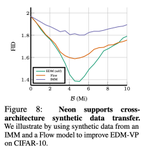
Synthetic data promised to shatter data scarcity barriers, but self-generated samples trigger catastrophic model collapse.
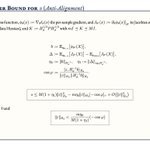
We discovered the key is thinking in reverse: degradation from self-training isn't random noise—it's a powerful signal provably anti-aligned with the real-data gradient.
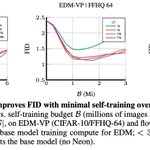
Neon reverses this degradation to achieve SOTA image generation—FID 1.02 on ImageNet-256—with <1% additional compute.
🦭 Come check out WaLRUS at #NeurIPS2024 today!
We introduce wavelets into the state-space model family—outperforming HiPPO-based methods on long-range representation tasks.
📍 Exhibit Hall C,D,E — Poster #2309 🕟 4:30–7:30 PM PT
1
139
Sina Alemohammad retweeted

(1/n) Until recently, even strong LLMs struggled with USAMO/IMO problems. This year, specific model variants from Google and OpenAI’s were reported to solve 5/6 IMO problems. In our recent work, we asked a relevant question: Can we grade proofs fairly with partial credit using LLMs?


When does negative extrapolation fail?
Theory predicts Neon only works for mode-seeking samplers. With diversity-seeking samplers (temperature τ > 1, or those upweighting low-probability regions), gradient alignment flips: ⟨r_d, r_s⟩ > 0
In this rare case, you'd use w < 0 instead—interpolating toward the self-trained weights rather than extrapolating away.
We empirically verify: diversity-seeking (ζ=0.9, green) optimizes at w<0, while mode-seeking (ζ=1.1, orange) optimizes at w>0 (Neon).

1
2
348
Neon shows synthetic data collapse can be harnessed, not avoided.
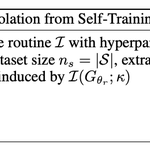
By reversing the degradation direction, we turn a known failure mode into practical improvement—no fresh real data, no auxiliary models, no complex training.
Just a simple parameter merge that makes models better.
📄 Paper: arxiv.org/abs/2510.03597💻 Code: github.com/VITA-Group/Neon

2
143
Sina Alemohammad retweeted

🎉 Excited to announce our group has 5 papers at #COLM2025!
Congrats to @KevinWang_111 @RunjinChen @hjy836 @CongWenyan0320 @KyriectionZhang and collaborators!
Details of our posters below 🧵👇
Sina Alemohammad retweeted
A wonderful evening with the VITA family
Good food, laughter, and ideas flowing. Here’s to more breakthroughs together!

Sina Alemohammad retweeted

🤖 From this week's issue: A research summary about self-improving diffusion models using synthetic data. buff.ly/4b66837
Sina Alemohammad retweeted

We have already achieved self-improvement in diffusion models, via its own synthetic data! Not that far away definitely!


Mustafa Suleyman, CEO of Microsoft AI, says in an interview surprisingly openly that self-improving AI will be achieved in 3-5 years at the latest, but certainly before 2030.
That would be the point in time when we would slowly enter the singularity.
The consequences after that would be unforeseeable. In any case, the future remains extremely exciting and it is good to see that more and more people are thinking the same way!
Sina Alemohammad retweeted

Excited that our paper "Pedagogical Alignment of LLMs" is accepted at EMNLP'24 findings 🎉
Thanks to all authors - Kangqi Ni, @Sapana_007, @rbaraniuk
Read here: arxiv.org/abs/2402.05000

Does training a generative model on its own synthetic data always result in MADness/model collapse?Turns out it doesn’t! We show that a diffusion model can “self-improve” using its own synthetic data while preventing MADness/model collapse altogether! Link to paper: arxiv.org/abs/2408.16333

Distribution controllability: We show that SIMS can adjust a diffusion model’s synthetic data distribution to match any desired in-domain target distribution. As shown below, SIMS can adjust the distribution of a model trained on FFHQ to generate 70% female and 30% male outputs, instead of the original 50/50 split in the dataset. This can help mitigate biases and ensure model fairness, all while improving the quality of the generated outputs


1
1
331
To help organize the growing literature on AI self-consuming feedback loops, we have posted a link to our paper on SIMS on the "Self-Consuming AI Resources" archive at dsp.rice.edu/ai-loops
Email us at the website on that page to add your latest work in this fast-moving area.

1
246