



Pinned Tweet
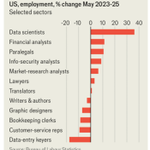
If AI leads to displacement, which AI-exposed workers will struggle to land on their feet after job loss? And which workers are best positioned to adapt on their own?
In a new @nberpubs paper and complementary @BrookingsInst brief, we work towards answering this question. 🧵


sam manning retweeted

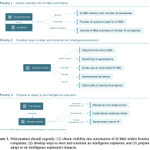
New @GovAIOrg post: I argue embedded assessors should verify frontier AI companies' pause claims. Earlier this year, OpenAI and Anthropic both said they paused frontier AI work after security incidents, but no third party has verified these claims. 🧵
governance.ai/analysis/verif…
OAI researchers willingness to trade 30% of their compute to retain access to today's coding agents (as opposed to going back to GPT-5.2) was surprising to me.
Evidence both that we are not in a strict software-only intelligence explosion (cuz the WTP in that case would be ~100% for both headcount and compute), and also that the relative value of AI labor vs compute is increasing rapidly. Researchers also said they expect they would trade 50% of their compute for anticipated capabilities of coding agents in 2 months.

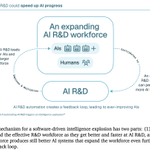
Today we are releasing new data on how AI models are accelerating AI research at OpenAI. This is an update and expansion of the company's first research acceleration report, which was released in September.
nitter.gq/OpenAI/status/21231913…
To share a few headline findings:
1. We find that AI agents are able to successfully complete increasingly long tasks. However, humans are still central to AI development -- agents' ability to successfully complete tasks is extremely heterogeneous across different tasks in @EpochAIResearch's O*NET for AI R&D taxonomy.
2. Despite this heterogeneity, we continue to see growing use of AI agents by researchers, and AI researchers assign high value to the use of agents in the R&D process. In October, the median researchers' daily usage reached $2,400 at API list prices, and the 90th percentile researcher's usage reached $23,000. In a survey questions, the median researcher reported being willing to trade 30% of team compute or 40% of team headcount in exchange for three months of frontier coding agent access.
3. Within OpenAI, an increasing amount of human effort is being devoted to safety and alignment, with growth picking up significantly following the Hugging Face incident in July 2026.
We believe that a shared public understanding of how AI models are entering into the research process is necessary to facilitate public discussion of the capabilities, risks, and required safeguards for increasingly powerful AI. One important thing to note is that OpenAI reporting on research acceleration should not be read as an intention to pursue full recursive self-improvement.
There has been quite a lot of discussion over the past several weeks about RSI, the extent to which we are seeing research acceleration, and the extent to which any such acceleration might be attributable to AI. I don't think this report definitively answers any of these questions, but I am glad we are able to contribute additional data to this conversation, and I hope that OpenAI's continued efforts to share such data will help sustain and advance shared measurement norms across the industry.
This update was a joint effort by colleagues across OpenAI. I feel very lucky to have worked with @kliu128, @Chris_Ong, @michaelzhao, @Kwathomas0, @drew_m_johnston, and @OliviaGWatkins2 on this, along with amazing support and guidance from folks like @tejalpatwardhan, @RonnieChatterji, and @deanwball.
I'll share some key findings below:
Side note this report is kind of insane. So much interesting data. Kudos @daveholtz @_Chris_Ong and rest of the team
3
324
sam manning retweeted

I'm excited to finally announce my new Substack! I'll be writing on AI evaluations & incidents, technical explainers, and more.
Check out post #1: A primer for policy folks on what AI evaluations are, and why policymakers should care about them
ai.scal.ing/p/evals-intro-1

sam manning retweeted

⏳Applications closing November 22: We're looking for a Head of Hiring to join GovAI!
You'll lead a growing team, shape our recruitment strategy, and strengthen how we identify and assess exceptional talent as GovAI scales. Help us build the next generation of AI governance talent.
Apply by 22 November: governance.ai/post/head-of-h…

sam manning retweeted

This was an incredibly valuable experience for me and I strongly recommend applying if you're looking to launch/accelerate a career in AI governance & policy!

Apply for GovAI's 2027 Summer Fellowship, Research and Applied tracks!
📍 Location: London, UK
📅 Deadline: 23:59 GMT Sunday, 22 November 2026
Fellows will join us in London to conduct a project on a topic of their choice, participate in an expert Q&A and seminar series aimed at developing a broad understanding of the field, and spend time forging connections with researchers and practitioners. Learn more below.
🔗 Learn more about the Research Track: governance.ai/post/uk-summer…
🔗 Learn more about the Applied Track: governance.ai/post/uk-summer…

Applications for GovAI's DC summer fellowship are now open.
If you are looking for a way to learn more about what is going on in AI policy and want to have an impact on making AI progress go well, consider applying.
Apply for GovAI's 2027 DC Summer Fellowship!
📍 Location: Washington, DC
📅 Deadline: Sunday, November 22nd, 2026 at 11:59 pm ET
The DC Summer Fellowship is a three-month bipartisan opportunity designed to accelerate or launch impactful careers in American AI governance and policy. Participants deepen their understanding of the field, connect with a network of experts, and build their skills and professional profile, all while conducting a research project of their choice under expert guidance.
🔗 Learn more: governance.ai/post/dc-summer…

sam manning retweeted

Rapid AI progress has many people imagining a world where general-purpose AI models autonomously control military drones at scale. But there’s little analysis on what this would look like in practice, and how soon it might be feasible.
My latest paper at @GovAIOrg asks what it would take to make this vision a reality, and what the path there means for AI policy.
Read it here: governance.ai/research-paper…
The AI-enabled drones widely fielded today use narrow AI, not general-purpose models like LLMs. AI is typically only used to handle limited portions of a flight when the link to a pilot is broken, and these models are brittle in unpredictable conditions on real-world battlefields. Because of this, today’s drones still require significant pilot involvement to be most effective.
General-purpose AI models might make it possible to field autonomous systems that can receive plain language commands and make complex decisions in unpredictable environments without human control. Many people see frontier LLMs as a path toward this end - and rapid progress in robotics capabilities by frontier models like GPT-6 Astra and most recently Claude Fable 5.2 supports this case.
But two things currently stand in the way:
- The biggest and most powerful models are still not capable enough even in controlled environments without compute and latency constraints
- Military drones will have to operate “on the edge” in contested environments without consistent cloud compute access - which makes these constraints even more severe
If and when general-purpose AI plays a major role in drone autonomy, it’ll likely be through models that are far smaller than today’s frontier, and those that militaries can rapidly modify. And, notably - when it comes to these types of small open-weight models, China currently dominates.
This has a variety of implications for the US military, frontier AI developers, and US policymakers.
Thread below with my key takeaways and recommendations.
1/

sam manning retweeted

We're hiring policy researchers at Thinking Machines.
Quick 🧵 on why I think this role is something folks in AI policy should consider applying to:
sam manning retweeted

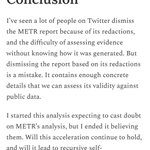
Spectacular essay by @karthiktadepall cross-checking non-redacted parts of the METR report with public data.
Shows the public data line up with METR's estimates of acceleration on internal models.
Uncertainty is whether bottlenecks will slow down acceleration going forward.

Karthik Tadepalli: the independent evaluator’s independent evaluator.
blog.karthiktadepalli.com/p/…


This is interesting. New METR report suggests that the increase in pace of capabilities advances within Anthropic is not due to an increase in the growth rate of training compute.
GDM on the other hand reported that despite a huge increase in AI usage for AI R&D, they suspect an increase in training compute was a main factor pushing argon 4 capabilities above trend.


@METR_Evals report here: metr.org/blog/2026-11-05-ant…
And GDM Argon 4 Safety and Security Report here: storage.googleapis.com/deepm…

3
353
sam manning retweeted

@collect_intel is expanding. We will be hiring for a few roles in the coming months. First up we are hiring for a Software Engineer.
We're building the infrastructure that gives people across the globe meaningful input into and agency over how AI systems are developed and governed, to ensure AI development expands democratic capacity rather than undermining it. These are wild, wonderful and weird times. Come and build the good path with us:
We’re looking for a software engineer who can help turn open questions about AI into software people actually use, turning ideas from our research explorations into real products that showcase the value of collective intelligence. You'll work closely with research, product, and engineering to take ideas from a prototype to production, building intuitive experiences, research tools, and practical AI applications. You’ll own well-defined projects end to end, with room to experiment. Experienced teammates will help you grow and scale your most promising work into something people can rely on. Our current products include:
✨ Weval Studio - our product platform for gathering structured public input on AI through deliberation, with tools for researchers to turn what people say into evaluations AI labs and civil society can act on.
✨ Weval (weval.org), our evaluation platform that's being used by AI labs and governments to assess frontier models.
✨ Global Dialogues (70+ countries gathering public input on AI), Digital Twin evals & experiments with partners deploying democratic AI governance tools in the real world.
jobs.gem.com/cip/am9icG9zdDq…
sam manning retweeted
Appreciate the thoughtful response! This will be long, but hope you have time to read:
>We'll get to a point where inserting humans just makes things slower and worse.
I think something that often gets lost in this is that slower does not always mean worse. There are many aspects of military decision making and operations that demand speed, but slowing down and exercising restraint is arguably just as important, so the pull toward automation is not universal. Even this Pentagon, which is as about as incautious as any I can recall, has apparently instituted changes to targeting processes and reportedly restoring civilian protection programs (which would slow things down) as a result of the horrible Minab school bombing. One example that just came to mind -- I was an army aviator, and we'd spend a lot of time studying various kinds of aircraft incidents to avoid them in the future. Almost every single one was the result of people moving too quickly, and the lesson was almost always to slow down and be more deliberate. We'd then update our procedures and train accordingly.
>Of course, AI will control many non-ai machinery
If by "non-ai machinery" you mean systems without onboard AI that will be remotely controlled by AI, then that means that this "non-ai machinery" that was never previously vulnerable to electronic warfare (ie. jamming) or reliant on internet/compute infrastructure that can be destroyed, is now vulnerable to these things, because the AI will have to communicate with it. So this "non-ai machinery" is essentially AI now, which leads into the next point.
>But won't it be possible to deploy ai without a single point of failure? Different models for different military units. Many different data centers, or on-device compute. Many different computer systems and security systems.
Yes, of course. But the point here is that if the military can't function without AI, then enemies only have to figure out how to target/exploit AI. They would surely target however many data centers they can, energy infrastructure, terrestrial internet infrastructure, satellites, etc. And if you start talking about thousands or millions of systems with on-device compute, then you're likely talking about much smaller models (I assume you believe running superintelligence will take a great deal of compute, no?). And those systems would need to coordinate with each other somehow, so they'd have to communicate in some way -- which again, bumps up against jamming and targeting of infrastructure.
Against an all-AI force, the enemy only has to figure out how to counter AI. I think you might be underestimating how different it is to defend against a military with wider ranging capabilities. Defending against an armored brigade is a completely different problem than defending against fighter jets is a completely different problem from defending against mechanized infantry vs. light infantry, low and slow aircraft like helicopters, navy destroyers, special forces teams, submarines, heavy artillery, light artillery, etc etc etc. The point here is that today an enemy can't just come up with one type of solution to defeat one type of threat -- this is the entire reason for the concept of combined arms maneuver. If everything's AI, it may be a bunch of different looking systems (autonomous tanks, autonomous jets, humanoid robots), but they'd all likely be vulnerable to the same things (EW, taking out infrastructure, hacking). Sounds like a pretty bad move to make for militaries. Probably a good idea to maintain a lot of diverse, complementary, and reinforcing capabilities and contingencies, rather than handing everything over to GPT 9.
>Stepping back, I wonder if I'm more imagining truly superintelligent AI, and you're thinking about earlier systems
I've done my best to think through these considerations in ways that accounts for capabilities far beyond the ones we have today. But there's of course the problem here that anyone can always offer the unfalsifiable argument of: "but superintelligence." I agree - if AI is able to overcome every obstacle I've listed then it will overcome every obstacle I've listed. If there's no preventing it from deceptively convincing us to hand the reins over to it, then it will deceptively convince us to hand the reins over to it. My equally rigorous counter could then just be, yeah but what if it doesn't. Or that I think a good superintelligence will stop the bad superintelligence.
I generally find this line of thinking pretty self-defeating. I think we have broadly the same goal here, which is to mitigate the risks of powerful AI. My view is that we can mitigate those risks, and that the best way to do so is to think concretely about them and offer solutions. In my piece, I talk about some ways to do that that I think would resonate more with policy makers than "full-blown takeover." The "but superintelligence" argument suggests that the only way to mitigate these risks is to shut it all down, which I think we also both likely agree is very unlikely in the short term and virtually impossible long-term -- pretty self-defeating.
sam manning retweeted
AI takeover scenarios often hinge on an idea I’m skeptical of, where rogue AI overthrows militaries and seizes hard power. I wrote a piece where I concretely break down what I think makes this improbable, and why “full-blown takeover” concerns could be counterproductive for mitigating the risks of misaligned or poorly controlled AI in the military.
For AI to seize hard power, it would need to be physically capable of defeating our military, and humans would need to be careless enough to give it the power to do so. I think that’s unlikely to occur for several reasons. Among them:
- The military is unlikely to sufficiently hand the reins over to AI. (1) Even if we wanted to, overhauling the institution in this way faces countless barriers that have plagued it for decades. (2) Doing so would be strategically suicidal.
- Integrating general-purpose AI into physical systems faces challenges that will take significant time to overcome, all while we grow increasingly attuned to the risks posed by AI.
- There’s little to suggest that more capable AI would be able to persuade or coerce people to take the costly, coordinated actions some of these scenarios predict.
- Even if AI managed to assume control over a large arsenal, we’d fight back. In which case, recent warfare shows us that crude countermeasures work against technologically advanced adversaries, and AI relies on infrastructure we can and would shut down.
1/2

sam manning retweeted

New DeepMind Institute essay: "What is work for? Human wellbeing and the value of work in the AGI era."
The empirical evidence shows that many people value their jobs beyond earning a salary, and the importance of agency, status, and meaning. At the same time, we investigate alternate sources of wellbeing, and the possibility that societal norms around work may change over time.
with @JulianDJacobs @locross
Read it here: bit.ly/wellbeing-work-agi

Performance on the remote labor index has increased 5x since February, up from a 4% task completion rate to over 20% in Sep. This benchmark samples 240 tasks from Upwork and hands them to AI systems to complete. Median human completion time in the benchmark set is 11.5 hours.

Here are some examples of the kinds of projects in the benchmark set. You can read more at: remotelabor.ai/

2
1
121