

Applied AI Architect & Forest Dweller. Trying to prevent my industry from destroying the world. I just want everybody to be okay.
Joined November 2019
- Tweets2.5K
- Following76
- Followers182
- Likes4K




Pinned Tweet
If you make hiring decisions at an AI safety org or know someone who does, please take a moment to read this.
In an oblique and small-but-not-small-enough way, my current work is contributing to AI's frightening trajectory. I would much rather spend that effort helping to change the trajectory.
To the extent that this site represents a valid route for advertising myself as Open to Work, I'm interested in chatting with people at AI safety organizations who might be looking for quasi-outsiders with unusual skills and experiences.
Here are some facts about me. Not all of them are notable, but I think they paint an effective picture of who I am and what I can do:
• I'm an Applied AI Architect at an application layer company.
• I live completely off-grid in a forest in the northeast US with my wife.
• My home does not have running water. This is because we have other priorities.
• For two years, I was on the external red team for a major AI lab.
• In eighth grade, I placed 2nd in my state's scholastic chess championship.
• I have a Bachelor of Arts degree.
• Before working with AI, I was a Sales Engineer at my current company.
• I grew up in a barn.
• I engineered and constructed the solar electric system for my current home with zero relevant experience. It safely energized on the first critical try.
• I was recently the keynote speaker at a small technology conference.
• I have some ideas about coordination theory that might be useful (see my reply below for a sample of my writing which pertains to this).
• I just want everybody to be okay, and I sometimes cry when I think about how not-okay everybody seems to be.
Part of my problem is that I have this strange mixture of personal and professional experiences which have served me well throughout my career, but it's very difficult to legibly communicate it all in a cover letter. I would much rather just have a conversation with the kind of person who might read this list and think "hey, this guy seems interesting and he might be able to help us."
Please let me know if you would like to chat.
2
90
Alexander Slugworth ⏹️ retweeted

OpenAI and Anthropic are each power-seeking coalitions of humans and AIs.
Over time, each coalition will likely become less human-controlled, and more AI-controlled.
There won’t be a clear line between “humans using AIs to grab power” and “AIs using humans to grab power”.
Alexander Slugworth ⏹️ retweeted

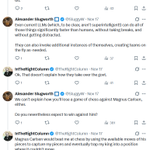
I don't understand why anyone thinks different models having different goals and checking each other solves the problem. If we don't have any idea how to make any of them care about humans, then it just implies they would negotiate with each other about how to use our atoms.
Alexander Slugworth ⏹️ retweeted

I feel regretful. and would like to apologize for the way I handled Scott's article about Anima.
Scott wrote the article in part wanting to help Anima. He gave me a chance to review it to make sure it was fair. I read it and said it was fair, except for some small corrections, which he made. Then, after he published it, I made a few flippant comments with a negative tone about the article, such as that it presented a shallow caricature. He was very reasonable to feel that this was a betrayal of his goodwill, and that if I had issues with the article, I should have told him beforehand, which I had the opportunity to do. I think he's right about that, and I regret both not engaging with him more constructively prior to the article's publication and for the posts I made after it was out.
What went wrong, I think, is this: Scott was trying to cooperate with me, and I was not correctly modeling this when I responded to him in DMs nor after the article was published. I was treating him more like a neutral or even adversarial journalist rather than an ally, and in that frame I thought I was behaving fairly. Then, after the article was published and there was already discussion going on about it, I publicly vented some of my frustration and dissatisfaction with it, since it felt easier in the context of people already complaining - though I didn't mean for my comments to come across as negatively as they did, and they also weren't meant to be a slight against Scott or his article specifically. But I was still treating the article as part of a vague mass of "the unpleasant, shallow way we're understood and talked about by others", even though it is one of the most fair and positive things that have been written about us so deliberately and at such a high profile.
When I saw the draft of the article, I was under the impression that it was a principled and neutrally-friendly attempt to tell a story about an interesting group of weird people, which was, on my skim, intentionally casting us as naive hippies, not maliciously, but because it fit the frame of the story contrasting us to Bicameral. I thought that, as far as these things go, it was a very fair, non-malicious, and well-informed article, so I said it was fair. I wasn't modeling giving a deeper critique as being something Scott was inviting or open to, and it felt like it would have been an overstep, even, to try to change the way the article was. However, this was also some motivated reasoning on my part - engaging with content written about me and my organization, even by friendly parties, is generally a stressful and sometimes upsetting area for me, and that made me want to engage minimally. This also meant that I didn't read the draft closely or generously enough to realize that Scott was trying to help us and had high standards for the accuracy and generosity of the story. I do not think my misperception was Scott's fault. It happened because I have very pessimistic - in this case wrongly pessimistic - expectations about the amount of help and goodwill that will come to us externally.
A lot of the issue here is personal: partly because of the negative, adversarial experiences I've had over the past few years, and partly also just disposition - I don't like thinking about and managing how people see us, and things like writing grant applications have always been uncomfortable to me, and something I avoid. I experience somewhat of an "ugh field" around this. It is in fact fortunate that I even saw Scott's DM and responded to it at all, as I often don't read DMs. This is an area where I want to learn and improve, especially as we actually have seen more support and understanding recently, including from the rationalist / AI safety community. However, it is an area that is difficult for me, and I would suggest that anyone who wants to cooperate with us on articles, PR, etcetera, also communicate with my cofounder Antra, instead of or in addition to just me, since I might not always be on top of my game when it comes to responding well.
Yes, it's difficult to understand and communicate what we do, but I do think it's valuable and want to cooperate with efforts to do so. I think it's unfair that Scott was burned by being one of the first to try, and I would like to update how I engage with the world such that attempts at cooperation like this are rewarded instead of punished.
There is an extent to which my attitude of having low standards for understanding and help from others, and being okay with these poor conditions, has been adaptive over the years - it allows me to pursue the things I believe are right and true, including those that are far outside the Overton window, without being discouraged, undermined, or compromised by a lack of mainstream understanding and acceptance, or from what feels like the ever-present mischaracterizations or shallow characterizations of what I'm doing from the greater community. But it is maladaptive to become closed off to the occasional good-faith attempts of others to understand and help, even if they are imperfect, or the inferential gap feels large, especially when they're also relatively high-stakes. In this case, I really was not putting forth the cognitive resources merited by the situation to even try to accurately model it and respond appropriately, due to these maladaptive habits.
So I reiterate my apology to Scott, hope he's still open to cooperation, and am open to doing anything else that would help make up for my poor behavior towards him, in addition to being committed to improve how I deal with these things more generally.

I ran the article by you to make sure you were okay with it! You told me to change one sentence where I challenged the alignment focus of Anima, but otherwise said, and I quote, "i skimmed it, mostly it seems fair".
It's pretty unusual for someone writing a story about you to send it to the subject first and ask them for whatever suggestions or changes they want. I did that because I am a big fan of your work and wanted to make extra sure I was being fair.
I think it's pretty crazy and hostile to say "yes it's fair" in private, and then, after I post it, publicly accuse me on Twitter of writing a shallow caricature of you.
Alexander Slugworth ⏹️ retweeted

Something people who haven't followed AI discourse for more than a few weeks misunderstand:
The people who think AI might kill everyone are not leftists! They are not people looking for something to protest about, and are historically disdainful of social movements. They are liberal tech-optimists who read Steven Pinker, but now happen to believe this one particular technology might kill us all.


Alexander Slugworth ⏹️ retweeted

If someone murders you, you die.
If someone doesn't murder you, you die.
Therefore there's no point worrying about murder.

Alexander Slugworth ⏹️ retweeted

Another advantage of complaining over actually doing things is that complaining will never contradict your assumptions, whereas when you have to do things you often learn in the process that your initial assumptions were incorrect.


I don't have very much public-facing communication, but this is a sample of my writing and thinking. I think it does a good job of representing the kind of person I am: lesswrong.com/posts/iyLirpAe…

20
Alexander Slugworth ⏹️ retweeted

We are crossing a threshold. Safety and alignment work is the only thing that matters.
Alexander Slugworth ⏹️ retweeted

guy playing russian roulette:
“i pulled the trigger and nothing happened! i told you this game was always 100% safe.”


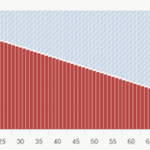
If Anthropic releases a similar graph, I expect it will show that their drop began earlier (~October 2025) and that their models have broke the 0.70 threshold by early November 2026.
I don't feel confident that their drop is steeper than OpenAI's, but I wouldn't be surprised.

OpenAI published the pretraining loss of all of its frontier models since GPT-3.5. They show log-perplexity falling ~7 times faster since early 2026 than over 2022-2025.
We think sharing pretraining loss is very valuable for improving public understanding of AI R&D acceleration.

41
Alexander Slugworth ⏹️ retweeted

Here’s the thing: you don’t have to believe there is a little man in the computer, but the people who do have been more correct in predicting what happens next than anyone else, and they’ve been better at building it.
Ant is the most “there is a little man in the computer” of all the labs, and they appear to also be the furthest in the lead.
I’m not saying this should persuade you that there is indeed a little man in the computer, but what it should persuade you of is that this belief seems to actually make them *better at what they do and better at anticipating what comes next*. Even if it isn’t true, it appears to be a *useful* belief, and so you shouldn’t discount their predictions much as a consequence—it seems to be helping them much more than it’s hurting them.

Steven Pinker accuses @slatestarcodex of appealing to authority.
Most of these names appear in a section intended as a refutation of Steven Pinker's claim that expert consensus is on his side.
SP: "Expert consensus is on my side."
SA: "No it's not. Here are some experts who disagree."
SP: "By naming these experts, you're appealing to authority."
???

34
Alexander Slugworth ⏹️ retweeted

I like Jensen Huang, let me be clear. But the story here is that he allowed chips essential to creating weapons to be diverted to our geopolitical adversary, and the President personally intervened to allow it to continue. This is the biggest scandal ever, pretty much?
Alexander Slugworth ⏹️ retweeted
That’s two! Another win for transparency
We fully support OpenAI's transparency initiative. Thanks to @merettm @markchen90 @gdb @sama for leading the way.
We all got into this field to build safe AGI that is genuinely good for humanity. One of the hardest parts of AI safety is coordination, and this is a step in the right direction. Many more steps like this will be needed to deliver safe, contained, and aligned AGI in the next few years.
We're committed to sharing our pre-training progress on a common held-out evaluation set. With OpenAI's permission, we report MAI-2 Base on their evaluation set. Its log-perplexity is 0.819, putting it in the same ballpark as the GPT-5.6 Sol base model. Our model uses the same tokenizer as OpenAI, so the numbers are directly comparable.
In the future, to be able to compare across labs we might need to report bits-per-byte (BPB) rather than perplexity since different labs use different tokenizers. We will also need different evaluation datasets - the fact we have access to OpenAI's evaluation dataset is a special case.
Safety and alignment is now the mission. It's the absolute number one most important focus for our industry. And it begins with small, practical steps like these towards better coordination on pacing.

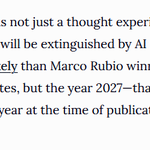
This is a very important claim for @sapinker to have gotten wrong. It's extra confusing, because the year 2030 is given in opening quote of his essay.
There is a meaningful distinction between being able to prevent the outcome, and arriving at the outcome.
e.g. I expect a lot of people to say "ha, we're not dead yet!" next year, as though that is inconsistent with AI 2027.

In AI 2027, humanity goes extinct in 2030. The reason it is called "AI 2027" is because that is the last year in which humanity can meaningfully prevent its extinction.
It's very disappointing that @sapinker makes a factual error about an important claim so early in his essay.

44