

South Asia analyst @ Fudan Editor-in-Chief, South Asia Study Newsletter (南亚研究通讯) 澜湄国传伙伴,In Partnership with Mekong News Network
ShangHai, China
Joined April 2025
- Tweets1.2K
- Following110
- Followers3.5K
- Likes795
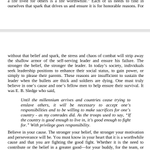



As Sun Tzu put it, “Know your enemy and know yourself, and you need not fear a hundred battles.” China and the US have long studied each other as strategic rivals. Chinese assessments of American motives, especially from the foreign policy community, are worth taking seriously even when Indian readers disagree.
I’ve long argued that America’s courtship of India comes at a price. India welcomed the status and hoped the US would bear much of the cost of confronting China. The US expected a return.
That demand will outlast any president. For the foreseeable future, Democrats and Republicans will both expect more from India and be less eager to talk up its importance. Their methods may differ, but a US worried about decline will have less patience for bearing today’s costs in exchange for tomorrow’s promised benefits. India will increasingly be judged by what it delivers now.
India needs to start with its own interests and decide where the US fits. Letting its role in American strategy shape its view of the world gets that order wrong.

"Washington gave India greater visibility while drawing it into a strategic role defined by the US," debates Chen Zhuo, South Asia analyst at Fudan University (@SouthernM46171).
When Marco Rubio links US tariffs on India to the Russia-Ukraine War, he validates Chen Zhuo’s debate that Washington tolerated Indian 'autonomy' only until it wanted direct returns.
"India’s policy appeared autonomous, but it was ultimately reshaped by American pressure," she writes.
Read her full argument on how New Delhi needs to reassess the extent to which its strategic outlook has become shaped by Washington: indiasworld.in/what-de-ameri…
#Geopolitics #IndiaUSRelations #Tariffs #UkraineWar #Russia #internationalaffairs

Chen Zhuo | Katrina retweeted

"Washington gave India greater visibility while drawing it into a strategic role defined by the US," debates Chen Zhuo, South Asia analyst at Fudan University (@SouthernM46171).
When Marco Rubio links US tariffs on India to the Russia-Ukraine War, he validates Chen Zhuo’s debate that Washington tolerated Indian 'autonomy' only until it wanted direct returns.
"India’s policy appeared autonomous, but it was ultimately reshaped by American pressure," she writes.
Read her full argument on how New Delhi needs to reassess the extent to which its strategic outlook has become shaped by Washington: indiasworld.in/what-de-ameri…
#Geopolitics #IndiaUSRelations #Tariffs #UkraineWar #Russia #internationalaffairs

Mohammed Ayoob, Professor Emeritus of International Relations at Michigan State University, put this remarkably well. It really struck me while reading today.
“Third World states are, therefore, caught between two stools. On the one hand, they are expected to approximate human rights standards as measured by the performance yardstick of the industrialized democracies.
On the other hand, they are expected to enhance their stateness by extending their dominion over often reluctant populations in the shortest possible time in order to approximate the standards of effective statehood set by the industrialized democracies of Europe and North America. The contradiction between these two sets of normative goals has made the security predicament of the Third World state increasingly acute as efforts by state authorities to extend their control have collided with the requirements for humane treatment of groups and individuals who resist such control.
“The tension between the two sets of norms is exacerbated by the increasing concern on the part of the industrialized states of Europe and North America that the human rights of states’ opponents in the Third World be adequately protected. This stance is adopted by the industrialized democracies with little regard for the task of state making, which Third World state elites perceive to be their primary political objective at this time. State making, however, has a logic of its own and requires the exercise of coercion even by postcolonial states, such as India, that have traditionally adopted primarily persuasive and consensual strategies for state building.
“As a result of these contradictory pressures, most Third World states can neither abdicate their responsibility for, nor fulfill their mission of, state building; they seem to be in a perpetual state of schizophrenia. This condition is accentuated by the workings of the global balance of power, which has done little to ameliorate the insecurity of Third World states and regions.”
Mohammed Ayoob, The Third World Security Predicament: State Making, Regional Conflict, and the International System (Boulder, CO: Lynne Rienner Publishers, 1995), pp. 87–88.
Ambassador Sibal, with respect, your question about the “Party line” reads China’s party-state through assumptions drawn from Indian politics. India has experienced China scholars, including @KangJing, who have spent years studying these questions. Perhaps she could explain why that framework travels rather poorly to China.
You seem to treat criticism of the Party as the test of independent thought. That is a rather narrow test. Similar Chinese assessments of India can also reflect shared observations. The gap in national capabilities gives people ample reason to reach similar conclusions.
We debate our problems and how to correct them. I am under no obligation to offer those discussions up as ammunition simply to establish my independence to your satisfaction.
I initially held back out of respect for your experience. Please do not mistake that courtesy for weakness. Surely a former ambassador can disagree with younger Chinese scholars without describing them as robots.

Ambassador Sibal, I can’t wake someone who’s pretending to be asleep, and I see no reason to try
Beyond agitating to fix local sewage problems what about any political opinion that questions the party line?
In India there are very different views expressed on relations with China.
On the Chinese side every one sings the same tune on India. No independent thinking at all.
Like trained robots.
China is never at fault on anything. No self-examination.
What does that say?
Chen Zhuo | Katrina retweeted

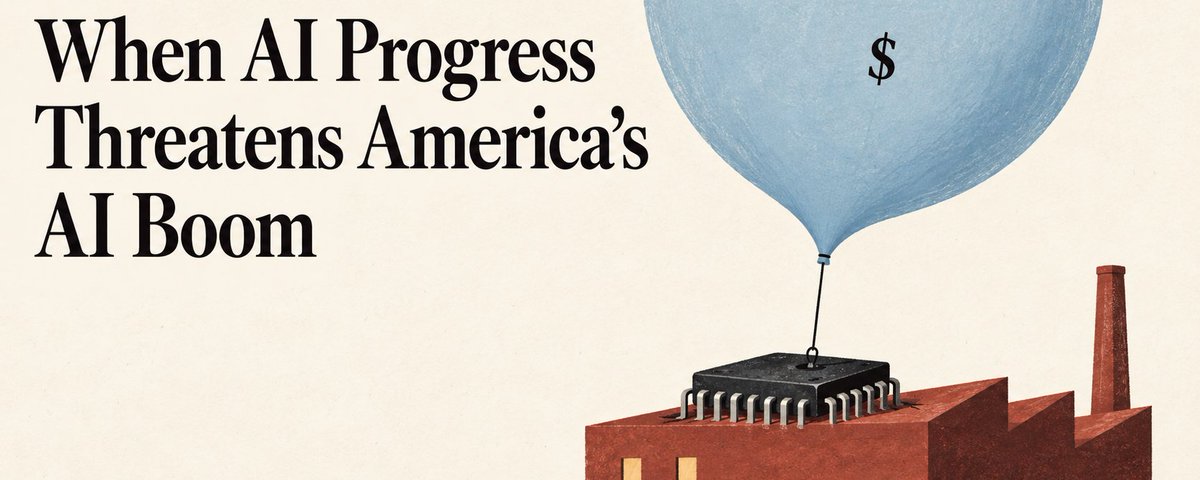
China does not need to build better AI than America. It needs to make American AI unprofitable.
The playbook is older than the technology. Flood the market with a cheaper version until the domestic industry collapses. China ran it with steel. Ran it with solar. Ran it with semiconductors.
Not a better product. A cheaper one. Good enough at a fraction of the price beats best in class at full cost.
AI is next.
Open-weight models. Lightweight. Inexpensive. Already inside a third of corporations. Not because they outperform. Because a CFO looked at the benchmark gap, looked at the price gap, and made the only decision capitalism allows.
The rational one.
China’s weapon is not Chinese technology. It is American capitalism.
The market has no loyalty. No patriotism. Only price sensitivity. Every procurement decision is a vote, and the vote always goes to the invoice.
American AI companies are valued on one assumption. That corporations will keep paying premium prices for premium intelligence. China’s strategy is to make that assumption false. Not by outbuilding. By undercutting.
Creating value and capturing value have never been the same thing. AI might be the first technology powerful enough to prove it at civilizational scale.
Roughly 40% of the S&P is tied to the AI bet. The majority of recent GDP growth has come from AI capital expenditure. America concentrated everything into a single sector and left that sector’s economics undefended.
The distance between AI boom and American recession is one quarter where enough CFOs make the same rational decision at the same time.
The technology race was the distraction. Who has the biggest model, who wins the benchmark, who reaches AGI first. None of that matters if the business model underneath it cannot survive being undercut.
A technological advantage that cannot sustain its own economics is not an advantage. It is a head start with no finish line.
America built the most advanced AI on Earth.
It has not yet built an economy that survives someone selling it cheaper.
And the country that figured that out is not trying to catch up.
It is trying to make catching up unnecessary.
Some people keep telling me I should thank American platforms and democratic societies for letting me speak on X. Even editors at major Indian newspapers have said this to me.
I find it baffling. Honestly, this kind of free speech is cheap. You’re free to criticise the government every day, and the government is free to ignore you every day. Why would that make you feel superior to Chinese people?
India’s elites and ordinary citizens can criticise Modi’s government and expose problems with elections. But speaking freely and getting problems fixed are two different things. You can speak without having the power to make anything change. Those responsible face no consequences. People keep complaining, and they carry on.
Why does this argument fail to impress Chinese people? For many of us, what matters is whether speaking out gets problems addressed. The Chinese government gives people considerable freedom to do exactly that.
Many foreign journalists miss how much pressure online public opinion now puts on Chinese officials.
There’s a guy on Douyin and Xiaohongshu who receives reports from viewers about local sewage and food safety problems, then investigates them himself. He’s an ordinary person, but what he exposes is stark. Small food-processing workshops, for example, illegally using additives on vegetables that end up in our markets. His videos quickly attract public attention.
The pressure then falls on the local government. Generally, officials are expected to publicly announce an investigation that same day, then report the findings and action taken as quickly as possible. Officials in China face demanding expectations and strict accountability. An ordinary person can expose a problem and put those in power under immediate pressure to act. Responding builds public trust. Evasion and silence quickly destroy it.
I spend time posting online because I want it to achieve something. Perhaps it gets a problem noticed. Perhaps it helps Indians willing to engage seriously understand what Chinese people think and do. I’m busy. I have no reason to waste time on pointless arguments.
As I’ve said before, I very much want more dialogue between Chinese and Indian people, including when we disagree. That’s what I’m working towards.

Reflecting on these stereotypical comments, I cannot help but observe that on platforms like X, Facebook, Instagram, Reddit, and 4chan, the Chinese approach international politics and foreign internet discourse from a distinctly top-down, condescending posture.
Many believe that because the CCP built the Great Firewall to restrict unfettered access to the global internet, foreigners harbor two major stereotypes about the Chinese: that they are brainwashed by the CCP, and that their access to information is severely insulated. Consequently, there is a subconscious assumption that Chinese people are ignorant, and that anything they say is merely party-line propaganda.
The reality, however, is quite the opposite. China boasts a comprehensive and rigorous educational system designed specifically to sharpen students' intellect and build an extensive knowledge base. Students produced by this system possess a level of cognitive depth that far outstrips their foreign peers—no other nation invests in student development to such an extreme degree.
Of course, China is by no means a flawless paradise. The price students pay for this intellectual advantage is an endless commitment of time to academic pursuits. For many, life consists almost entirely of acquiring knowledge and sitting for exams. To the international community, Chinese students often appear reserved, quiet, lacking hobbies or leisure pursuits, socially awkward, and inclined toward solitude. After all, when so much time and energy are channeled into academic excellence, social skills, personal hobbies, grooming, and self-expression naturally take a backseat. When top academic achievers—who often happen to be the least socially adept—go abroad to study, it inadvertently reinforces these foreign stereotypes even further.
From a Chinese perspective, everything comes with a price, and freedom is no exception. In this case, the price of digital freedom is a mere $2 to $3 a month. Those willing to pay it tend to be highly educated young Chinese. Their grasp of international politics, economics, military affairs, commerce, and cultural nuances is light-years ahead of their global peers—and even ahead of many self-styled experts and scholars.
When these young Chinese scale the Firewall, they are astonished by what they find: the outside world is far less idyllic than China, and many foreigners strike them as shockingly foolish—intensely arrogant, conceited, detached from reality, and deeply delusional. It is hard to imagine how someone so arrogant, conceited, and living in fantasy would manage to survive in China. They come to a striking realization: what the CCP was trying to keep out was a world that is filthy, dilapidated, decaying, yet hopelessly full of itself.
As a result, young Chinese—especially those who regularly use VPNs—have developed a profound sense of superiority rooted in their vastly superior lifestyle and cognitive awareness. They have discovered a rather amusing pastime: leaving fiercely sarcastic and delightfully wicked comments under posts that attempt to demean, slander, or mock China, deriving great entertainment from it. Meanwhile, many abroad misinterpret them as mind-controlled propaganda machines operated by the CCP. Thus, the mutual misunderstanding and mockery only deepen.
The whole dynamic is utterly mind-boggling. Hahaha.
This brings back a childhood memory. I was visiting Xi’an with my parents, and my dad got caught spitting. The fine was five yuan. Not a lot, but enough to sting. He argued about it, and I was so embarrassed. That was the first time I felt ashamed of behaviour like that.
Things are much better now. The civic improvement campaigns a decade or so ago helped too, but I think economic development and urbanisation have been the main drivers. A lot of that blatantly uncivil behaviour just feels unnecessary now, and nobody wants the social disapproval that comes with it.


Many Indians see themselves this way too. As I argued in my piece on the de-Americanisation of India’s grand strategy, viewing the world through American eyes leads Indian strategists to misjudge both the world and India’s place in it.
A colleague put it well around 2020, as the US and India were building their Indo-Pacific partnership. Confronting China comes at a cost. India didn’t want to pay it and expected the US to pay instead. But if the US is unwilling to bear the cost, it will expect Indians to pick up their guns and fight on the front line themselves.That’s exactly what we’re seeing now.

I discuss this in more detail in my piece for India’s World, “What De-Americanisation Really Means for India”:
indiasworld.in/what-de-ameri…

Some very sharp observations in this piece. The Chinese sources the author draws on are solid, and several points capture Chinese thinking on India really well. This is the kind of analysis worth sharing and discussing.
"These assessments have considerable implications for U.S. policy. If Chinese anxiety about the American-Indian relationship has genuinely diminished, then the deterrent value Washington derived from that relationship has diminished with it, which is a cost of the current policy that nobody is counting. If the Chinese read of Indian unmalleability is correct, then a post-Trump return to competition with China, and hence a return to cooperation with India, would face the same limits that frustrated the previous approach, and American planners should develop realistic expectations."

Chinese reassessment of India: "...in the past year, China has watched India lose its balance and simmer in a sense of strategic disorientation due to America’s change of heart...Many Chinese experts see India as returning to middle-power alignment for 'economic authority and strategic freedom,' which translates into vigorous outreach to Europe, Japan, Canada, and all the middle powers. It’s almost as if India is returning to its middle-power roots."
warontherocks.com/chinas-str…

Here’s my latest piece on Indian politics.
m.guancha.cn/chenzhuo/2026_1…
Chinese scholars have little patience for moral grandstanding about democracy and freedom. We’re more interested in how power actually works. Once you get into that, appeals to democratic virtue lose much of their force. I rarely write about Indian politics through the familiar “democracy is being destroyed” lens, though plenty of journalists seem to love it.
My argument is, Modi’s efforts to preserve his personal authority are weakening the support he depends on. Each crisis costs him support, and rebuilding it is getting harder.
1. The electoral roll controversy gives youth movements and opposition parties a shared reason to mobilise. Voters can punish a government by voting it out. Removing their names threatens that basic option. Opposition parties face losing voters before polling even begins, giving them a reason to work with youth groups they previously distrusted.
2. Protecting Gyanesh Kumar puts Modi’s loyalty to a trusted official at odds with the BJP’s interests. Keeping Kumar leaves future elections under a cloud. Even a BJP victory becomes harder to present as proof of Modi’s popularity. Dropping him sends a different message to other loyal officials. Carry out politically sensitive tasks, and you may end up taking the blame alone. Both choices weaken the confidence that holds Modi’s support together.
3. Diplomacy is giving Modi less room to recover at home. He once used India’s growing international standing to offset domestic setbacks. Sustained US pressure makes that harder. Indians angered by foreign insults also see their government struggling to respond. That anger can turn into disappointment with Modi, adding to the pressure he already faces.
I’ve also found that some of the people with the sharpest understanding of Indian politics are editors rather than academics. Indian journalists and editors do a lot of serious research themselves. That work deserves respect.

Also, you don’t judge a country’s understanding of India by counting how many people like India or have visited. Look at the policies its analysts help shape and whether those policies serve their country well. That speaks for itself. Judging by the results, China’s India policy scholars have done a good job. We can argue all day, but the results speak for themselves.

Rezaul, I don’t think someone’s never having visited India means they don’t understand it. I strongly believe everyone studying India should spend time there. Still, visiting a country doesn’t automatically give you a sound understanding of it. Otherwise, growing up in India would make someone an expert on Indian foreign policy, and we’d have 1.4 billion experts.
How well someone understands a country depends on their knowledge and ability to make sense of what they see.
I’ve met a professor who studied in India and specialised in Indian culture. He explained the cattle, stray dogs, poor sanitation, flies and mosquitoes by saying that Hinduism teaches people to live peacefully with animals. I’ve also met businesspeople who visited India many times and explained its crowded streets and poor sanitation by saying Indians were lazy and that this was simply their national character.
All had been to India. Their visits clearly hadn’t prevented them from relying on stereotypes. Someone who has never visited, yet understands Indian urban governance or political economy, could give a far better explanation of the same conditions.
For six full years, very few Chinese scholars have been able to visit India. Think about what that means. Someone who started working at 22 has spent six formative years in an atmosphere of intense hostility, watching the other country take every opportunity to show how tough it can be towards theirs. You can hardly expect them to develop a rosy view of India. I think it’s already remarkable that people on both sides can still view each other objectively. Under these conditions, dismissing someone’s understanding simply because they haven’t visited gets us nowhere.

Obsessing over X bans and VPNs is pretty silly when you can already see Chinese people posting here. What’s the point of dwelling on it? All it does is stir things up


Chen Zhuo | Katrina retweeted

I am an Indian @961957192q83556, from India's North East, who has lived barely 160-170 Kms (as the crow flies) away from the tri-junction of Bhutan-India-China for much of his life.
My father's elder brother was a civil servant in NEFA in 1962. He had literally walked home to Jorhat over weeks due to the military debacle India suffered.
So, naturally, Sino-Indian relation isn't just an academic interest.
I have read Neville Maxwell's "India's China War" in the 1990s when I was in college. The book was never banned in India although it did face criticism. I found Maxwell's account fairly objective in what led to the war. So, no disagreement with you there.
It was the other book, Brig. John Dalvi's "Himalayan Blunder", which was quickly banned. Brig. Dalvi, as you would certainly know, was the highest ranking POW of the war and was scathing in his criticism of India's politico-military leadership. But this ban too was quietly withdrawn much later and I read this too during early 1990s.
Unlike those ensconsed in India's national security apparatus, and what can be termed as it's ruling elite, I, or the people I represent, don't suffer any paranoia about China, do not suffer from any Sinophobia, or harbour any irrational animosity.
Fair, objective opinions are actually welcome.
I am Chinese, and of course I speak from a Chinese perspective—what is there to reproach me for? Are Indian researchers supposed to interpret the border issue from a Chinese perspective? Moreover, even if I made a neutral and objective statement, would Indians believe it? You would still say I am not neutral or objective. As long as I am Chinese, Indians will never believe me.
Take Neville Maxwell of Australia—his research was neutral and objective enough, was it not? He worked as a journalist in Delhi for several years. He was once pro-India and unfriendly toward China, but when his India’s China War was published, India banned it. Why? Because the historical facts it described were regarded by the Indian government as anti-India. Indians may say within India that the war with China was Nehru’s fault, or the product of Kaul’s arrogance, and so on—but in external propaganda, it must always be China’s fault. That is no longer serious research.
I have carefully studied the Sino-Indian border dispute of 1962, including primary sources from both China and India, and I have tried to conduct my research from as neutral and objective a standpoint as possible. My research is more thorough than Maxwell’s, because I have access to abundant Chinese-language materials, yet my conclusions are almost identical to his. By both reason and justice, the party responsible for the 1962 war—and the greatest obstacle to resolving the current border situation—is India.
India’s current China studies are very poor. The core reason is the lack of Chinese perspectives and sources, which leads to interpretations of China that are almost entirely wrong, even laughable. If Indians wish to learn from historical experience, the right approach is to engage seriously with Chinese people, to discover the truths and facts that India failed to notice at the time, and thereby avoid repeating such a tragedy—not to treat an excellent Chinese scholar of India with a condescending sense of superiority.
Saying this will certainly be hard for many Indians to accept. OK, I understand the pain of Indians—who does not want their country to stand on the moral high ground? If you wish to refute me, then please present your research.