Spaceguard Centre (@SpaceGuardOnX) header
Spaceguard Centre (@SpaceGuardOnX) profile picture

Spaceguard Centre is the UK's National Near-Earth Objects Information Centre (NNEOIC). It is focused on asteroids and comets that could pose a threat to Earth.

LD7 1LW Knighton, Powys
Joined February 2025
Photo by Spaceguard Centre (@SpaceGuardOnX)Photo by Spaceguard Centre (@SpaceGuardOnX)Photo by Spaceguard Centre (@SpaceGuardOnX)Photo by Spaceguard Centre (@SpaceGuardOnX)Photo by Spaceguard Centre (@SpaceGuardOnX)Photo by Spaceguard Centre (@SpaceGuardOnX)
Interesting video about the Vera C Rubin telescope: The $1 Billion Telescope No One Is Talking About msn.com/en-gb/news/techandsc…
67
NASA on alert as asteroid heading for 'close approach' to Earth at 16,900mph msn.com/en-gb/news/techandsc…
63
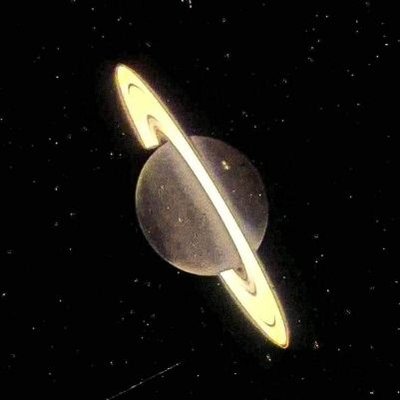
Astronomers call for help identifying mystery object that may have just crashed into Saturn msn.com/en-gb/news/world/ast…
52
On this day in 1966, the Saturn 1B vehicle was launched on the Apollo/Saturn AS-203 mission. It was an unpiloted test of the S-IVB engine restart in orbit in preparation for future Apollo flights.
2
47
1
251
7,343
Spaceguard Centre retweeted
📡We are on @universetoday "Planets Form Earlier Than Thought Around Baby Stars" universetoday.com/articles/p…
23
1
91
2,957
Spaceguard Centre retweeted
The National Space Innovation Programme (NSIP) held its inaugural Space Technology Showcase at the Royal Society. 🚀 We welcomed stakeholders from the space sector and beyond to showcase ground-breaking technologies developed through NSIP. 🛰️ Hear from our CEO, Paul Bate. 👇
3
10
1
25
2,963
Spaceguard Centre retweeted
The #LucyMission team has released new images from its flyby of asteroid Donaldjohanson, a rough, cratered, peanut-shaped relic of the early solar system. This successful pass was a dress rehearsal for Lucy’s big mission: visiting the Jupiter Trojans. go.nasa.gov/40yncKI
9
103
4
346
9,564
Spaceguard Centre retweeted
This is how Jupiter has been protecting Earth since billions of years!
99
558
64
2,579
226,794
It’s #SunDay! This week’s (June 27 - July 3) space weather report includes: · 0 M-class flares · 1 C-class flare · 25 coronal mass ejections · 0 geomagnetic storms This video from NASA’s Solar Dynamics Observatory (SDO) shows the week’s activity. More on flares & coronal mass ejections: go.nasa.gov/3Naeuv9
20
200
13
705
39,782
Buck Moon 2025: How to spot the year's farthest full moon from the sun msn.com/en-gb/entertainment/…
14
For 100 years, we have marvelled at planetariums. Here's a brief history of how humans brought the stars indoors msn.com/en-gb/money/technolo…
7
2 Hours Of Space Exploration Facts To Fall Asleep To youtu.be/zRsvL4z5V6g?si=na68… via @YouTube
23
Voyagers’ Mission to the Outer Solar System (1977 Vintage Video) msn.com/en-gb/video/webconte…
16
Spaceguard Centre retweeted
An upcoming once‑in‑a‑decade opportunity, in 2034, Earth, Jupiter, Uranus, and Neptune will align again, just as they did when Voyager 2 flew past the outer giants. This rare alignment, which repeats roughly every 12 years, would allow something extraordinary: a single mission that could visit both Uranus and Neptune. Such a combined mission has long been a dream of planetary scientists, who recognize that these "ice giants," though less studied than Jupiter or Saturn, hold vital clues to planetary formation, atmospheres, magnetospheres, and potential ocean worlds beneath their icy surfaces. The @esa has proposed the twin-orbiter “ODINUS” mission, Feryr to Uranus and Freyja to Neptune, targeting that 2034 launch window. It aims to explore their interiors, rings, moons, atmospheres, and magnetic environments. Meanwhile, NASA’s community-driven Uranus Orbiter and Probe concept is also emerging as a top-tier priority, thanks to the latest planetary science decadal survey. The plan envisions a 2031–2034 launch toward Uranus, delivering an orbiter plus atmospheric probe to begin intensive study by the mid-2040s. These twin missions, whether launched by ESA, NASA, or in collaboration, promise to fill a vast gap in our understanding of the solar system. By exploring Uranus and Neptune up close, we stand to learn not only about these distant worlds, where internal heat sources, climate, magnetic fields, and moon systems vary drastically, but also about the formation and evolution of similar planets in exoplanetary systems across the galaxy. 👉 share.google/UEsCWd3w0z0g8nd…
19
76
7
424
10,702
Launching on the #4thofJuly! On this day in 2006, Space Shuttle Discovery launched on the STS-121 mission, NASA's first Independence Day launch.
12
87
4
558
12,968
Spaceguard Centre retweeted
Jupiter seen by the James Webb telescope
17
115
3
719
22,015
Wow!
The glowing center of the Milky Way, captured by the James Webb telescope.
14
Spaceguard Centre retweeted
For three years, @NASAWebb has shattered expectations and rewritten what we thought we knew about the universe. Here are 10 discoveries that blew scientists’ minds: science.nasa.gov/missions/we…
10
65
2
342
11,633
Spaceguard Centre retweeted
On the 4th of July in 1982, thousands of spectators flocked to the California desert for a special event! Astronauts TK Mattingly and Hank Hartsfield made a perfect landing of the Columbia orbiter as STS-4, the final test flight of the Space Shuttle, ended #OTD in 1982.
28
249
15
1,535
49,331
Japan’s Hayabusa2 Returns with Asteroid Samples msn.com/en-gb/news/techandsc…
13