

Discover the Japan you never knew 🇯🇵 Untold stories of history, culture, innovators, business legends & anime. A new side of Japan, every day.
Japan
Joined September 2026
- Tweets615
- Following337
- Followers148
- Likes725


Pinned Tweet
The Japan You Never Knew 🇯🇵
The world’s oldest companies.
Inventors who changed everyday life.
Visionaries who built global brands.
Creators whose stories captured the world’s imagination.
Behind these achievements lie remarkable people, bold ideas, and centuries of wisdom.
But Japan’s story goes far beyond its greatest achievements.
It lives in everyday traditions, quiet acts of kindness, unexpected discoveries, and a culture that continues to evolve.
There are countless stories waiting to be told.
Some will surprise you. Others may change the way you see Japan.
Follow along. There’s so much more to discover.
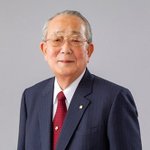
Kazuo Inamori Built Global Companies — Then Asked What Work Was For
Kazuo Inamori founded Kyocera at 27.
Later, he helped create the company that became KDDI.
But what made him unusual was not only that he built major companies.
He kept asking a deeper question.
What is work actually for?
Inamori believed management should begin with a simple principle:
“What is the right thing to do as a human being?”
For him, business was not only about growth, competition or profit.
It was also about improving the lives of employees, contributing to society and developing one’s own character through work.
Kyocera’s philosophy eventually emphasized the material and intellectual well-being of all employees alongside contribution to humanity and society.
Inamori believed that ordinary people could achieve extraordinary results through sincere effort, self-discipline and the right mindset.
That may be why his management philosophy became influential far beyond Kyocera.
He did not separate business from life.
He treated work itself as a way to become a better person.


Why Japanese Gardens “Borrow” Mountains They Do Not Own 🌿
Some Japanese gardens are much larger than they appear. Not because the land is huge.
Because the garden borrows the landscape beyond its walls.
This technique is called shakkei — “borrowed scenery.”
A distant mountain, forest or hillside is deliberately framed so that it becomes part of the garden’s composition.
At Tenryū-ji in Kyoto, the garden uses the surrounding hills of Arashiyama as part of the view.
The mountain is not inside the garden. But visually, it belongs to it. That changes how the space feels.
Instead of building a miniature world and separating it from nature, the garden reaches outward and connects itself to the landscape around it.
Sometimes good design is not about adding more.
It is about recognizing what is already there.


The Englishman Who Became a Samurai — William Adams ⚔️
In 1600, an English sailor arrived in Japan after a brutal voyage across the world.
He never imagined he would become a samurai.
His name was William Adams.
After reaching Japan aboard the Dutch ship Liefde, Adams was questioned by Tokugawa Ieyasu.
Instead of executing or expelling him, Ieyasu recognized his knowledge of navigation, shipbuilding, mathematics and European affairs.
Adams became an adviser to the future shogun.
He helped build Western-style ships, assisted with diplomacy and trade, and eventually received land in Miura.
He was given the Japanese name Miura Anjin.
In an age when Europeans and Japanese knew relatively little about one another, an English sailor became part of the Tokugawa world.
Adams did not simply visit Japan.
Japan became his home.


Akira Kurosawa Changed Movies Far Beyond Japan 🎬
Akira Kurosawa did not only change Japanese cinema.
He changed world cinema.
Rashomon introduced many international audiences to Japanese film after winning the Golden Lion at Venice in 1951.
Seven Samurai helped define the modern action-team story and was later remade in Hollywood as The Magnificent Seven.
Yojimbo directly influenced A Fistful of Dollars.
And Kurosawa’s visual storytelling inspired generations of filmmakers around the world.
What makes this especially interesting is that Kurosawa himself learned from Western cinema and literature.
He admired directors such as John Ford and adapted ideas from Shakespeare, Dostoyevsky and others.
Then those influences returned to the West transformed through Japanese cinema.
Culture did not move in one direction.
It traveled, changed, and came back different.
That may be Kurosawa’s greatest international legacy.


Kyoto Holds a Parade Through 1,000 Years of Japanese History 👘
On October 22, Kyoto becomes a moving history book.
The Jidai Matsuri features around 2,000 participants dressed in carefully recreated clothing from different periods of Japanese history.
The procession begins with the Meiji Restoration and moves backward through Edo, Azuchi-Momoyama, Muromachi, Kamakura, Heian and earlier eras.
Warriors. Court nobles. Famous women. Horses. Ox carts.
More than a thousand years of history passes through the streets in a single afternoon.
The festival began in 1895, when Kyoto was searching for new energy after Japan’s capital had effectively moved to Tokyo.
Instead of forgetting its past, the city turned that history into something people could still see.
For one day, Kyoto does not simply preserve history in museums.
It lets history walk through the city.


Modernization Does Not Have to Mean Becoming Culturally Identical
Modernization is often treated as if every country must eventually look the same.
The same buildings. The same brands. The same habits. The same values.
I do not think that should be the goal. Japan became modern by adopting technology, institutions and ideas from abroad.
But the strongest periods of change were not simply about copying.
Japan adapted what it learned to its own society.
That is why railways, factories and modern education could exist alongside shrines, festivals, traditional crafts and older ideas about community.
Progress does not require cultural erasure. A country can modernize and still remain itself.
In fact, I think the world becomes less interesting when every society starts to look the same.
Modernization should expand our choices.
Not erase our identity.

What Is an Engawa — And Why Did Japanese Houses Need One? 🏠
An engawa is neither fully inside nor fully outside.
It is the narrow wooden space running along the edge of a traditional Japanese house.
People could sit there, cool down, talk, watch the garden or simply enjoy the weather.
It also helped connect the house to nature.
Open the sliding doors, and the room extended outward.
Close them, and the engawa became a buffer against rain, heat and cold.
It is a small architectural idea.
But it says something larger about traditional Japanese homes.
The boundary between inside and outside was not always meant to be sharp.


Eiichi Shibusawa helped build the foundations of modern Japanese capitalism.
He was involved in the creation or development of hundreds of companies and institutions, including the First National Bank, Mitsubishi Group, Tokyo Marine, the Imperial Hotel and many others.
But Shibusawa did not believe profit alone was enough.
His famous idea was “The Analects and the Abacus.”
The abacus represented business and profit.
The Analects represented ethics and responsibility.
Shibusawa believed the two should never be separated.
A company had to make money. But it also had to contribute to society.
That philosophy guided much of his work as Japan built modern banking, industry, transportation and commerce.
His question still feels remarkably modern.
Can a business grow without losing its moral purpose?
Shibusawa believed it could — and should.

Why Do Japanese Sweets Change With the Seasons? 🍡
In Japan, sweets do not only taste different with the seasons.
They can look different too. Spring wagashi may resemble cherry blossoms. Summer sweets can look like clear water or goldfish. Autumn brings maple leaves and chestnuts. Winter may appear as snow.
The goal is not simply to make dessert beautiful.
Wagashi often try to let you experience the season before you even take the first bite.
Food becomes a small piece of nature you can eat.

How Did Ordinary Children Learn to Read in Edo Japan? 📚
Edo Japan did not have a modern public school system.
Yet large numbers of ordinary children learned to read, write and calculate.
How? One answer was the terakoya.
These small schools operated across towns and villages and taught the children of merchants, artisans and other commoners.
The lessons were practical. Reading. Writing. Abacus. Letters. Documents used in everyday business.
Teaching was also very different from the modern classroom.
Instead of one teacher giving the same lesson to everyone, students often worked at different levels while the instructor taught them individually.
This mattered. As commerce expanded, literacy became useful in ordinary life, not only for elites.
By the late Edo period, education had spread widely enough that foreign visitors sometimes remarked on the literacy they encountered among Japanese commoners.
Japan’s rapid modernization after 1868 did not begin with an uneducated population.
A culture of everyday learning was already there.


Nintendo Started With Playing Cards — Not Video Games 🎮
Nintendo existed almost a century before the Famicom.
The company began in Kyoto in 1889, when Fusajiro Yamauchi started making hanafuda — traditional Japanese playing cards.
For decades, Nintendo was a card company.
It later expanded into Western-style cards, toys and other forms of entertainment before eventually entering electronic games.
That long history helps explain something important about Nintendo.
Its real business was never simply “video games.”
It was entertainment. The technology changed. The products changed.
But the goal stayed surprisingly consistent — create something people want to play with.
One of the world’s most famous gaming companies began with pieces of painted paper.


Why Do Hayao Miyazaki’s Worlds Feel So Different? 🎬
Hayao Miyazaki’s films often feel very different from mainstream animation.
The heroes are not always trying to defeat a villain. The villains are not always completely evil.
Nature is beautiful, but it can also be dangerous.
Technology can be exciting, but it can also destroy.
And sometimes the story simply stops to let a character eat, walk, watch the wind or sit quietly. That space matters.
Films such as Princess Mononoke, Nausicaä and The Wind Rises repeatedly explore difficult questions about war, nature, technology and human responsibility.
But they rarely give the audience a simple answer.
Perhaps that is one reason Miyazaki’s films stay with people.
They do not only tell you what to think.
They leave you something to think about.


The Japanese Scientist Who Discovered Umami 🧪
Sweet. Sour. Salty. Bitter. For centuries, those were considered the four basic tastes.
Then a Japanese chemist noticed something was missing.
In 1908, Kikunae Ikeda studied the taste of kombu dashi and isolated glutamate, the substance responsible for its deep savory flavor.
He gave that taste a name -Umami-
Today, umami is recognized around the world as one of the basic tastes.
But Ikeda was not interested only in scientific discovery.
He also wanted to make nutritious food more enjoyable for ordinary people.
A bowl of simple kombu broth led to a discovery that changed how the world understands taste.


Why Is Sake Offered to God -Kami- at Shinto Shrines? 🍶
At many Shinto shrines, sake is more than a drink. It is an offering.
Rice has long been sacred in Japanese culture, and sake is made by transforming rice through fermentation. Because of that, sake became closely connected with harvest rituals, festivals and offerings to the kami.
At Ise Jingu, several kinds of sacred sake are still prepared and offered during important ceremonies.
The idea is simple. People receive the gifts of nature. Then they return part of those gifts to the kami in gratitude.
After some ceremonies, sacred sake may also be shared with participants.
So in Shinto, drinking sake can sometimes mean more than celebration.
It can represent gratitude, connection and a shared blessing.


What Does “Mottainai” Really Mean? ♻️
“Mottainai” is often translated as “What a waste.”
But that translation misses something.
The word can express regret that an object, food or resource is not being used to its full value.
Throwing away food. Discarding something that can still be used. Wasting time, materials or effort.
All can feel mottainai.
That is why the word fits so naturally with ideas like reuse and recycling.
But the deeper feeling is not simply “save money.”
It is respect. Respect for what was made. Respect for the resources behind it.
Respect for the fact that something still has value.
Sometimes one Japanese word carries an entire attitude toward how we use the world around us.


Yamaha Began Because One Man Repaired a Broken Organ 🎹
Yamaha is now one of the world’s best-known musical instrument brands.
But it began with one broken organ in a Japanese elementary school.
In 1887, Torakusu Yamaha was asked to repair an imported reed organ in Hamamatsu.
He fixed it. Then he became fascinated by how it worked.
Yamaha copied the internal structure, built his own prototype, and carried it over the mountains to Tokyo to have it evaluated.
The verdict was harsh. The organ looked right, but its tuning was poor.
So Yamaha stayed in Tokyo and studied music theory and tuning from scratch.
Then he tried again.
His second organ succeeded.
That failure became the beginning of a company that would later make pianos, guitars, synthesizers, audio equipment and much more.
The interesting part is not that Yamaha knew everything from the beginning. He did not.
He saw a problem, became curious, failed, learned what he lacked, and tried again.
A global brand began with a repair job.


Did the American Occupation Change Japan’s Relationship With Its Flag? 🇯🇵
Today, Japan’s flag is familiar around the world.
But immediately after World War II, displaying the Hinomaru was not simply a normal everyday choice.
During the Allied Occupation, GHQ initially restricted the public use of Japan’s national flag. The rules were gradually relaxed, and by 1949 the restrictions on displaying the flag within Japan had largely been removed.
What happened after that is more complicated.
Japan rebuilt rapidly. Society changed. Education changed. Attitudes toward nationalism also changed after the experience of war.
So did the Occupation itself permanently change how Japanese people felt about their flag?
That is harder to prove with one simple cause.
But one fact is clear.
For several years after the war, even something as basic as displaying the national flag was subject to outside restrictions.
Understanding that period helps explain why symbols that seem ordinary today carried much heavier meaning in postwar Japan.


Why Do Japanese Gardens Use Empty Space So Carefully? 🌿
A Japanese garden is not designed by filling every corner.
Sometimes what is missing matters just as much as what is there.
Open gravel. Quiet water. A gap between trees. An empty stretch of moss.
These spaces slow the eye down and give the viewer room to notice individual elements.
Japanese gardens also use techniques such as shakkei — “borrowed scenery” — where a distant mountain or surrounding landscape becomes part of the garden even though it lies outside the garden itself.
This creates a strange effect.
A relatively small space can feel much larger than it really is.
The garden does not try to dominate nature.
It frames it.
Perhaps that is why some Japanese gardens feel so calm.
They leave enough space for the viewer to become part of the scene.


Godzilla Was Never Just a Monster 🦖
When Godzilla first appeared in 1954, Japan was still living with the memory of war and nuclear destruction.
So Godzilla was never just a giant monster.
In the original film, the creature is awakened and transformed by nuclear testing. It rises from the Pacific and destroys Tokyo with overwhelming force.
For Japanese audiences, the imagery was hard to separate from recent history.
Burning cities. Evacuation. Radiation. Mass destruction.
Godzilla became a symbol of fears created by the nuclear age.
Over time, the character changed. In later films, Godzilla could be villain, antihero or even protector.
But the original film carried a darker message.
Human technology had created something it could no longer control.
That is one reason Godzilla survived far beyond the era that created him.
He was a monster. But he was also a warning.


