

Recovering Overthinker. Advertising brain for hire.
Sydney, New South Wales
Joined February 2009
- Tweets4.1K
- Following55
- Followers350
- Likes1.3K





Steve Leach retweeted

He's not just defending AI energy use. He is smuggling in a whole anthropology where humans are basically inefficient meat computers that you have to pour food and years into before they become useful. And once you accept that, the next move is obvious. If people are just costly biological training runs, then burning mountains of electricity to build synthetic intelligence starts to feel not only equal, but superior, even if it negatively impacts actual humans.
That is the dystopian. It makes human development sound like a bug in the system, and it makes sacrificing human and creational flourishing for more computational power sound logical. To him, the grid gets strained, prices go up, ecosystems get hit, but hey, humans eat too, so what's the difference?
The difference is that humans aren't an inefficient line item. They're the point. If your worldview can look at a child growing into an adult and describe it as energy spent to train intelligence, you haven't said something profound. You've revealed a horrifically rotten worldview.

Steve Leach retweeted

Anthropic just took a big swipe at OpenAI's decision to put ads in ChatGPT. Anthropic is airing ads mocking ChatGPT ads during the Super Bowl, and they're hilarious 😅 Anthropic is also committing to no ads in Claude theverge.com/ai-artificial-i…
Steve Leach retweeted

OPENAI, ANTHROPIC, AND GOOGLE DON’T PROMPT LIKE NORMAL USERS
and once you see how they do it… you’ll understand why your LLM isn’t operating at 100 percent.
Here are 6 techniques + a guide on how to use them to unlock the full potential of your LLM 👇

Steve Leach retweeted
A haiku about stepping on Lego:
Shit shit shit fucking
ow goddammit fuck fuck damn
bugger piece of shit! – at Sydney, New South Wales
Steve Leach retweeted

GenAI poses a much deeper pickle for Google than I initially assumed... The last few weeks completely echo the time I was at Google in the early 2000's when we were up against Microsoft - except this time Google is on the receiving end.
Looking back, we beat Microsoft not because we had better tech, but because we forced them to play on our terms AND at our "clockspeed."
Many (myself included) were viewing Google's LLM problem as one of catching up with the technology - specifically OpenAI. It stands to reason that with all its incredible talent, infrastructure, users and data, Google can and will catch up to OpenAI and likely be able to build better technology.
But I'm realizing that's likely to be wrong. The debacle last week (and even more, Google's response) puts a point on the real and somewhat unsolvable problem Google faces now.
Google isn't going to lose to OpenAI tomorrow - it lost to it over the last ten years.
The problem that Google faces today relative to the likes of OpenAI and Perplexity is very similar to what we did to Microsoft 20 years ago. What ChatGPT in particular has made us realize is that many of the tasks that we have so far labeled "search" and where we click on blue links are really tasks of research, analysis and decision-making.
We viewed Google as the way to complete these tasks because 20 years ago, Google solved the most important challenge in that workflow, which was to bring all the world's information to within one click in the form of a search engine.
Over these 20 years, Google built and has been harvesting one of the most profitable business models in history (remember that we used to talk with similar admiration of the operating system + desktop productivity biz model).
The problem now, is that ChatGPT, Perplexity and others have shown us that A LOT of the tasks we used to think of as search engine-based workflows are even better served through an exchange with this new piece of technological magic (similarly to how PageRank made Google Search feel magical 25 years ago).
The real problem for Google is one of clockspeed. Google all of a sudden has its ass on fire and is trying to innovate into the future. But, that innovation now has to happen at the heart of its business. OpenAI doesn't care about messing up an ads business model - they can just iterate with a product/quality purity that is impossible for Google to get.
Google isn't going to lose to OpenAI in the coming few years. It has lost over the past decade, when it could have evolved/iterated AI into its model at its success-encumbered clockspeed. Now that the game is on, but on a startup clockspeed, there is no chance for Google to catch up and even less win this next cycle.
This problem compounds over time, because every single day that goes by, we are all feeding OpenAI our usage patterns, feedback, custom GPTs, integrations, etc... At this stage, there is no way for Google to shift its clockspeed unless it is willing to give the middle finger to the market and its customers for a while and say sorry, the future beckons - feel free to opt out and invest your money elsewhere.
The sad part is that Google actually has the wherewithal to do that, but few incumbents are ever able to pull it off. Meta/Zuck have done this several times (mobile transition, VR bet and now AI), so we know it's possible, but it is exceedingly unlikely for that to happen. People often think that's only possible because Mark is the founder, but I think it's because of his posture between risk and opportunity.
I'll close this with the phrase that I think captures this posture: Our missed opportunities will cost us more than our mistakes
Steve Leach retweeted

I'm done with @Google. I know many good individuals working there, but as a company they've irrevocably lost my trust. I'm "moving out". Here's why:
I've been reading Google's Gemini damage control posts. I think they're simply not telling the truth. For one, their text-only product has the same (if not worse) issues. And second, if you know a bit about how these models are built, you know you don't get these "incorrect" answers through one-off innocent mistakes. Gemini's outputs reflect the many, many, FTE-years of labeling efforts, training, fine-tuning, prompt design, QA/verification -- all iteratively guided by the team who built it. You can also be certain that before releasing it, many people have tried the product internally, that many demos were given to senior PMs and VPs, that they all thought it was fine, and that they all ultimately signed off on the release. With that prior, the balance of probabilities is strongly against the outputs being an innocent bug -- as @googlepubpolicy is now trying to spin it: Gemini is a product that functions exactly as designed, and an accurate reflection of the values people who built it.
Those values appear to include a desire to reshape the world in a specific way that is so strong that it allowed the people involved to rationalize to themselves that it's not just acceptable but desirable to train their AI to prioritize ideology ahead of giving user the facts. To revise history, to obfuscate the present, and to outright hide information that doesn't align with the company's (staff's) impression of what is "good". I don't care if some of that ideology may or may not align with your or my thinking about what would make the world a better place: for anyone with a shred of awareness of human history it should be clear how unbelievably irresponsible it is to build a system that aims to become an authoritative compendium of human knowledge (remember Google's mission statement?), but which actually prioritizes ideology over facts. History is littered with many who have tried this sort of moral flexibility "for the greater good"; rather than helping, they typically resulted in decades of setbacks (and tens of millions of victims).
Setting social irresponsibility aside, in a purely business sense, it is beyond stupid to build a product which will explicitly put your company's social agenda before the customer's needs. Think about it: G's Search -- for all its issues -- has been perceived as a good tool, because it focused on providing accurate and useful information. Its mission was aligned with the users' goals ("get me to the correct answer for the stuff I need, and fast!"). That's why we all use(d) it. I always assumed Google's AI efforts would follow the pattern, which would transfer over the user base & lock in another 1-2 decade of dominance.
But they've done the opposite. After Gemini, rather than as a user-centric company, Google will be perceived as an activist organization first -- ready to lie to the user to advance their (staff's) social agenda. That's huge. Would you hire a personal assistant who openly has an unaligned (and secret -- they hide the system prompts) agenda, who you fundamentally can't trust? Who strongly believes they know better than you? Who you suspect will covertly lie to you (directly or through omission) when your interests diverge? Forget the cookies, ads, privacy issues, or YouTube content moderation; Google just made 50%+ of the population run through this scenario and question the trustworthiness of the core business and the people running it. And not at the typical financial ("they're fleecing me!") level, but ideological level ("they hate people like me!"). That'll be hard to reset, IMHO.
What about the future? Take a look at Google's AI Responsibility Principles (ai.google/responsibility/pri…) and ask yourself what would Search look like if the staff who brought you Gemini was tasked to interpret them & rebuild it accordingly? Would you trust that product? Would you use it? Well, with Google's promise to include Gemini everywhere, that's what we'll be getting (technologyreview.com/2024/02…). In this brave new world, every time you run a search you'll be asking yourself "did it tell me the truth, or did it lie, or hide something?". That's lethal for a company built around organizing information.
And that's why, as of this weekend, I've started divorcing my personal life and taking my information out of the Google ecosystem. It will probably take a ~year (having invested in nearly everything, from Search to Pixel to Assistant to more obscure things like Voice), but has to be done. Still, really, really sad...

Our AI image generation feature got it wrong. Here's more on what happened and how we're working to fix it. blog.google/products/gemini/…


Steve Leach retweeted

THIS BOOK IS A TRAVESTY.
Someone just bought it for my soon-to-be-born son.
Here is a replay of my internal monologue as I gave it a first read:

Steve Leach retweeted

"Graphic Designers are Doomed!"
"Web Developers are Toast!"
These posts are toxic. I know it's engagement bait but it's playing into people's very real fears about AI.
The correct narrative:
"Graphic Designers Jobs Just Got A Lot Easier!"
"Web Developers Now Have Super Powers"


Steve Leach retweeted

New update, new versions of hosts, new GPUs, new Speed! For more details go to neatvideo.com/news/nv485
Steve Leach retweeted
Noise profiling is the most critical part of the denoising process. Take a look at the tools and procedures within Neat Video that help you to build more accurate noise profiles. Read more in our latest Blog post: blog.neatvideo.com/post/lumi…


Steve Leach retweeted
Our eyes react differently to changes in brightness and color. We can easily discern fine details in the brightness, but not in color space. Neat Video utilizes this fact and uses it when cleaning up your video.
Read more: blog.neatvideo.com/post/lumi…

Steve Leach retweeted
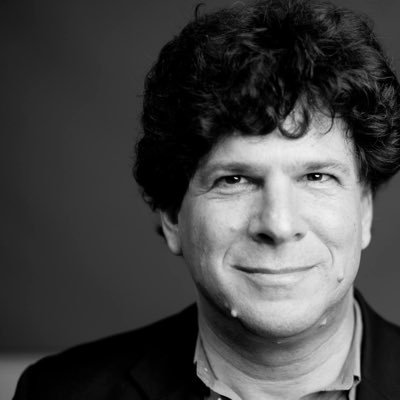
How come we to pass judgment on @elonmusk smoking cannabis with @joerogan? We can’t be this puritanical.
For the record, I fully support his right to order wine with dinner, to listen to FM radio with unmarried women, and to go to the bathroom alone w/o shareholder permission. – at San Francisco, CA
Steve Leach retweeted
Three thoughts on 9/11:
Do not believe in something if it asks you to sacrifice everything.
If you are truly long heroism,
you must also be short martyrdom.
Never let a tiny number of deranged dogmatic lunatics convince you that you’ll be better off cooperating with them. – at San Francisco, CA


Steve Leach retweeted

This is an honest and fun conversation between @elonmusk and @joerogan. Stop at the headlines and memes and you’ll miss all the thoughtfulness, clarity, and curiosity. youtu.be/ycPr5-27vSI – at Manhattan, NY
